Technology
How to Build Lead Lists From Businesses Near Hospitals
Learn how to turn hospitals into high-value prospecting anchors. This guide shows how to find, qualify, and prioritize nearby businesses for cleaner local lead lists.
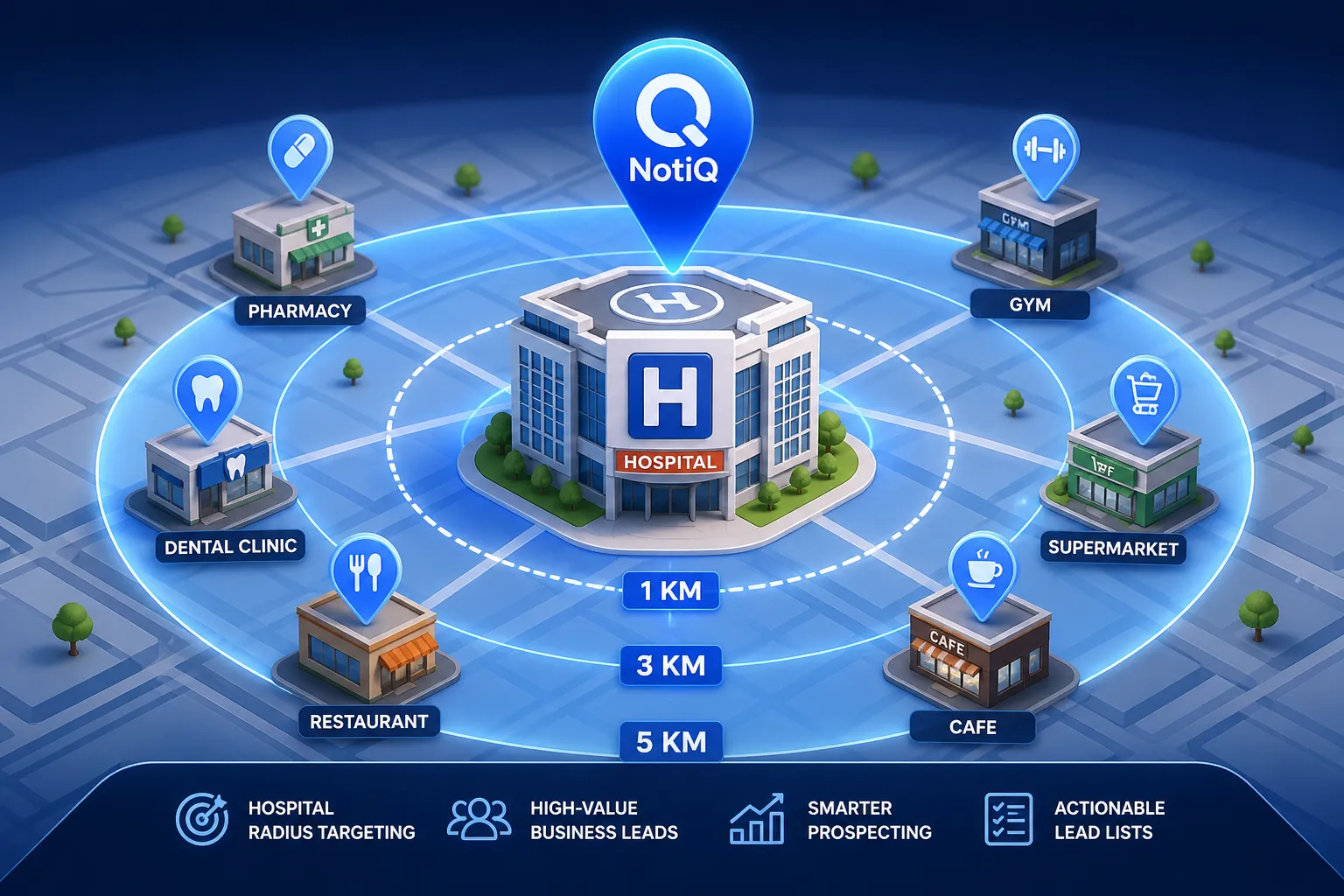
1. Introduction: Why Hospital Locations Are Powerful Prospecting Anchors
Searching for "businesses near hospitals" is not simply a local search query; it is the starting point for mapping a highly interconnected healthcare-related commercial ecosystem. Major medical centers act as economic anchors, drawing in a dense network of specialized clinics, suppliers, logistics providers, and hospitality services. For B2B sales, marketing, and prospecting teams, these geographic clusters represent high-value territories.
However, extracting actionable leads from these areas is notoriously difficult. Manual map searches are slow, inconsistent, and difficult to scale. Worse, they often produce raw data riddled with duplicate entries, permanently closed locations, miscategorized entities, or weakly qualified businesses.
This comprehensive guide solves that problem. You will learn how to select the right hospitals, define precise geographic boundaries, discover relevant businesses, enrich contact records, score prospects, and create a sales-ready list. The key is combining geographic intent with category relevance, contact quality, operating status, and hospital-adjacency signals.
Proximity alone does not prove buying intent; it must be paired with rigorous business fit and verification. By utilizing a location-driven prospecting solution like[NotiQ](/)to organize businesses near hospitals and other geographic anchors, teams can transform raw geographic data into a highly targeted, compliant, and revenue-generating local business prospecting engine.
2. Define the Hospital-Centered Prospecting Model
To build an effective geographic lead generation system, you must convert a hospital location into a repeatable prospecting territory rather than conducting disconnected, ad-hoc nearby searches.
Choose the Right Hospital Locations
The first step in hospital-centered prospecting is creating your initial set of hospital anchors. This selection should be based on your specific sales territory, hospital network affiliations, department relevance, or broader target market.
It is crucial to distinguish between different types of medical facilities. A sprawling, multi-building hospital campus will generate a vastly different commercial ecosystem than a single independent facility, a specialized children's hospital, or a localized network of outpatient surgical centers.
Before beginning any business discovery, document the anchor hospital’s exact name, physical address, geographic coordinates (latitude and longitude), facility type, and target territory. Your hospital selection directly affects the types of businesses near medical centers you will uncover and the ultimate relevance of your resulting lead list. Mapping a Level 1 Trauma Center, for instance, will yield different adjacent businesses than mapping a psychiatric facility.
Select the Geographic Boundary
Once the hospital anchor is defined, you must establish the rules for your search boundary. Standard radius-based prospect lists (e.g., a straight-line 2-mile radius) are easy to configure but may not reflect real-world accessibility.
Consider comparing a straight-line radius against walking distance, drive time, pedestrian access, and broader hospital catchment areas. A tight walking-distance radius may perfectly suit pharmacies, coffee shops, or nearby outpatient clinics. Conversely, a 15-minute drive-time or catchment model may better suit accommodation providers, non-emergency medical transport, or regional medical suppliers.
Whatever method you choose, require one consistent boundary rule when comparing multiple hospitals or territories. It is also important to remember that geographic proximity should be treated strictly as an indicator of potential relevance. For technical implementation regarding places, geocoding, or distance capabilities, refer to the Google Places API overview. Ensure all implementation and commercial use strictly follows applicable platform terms. Geospatial sales intelligence provides context, not definitive evidence of a business relationship.
3. Identify Relevant Businesses Near Hospitals
Moving beyond generic "nearby businesses" searches requires organizing prospects according to their specific role within the broader hospital ecosystem.
Core Healthcare and Patient-Support Categories
A highly functional lead list should be organized into practical, actionable segments. Depending on your product, core categories typically include:
• Pharmacies and pharmacy chains
• Outpatient clinics and specialist practices
• Diagnostic laboratories
• Medical suppliers and distributors
• Rehabilitation and home-care providers
• Medical transport and logistics services
• Accommodation providers serving patients, visitors, or staff
• Restaurants, convenience services, and other visitor-support businesses
Category selection must depend on your specific product, service, territory, and target buyer. It is vital to distinguish direct healthcare prospects (like a cardiology clinic) from businesses that support patients, visitors, staff, or referral partners. Including hospitality businesses near hospitals is highly strategic, as patient families, visiting clinicians, or hospital staff create a relevant commercial context. However, do so without assuming a direct purchasing relationship with the hospital itself. This segmentation is the foundation of effective pharmacy lead generation, clinic lead generation, and laboratory lead generation.
Build Category-Specific Search Logic
Relying on a single, broad search query will yield chaotic results. Instead, build specific search variations based on the hospital name, neighborhood, city, business category, and service type.
Combine category terms with geographic logic (e.g., "orthopedic clinics within 2 miles of [Hospital Name]") rather than relying on generic searches. Category normalization is essential here; it prevents related businesses from being split across inconsistent labels (e.g., grouping "drug store," "apothecary," and "pharmacy" under one normalized category).
By structuring your search logic this way, one hospital can produce several highly segmented lists of hospital-area businesses instead of one undifferentiated directory of local business leads. Keep in mind that map listings and public business profiles are discovery inputs, not automatic proof that a business is open, relevant, or ready for outreach. Refer to this Google Business Profile resource for understanding local business information and verification standards.
Identify Hospital-Adjacency Signals
Proximity is a geographic fact; adjacency is a commercial context. You must record signals that suggest a business actively serves the hospital ecosystem, including:
• Hospital staff
• Patients or visitors
• Referral partners
• Clinical departments
• Healthcare supply chains
Look for observable evidence such as service descriptions, website content, stated medical specialties, operating hours, and targeted contact information. For example, a hotel offering a "hospital visitor rate" or a clinic explicitly stating it has "admitting privileges at [Hospital Name]" exhibits strong adjacency signals. Healthcare ecosystem mapping relies on these clues. Avoid presenting location-based lead generation or proximity as proof of affiliation, endorsement, or referral activity unless explicitly verified.
4. Build a Structured Hospital-Area Lead List
This phase transitions your workflow from raw place discovery to a structured, usable, and compliant prospect database.
Recommended Lead-List Fields
A flat list of names and phone numbers is insufficient for local B2B prospecting. A structured list makes data easier to filter, compare, route to sales teams, and export into CRM systems. Use a practical template with the following fields:
• Business name
• Normalized category
• Hospital anchor
• Full address
• Coordinates (Latitude/Longitude)
• Distance or travel-time band
• Website
• Phone number
• Contact or decision-maker
• Service description
• Hospital-adjacency rationale
• Operating-status evidence
• Source or provenance
• Priority score
• Outreach status
• Last verified date
Fields like distance, normalized category, relevance reason, and verification date are essential for sales prioritization. Geographic lead generation fails when sales reps cannot quickly discern why a business is on their list.
Separate Discovery, Enrichment, and Qualification
Collecting more records is not the same as producing better leads. Break your local lead list generation workflow into three distinct stages:
1. Discovery: Find businesses within the selected geographic boundary using your search logic.
2. Enrichment: Add websites, phone numbers, decision-maker contacts, normalized categories, and business context.
3. Qualification: Confirm relevance, operating status, service fit, and outreach readiness based on observable evidence.
Record the evidence used to support each qualification decision. If you are looking to streamline this process, utilizing a platform like[NotiQ](/)positions your team perfectly at the point where geographic discovery is converted into an organized, sales-ready prospect list and actionable prospecting workflow.
Remove Duplicates and Resolve Business Entities
Duplicate listings destroy the credibility of geospatial business data. Duplicates arise from multiple map profiles, alternate business names, branch pages, or conflicting data sources.
You must distinguish individual branches from parent companies, franchise networks, and hospital-wide organizations. For example, a hospital may have a pharmacy inside it, while a national chain operates across the street. Preserve branch-level location data while linking related branches or parent entities where appropriate to avoid duplicate lead removal errors. Institute rigorous checks for duplicate addresses, phone numbers, websites, business names, and coordinates to ensure multi-location businesses are handled correctly.
5. Prioritize Prospects by Proximity and Commercial Relevance
A massive list is overwhelming. Ensure the final list helps sales teams decide whom to contact first rather than merely showing who is nearby.
Create a Practical Lead-Scoring Framework
Introduce a transparent scoring model to rank your location-based sales prospecting efforts. Factors should include:
• Geographic proximity or travel-time band
• Category relevance
• Patient-journey or hospital-support relevance
• Service overlap
• Business size or strategic value (where verified)
• Contactability and contact quality
• Operating-status confidence
Scores should support local prospect prioritization, not imply certainty about a prospect's buying intent. Document your scoring rules clearly so that different hospitals, cities, and territories can be compared consistently by your geospatial sales intelligence team.
Segment Prospects by Hospital Relationship
Do not blast the same message to every business within a two-mile radius. Create distinct segments for:
• Directly adjacent healthcare businesses (clinics, imaging centers)
• Patient and visitor support services (hotels, transit)
• Potential referral or care-continuity partners (rehab centers, nursing homes)
• Medical suppliers and operational providers (laundry, logistics)
• Hospitality and local convenience businesses (restaurants, cafes)
Each segment requires different messaging, targets different decision-makers, and utilizes different qualification criteria. Prioritize outreach by commercial fit rather than automatically contacting every entity on your hospital-area businesses list.
Compare Several Hospitals or Territories
When scaling your hospital network prospecting, you must compare hospitals using consistent distance bands, category counts, coverage gaps, and verified contact rates.
This catchment area analysis can reveal underserved areas, highly dense business clusters, and territories requiring different outreach strategies. However, exercise caution: a larger number of nearby businesses does not automatically indicate a higher-value territory. Quality and relevance always supersede volume. Use the Census Business Builder resource as contextual support for demographic market analysis, but remember it does not replace business-level verification or territory planning.
6. Quality Control, Compliance, and List Maintenance
To make your workflow credible and operationally safe, you must address accuracy, data provenance, licensing, privacy, and list freshness.
Validate Business Accuracy Before Outreach
Before a single email is sent or call is made, validate business data verification. Include mandatory checks for:
• Closed or permanently moved businesses
• Incorrect or overly broad categories
• Invalid websites or disconnected phone numbers
• Incomplete addresses
• Duplicate branches
• Unclear operating status
Require a “last verified” field and a confidence or evidence note for every record. Location data changes rapidly as businesses open, close, move, rebrand, or update their public profiles. Lead list accuracy is a continuous process, not a one-time event.
Use Location Data Responsibly
Responsible business data use is non-negotiable. You must review data licensing, platform terms, permitted APIs, privacy obligations, and contact permissions before operational use.
Always distinguish publicly visible business information from personal contact data. Never treat scraped or automatically enriched data as inherently accurate or authorized for unrestricted outreach. Use official APIs, permitted data providers, or compliant workflows. For context on open geographic data, review the OpenStreetMap About page, while ensuring you verify applicable licensing and commercial-use requirements for your specific project. Always confirm legal and privacy requirements for your jurisdiction, data sources, and outreach channels to maintain compliant lead generation.
Establish a Refresh Schedule
Location data freshness degrades over time. Establish a schedule to refresh hospital-centered lists based on business volatility, territory importance, and the frequency of planned outreach.
Track changes to operating status, contact details, category, ownership, and location. To prove the value of your local prospecting metrics, measure list freshness alongside your response rates, meeting rates, opportunity value, and conversions grouped by distance band.
7. Turn the List Into a Repeatable Sales Workflow
The ultimate goal is connecting geographic discovery to practical account-based sales execution and measurable revenue outcomes.
Route Prospects Into Segmented Outreach
Tailor your localized outreach by business category, hospital-adjacency signal, service need, and geographic context.
Recommend separate, highly specific messaging for pharmacies, clinics, laboratories, accommodation providers, suppliers, and support services. Encourage outreach that references relevant business context (e.g., "Given your clinic's proximity to General Hospital...") without implying an existing hospital relationship that has not been verified. If you utilize tools like RepliQ to support your outreach or prospecting workflow, ensure your messaging variables map directly to the structured data fields you captured during the enrichment phase of your local B2B prospecting.
Measure Geographic Prospecting Performance
To validate your proximity-based prospecting, define and track precise geographic lead generation metrics, such as:
• Verified prospects per hospital
• Percentage of relevant businesses vs. total discovered
• Contactability rate
• Positive response rate
• Meetings booked
• Opportunity value
• Conversion by distance or travel-time band
• Performance by business category
Compare your hospital-centered prospecting campaigns against broader, non-geographic lists. The goal is to determine whether geographic relevance improves local sales conversion and efficiency—not simply to see who can collect the most records.
8. Tools, Resources, and Practical Lead-List Template
Advanced sales operations require a concise operational toolkit adapted to their specific workflow.
Use Different Data Sources for Different Jobs
A robust geospatial business data strategy requires distinct tools for distinct tasks:
• Map and places platforms (like Google Maps) for business discovery and distance logic.
• Business profiles (like Google Business Profile) for local information and validation signals.
• Open geographic datasets (like OpenStreetMap) for spatial context, subject to strict licensing.
• Official business and demographic resources (like Census Business Builder) for broader market context.
• Prospecting or workflow tools for organization, enrichment, scoring, and CRM export.
Contrast a one-off hospital-radius search with a repeatable local business prospecting tools system that includes qualification, deduplication, verification, and prioritization. The real value lies in bridging the workflow gaps between raw discovery tools and sales-ready lead generation.
Suggested Hospital Lead-List Template
To operationalize this, use this compact example schema for your radius search for businesses:
• `Hospital anchor`
• `Business name`
• `Category`
• `Address`
• `Distance or travel time`
• `Website`
• `Phone`
• `Decision-maker`
• `Hospital-adjacency reason`
• `Priority score`
• `Verification status`
• `Last verified`
• `Outreach status`
Add a strict checklist to determine if a record is a sales-ready prospect list candidate:
• Correct business and branch identified
• Relevant category confirmed
• Location verified
• Operating status checked
• Contact path available
• Reason for inclusion documented
• Source and verification date recorded
For further insights on implementing this hospital lead list template and practical prospecting processes, explore the NotiQ Blog.
9. Conclusion
Building better hospital-area lead lists requires replacing random map searches with strict geographic logic. The complete process requires you to select hospital anchors, define precise boundaries, discover relevant categories, enrich records, remove duplicates, qualify businesses, score prospects, and continuously refresh the list.
The true value of a hospital-centered lead list comes from combining proximity with business relevance, observable evidence, and contact quality. Begin with one hospital, a clearly defined geographic rule, and a small number of priority categories before attempting to scale across national territories.
Remember, geographic proximity is a prioritization signal, not proof of intent, affiliation, or suitability. Ongoing verification and responsible outreach are paramount. For teams ready to turn location-based prospecting and healthcare ecosystem mapping into a structured, scalable workflow,[NotiQ](/)provides the ideal framework to drive revenue from businesses near hospitals.
Frequently Asked Questions
- How do I find businesses near a hospital?
- To find businesses around a hospital, follow a structured workflow: select the hospital anchor, define a radius or travel-time boundary, and search by relevant business categories. Do not stop at manual discovery; you must follow up by verifying operating status, deduplicating records, enriching contact details, and qualifying the business for relevance.
- What types of businesses should be included in a hospital-area lead list?
- Depending on your product, you should target pharmacies near hospitals, clinics near hospitals, laboratories near hospitals, medical suppliers, rehabilitation providers, home-care services, accommodation, transport, and restaurants. Inclusion strictly depends on your specific service and target buyer profile.
- Is a radius search the best way to measure proximity?
- A standard radius search for businesses is easy but not always optimal. You must compare radius, walking distance, drive-time prospecting, and hospital catchment area models. The best method depends on real-world accessibility, the service type, territory size, and the expected relationship between the business and the hospital.
- How accurate are proximity-based business leads?
- Proximity-based prospecting accurately measures distance, but it does not guarantee business lead accuracy. Business relevance, operating status, contact details, and buying potential still require rigorous local business data verification. Always track your data source, adjacency evidence, confidence score, and last verified date.
- What data fields should a hospital-centered prospect list include?
- Essential hospital lead list fields include the business identity, normalized category, hospital anchor, address, coordinates, distance, website, phone, contact, relevance reason, priority score, source, and verification date. Structured fields are the foundation of geospatial sales intelligence, enabling seamless filtering, routing, scoring, and measurement during local lead list generation.
Continue Reading
More articles you might find useful
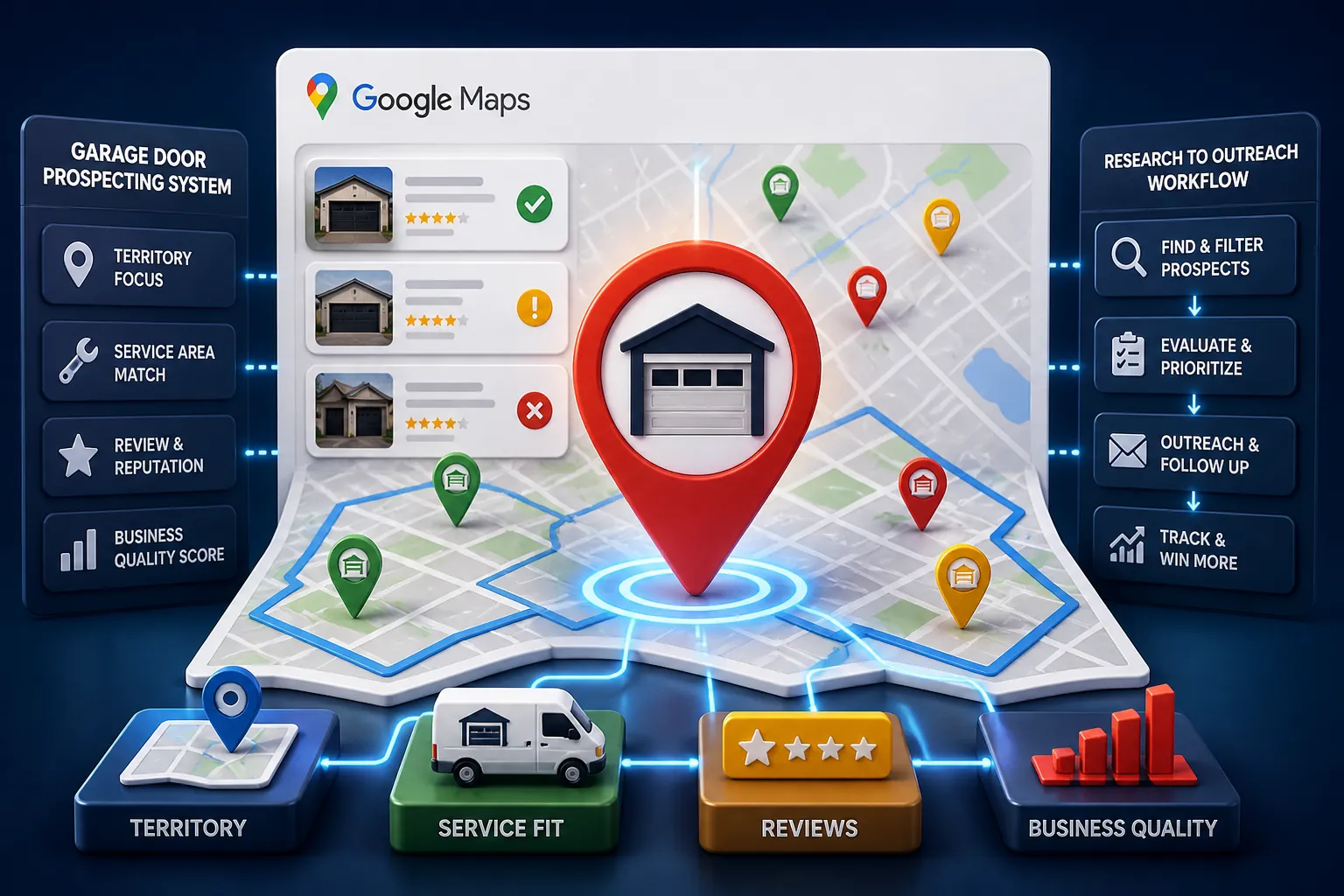
Google Maps Lead Generation for Garage Door Companies
Learn a practical workflow for using Google Maps to find, verify, and prioritize local garage door prospects. This beginner-friendly guide shows how to turn public listing signals into better outreach and more qualified leads.
Read the article →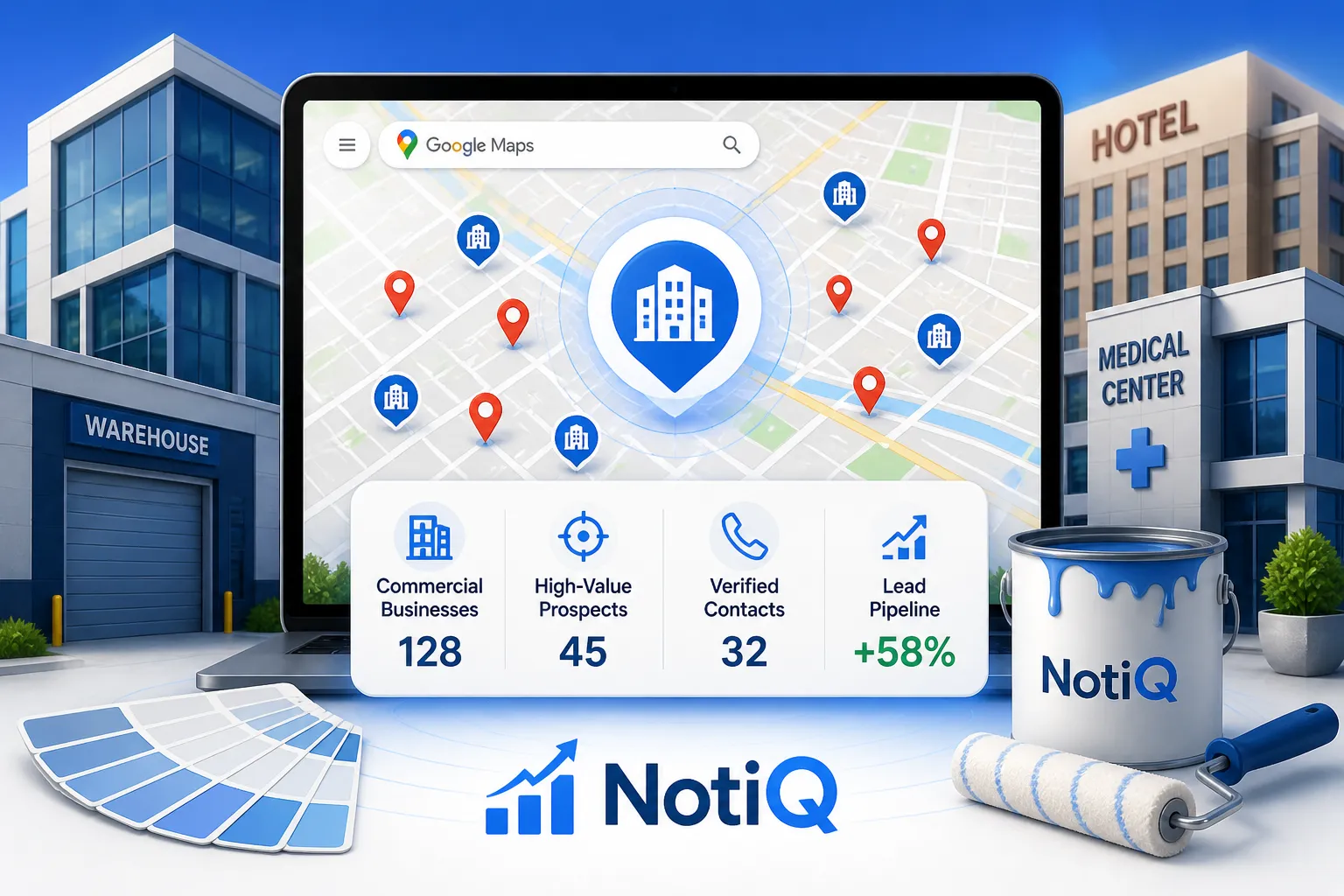
Google Maps Prospecting for Commercial Painting Contractors
Learn how commercial painting contractors can use Google Maps to build a smarter local prospecting system. This guide covers qualification, scoring, prioritization, and outreach for better-fit B2B leads.
Read the article →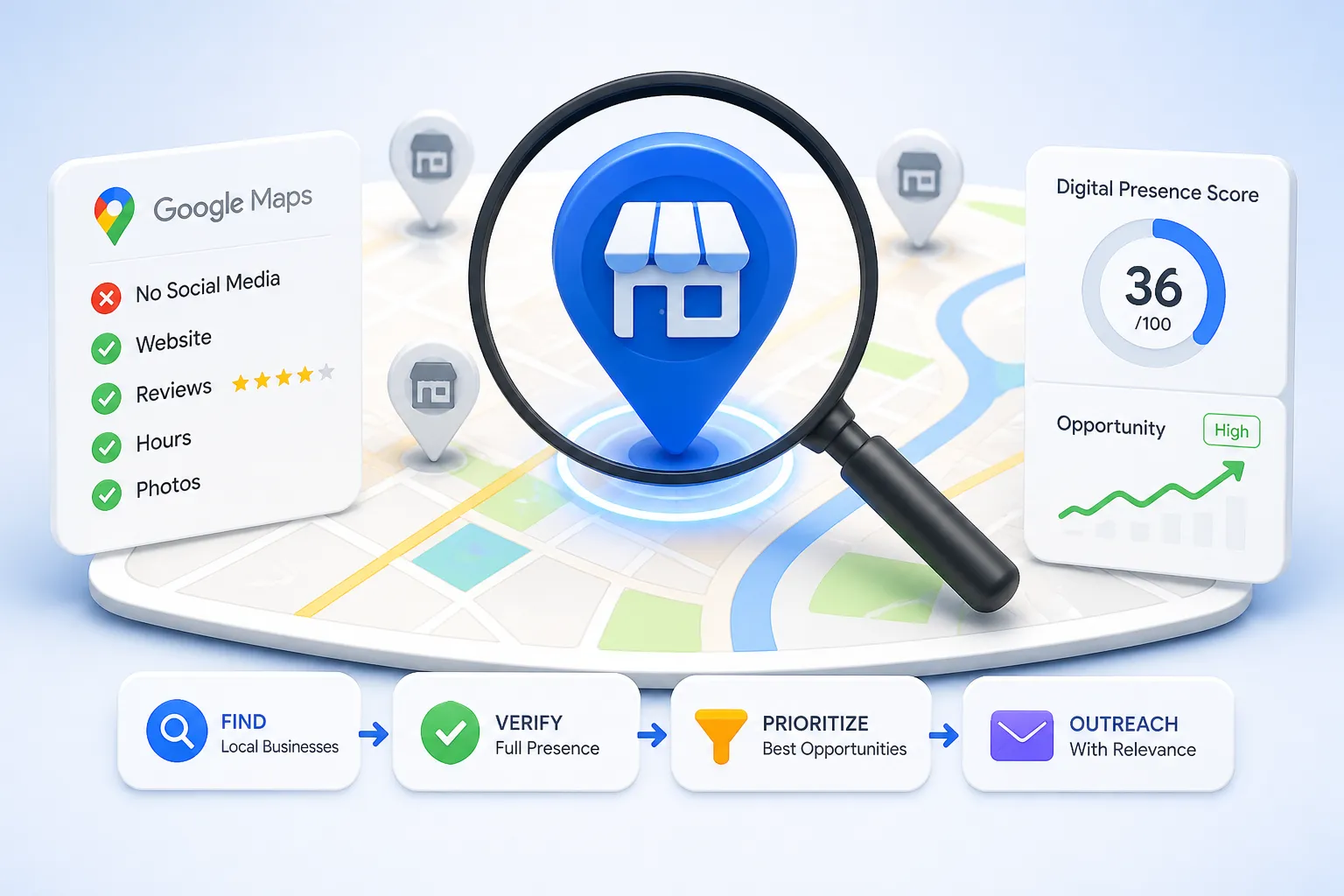
How to Find Local Businesses With No Social Media Links
Learn how to use Google Maps to find local businesses with missing social links, verify real digital gaps, and prioritize better outreach. This guide shows agencies how to turn raw prospecting into qualified opportunities.
Read the article →Popular industry lead playbooks
Maps search examples and niche outreach for the verticals teams prospect most.