Technology
Google Maps Prospecting for Commercial Painting Contractors
Learn how commercial painting contractors can use Google Maps to build a smarter local prospecting system. This guide covers qualification, scoring, prioritization, and outreach for better-fit B2B leads.
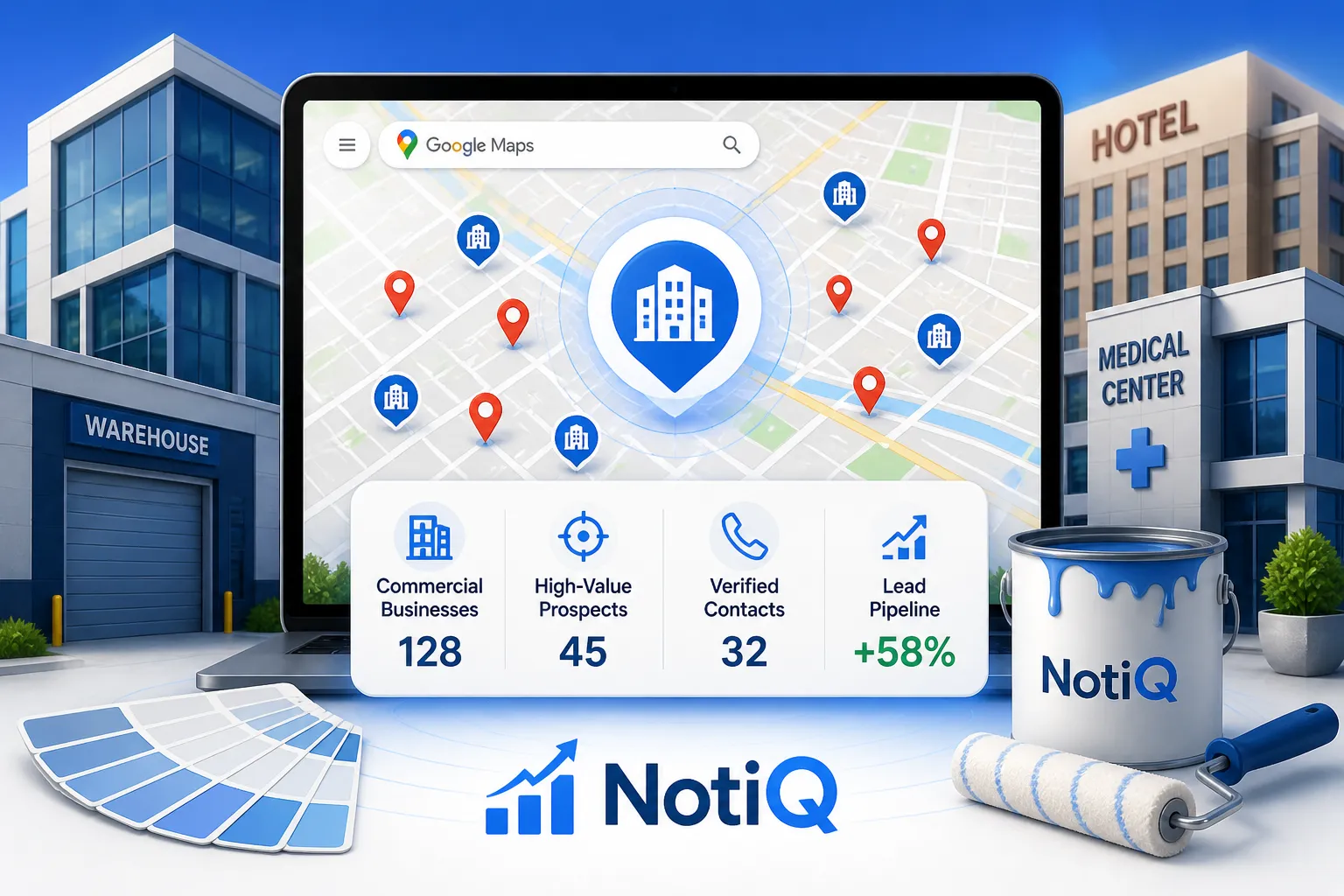
1. Introduction
Commercial painting contractors often know exactly who their ideal customers are—property managers, facility managers, general contractors, offices, warehouses, retailers, hospitality businesses, healthcare facilities, education providers, and multifamily properties. However, many lack a consistent, scalable way to find and prioritize these accounts in their local market.
A large list of businesses exported from Google Maps is not automatically a list of qualified commercial painting leads. Without a strategic approach, contractors waste hours calling businesses that are outside their service area, lack the budget for commercial work, or simply have no relevant property to paint.
This article provides a practical, repeatable workflow for turning raw Google Maps research into a structured system for discovery, qualification, prioritization, outreach, and follow-up. By segmenting prospects based on geography, review profiles, website quality, and business specialization, contractors can stop treating every local business equally and start focusing on high-probability targets.
Throughout this guide, you will find actionable outputs, including a prospect-scoring framework, business-category ideas, essential research fields, route-clustering methods, and compliant outreach guidance. For contractors seeking to streamline this process, NotiQ serves as a practical prospecting and qualification solution—not a source of guaranteed leads, but a powerful engine for workflow improvement, prioritization, and research consistency.
2. What Makes a Google Maps Listing a Valuable Commercial Painting Prospect?
A Google Maps listing is merely a starting point for research. It is not proof that a business currently needs commercial painting services. To build a highly effective local B2B outreach strategy, contractors must understand the difference between three distinct stages of data:
1. A local business listing: A raw data point showing that an entity exists at a specific location.
2. A potential commercial painting prospect: A business that matches your target property type, operates within your service area, and has the structural capacity to require commercial painting.
3. A sales-ready opportunity: A qualified prospect where research has identified a potential need, a specific decision-maker, and an ideal service-area fit.
To move a listing from a raw data point to a sales-ready opportunity, contractors must evaluate core qualification dimensions. These include geography and route efficiency, business specialization, and the property type. Furthermore, a business’s review profile can offer language related to maintenance, expansion, or facility quality, while its website quality can signal visible signs of growth or change. Finally, identifying the likely buyer role—such as an owner, property manager, facility manager, or general contractor—is critical.
By combining several public business signals, contractors can confidently invest time in outreach. However, it is vital to remember that positive reviews, professional website quality, or detailed listing information do not guarantee buying intent. Each element is a qualification signal that requires human verification.
The Five Signals to Review on Every Listing
When evaluating commercial painting prospects, prioritize these five signals on every listing:
• Geographic fit: Check whether the business is inside your established service area and whether nearby accounts can be grouped into an efficient sales route to minimize travel time.
• Business specialization: Identify whether the property appears to match your preferred work. Look for indicators that the property is an office, retail center, warehouse, hospitality venue, healthcare facility, education center, or multifamily complex.
• Review profile: Look for legitimate, publicly visible comments that reference upkeep, renovations, customer experience, expansion, or the general property condition.
• Website quality: Review whether the site is current, functional, and clear about its locations, facilities, services, or upcoming expansion activity.
• Commercial opportunity context: Note visible indicators such as a multi-location presence, a large facility footprint, property-management involvement, or a likely recurring maintenance need.
These signals are foundational to effective Google Maps lead generation and building a healthy commercial painting sales pipeline. As noted in the National Bureau of Economic Research’s research on online business listings, local business discoverability and public digital footprints provide valuable, observable data for structured business directory prospecting, provided the information is carefully verified.
3. Which Commercial Business Categories Should Painting Contractors Target?
Category-based research is the most effective way to avoid building a generic, unmanageable list of every business in a given market. By targeting specific commercial categories, contractors can connect each search to a potential commercial painting use case—without assuming that every business is actively buying.
Contractors should prioritize categories that match their crews' capabilities, equipment, preferred project size, licensing requirements, and service specialization. Keep in mind that the same category can contain vastly different buyer roles and project types.
Offices and Professional Buildings
Offices and professional buildings present numerous opportunities, including exterior repainting, common-area refreshes, tenant-improvement work, and ongoing facility maintenance. When prospecting this category, your potential contacts will likely include business owners, office managers, property managers, and facility managers. Before initiating commercial property manager outreach, review the prospect's multi-location presence, building type, and website information to tailor your commercial office painting leads strategy.
Retail, Hospitality and Customer-Facing Properties
Retail centers, hotels, restaurants, and other high-visibility properties rely heavily on their physical appearance to attract customers. For these commercial property maintenance leads, look for multiple locations, signs of recent changes, renovation language on their website, or customer reviews referencing the environment. It is crucial to separate independent locations from larger property groups or portfolios, as the latter may offer broader, recurring retail painting prospects and hospitality painting leads.
Warehouses, Industrial Sites and Distribution Facilities
Industrial facilities are unique. Facility size, exterior surface materials, strict safety requirements, and the need to minimize operational disruption will heavily influence the sales conversation. Likely buyer roles include facility managers, operations leaders, property managers, and general contractors. Do not make assumptions about the property’s condition based solely on a map view; use your research to determine whether a conversation about warehouse painting leads or industrial painting prospects is relevant.
Healthcare, Education and Multifamily Properties
Healthcare facilities, educational institutions, and multifamily properties typically involve larger campuses, recurring maintenance schedules, and multiple stakeholders. When pursuing these commercial painting contractor leads, distinguish between direct outreach to the organization and outreach to the property manager, facilities team, or third-party managing company. Because these sectors often have strict compliance and safety expectations, verify your specialization and project requirements before presenting your services to these facility manager prospecting targets.
4. The Step-by-Step Google Maps Prospecting Workflow
A successful Google Maps prospecting strategy is a repeatable process that a contractor can scale across one territory or multiple service areas. The objective is not to achieve the maximum list size; it is to build a clean, relevant, and prioritized prospect database. Always record the date of your research so that information can be accurately reviewed and refreshed later.
Step 1: Define the Ideal Commercial Painting Prospect
Begin by specifying your target geography, maximum travel radius, preferred property types, and minimum project fit. Define the commercial buyers you want to pursue, whether they are business owners, property managers, facility managers, or general contractors. Record strict exclusions—such as businesses outside your service area or property types your crews are not equipped to handle. Establish the types of commercial painting prospects you want to prioritize, including one-time projects, repainting, maintenance, or recurring portfolio work to solidify your commercial painting sales strategy.
Step 2: Search Google Maps by Geography and Business Category
Use location and category combinations that align with your ideal customer profile. Build separate research lists for distinct categories like offices, warehouses, hotels, retail properties, healthcare, education, and multifamily units. Capture the listing name, location, category, website, phone number, review information, and any visible service-area details. As you gather this local business lead generation data, verify whether each listing represents a true commercial property, a residential provider, or an unrelated business.
Step 3: Enrich the Listing With Website and Business Research
A Maps listing alone is incomplete. Visit the business website to confirm the property type, locations, services, ownership structure, and any signs of recent activity. Note whether the website is current, easy to navigate, and useful for identifying a buyer or facilities contact. Look for parent companies, multiple locations, property portfolios, or general-contractor relationships where publicly available. Always keep observed facts separate from assumptions in your prospect record. To streamline this process, you can leverage NotiQ's features to see how structured research can automatically organize business details and website quality signals for your commercial painting contractor leads.
Step 4: Review Public Reputation and Facility Signals
Read relevant reviews for recurring references to maintenance, appearance, renovations, expansion, cleanliness, or facility changes. Treat this review language as valuable context rather than direct evidence of an active painting project. Record only useful, relevant observations that can support a personalized outreach message. When discussing reputation-related outreach, never manipulate, incentivize, or misrepresent reviews. Always adhere to the FTC’s guidance on online reviews to ensure honest review practices and avoid misleading reputation tactics while evaluating commercial painting leads.
Step 5: Identify the Most Relevant Buyer or Contact Path
Distinguish between the business occupant, the building owner, the property manager, the facility manager, and the general contractor. Use the company website and public business directories to determine the most relevant contact route. Avoid forcing every prospect into an email-first approach; the right path may be a phone call, a LinkedIn message, or a physical site visit depending on the business type. Add a confidence level to your contact information so your B2B painting sales team knows what has been verified and what still requires research.
5. How to Score and Prioritize Commercial Painting Prospects
Not all commercial painting prospects are created equal. Implementing a simple scoring framework based on geography, review profile, website quality, and business specialization ensures your sales team focuses their time efficiently. Scoring is designed to focus sales time, not to predict revenue with absolute certainty. Use a small number of consistent fields so you can apply the framework manually or within a structured workflow.
Suggested Prospect-Scoring Framework
Evaluate each prospect using a simple low, medium, or high rating across the following dimensions:
• Geography: Prioritize accounts inside your core service area or close to other active opportunities.
• Business specialization: Give higher priority to property types that perfectly match your contractor experience, crew capacity, and preferred project work.
• Review profile: Note relevant, recent, or repeated signals connected to facility quality, maintenance, or expansion.
• Website quality: Assess whether the website provides current information, multiple locations, management details, or a clear contact path.
• Opportunity context: Record visible indicators such as a larger facility, multi-location presence, renovation language, or a likely recurring maintenance requirement.
Prioritize by Fit, Need and Route Efficiency
It is crucial to separate high-fit prospects from those with a high-likelihood need. A business may perfectly match your ideal profile without showing a visible timing signal for a painting project. Cluster nearby prospects to reduce travel time for site visits, relationship building, and local sales activity. Prioritize portfolio owners, property managers, or organizations with multiple relevant locations when you have the capacity to support that volume of work. Instead of discarding lower-priority commercial property manager leads, create a follow-up tier for prospects requiring additional verification.
Recommended Prospect Record Fields
To maintain a clean commercial painting prospect list, ensure your database includes:
• Business name and Google Maps listing URL.
• Address, service area, and geographic cluster.
• Business category and property type.
• Website URL, phone number, and available contact path.
• Review observations and date checked.
• Website-quality observations and date checked.
• Likely buyer role.
• Fit rating, need rating, route priority, and next action.
To seamlessly manage this data,[NotiQ](/)serves as the ideal workflow layer for organizing, qualifying, and maintaining a local commercial prospect database for painting contractor prospecting.
6. Turning Prospect Signals Into Relevant Local B2B Outreach
Effective local B2B outreach connects one observed business signal to one plausible commercial painting use case. Generic messages like "we paint all types of buildings" fail because they provide no specific reason for contacting that individual business. Adapt your message to the likely buyer, keep claims factual, and never imply that a business definitely needs repainting without verifying it first.
Outreach Angles by Buyer Type
• Business owner: Focus on property appearance, customer-facing spaces, business growth, or minimizing operational disruption.
• Property manager: Focus on portfolio consistency, planned maintenance schedules, tenant coordination, and dependable project execution.
• Facility manager: Focus on scheduling flexibility, operational continuity, specific site requirements, and long-term maintenance planning.
• General contractor: Focus on subcontractor fit, project coordination, scope clarity, and reliable service-area coverage.
A Practical Outreach Message Structure
When crafting your commercial painting outreach, follow this structure:
1. Start with a specific, accurate observation about the business, property type, location, or portfolio.
2. Connect that observation to a relevant painting or maintenance question.
3. Explain exactly why you are contacting their specific business rather than sending a mass message.
4. Offer a low-friction next step, such as confirming the appropriate contact person or discussing upcoming maintenance plans.
Compliance Reminder:Public business information must be handled accurately and used only for relevant, lawful outreach. A public listing does not automatically grant permission for unrestricted bulk messaging. Always include a clear opt-out and follow applicable privacy and platform requirements.
Follow-Up Without Losing Relevance
Create follow-up stages based on the prospect’s qualification status, not just the elapsed time since your last message. When following up, revisit your original observation and add useful context instead of repeating the same generic pitch. Stop or change direction immediately if the contact is incorrect, the business is outside your service area, or the prospect indicates no interest. Track all contact attempts, responses, qualification changes, estimates, and booked opportunities to measure your commercial painting customer acquisition. For contractors looking to scale structured prospecting and outreach activity across multiple territories,ScalIQ is an excellent adjacent resource.
7. Building a Repeatable Maps-to-CRM Workflow
Discovery, qualification, outreach, and follow-up should operate as one connected commercial painting sales pipeline. A static list quickly becomes obsolete; an active prospecting system is continuously updated over time. Assign clear ownership within your team for research, outreach, status updates, and regular data review.
From Discovery to Sales Activity
• Discover: Find businesses systematically by category and territory.
• Qualify: Review geography, specialization, website quality, reviews, and the likely buyer.
• Prioritize: Assign fit, need, and route rankings to maximize efficiency.
• Contact: Use a relevant outreach angle based on an observable, factual signal.
• Track: Record the response, next step, estimate status, and final outcome.
• Refresh: Recheck important account details periodically and remove inaccurate or outdated records to maintain a clean database.
Metrics to Monitor
To gauge the health of your B2B painting sales efforts, monitor these key metrics:
• Number of researched businesses by territory and category.
• Percentage of listings that meet your strict service-area and specialization criteria.
• Contact identification rate.
• Response and qualified-opportunity rates.
• Estimate rate and booked-job rate.
• Performance segmented by business category, geographic cluster, and outreach angle.
These metrics help identify workflow quality and operational bottlenecks; they should not be presented as guaranteed benchmarks. As highlighted in the University of Technology Sydney’s digital marketing research for construction SMEs, structured digital marketing and customer acquisition require consistent, sector-specific measurement to yield sustainable results.
8. Common Mistakes, Compliance Considerations and Quality Checks
Many competing approaches fail because they collect data without qualification, rely on generic sales messaging, and overlook vital compliance standards. While software can dramatically accelerate organization and research, it does not replace contractor judgment or human verification. Always maintain source dates and distinguish verified information from assumptions.
Mistakes That Reduce Lead Quality
Avoid these common pitfalls in commercial painting prospecting:
• Building a list without clearly defining target property types or service-area boundaries.
• Treating every Google Maps listing as a viable commercial opportunity.
• Ignoring the critical difference between a business occupant and the actual property decision-maker.
• Sending generic outreach that lacks a relevant, personalized observation.
• Failing to track research dates, follow-ups, and final outcomes.
• Relying on purchased or extracted data without manually checking for accuracy and fit.
Safe and Trustworthy Research Practices
Ethical local B2B outreach requires strict adherence to safe research practices. Follow all applicable Google, platform, privacy, and outreach requirements when collecting or using business information. Avoid presenting unverified property conditions, reviews, or expansion activity as undeniable facts. Use honest review practices and never encourage manipulated or misleading reviews, adhering strictly to the FTC guidance cited earlier. Keep prospect information relevant to your business purpose and promptly remove records that are inaccurate or no longer useful.
Trust Note:This article does not provide legal advice. Contractors should independently confirm all regulations and compliance requirements relevant to their specific location, communication channels, and workflow.
9. FAQ: Google Maps Prospecting for Commercial Painting Contractors
How can commercial painting contractors find qualified leads on Google Maps?
Contractors can find commercial painting leads by systematically searching Google Maps by business category and geography. Once a list is generated, each listing must be qualified using business specialization, public reviews, website quality, the likely buyer role, and service-area fit. Maps supports prospect discovery but does not confirm active buying intent.
What types of commercial businesses need painting services?
Ideal commercial painting prospects include offices, retail spaces, hospitality venues, healthcare facilities, education centers, warehouses, industrial sites, and multifamily properties. Suitability depends entirely on the contractor’s specialization, territory, crew capacity, and the property’s actual physical requirements.
How do you identify a business that may need commercial painting?
Review relevant public signals such as the property type, website information, customer reviews, visible business changes, multiple locations, and maintenance context. These are signals for further qualification during your commercial painting prospecting efforts, not definitive proof of an immediate need.
How should contractors prioritize prospects by geography?
Group nearby businesses into route-efficient clusters. Combine this geographic fit with business specialization and opportunity context for highly targeted local B2B outreach. The nearest prospect is not always the best prospect if they do not match your ideal customer profile.
What information should a contractor collect from a Google Maps prospect?
A robust commercial painting prospect list should include the business name, category, address, website, contact path, review observations, website-quality notes, likely buyer, fit rating, next action, and the specific research date. Record only relevant, accurate information.
10. Conclusion: Build a Better Commercial Painting Prospecting System
Mastering Google Maps prospecting requires moving beyond raw data extraction. The core workflow is simple but highly effective: define your ideal customer, search by specific categories and territories, qualify using multiple public signals, prioritize by fit and route efficiency, personalize your outreach, and meticulously track every next step.
Google Maps is most valuable when it becomes part of a structured commercial painting sales process rather than functioning as a standalone directory. Start small—focus on one service area and a small number of high-fit business categories before expanding your local B2B outreach efforts.
For contractors seeking a more organized way to segment and manage local prospects by geography, review profile, website quality, and business specialization,[NotiQ](/)is the logical next step. By integrating AI-assisted workflow orchestration, NotiQ helps maintain accurate, relevant business research without the clutter of unqualified data.
Explore the feature overview today to see how a structured, compliant workflow can transform your commercial painting leads into a predictable, scalable sales pipeline.
Brand Note: NotiQ is focused on practical, AI-assisted workflow orchestration and local prospect qualification. We prioritize accurate, relevant business research and compliant data use over promising guaranteed lead volumes.
Continue Reading
More articles you might find useful
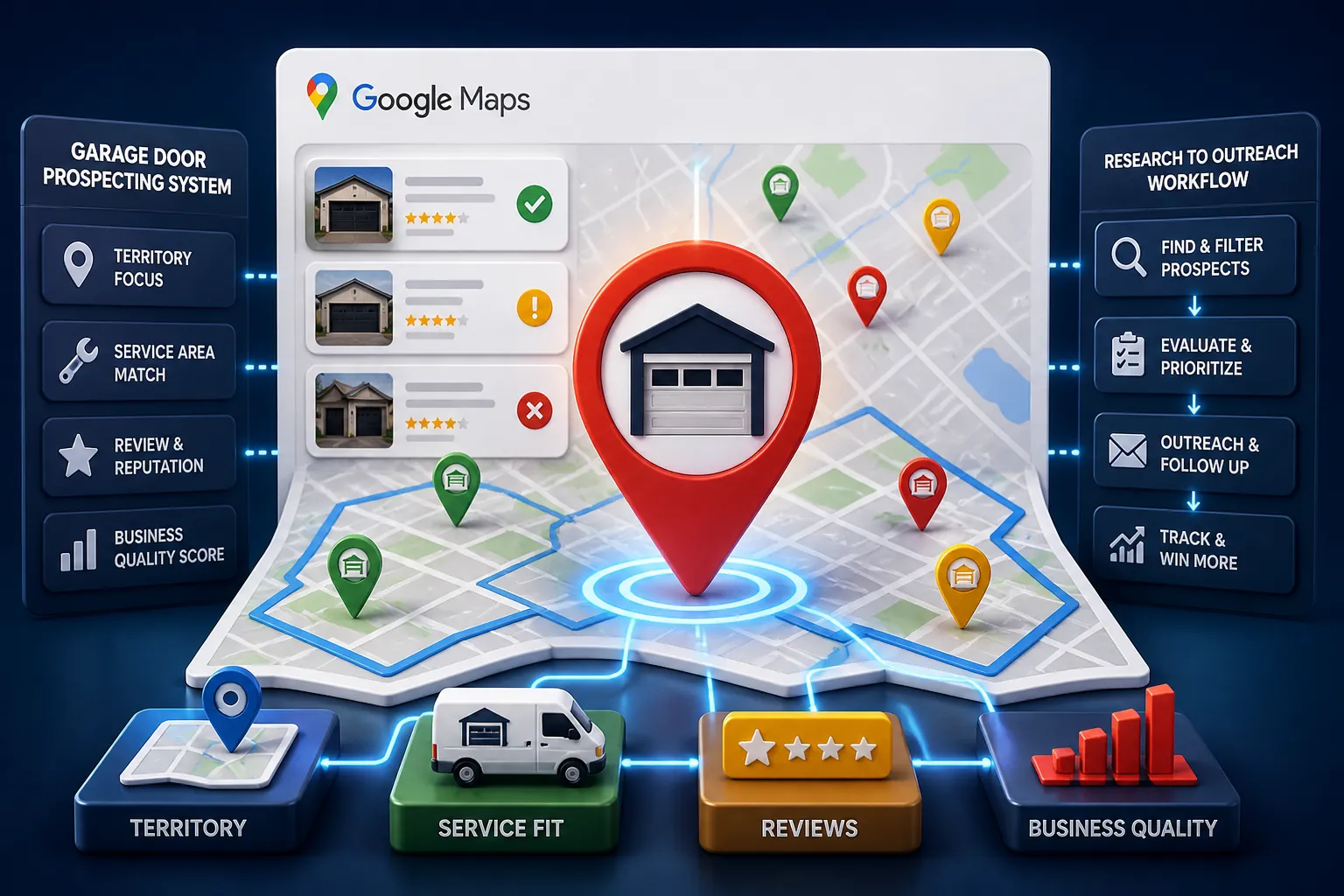
Google Maps Lead Generation for Garage Door Companies
Learn a practical workflow for using Google Maps to find, verify, and prioritize local garage door prospects. This beginner-friendly guide shows how to turn public listing signals into better outreach and more qualified leads.
Read the article →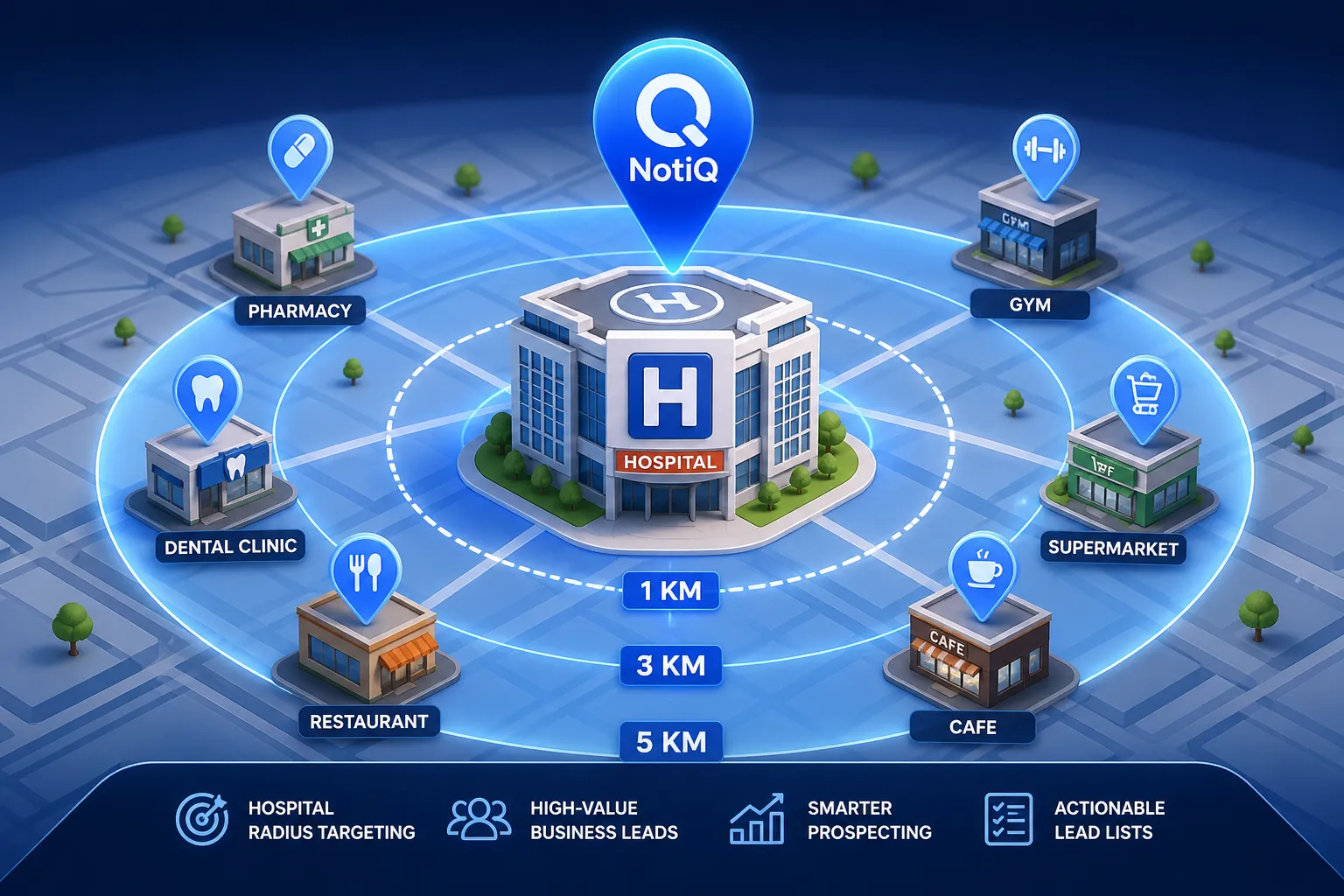
How to Build Lead Lists From Businesses Near Hospitals
Learn how to turn hospitals into high-value prospecting anchors. This guide shows how to find, qualify, and prioritize nearby businesses for cleaner local lead lists.
Read the article →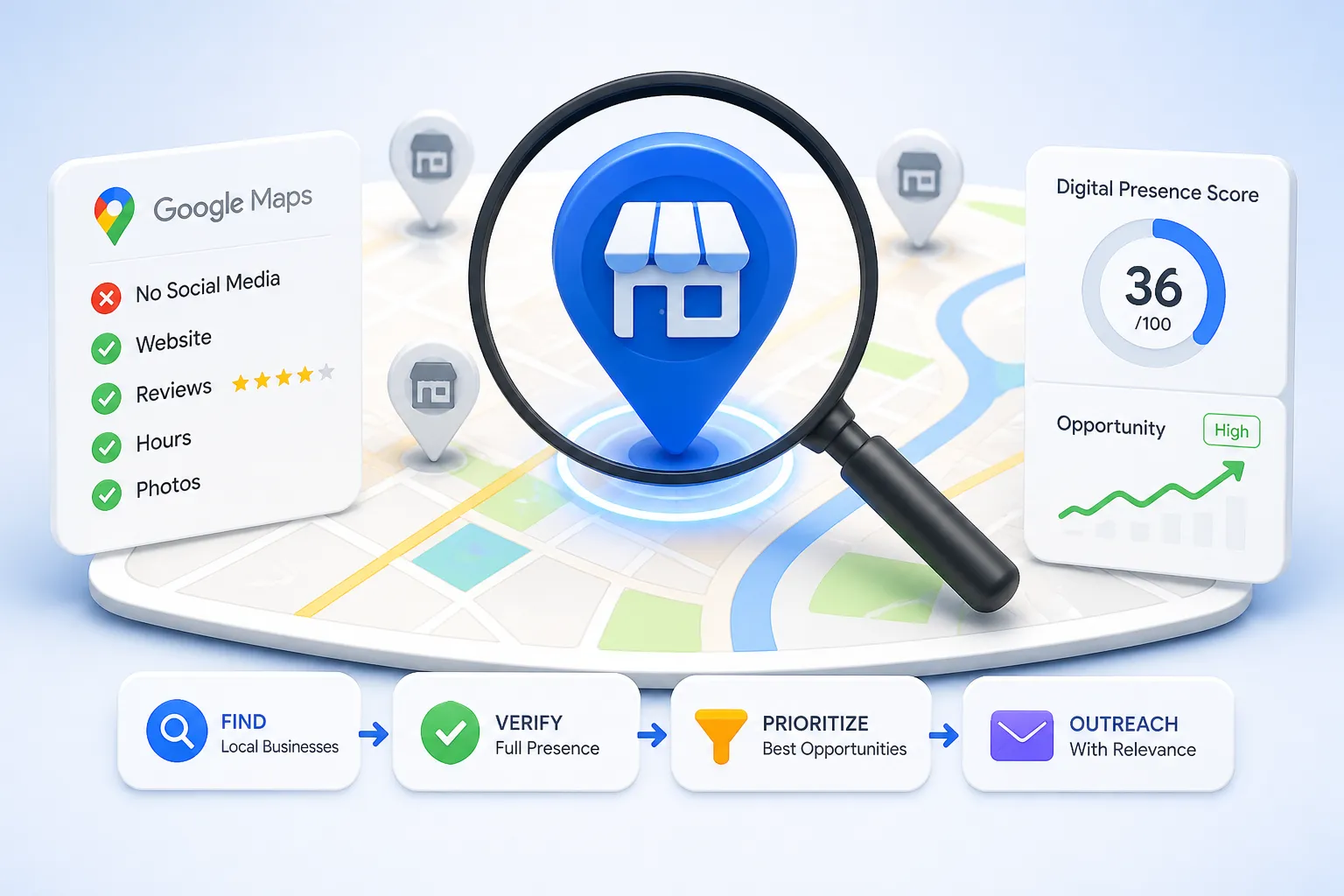
How to Find Local Businesses With No Social Media Links
Learn how to use Google Maps to find local businesses with missing social links, verify real digital gaps, and prioritize better outreach. This guide shows agencies how to turn raw prospecting into qualified opportunities.
Read the article →Popular industry lead playbooks
Maps search examples and niche outreach for the verticals teams prospect most.