Technology
Google Maps Lead Generation for Moving Companies
Learn how moving companies can use Google Maps to find better-fit prospects, qualify opportunities, and turn outreach into booked estimates. This playbook covers territories, segmentation, follow-up, and revenue tracking.
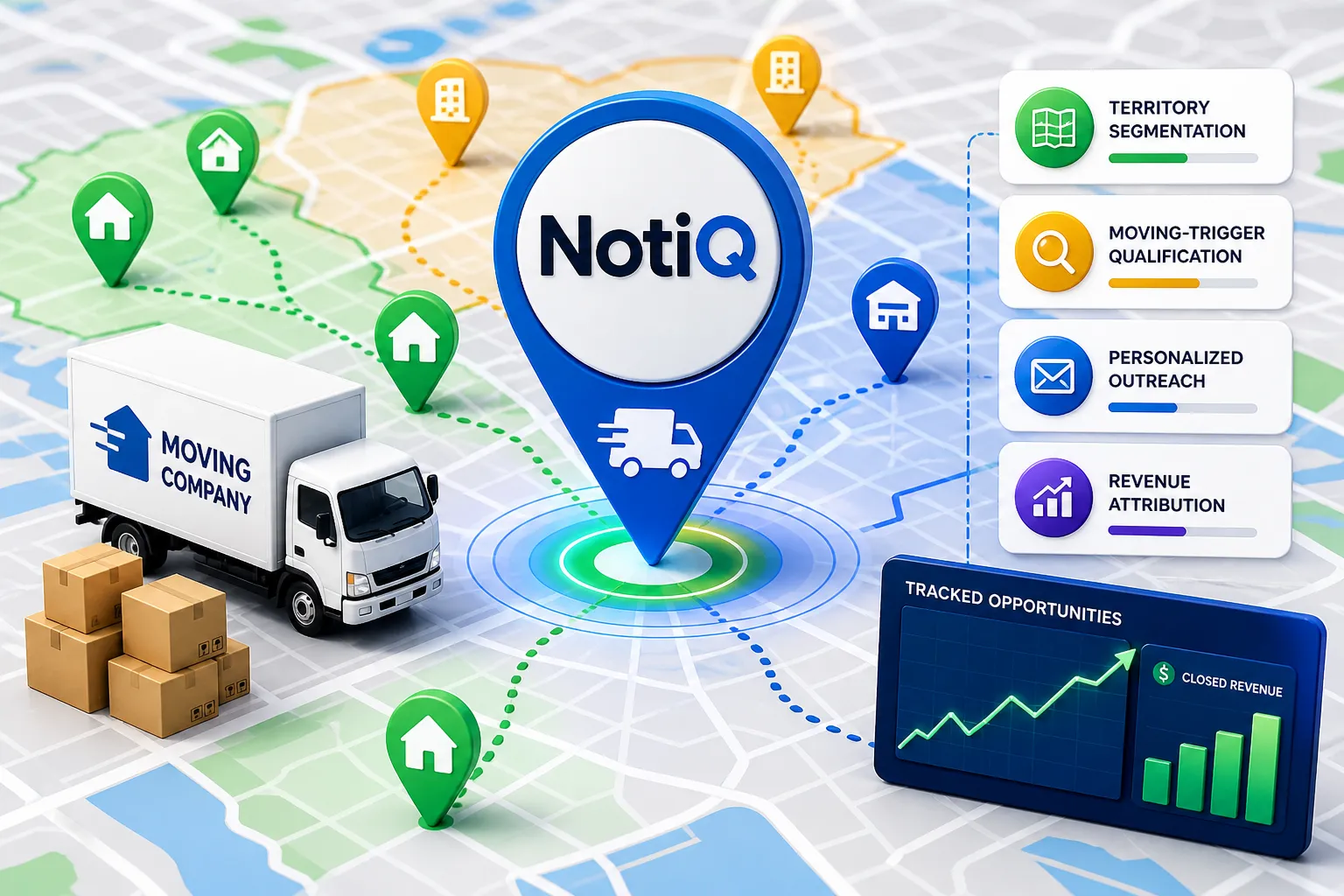
1. Introduction
Inconsistent lead flow is one of the most frustrating challenges for growing moving companies. When you rely solely on expensive shared lead marketplaces or wait passively for the phone to ring, it becomes incredibly difficult to target the specific, profitable service territories you actually want to work in. This is where Google Maps lead generation for moving companies comes into play, serving as a practical starting point for finding geographically relevant moving opportunities, referral partners, and underserved service areas.
However, a critical distinction must be made from the start: a Google Maps listing is a prospecting signal—not automatically a qualified lead or a guaranteed customer. Finding a business on a map does not mean they are packing boxes today.
This playbook is designed for beginner-level owners and marketing operators at small or growing residential, commercial, and long-distance moving companies. It provides a complete, mover-specific workflow: defining your ideal prospect, searching by location and need, verifying information, qualifying opportunities, personalizing outreach, and measuring booked estimates and revenue.
Designed around NotiQ’s service-business focus, this process emphasizes territory-based segmentation for residential, commercial, and long-distance movers. By focusing on territory segmentation, moving triggers, service fit, follow-up, and revenue attribution, you can transform chaotic mover prospecting into a reliable engine for moving company leads.
2. What Google Maps Lead Generation Means for Moving Companies
Before diving into the mechanics of Google Maps prospecting, it is essential to understand the terminology of local moving leads:
• Prospects: Businesses, organizations, or referral partners discovered through local research. They are potential fits but have not yet engaged.
• Leads: Prospects who show interest or provide a response to your outreach.
• Qualified opportunities: Leads with a relevant moving need, service-area fit, and realistic potential for an estimate.
• Customers: Opportunities that become booked and completed jobs.
Google Maps helps you identify local businesses, property-related partners, apartment communities, offices, storage facilities, and other location-based opportunities that fit your ideal customer profile. However, maps research cannot exist in a vacuum. It must be combined with territory planning, contact verification, personalized outreach, and CRM or spreadsheet tracking to be effective.
It is also important to distinguish this outbound prospecting strategy from inbound visibility. Having your own optimized profile to attract inbound calls is local SEO; using the map to find other businesses to contact is outbound prospecting. When evaluating business information, always keep Google Business Profile eligibility guidelines in mind, ensuring that business information should be accurate and that profile or business details should never be misrepresented. Google Business Profile leads generated through outbound efforts require transparency and accuracy.
3. 1. Define Your Ideal Moving Prospect and Service Territory
A common mistake in moving company customer acquisition is collecting a massive, unfocused list of businesses that do not match your crews, equipment, pricing, or service area. To avoid this, you must define your ideal customer profile using specific parameters:
• Location or ZIP code: The exact geographic boundaries you serve.
• Service need: Residential, commercial, or long-distance.
• Estimated job value or move complexity: Are you looking for single-office moves or entire corporate relocations?
• Distance and operational capacity: How far can your trucks travel profitably?
• Likely timing or moving trigger: Events that indicate a potential need for moving services.
Start with a manageable territory rather than searching an entire city or state at once. Account for your crew availability, vehicle capacity, travel distance, and your company’s most profitable service types. Create separate campaign names for each territory and segment to keep your local moving leads organized, such as:
• Residential referrals in a specific city
• Commercial relocations in an office district
• Property-management and apartment opportunities
• Long-distance or interstate moving partnerships
Separate Residential, Commercial, and Long-Distance Opportunities
Each segment requires entirely different qualification criteria and outreach language. Presenting every listing as equally valuable is a fast track to wasted effort. Connect each segment to your actual operational capabilities.
• Residential opportunities: Focus on real estate professionals, senior communities, storage facilities, apartment communities, and local referral relationships. These prospects generate residential moving leads by referring your services to their clients.
• Commercial opportunities: Look for offices, warehouses, industrial businesses, coworking spaces, construction-related businesses, and companies showing signs of expansion. These are prime targets for commercial moving leads.
• Long-distance opportunities: Focus on interstate or broader service-area fit. Long-distance moving leads require strong trust signals, clear estimate expectations, and addressing customer concerns about authorization and insurance. For interstate moving trust and qualification considerations, refer to FMCSA mover verification guidance. While this supports customer confidence, it does not replace the mover’s own legal or operational review.
Build a Territory Segmentation Worksheet
To keep your local business prospecting organized, build a simple territory segmentation worksheet. Use one consistent naming convention for territories and dedicate one row per prospect. Include fields for:
• City, neighborhood, ZIP code, or radius
• Prospect category
• Residential, commercial, or long-distance segment
• Service fit
• Estimated job value
• Moving trigger
• Contact status
• Next action
Track your crew capacity and service constraints alongside this prospect list to ensure you aren't generating moving company leads you cannot service. You can also include an optional market-research step. Utilizing geographic and business data, such as Census market research data, can support territory decisions and highlight areas deserving more attention. Note that demographic data supports moving company territory planning but does not identify ready-to-buy moving customers.
4. 2. Find and Segment Opportunities with Google Maps
Once your territory is defined, you can turn those service areas and customer segments into focused Google Maps searches. The basic search formula for Google Maps lead generation is:prospect type + location + moving-related context.
When conducting local business outreach, record the exact search phrase, location, date researched, and segment for later comparison. Conduct separate searches for neighborhoods, ZIP codes, office districts, apartment areas, industrial zones, and nearby towns. Different searches reveal entirely different types of opportunities and should never be combined into one undifferentiated list.
Use Targeted Search Patterns
Adapt the following search patterns for your specific market. Keep in mind these generate Google Maps prospecting lists, not guaranteed lead sources:
• Property managers + [City]
• Apartment communities + [Neighborhood]
• Real estate agents + [ZIP code]
• Storage facilities + [Service area]
• Office buildings + [City]
• Warehouses or industrial businesses + [Location]
• Senior communities + [City]
• Construction companies or commercial contractors + [Territory]
Vary your Google Maps search for moving leads by city, ZIP code, neighborhood, service type, commercial district, and apartment or industrial area. Compare your search results for relevance, duplication, and service-area fit to ensure you are capturing both commercial moving leads and residential moving leads accurately.
Identify Moving Triggers and Referral Partners
The strongest prospecting signals relate to a likely moving need, a referral relationship, or local demand—not merely the existence of a business listing. Look for commercial relocation leads and moving company referral partners by identifying moving triggers:
• New or expanded locations
• Office relocation language on websites or press releases
• Apartment turnover periods
• Construction activity
• Warehousing or facility changes
• Underserved service areas
• Businesses with a strong connection to people or organizations that move
Distinguish a direct moving opportunity (a business relocating) from a referral partner (a realtor recommending you). Use practical examples from your market as qualification signals or hypotheses. Never claim that a business is preparing to move unless the source confirms it; all signals must be verified.
Turn Listings Into an Organized Prospect List
A massive list is not necessarily a productive list. When building your moving company prospect list, capture only the fields needed for useful qualification and follow-up:
• Business or organization name
• Listing URL or source
• Address and territory
• Category
• Website and publicly displayed contact details
• Segment
• Moving trigger
• Verification date
• Priority
• Next action
Remove duplicate listings and avoid mixing branches or multiple locations into one record. This mover prospecting workflow heavily contrasts with generic list-building tools that focus mainly on volume or data exports. When scaling your research, distinguish between manual review, approved platform capabilities, and third-party data workflows. Google Business Profile leads and Maps data must not be collected or reused without checking applicable platform terms and policies.
5. 3. Verify, Qualify, and Prioritize Prospects
To prevent outdated, duplicated, incomplete, or low-intent listings from entering your active outreach pipeline, verification must happenbeforea prospect is contacted.
You should always check the business name and location, website and phone details, whether the business is still operating, service area and category, branch or duplicate records, and overall relevance to your moving segment.
Verify Business Information Before Outreach
Compare the Maps listing with the prospect’s current website and other publicly available business information. During your business contact verification, you will inevitably encounter messy data.
• Missing websites or unanswered/outdated phone numbers: Mark for further research or pause outreach.
• Duplicate branches: Consolidate into a single parent account record.
• Closed or relocated businesses: Remove from the list.
• Businesses outside the service area or with unclear categories: Disqualify to save time.
Add a “last verified” field to your CRM or spreadsheet. Pause or remove records that cannot be verified instead of forcing them into your moving company outreach pipeline. Reinforce accuracy and transparency using Google Business Profile eligibility guidelines. Never edit, claim, or manage another business’s profile without authorization while verifying Google Maps business listings.
Use a Moving-Specific Lead Qualification Score
Not all qualified moving opportunities are equal. Use an illustrative moving lead scoring framework to evaluate commercial moving prospects and residential partners:
• Territory fit: Is the prospect inside a profitable service area?
• Service fit: Does the opportunity match your residential, commercial, or long-distance capabilities?
• Moving trigger: Is there a credible reason to believe a move, turnover, expansion, or referral need may exist?
• Potential value: Could the opportunity align with the company’s target job size?
• Contactability: Is there a current, relevant contact route?
• Timing: Is there a reason to follow up now rather than later?
Assign a high, medium, or low priority to each prospect. Remember, scoring indicates where to spend your time; it does not guarantee or predict conversion.
Prioritize by Service Fit, Territory, and Potential Value
When sales capacity is limited, prioritize contacting high-fit, high-priority prospects first. Moving company lead prioritization ensures you focus on the highest yield local moving opportunities.
Consider these examples of priority logic for territory-based prospecting:
• High Priority: A nearby property manager with several apartment locations in your core service area.
• High Priority: An office district business with a verified potential relocation signal.
• Medium Priority: A residential referral partner in a high-value service area you are trying to break into.
• Low Priority: A distant listing that does not match current crew capacity or requires excessive travel time.
Priority can and should change when territory capacity, seasonality, or service offerings change. This qualification model stands in stark contrast to generic Google Maps list-building approaches that emphasize sheer listing volume without connecting records to moving triggers, service fit, booked estimates, or revenue.
6. 4. Personalize Outreach and Manage Follow-Up
The goal of moving company outreach is to turn verified prospects into respectful conversations, not to blast generic messages to an unqualified list. Your first message should reference a relevant service area, business type, referral opportunity, or verified moving context.
Match the channel and message to the relationship, whether it is referral-partner outreach, commercial relocation outreach, property/apartment relationship outreach, or a long-distance service inquiry. Always include a clear, low-pressure call to action, such as asking whether a brief conversation would be relevant.
Match the Message to the Prospect Type
Personalized mover outreach requires tailored templates. Do not assume; personalize using verified details from the listing or website.
• Property managers: Explain how your moving company could support tenant transitions, reduce property damage during moves, or handle recurring move-related needs.
• Real estate professionals: Position your company around client referrals, reliable estimate coordination, and making the realtor look good to their buyers/sellers.
• Commercial businesses: Focus on minimal downtime, planning, scheduling, office or facility transitions, and specific commercial service fit.
• Storage facilities: Explore a referral relationship for customers who frequently need transportation or moving labor to and from their units.
• Long-distance prospects: Lead with clear service-area information, licensing, and trust-building details rather than vague promises.
When executing commercial moving outreach or moving company referral outreach, never claim knowledge of an upcoming move without confirmation. Keep these examples clearly labeled as templates, adjusting the message based on territory, job type, crew capacity, or a previous customer interaction.
Create a Simple Follow-Up Workflow
A manageable moving sales follow-up sequence is vital for local service business outreach. Define your outreach workflow with stages such as:
1. Research completed
2. Verified
3. First contact
4. Follow-up needed
5. Conversation started
6. Estimate opportunity
7. Booked estimate
8. Won, lost, or not a fit
Track the last touch, next action, response, and reason for disqualification for proper moving lead management. Stop outreach immediately when a prospect opts out, asks not to be contacted, or is clearly irrelevant.
To organize this process,[NotiQ](/)serves as a practical resource for organizing territory-based prospecting, segmentation, and follow-up for moving companies. By utilizing NotiQ's features, you can maintain workflow organization, prospect prioritization, and repeatable outreach operations without replacing human judgment and verification. For specific outreach or response-workflow execution, tools like Repliq can also support the described use case when used responsibly.
Use Respectful and Compliant Outreach Practices
Compliant moving company outreach is non-negotiable. Commercial email outreach must use truthful sender information, an accurate subject line, a clear identity, and a practical way to opt out where applicable.
Review the rules that apply to your location, audience, communication channel, and industry. Public business information is not permission to send unlimited messages. Ensure human review occurs before messages are sent, and handle contact information carefully. Permission-conscious prospecting builds long-term brand equity.
Always cite the FTC commercial email compliance guide for commercial email requirements (note: this article is educational and does not replace legal advice). Furthermore, while software helps scale, it does not guarantee deliverability, response rates, or legal compliance. NotiQ’s role is as an organizational and workflow resource, not as a substitute for business owners’ responsibility to verify data and follow applicable laws and platform policies.
7. 5. Measure Leads, Booked Estimates, and Revenue
To determine whether Google Maps prospecting actually contributes to business results—rather than merely producing a large contact list—you must measure moving marketing ROI across the full funnel. Separate your activity metrics (emails sent) from business outcomes (revenue).
Define the Prospecting Funnel
Define important interactions and evaluate them properly, keeping Google Analytics key event measurement principles in mind. Create a tracking table for your moving lead funnel with:
• Territory
• Search phrase
• Prospect segment
• Source
• Verification date
• Contact attempt
• Response
• Qualified opportunity
• Estimate status
• Job outcome
• Revenue
Moving company conversion tracking requires understanding the difference between your response rate, qualified-opportunity rate, estimate booking rate, close rate, and revenue per opportunity. Use consistent definitions so results can be compared accurately across campaigns. Keep in mind that tracking booked moving estimates and completed-job revenue will require your CRM or internal financial records.
Track Results by Territory and Moving Segment
Compare your territory marketing metrics by city or ZIP code, residential vs. commercial vs. long-distance segment, referral-partner type, search phrase, outreach channel, and crew or service category.
Tracking residential moving leads against commercial moving leads at the territory level can reveal critical insights—such as areas with high activity but low job value. Review both winning and losing opportunities to continually improve your qualification criteria.
Improve the Process Based on Revenue Data
Conduct a recurring review to master moving company revenue attribution. Analyze:
• Which searches produced verified prospects
• Which segments generated responses
• Which territories produced booked estimates
• Which opportunities became completed jobs
• Which outreach messages led to useful conversations
Reduce effort in low-performing territories and expand the workflows that produce qualified opportunities. Local service business marketing attribution may be imperfect when customers interact with multiple channels before booking, but moving prospecting ROI becomes much clearer when you connect Maps research directly to estimate booking, completed jobs, cost per opportunity, and revenue by territory. This goes far beyond generic extraction or automation guides.
8. Tools, Templates, and Practical Resources
To implement this mover outreach workflow immediately, use this one-page moving company prospecting template and checklist:
• Define service area
• Choose a moving segment
• Create targeted searches
• Record prospects
• Verify business information
• Assign priority
• Personalize outreach
• Schedule follow-up
• Track estimates and revenue
Set up your moving lead tracking spreadsheet or CRM with these essential fields:
• Business name
• Contact name or role
• Website
• Public contact route
• Address
• Territory
• Segment
• Moving trigger
• Priority
• Last touch
• Next action
• Response
• Estimate status
• Job status
• Revenue
For businesses that want a more organized workflow than disconnected spreadsheets,[NotiQ](/)is the logical next step. You can explore NotiQ's features to see how it organizes and scales local moving outreach effectively.
9. Common Mistakes and How to Avoid Them
Google Maps prospecting mistakes usually stem from a lack of moving lead qualification or poor moving company outreach execution. Avoid these common pitfalls:
1. Treating every Maps listing as a qualified lead: A listing is just a signal. Qualify it based on triggers and service fit.
2. Searching too broad a territory: Start small. Stick to profitable, manageable radii.
3. Ignoring crew capacity and service fit: Only prospect for jobs you can actually execute.
4. Failing to verify current information: Always check the website and public data before reaching out.
5. Keeping duplicate or closed listings: Clean your data to avoid looking unprofessional.
6. Sending generic outreach: Personalize messages based on the specific prospect type and verified data.
7. Over-automating without human review: Human oversight prevents embarrassing and non-compliant outreach mistakes.
8. Forgetting to record follow-up actions: Use a CRM or structured spreadsheet to track your next steps.
9. Measuring list size instead of booked estimates and revenue: A list of 1,000 bad prospects is worth less than 10 booked estimates.
10. Ignoring platform terms and communication requirements: Always comply with local laws and platform terms of service.
Google Maps prospecting can support research and outreach, but it does not guarantee demand, response, estimate bookings, or closed jobs. Success requires disciplined execution.
10. Conclusion
This playbook provides a mover-specific system for Google Maps lead generation for moving companies. By defining your ideal prospect and service territory, searching Google Maps using segment- and location-specific queries, and verifying and qualifying each opportunity, you build a foundation for success. From there, personalize your outreach, track follow-up, and measure booked estimates, completed jobs, and revenue.
Always remember the central distinction between a local listing, a prospect, a qualified opportunity, and a customer. Start with one territory and one moving segment before expanding your moving company customer acquisition efforts.
For organized territory-based prospecting, residential, commercial, and long-distance moving workflows, and practical outreach operations,[NotiQ](/)provides the credibility, structure, and tools needed to support local service-business outreach.
Frequently Asked Questions
- How can moving companies find leads on Google Maps?
- Movers can use location- and service-specific searches to identify potential referral partners, commercial opportunities, property-related contacts, and underserved areas. These listings require verification and qualification before they become active prospects. Proper Google Maps lead generation focuses on how to get moving company leads through targeted research, not bulk data extraction.
- Is Google Maps prospecting effective for moving companies?
- Yes, but effectiveness depends entirely on territory fit, prospect quality, personalization, follow-up, and measurement. Google Maps prospecting does not guarantee a specific number of moving company leads or customers. Results should be compared through responses, qualified opportunities, booked estimates, completed jobs, and revenue.
- What information should movers collect when prospecting local businesses?
- A moving company prospect list should include minimum useful fields: business name, location, category, website, public contact route, segment, moving trigger, verification date, priority, last touch, and next action. Source and verification dates matter immensely for data quality in local business prospecting.
- How can movers generate both residential and commercial moving leads?
- The company should create separate searches, qualification criteria, messages, and tracking views for residential moving leads and commercial moving leads. Examples include referral partners and property-related prospects for residential, and offices, warehouses, and businesses with potential relocation signals for commercial.
- How should a moving company measure Google Maps prospecting ROI?
- Track verified prospects, outreach activity, responses, qualified opportunities, booked estimates, completed jobs, revenue, and effort or acquisition cost. Moving marketing ROI and moving company revenue attribution should be reported by territory, search phrase, and service segment.
- What should movers do when a Google Maps listing is incomplete or outdated?
- When verifying Google Business Profile leads, check the business website and other current public information. Mark the record for review during business contact verification, remove duplicates, and avoid outreach when the business cannot be reasonably verified. Inaccurate information should never be presented as fact.
- What compliance issues should movers consider before outreach?
- Compliant moving company outreach requires truthful sender information, accurate messaging, opt-out handling, contact-data responsibility, and adherence to applicable platform and communication rules. Review the FTC commercial email compliance guide for commercial email compliance (note: this is educational and not legal advice). Legal requirements vary by location and channel.
Continue Reading
More articles you might find useful
Google Maps Lead Generation for Moving Companies
Learn how movers can use Google Maps to find qualified local prospects, referral partners, and commercial opportunities. This guide shows how to turn map research into an organized lead generation workflow.
Read the article →
How to Find Businesses With No Online Contact Form
Learn how to find local businesses with missing or weak inquiry paths using a practical website contact form audit workflow. This guide shows how to verify issues, score opportunities, and turn website gaps into qualified prospects.
Read the article →
Google Maps Prospecting for Commercial Cleaning Equipment Suppliers
Learn how commercial cleaning equipment suppliers can use Google Maps to find, verify, and prioritize better local prospects. This guide covers segmentation, qualification, outreach, and pipeline tracking.
Read the article →Popular industry lead playbooks
Maps search examples and niche outreach for the verticals teams prospect most.