Technology
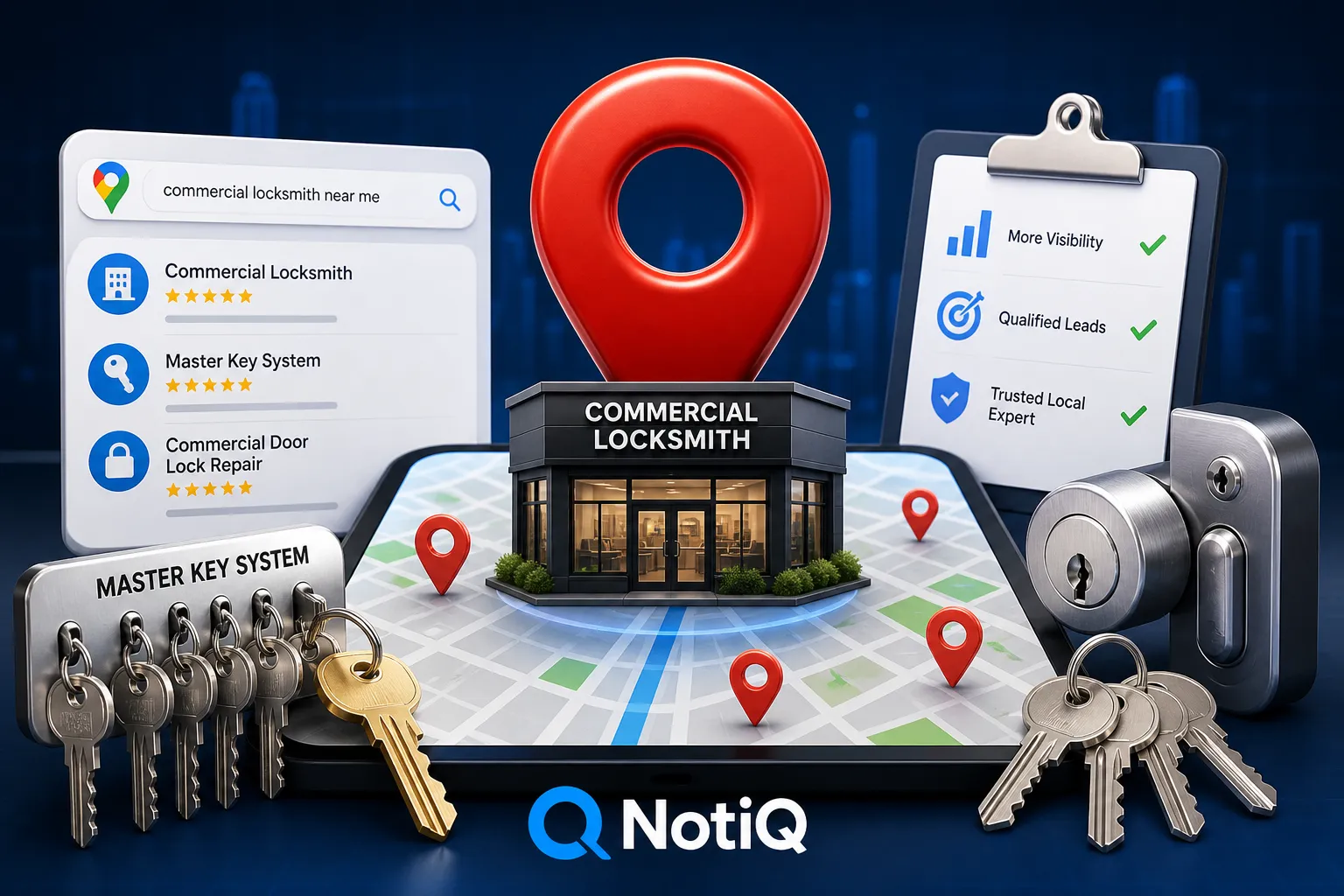
Google Maps Prospecting for Commercial Locksmith Companies
Learn how commercial locksmith companies can use Google Maps to find, verify, and prioritize high-value local B2B prospects. This guide outlines a practical workflow for turning map research into recurring commercial service opportunities.
1. Introduction
Commercial locksmith companies frequently face a frustrating challenge: relying solely on referrals and emergency calls creates unpredictable, uneven demand. Conversely, broad cold outreach campaigns often generate low-fit residential inquiries rather than lucrative, long-term B2B contracts. To build a reliable pipeline, security professionals need a targeted approach to discover and qualify high-value accounts in their specific service areas.
This blueprint reveals how to effectively leverage Google Maps and public business information to identify, qualify, verify, and prioritize commercial locksmith prospects. The objective is not to scrape the largest possible list of local businesses. Instead, the goal is to pinpoint organizations with a plausible, verifiable need for commercial rekeying, master-key systems, access control, door hardware upgrades, security audits, or ongoing maintenance agreements.
Successfully generating commercial locksmith leads requires a structured core workflow: territory definition, map discovery, qualification, verification, responsible outreach, and pipeline measurement. For commercial locksmiths, master-key specialists, and access-service providers, this localized B2B lead generation strategy bridges the gap between raw data and signed service agreements.
As a local, security-focused resource,[NotiQ](/)provides a platform for organizing local prospect intelligence and structured follow-up. By utilizing compliant, publicly available data, locksmiths can build a sustainable pipeline without ever implying a business has a security weakness unless verified through appropriate public information.
2. Why Google Maps Can Be Valuable for Commercial Locksmith Prospecting
For geographically bounded services, map-based discovery is an exceptionally powerful tool. Google Maps connects a business account directly to its physical location, operating context, territory, and potential service area. When executing commercial locksmith marketing, knowing the physical footprint of a prospect is just as critical as knowing their industry.
It is important to distinguish targeted commercial prospecting from generic local B2B lead generation. Locksmith business leads are most valuable when focused on organizations with dedicated facilities, employees, controlled access points, multiple doors, multi-site operations, or recurring property-management needs. Google Maps prospecting excels here by providing rich, localized listing signals.
When evaluating a Google Business Profile, locksmiths can extract highly relevant context. Key signals include the business category and description, physical address, public phone number, website, and operating hours. Furthermore, you can identify visible business activity, the number of branches in a service area, and customer reviews that mention doors, keys, access issues, renovations, or property expansions.
However, it is crucial to understand what Google Maps doesnotprovide. A map listing alone does not reveal immediate buying intent, confirmed security vulnerabilities, the identity of the final decision-maker, guaranteed data freshness, or a complete sales workflow.
This is where map discovery fundamentally differs from generic B2B contact databases. While contact-data platforms may assist with later enrichment, Maps provides the essential property and territory context. Google Maps is a discovery environment—not a complete CRM, qualification system, or outreach solution. The workflow outlined in this article serves as the vital missing layer between raw local listings and fully qualified commercial opportunities.
3. Define the Commercial Locksmith Accounts Worth Targeting
Targeting a specific, well-defined account segment is vastly more effective than blindly searching for every business within a service area. Commercial locksmith lead generation yields the highest ROI when you focus on organizations that inherently require complex or recurring security services.
Research indicates several high-potential segments that consistently produce quality commercial property security leads. These include property managers and commercial landlords, office buildings and business parks, retail stores, and multi-location operators. Additionally, warehouses, industrial sites, distribution facilities, healthcare practices, schools, hotels, general contractors, and facilities-management firms all represent excellent targets.
To maximize success, map these common segment needs to your specific service offerings:
• Rekeying: Essential for property managers or offices after tenant turnover or staff changes.
• Master-key planning: Crucial for schools, hospitals, or corporate campuses with multiple departments.
• Access-control installation or upgrades: High demand in healthcare, industrial sites, and growing business parks.
• Door hardware and exit-device work: Necessary for retail and hospitality compliance.
• Security audits and documented maintenance: Valued by facilities-management firms and security integrators.
• Emergency response and service agreements: Ideal for multi-location retail and distribution centers.
Before building a prospect list, choose one or two priority segments to focus your initial efforts. Pair this with strict territory-based planning by defining specific cities, ZIP codes, commercial districts, property clusters, or a set service-radius boundary. By applying segment-specific expertise rather than fear-based messaging, you can accurately assess service fit and generate highly targeted access control leads based on genuine operational needs.
4. Build a Google Maps Search Strategy for Locksmith Prospecting
Use Segment-Specific Search Combinations
To generate high-quality commercial locksmith leads, you must deploy deliberate, segment-specific search combinations. Generic searches yield generic results, but combining a specific business type with a precise location uncovers highly relevant local business prospecting opportunities.
Effective search patterns include:
• `[business segment] + [city]` (e.g., "property management companies Chicago")
• `[business segment] + [neighborhood]` (e.g., "medical offices downtown Seattle")
• `[commercial property type] + [service area]` (e.g., "warehouses in Travis County")
• `[facilities-management term] + [city]` (e.g., "facilities management Dallas")
It is highly recommended to search using both broad categories and service-specific terms to identify different types of accounts. However, remember that Google Business Profile prospecting results should be treated strictly as discovery inputs, not as definitive proof of a commercial opportunity. Always document the exact search phrase and territory boundary used; this ensures your discovery process can be accurately repeated, measured, and refined over time.
Capture Only Useful, Appropriate Public Business Information
Once you identify potential targets, you must build a practical prospect record. A well-structured record for locksmith prospecting should include the business name and location, website, public business phone, business category, and the number of visible locations.
Additionally, record relevant service-fit notes, publicly visible growth or renovation signals, the source URL, verification status, and a potential contact role—if publicly and appropriately available. Crucially, you must log the date the listing was reviewed. Recording the source and review date helps identify stale or duplicated records later in the local B2B lead generation process.
As a matter of trust and privacy, never collect unnecessary personal information or treat publicly visible data as unrestricted fuel for bulk, automated spam. Strictly follow platform terms, applicable privacy requirements, and marketing-consent rules. Furthermore, never describe a business as vulnerable based solely on its location or public listing during your commercial locksmith marketing efforts.
5. Qualify and Prioritize Commercial Locksmith Prospects
There is a massive difference between a newly discovered map listing and a qualified commercial locksmith account. To ensure your sales efforts are spent efficiently, you must implement a simple, evidence-based account-scoring model using observable, non-sensitive signals.
Evaluate each prospect against the following criteria:
• Service fit: Does the business plausibly require commercial locks, access control, master-key planning, or heavy-duty door hardware?
• Operational complexity: Does the facility feature multiple departments, buildings, entrances, branches, or tenants?
• Account potential: Could this relationship evolve into recurring maintenance, multi-site service, or property-wide upgrades?
• Territory fit: Is the physical location strictly within your company’s defined service area?
• Verification quality: Are the website, address, phone number, and business operating status consistent across public sources?
• Contact accessibility: Is there a legitimate, professional route to reach an owner, facilities manager, property manager, or operations contact?
Based on these signals, categorize your commercial locksmith leads into a three-tier priority model.High priority accounts exhibit strong service fit, multiple locations or complex facilities, and fully verified information.Medium priority accounts show a plausible fit, but lack deep evidence or a clear decision-maker.Low priority accounts fall outside your service area, appear residential or automotive-focused, are duplicated, or have poorly verified data.
While reviews, operating hours, and expansion signals can inform this prioritization, they do not guarantee a sale. Emphasize evidence-based qualification for master key system leads and commercial security system leads. Never state that a prospect has an access-control gap, poor security, or a compliance issue without direct, reliable, and verified evidence.
6. Verify the Account Before Starting Outreach
Cross-Check the Listing Against First-Party Information
Before initiating outreach, you must compare the map listing with the company’s website and other appropriate first-party business information. Map data can become outdated, and relying on it blindly will derail your commercial locksmith prospecting efforts.
Take the time to verify the business name, exact address, public phone number, and current operating status. Check for additional service locations and branch information that might indicate a larger account. Review the industries they serve or the facility types mentioned on their site. Look for public indications of property management, facilities, operations, or ownership roles. Most importantly, confirm whether the business is residential-focused, automotive-focused, commercial-focused, or a mixed operation.
Thorough verification drastically reduces wasted outreach caused by permanently closed businesses, duplicate listings, disconnected phone numbers, and outdated local B2B lead generation data. When verifying locksmith business leads, always note any uncertainty in your CRM rather than filling gaps with assumptions. Recording the date and source of each verification step supports accuracy, operational transparency, and responsible follow-up.
Identify the Right Business Conversation
The primary objective of initial outreach is to identify the relevant business function, not to force an immediate product pitch. To generate high-quality commercial locksmith leads, you must connect with the right persona.
Likely roles vary heavily by segment. Target property managers for tenant spaces and real estate portfolios. Seek out facilities managers for large buildings and integrated access systems. Engage operations managers for warehouses, industrial sites, and logistics hubs. For smaller commercial businesses, owners or general managers are usually the best point of contact, while larger organizations may have dedicated security or compliance officers.
When a decision-maker is not immediately visible, use a public company contact route or seek a professional referral path. Avoid unsupported personal-data collection or aggressive contact harvesting. Respectful, targeted communication is the key to converting property management locksmith services and access control installation leads into long-term clients.
7. Turn Map Research Into a Security-Conscious Outreach Conversation
Effective outreach connects a verified business context to a highly relevant operational question. Generic pitches fail; instead, your commercial locksmith marketing must demonstrate an understanding of the prospect's specific environment.
Tailor your conversation angles to specific services. Ask about planning rekeying after recent staff, tenant, or occupancy changes. Inquire about reviewing master-key requirements across multiple departments or newly acquired buildings. Offer to support access control leads by discussing credential management, system upgrades, or new installations. You can also focus on maintaining heavy-duty door hardware, preparing for a documented site survey, or supporting multi-location service coordination.
Use a concise, personalized message structure:
1. Identify the business and reference a relevant public context (e.g., a recent expansion).
2. State your commercial service area and specialization.
3. Ask a practical, operational question about their current needs or upcoming facility changes.
4. Offer a low-friction next step, such as a brief introductory call or a complimentary site survey.
5. Provide a clear, professional way for them to decline or redirect the request.
Never use fear-based language, reveal sensitive assumptions, or claim that a location is insecure based on map data. Adjust your messaging appropriately—an owner cares about cost and liability, while a facilities manager cares about durability and vendor reliability. By utilizing NotiQ features, you can seamlessly organize this structured research, qualification, and follow-up to support highly personalized, effective commercial locksmith lead generation. Always reinforce authorized service, discretion, and compliance with applicable contact, privacy, and marketing rules.
8. Organize the Workflow With AI Assistance and Human Verification
Scaling a local B2B lead generation program requires organization, but manual data entry can quickly overwhelm a sales team. Workflow assistance and AI tools can significantly reduce this manual effort by organizing prospects by territory and segment, standardizing data fields, and keeping qualification notes uniform.
Technology excels at flagging duplicate or incomplete records, prioritizing accounts based on defined scoring rules, preparing follow-up queues, and connecting initial account research directly with pipeline stages. For instance, platforms like ScaliQ can serve as a related resource for organizing local prospecting and account intelligence, streamlining the transition from discovery to outreach.
However, AI assistance must never independently decide that a property is physically vulnerable, infer sensitive security conditions, or replace human verification. A strict human review step is mandatory before contact information is utilized, an account is marked as officially qualified, a personalized message is deployed, or any security-related claim is made.
Position your workflow tools as a means to support a repeatable local prospecting process, rather than as a substitute for professional locksmith expertise. By contrasting this verified, highly localized workflow with generic, database-first AI lead generation, locksmith prospecting remains accurate, compliant, and deeply relevant to the prospect's actual operational needs.
9. Measure Whether Google Maps Prospecting Produces Revenue
Tracking raw listing volume is a remarkably weak success metric for commercial locksmith companies. Collecting a thousand map listings means nothing if they do not convert into service agreements. To accurately gauge the success of your commercial locksmith lead generation, you must track performance across the entire pipeline.
Measure each distinct stage: the number of businesses discovered, accounts successfully verified, and prospects deemed qualified. Track how many appropriate contacts are identified, conversations started, and site surveys booked. Finally, monitor proposals issued, new accounts won, and the resulting recurring maintenance or multi-site revenue generated. Evaluating the time and cost per qualified opportunity will reveal the true ROI of your efforts.
Implement segment-level comparisons to identify which categories—whether property managers, office parks, healthcare practices, retail, or warehouses—produce the strongest financial results. Always track the original search territory and segment so performance can be attributed accurately back to the source. By analyzing this local B2B lead generation data, you can continuously refine your account-scoring model, eliminate friction, and drastically reduce the time spent chasing low-fit commercial locksmith leads. Transparent reporting and clear definitions for "lead," "qualified opportunity," and "customer" build trust and prevent inflated performance claims.
10. Common Google Maps Prospecting Mistakes—and How to Avoid Them
Even with a solid strategy, commercial locksmith marketing teams often stumble over predictable failure points. The most common mistake is treating every local business as a commercial opportunity; a small boutique does not have the same needs as a sprawling medical campus. Relying on outdated or duplicate listings, or collecting data without recording its source and review date, guarantees a messy CRM and wasted outreach.
Sending generic outreach with no segment relevance will be ignored, while making claims about security vulnerabilities without direct evidence will actively damage your reputation. Furthermore, ignoring multi-location and property-management opportunities leaves the most lucrative contracts on the table. Using automation without human review, or treating map prospecting as a total replacement for referrals, local SEO, or inbound demand, creates a fragile sales pipeline.
To correct these issues, enforce strict qualification scoring, mandate human verification, and tailor messaging to specific facility roles. While B2B databases like Apollo or UpLead, local directories, referrals, and local SEO may complement map discovery, each source must be evaluated for fit, accuracy, and cost.
Compliance Callout: Always review Google’s applicable platform terms, local privacy requirements, and relevant outreach laws (such as CAN-SPAM or GDPR, where applicable) before using automation or conducting B2B prospecting. Ensure your locksmith prospecting respects contact-consent requirements. Obtain qualified legal advice tailored to your specific business circumstances to ensure full compliance.
11. Conclusion: Build a Repeatable Pipeline From Local Business Discovery
Building a predictable revenue engine requires moving beyond reactive emergency calls. The complete local B2B lead generation process is straightforward but demands discipline: choose a specific segment and territory, find relevant businesses on Google Maps, capture appropriate public information, verify the account details, score the opportunity, personalize your outreach, and meticulously measure your pipeline outcomes.
The central differentiation of this strategy is clear. Effective commercial locksmith prospecting is not about collecting the highest volume of local listings; it is about identifying credible, high-service-fit opportunities and approaching them with absolute professionalism. By focusing on core commercial services—rekeying, master-key systems, access control, door hardware, security audits, emergency response, and preventative maintenance—you position your business as a vital operational partner.
Start small. Choose one territory and one target segment to master the workflow before expanding your reach. For a more structured approach to organizing your local account research, qualification, and follow-up, explore[NotiQ](/)to streamline your commercial locksmith leads. Ultimately, successful commercial locksmith outreach must always prioritize proper authorization, operational discretion, highly accurate information, and uncompromising professional service standards.
12. FAQ: Commercial Locksmith Leads and Google Maps Prospecting
How can commercial locksmith companies find new B2B leads on Google Maps?
Locksmiths can find high-quality B2B leads by combining specific business categories, locations, commercial-property terms, and service-area boundaries in their searches. The focus should be on rigorous qualification and verification of the business's physical footprint and operational needs, rather than simply collecting every available listing for generic Google Maps prospecting.
What types of businesses need commercial locksmith services?
High-value targets include property managers, office buildings, multi-location retailers, warehouses, healthcare practices, schools, hotels, and industrial facilities. Each segment has distinct needs—from master-key systems in schools to panic hardware in retail—allowing for tailored commercial locksmith lead generation without falsely claiming a business requires an immediate upgrade.
How do locksmiths qualify prospects before contacting them?
Effective locksmith prospecting requires evaluating service fit, territory alignment, operational complexity (like multiple entrances or branches), verification quality, and the ability to access an appropriate contact. It is highly recommended to use a documented priority score and require a human review step to ensure the prospect is a genuine commercial opportunity.
Is Google Maps effective for local B2B lead generation?
Yes, Google Maps is highly effective for localized account discovery and territory research. However, Google Business Profile prospecting does not replace the need for manual verification, a strong outreach strategy, local SEO, referrals, or proper CRM tracking. Success ultimately depends on careful account selection, data quality, and relevant follow-up.
How can locksmith companies prospect responsibly?
Responsible commercial locksmith marketing involves using only appropriate public business information, strictly respecting platform terms, and avoiding unsupported security vulnerability claims. Locksmiths must protect contact privacy and comply with all applicable outreach laws, always ensuring a human review step occurs before data enrichment, outreach, or automated follow-up.
Continue Reading
More articles you might find useful
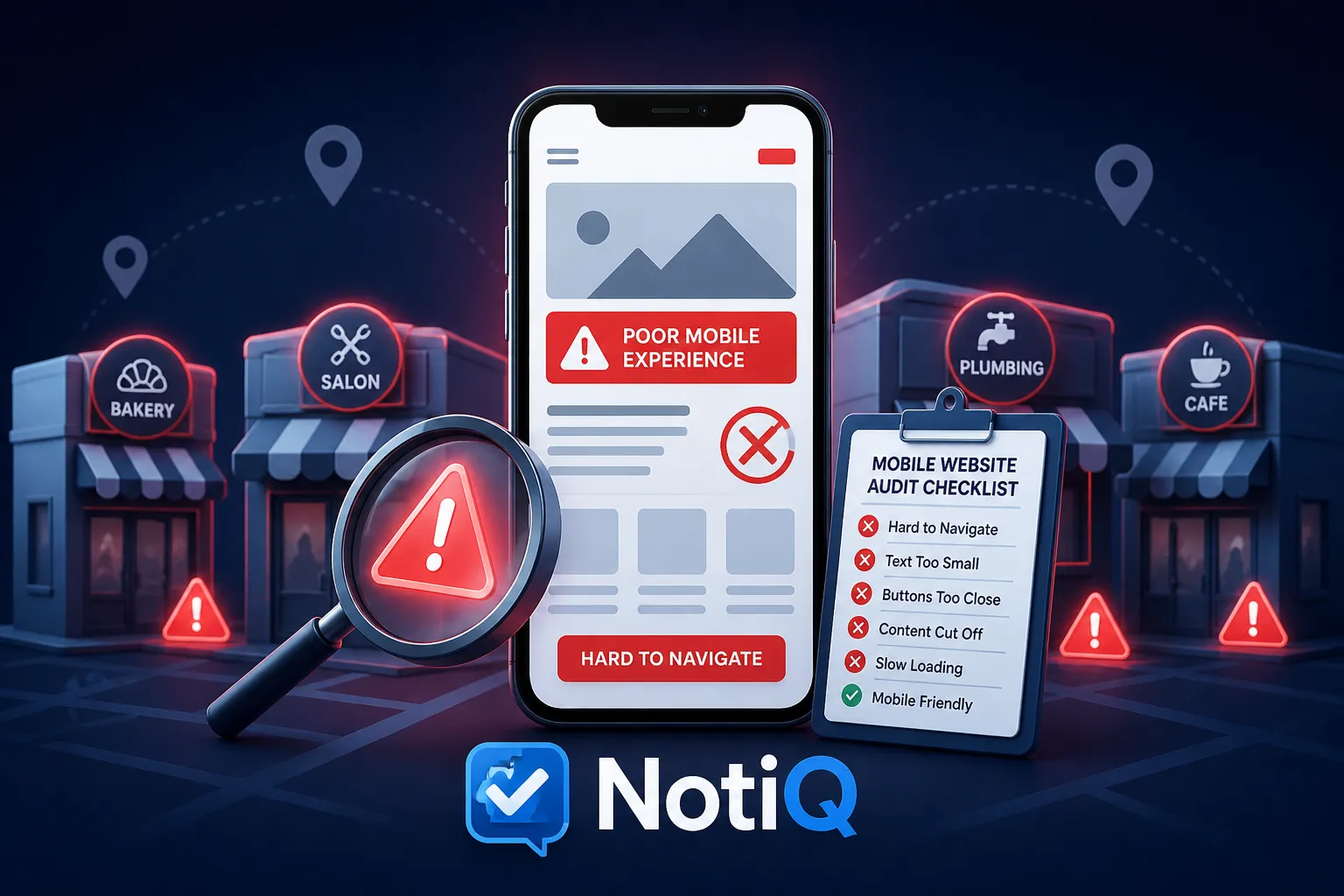
How to Find Local Businesses With Poor Mobile Websites
Learn how to find local businesses with poor mobile websites using a repeatable audit workflow. This guide shows how to validate issues, score prospects, and turn findings into stronger web design leads.
Read the article →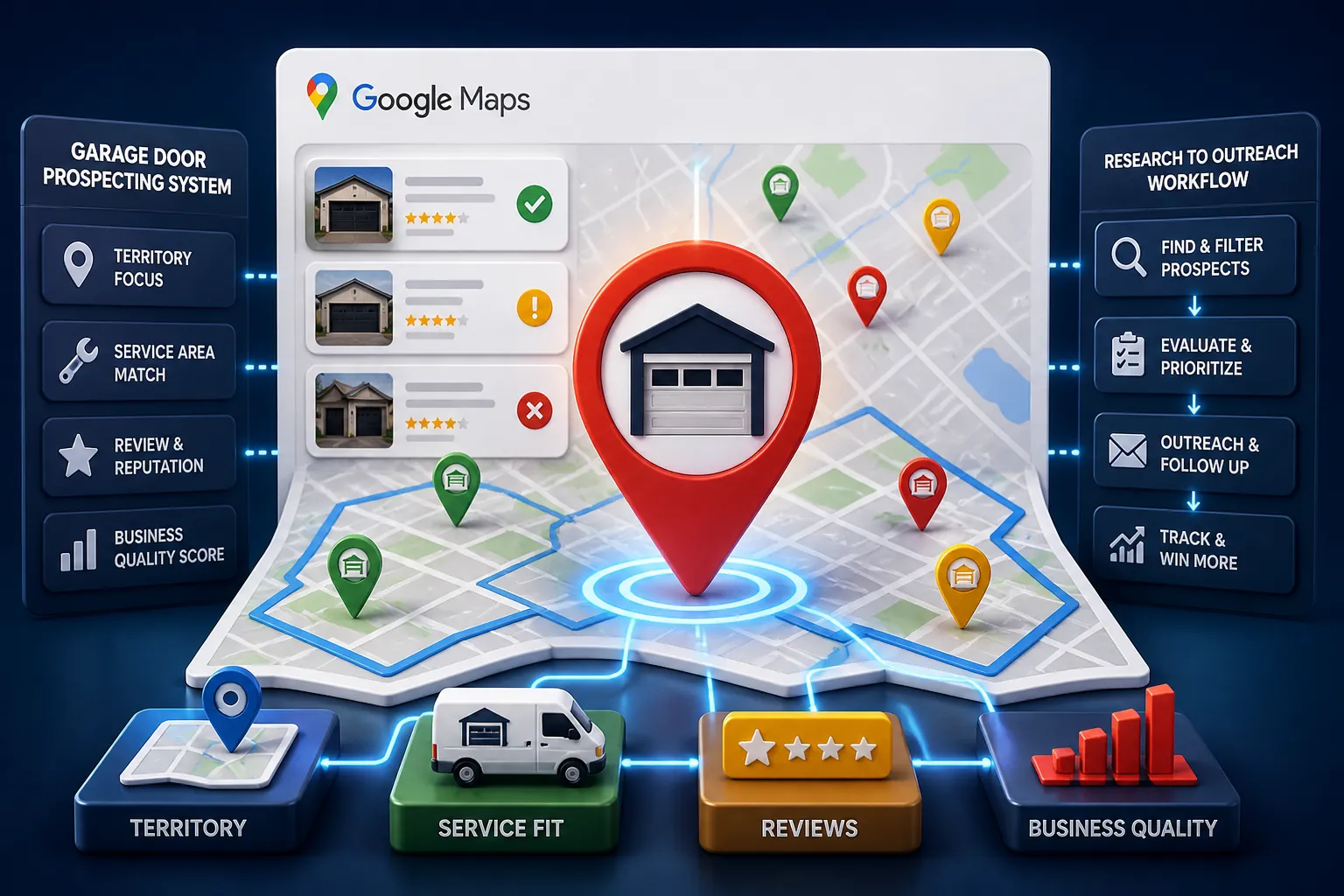
Google Maps Lead Generation for Garage Door Companies
Learn a practical workflow for using Google Maps to find, verify, and prioritize local garage door prospects. This beginner-friendly guide shows how to turn public listing signals into better outreach and more qualified leads.
Read the article →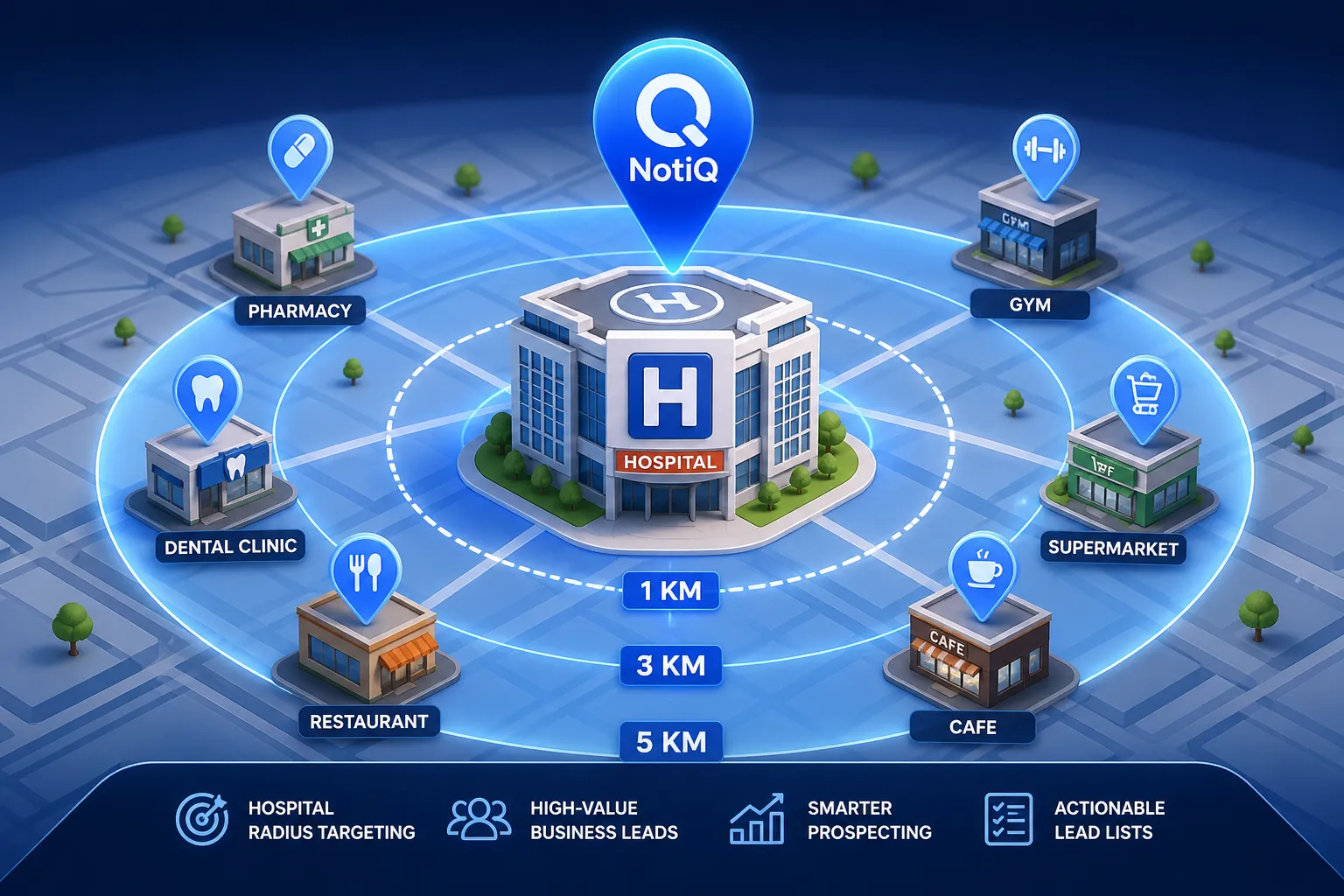
How to Build Lead Lists From Businesses Near Hospitals
Learn how to turn hospitals into high-value prospecting anchors. This guide shows how to find, qualify, and prioritize nearby businesses for cleaner local lead lists.
Read the article →Popular industry lead playbooks
Maps search examples and niche outreach for the verticals teams prospect most.