Technology
Google Maps Prospecting for Commercial Cleaning Equipment Suppliers
Learn how commercial cleaning equipment suppliers can use Google Maps to find, verify, and prioritize better local prospects. This guide covers segmentation, qualification, outreach, and pipeline tracking.
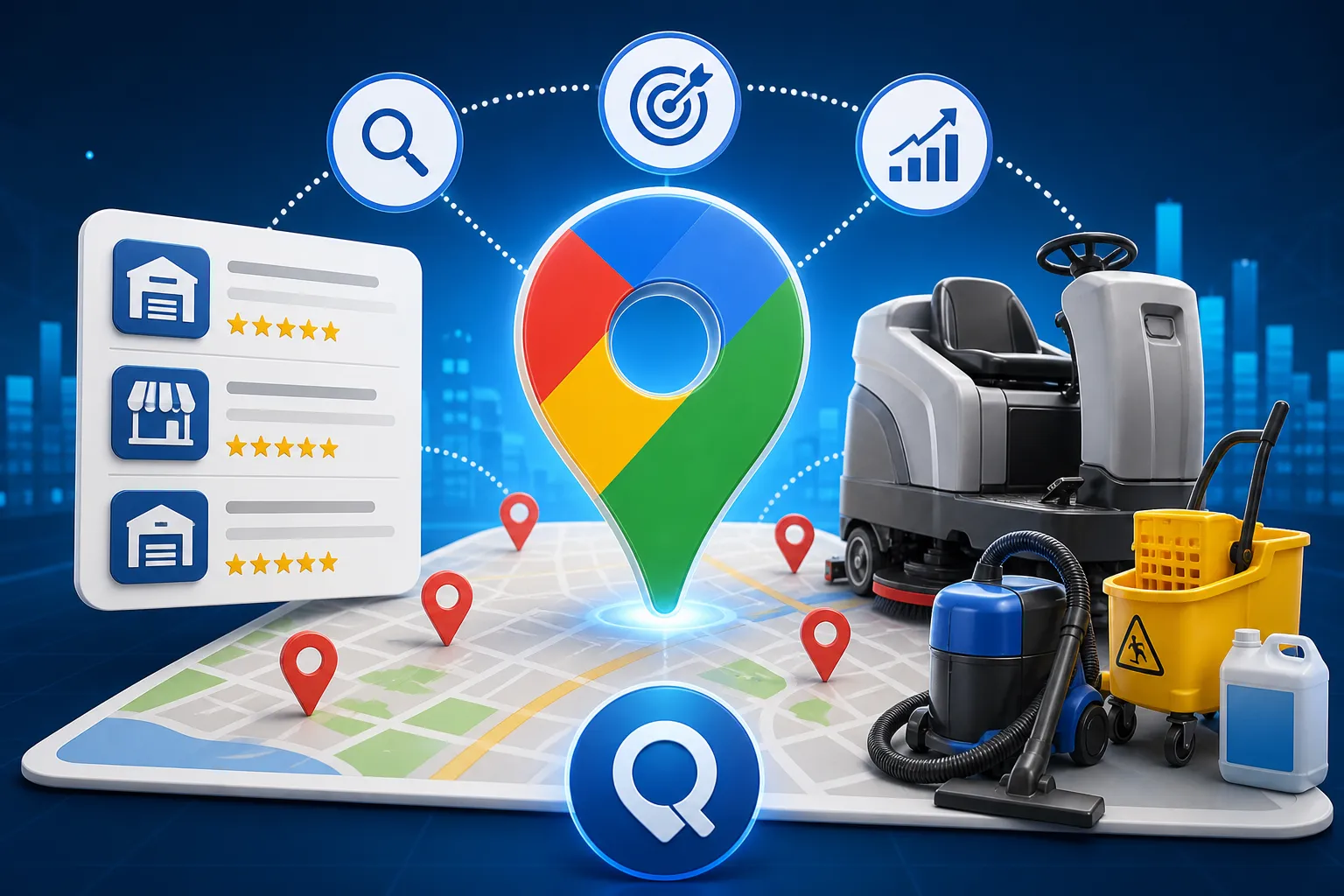
1. Introduction
Commercial cleaning equipment suppliers often face a frustrating paradox: every commercial building in a given territory needs to be cleaned, yet finding the specific businesses that actively purchase heavy-duty equipment is incredibly difficult. Sales teams frequently struggle to identify qualified local businesses, locate the right purchasing contact, and pinpoint accounts with genuine, recurring equipment needs.
Relying on broad local searches often leads to dead ends. A generic search for "cleaning businesses" or "commercial buildings" produces incomplete listings, consumer-focused maid services, duplicate franchise locations, and prospects that rely on third-party contractors rather than purchasing equipment directly. The result is wasted outreach and a cluttered CRM.
There is a better way. By implementing a repeatable workflow, suppliers can turn Google Maps discovery into a segmented, highly qualified pipeline of janitorial supplier prospects and actionable local B2B outreach opportunities. This approach is specifically designed for suppliers serving offices, hospitality, healthcare, facilities-management companies, janitorial contractors, warehouses, manufacturers, and other operationally complex facilities.
This guide focuses on the complete process—search design, qualification, enrichment, buyer identification, outreach, compliance, and measurement—rather than treating Google Maps as a simple list source. It is important to set expectations clearly from the start: a Google Maps listing is a starting point for research, not proof of purchase intent or a sales-ready lead. To succeed, suppliers must bridge the gap between local discovery and verified commercial need.
2. Why Google Maps Is a Useful Starting Point for Cleaning Equipment Supplier Leads
Local business listings provide a unique geographic lens that helps suppliers identify concentrated markets, uncover overlooked accounts, map nearby facilities, and spot multi-location businesses that might not appear in traditional corporate databases.
However, success requires understanding the difference between a discovered business, a qualified prospect, and a sales opportunity. A discovered business is simply a pin on a map. A qualified prospect is a verified entity with a likely operational need. A sales opportunity only exists once a decision-maker confirms that need and engages in a conversation.
During initial research, several visible listing details can support your qualification efforts:
• Business category and facility type: Indicates the industry and potential operational scale.
• Location and service area: Helps define territory mapping and logistical feasibility.
• Website, phone number, and opening details: Provides basic contact routing and operational hours.
• Reviews and operational language: Can reveal facility size, cleanliness standards, or recurring maintenance challenges.
• Multiple branches or locations: Signals a potentially larger account with centralized or regional purchasing needs.
This local discovery directly supports a supplier’s territory strategy, whether you are conducting city-by-city sweeps, service-area targeting, vertical-specific campaigns, or account-based prospecting. In contrast to broad contact databases that often lack local facility context, Maps allows you to see the physical footprint of a prospect.
It is important to remember that local visibility is influenced by multiple algorithms. As outlined in Google’s local ranking factors, relevance, distance, prominence, complete business information, and reviews dictate what appears in your search. Therefore, ranking visibility should never be confused with buying intent. To bridge this gap, suppliers can leverage structured platforms like[NotiQ](/)to turn raw local business discovery into organized, actionable supplier prospecting.
What Google Maps Can—and Cannot—Tell You
Google Maps is a powerful discovery engine, but it has distinct limitations. During initial research, Maps can reveal a facility's location, its primary business category, and public-facing operational details. It provides the geographic context necessary for local B2B prospecting.
However, Maps cannot tell you who makes the purchasing decisions, what equipment they currently use, or if they even buy equipment themselves. Everything found on a listing requires verification through the company website, public business information, enrichment tools, or direct outreach.
Furthermore, listing data may be incomplete, outdated, duplicated, or incorrectly categorized. Commercial cleaning equipment suppliers must avoid assuming that every hotel, office, clinic, or janitorial contractor buys equipment directly. Many outsource these functions, making thorough verification an essential step in generating viable facility management supplier leads.
3. Choose the Highest-Potential Business Segments Before Searching
Segmenting your search by facility type drastically improves search relevance and outreach personalization. Throwing every local business into one massive, unqualified database leads to generic messaging and low conversion rates.
Instead, use a practical segmentation model based on industry, facility complexity, location count, likely equipment needs, and purchasing structure. Maintaining separate prospect lists for each vertical ensures that your B2B prospecting for cleaning suppliers remains highly targeted and relevant to the specific pain points of commercial cleaning supply sales.
Offices and Commercial Buildings
When targeting the corporate sector, search for office buildings, business parks, corporate offices, coworking spaces, property-management firms, and office facilities. Look for signals of scale, such as multiple tenants, large operating footprints, active building-management services, or outsourced cleaning requirements.
The likely buyer in this segment varies. You may need to connect with an office manager, facilities manager, property manager, or procurement contact. Keep in mind that some office accounts purchase commercial cleaning equipment directly, while others rely entirely on a facilities-management firm or janitorial contractor to supply the necessary tools.
Hospitality and Hotels
The hospitality sector is a prime target for janitorial supplier prospecting. Search for hotels, resorts, conference venues, serviced apartments, and hospitality groups. Prioritize accounts with multiple properties, high guest volume, large common areas, or visible operational complexity.
Potential contacts typically reside in operations, housekeeping, procurement, engineering, or property management. When approaching hotel cleaning equipment suppliers, tailor your research and outreach around recurring cleaning requirements—such as carpet extraction, hard floor care, and rapid room turnover—rather than generic product promotion.
Healthcare Facilities
Healthcare facilities demand rigorous cleaning standards, making them excellent commercial cleaning equipment leads. Search for hospitals, clinics, medical centers, rehabilitation facilities, assisted-living locations, and healthcare networks.
Healthcare prospects require more careful research into facility type, purchasing procedures, compliance expectations, and approved suppliers. Potential buying stakeholders often include facilities-management, environmental-services (EVS), procurement, and operations roles. Avoid making unsupported claims about specific equipment requirements; instead, use your research and initial outreach to validate their unique healthcare facility supply prospects and needs.
Facilities-Management Companies and Janitorial Contractors
These businesses are often the most lucrative commercial janitorial supplies prospecting targets because they manage multiple client locations and represent broader account opportunities. Search for facilities-management firms, commercial cleaning companies, janitorial contractors, building-service providers, and property-service companies.
It is critical to distinguish between businesses that resell, specify, rent, or directly use cleaning equipment. Prioritize companies with broad service coverage, multiple branches, or evidence of large commercial contracts. Engaging these janitorial equipment distributors and contractors can yield high-volume, recurring equipment sales.
4. Build a Repeatable Google Maps Prospecting Workflow
To generate consistent cleaning equipment supplier leads, you must move beyond occasional manual searching. A structured, repeatable workflow is far more valuable. This sequence should include: defining your territory, creating search variations, discovering listings, capturing fields, verifying details, qualifying accounts, enriching contacts, and preparing outreach.
Assign each prospect a specific segment, territory, source query, research status, and qualification status to maintain an organized pipeline for local prospecting for suppliers.
Step 1—Create Vertical- and Location-Specific Search Queries
Effective Google Maps lead generation for B2B relies on precise search queries. Use targeted patterns combining the business type and geography. Examples include:
• `[business type] + [city]` (e.g., "commercial property management Chicago")
• `[business type] near [area]` (e.g., "hotels near downtown Dallas")
• `[service category] + [region]` (e.g., "janitorial contractors Pacific Northwest")
• `[multi-location business type] + [territory]` (e.g., "assisted living facilities Ohio")
Deploy search variations specifically tailored for offices, hotels, healthcare facilities, facilities-management companies, and janitorial contractors. Different category terms will reveal different parts of the local market. Treat these as examples and starting points rather than guaranteed search formulas, adjusting them based on the specific commercial cleaning equipment suppliers near me you aim to uncover.
Step 2—Capture the Right Prospect Fields
Gathering data without structure creates chaos. Use a standardized spreadsheet or CRM field template to capture:
• Business name
• Business category and vertical
• Address, city, and territory
• Website and phone number
• Number of visible locations
• Relevant review or website signals
• Potential equipment or service context
• Likely buyer role
• Source search and date researched
• Verification status
• Qualification score
• Outreach status and next action
These fields support segmentation, deduplication, structured follow-up, and highly personalized local B2B outreach. Always distinguish factual, visible fields from assumptions that require validation. To streamline this process, explore NotiQ’s features for structured data capture, enrichment, workflow organization, and comprehensive prospect research.
Step 3—Verify Businesses Before Adding Them to Outreach
Never import raw map data directly into an outreach campaign. Always verify the business first. Check the company website, business category, location, operating status, service scope, and apparent commercial focus.
Confirm whether the business is an end user, a contractor, a distributor, a property manager, or another intermediary. Identify duplicate listings, branch locations, parent companies, and related entities to avoid embarrassing outreach overlap. Mark uncertain data for review instead of treating it as verified. Familiarizing yourself with Google Business Profile guidelines can help you better understand how accurate business representation, categories, addresses, and service areas are supposed to be structured, aiding in your verification of qualified cleaning equipment prospects.
5. Qualify and Prioritize Prospects by Commercial Fit
Not every discovered listing deserves your time. Introduce a simple qualification scorecard to prevent your sales team from contacting unqualified businesses. Rather than relying on a binary "lead/no lead" decision, label prospects as high, medium, low, or unqualified.
Score each account based on:
• Vertical relevance
• Facility or operational complexity
• Number of locations
• Potential equipment intensity (e.g., carpet vs. hard floors, square footage)
• Likely purchasing access
• Data completeness
• Evidence of a current or future operational need
This scoring system ensures you focus your energy on the most viable facility management supplier leads and janitorial equipment leads.
Identify Signals That May Indicate Equipment Potential
Look for operational signals that suggest a need for commercial cleaning supply sales. These include large facilities, multiple sites, broad service areas, high-volume operations, or specific cleaning-related service language on their website.
Use website content, reviews, hiring activity (e.g., hiring janitorial staff), expansion information, and service descriptions as research prompts—not definitive evidence. Review language can sometimes reveal facility scale or recurring cleanliness concerns, but avoid jumping to unsupported conclusions. Always record the exact source and date for each signal to contextualize your local business lead generation efforts.
Determine Who May Influence or Approve the Purchase
The visible business listing will rarely identify the buyer directly. You must map likely roles by segment:
• Offices: Facilities managers, office managers, property managers, procurement managers
• Hospitality: Operations directors, housekeeping managers, procurement, property leadership
• Healthcare: Facilities directors, environmental services (EVS) managers, procurement, operations
• Facilities management: Procurement, contract operations, account leadership
Use the company website, LinkedIn, and professional research to identify these relevant roles before initiating outreach. Transparently label inferred roles versus verified contacts in your CRM so your team does not imply certainty where research only suggests a likely stakeholder for B2B prospecting for cleaning suppliers.
6. Turn Qualified Listings Into Personalized Local B2B Outreach
Research context drastically improves outreach relevance, provided you do not overclaim the prospect’s needs. Tailor your message by facility type, territory, operational scale, and likely role. The goal of the first message is to seek validation and start a conversation, not to assume they are ready for an immediate commercial cleaning equipment sales transaction.
Outreach Angles by Prospect Segment
• Offices: Ask about their facility coverage, building-management responsibilities, and current equipment sourcing processes.
• Hospitality: Reference the property's scale or operational context and ask who specifically manages housekeeping operations or equipment procurement.
• Healthcare: Use a careful, compliance-aware tone. Focus on understanding their unique procurement procedures and environmental services requirements.
• Facilities-management companies: Explore their service coverage, client-site needs, equipment standardization efforts, and purchasing responsibilities.
• Janitorial contractors: Ask whether equipment is purchased directly for internal teams, specified for clients, or sourced through specific distributors.
Use a Qualification-First Outreach Sequence
Implement a short outreach sequence that begins with a relevant observation, asks a focused question, and offers a useful, low-friction next step. Include a structured follow-up process for unanswered messages, strictly avoiding high-pressure tactics or unsupported urgency.
Track your local B2B outreach stages separately: response, contact made, meeting booked, qualified opportunity, and closed-sale. Analyzing message performance across these stages will reveal which segments and qualification signals produce the best qualified cleaning equipment prospects.
7. Organize, Enrich, and Scale the Workflow Responsibly
Manual browsing results in inconsistent market coverage and tedious, repeated data entry. Structured tools reduce repetitive research, copying, enrichment, segmentation, and follow-up administration.
When comparing a manual process to a structured workflow, the benefits are clear. A structured workflow utilizes defined fields, statuses, segments, and mandatory review steps. AI-assisted prospecting can provide faster organization and enrichment, though human validation remains essential for important claims. While broad prospecting platforms like Apollo or UpLead exist, they often lack the niche-specific qualification, facility context, and buyer-role guidance required for B2B lead generation for facility services.
For scalable research, enrichment, and B2B prospecting workflows that bridge the gap between discovery and measurable opportunities, consider integrating tools like ScalIQ.
However, automation does not guarantee accurate data or purchase intent. Human review, deduplication, verification, and source tracking remain absolutely necessary. Suppliers must use business information responsibly, respect applicable terms of service and privacy requirements, and verify data before contacting prospects. All outreach must be ethical and non-deceptive, aligning with FTC online advertising guidance regarding transparent marketing practices.
8. Measure Whether Google Maps Prospecting Is Creating Pipeline
List size alone is not a meaningful success metric. Generating 1,000 unqualified pins on a map does not pay the bills. To measure true success, implement a framework that tracks the prospect from initial discovery to closed revenue:
• Businesses discovered
• Businesses verified
• Qualified accounts
• Decision-makers identified
• Contacts reached
• Replies received
• Meetings booked
• Qualified opportunities created
• Revenue or pipeline influenced
Track these results by vertical, location, search query, qualification score, and outreach angle to see where your Google Maps lead generation for B2B is most effective. Because business information, locations, contacts, and operating conditions change frequently, refresh your lists periodically to ensure your supplier lead qualification remains accurate. (Note: Conversion benchmarks should be based on your internal measurements, as external performance statistics vary wildly by territory and execution).
9. Conclusion: Build a More Focused System for Cleaning Equipment Supplier Leads
Successfully generating cleaning equipment supplier leads requires a disciplined, focused system. The core process is straightforward but requires consistency: search by vertical and location, capture structured data, verify each account, qualify for commercial fit, identify likely buyers, personalize your outreach, and meticulously measure conversion.
Google Maps is a powerful discovery layer, but it is not a complete prospect database or a substitute for rigorous qualification. By focusing on high-value segments like offices, hospitality, healthcare, facilities-management companies, and janitorial contractors with segment-specific workflows, suppliers can drastically improve their win rates.
Start small. Choose one territory and one vertical, create a repeatable field structure, and refine your workflow based on measured results. To transition from manual map-scrolling to a highly organized approach to local business discovery, research, enrichment, and outreach preparation, explore[NotiQ](/)to elevate your janitorial supplier prospecting. NotiQ provides a dedicated prospecting and research solution specifically tailored for suppliers serving offices, hospitality, healthcare, and facilities-management companies.
10. FAQ: Google Maps Prospecting for Commercial Cleaning Equipment Suppliers
How can cleaning equipment suppliers find more qualified local business leads?
Finding qualified cleaning equipment supplier leads requires moving beyond basic searches. It involves a combination of vertical-specific Maps searches, rigorous account verification, qualification scoring, buyer-role research, and structured follow-up. Discovery alone does not equal qualification; local business lead generation requires verifying that a discovered business actually has an operational need and the authority to purchase.
What types of businesses buy commercial cleaning equipment?
Commercial cleaning equipment buyers span multiple industries. Key targets include offices, hotels, healthcare facilities, facilities-management companies, janitorial contractors, warehouses, manufacturers, and property managers. However, purchasing responsibility varies greatly by facility. Some buy directly, while others outsource to contractors, which is why verifying the purchasing structure is critical when pursuing janitorial equipment leads.
Which Google Maps signals suggest a business may be worth researching?
When conducting Google Maps prospecting, look for prioritization signals such as specific facility types, multiple locations, large operational scale, broad service scopes, detailed website information, reviews mentioning cleanliness, expansion indicators, and cleaning-related language. These signals suggest a business is worth researching further, but they are indicators for qualified cleaning equipment prospects, not definitive proof of active demand.
What information should suppliers collect before outreach?
Effective prospect data collection requires capturing the business identity, precise location, website, category, number of locations, relevant operational signals, and the likely buyer role. You should also track the verification status, source query, date of research, and the planned next action. This structured approach is the backbone of successful janitorial supplier prospecting.
How can suppliers avoid wasting time on businesses that do not buy equipment directly?
To avoid wasting time on non-buyers, suppliers must distinguish between end users, janitorial contractors, facilities-management firms, distributors, and intermediaries during the research phase. Use qualification labels in your CRM and actively confirm purchasing responsibility during your initial outreach to ensure you are targeting genuine facility management supplier leads and conducting effective B2B prospecting for cleaning suppliers.
How often should local prospect lists be refreshed?
The frequency of refreshing your lists depends on your territory size, market activity, data quality, and the length of your sales cycle. As a best practice for local prospecting for suppliers, always record the initial research date. Review and update outdated or unverified records before launching another Google Maps lead generation for B2B campaign to ensure your outreach relies on accurate, compliant, and current data.
Continue Reading
More articles you might find useful
Google Maps Lead Generation for Moving Companies
Learn how movers can use Google Maps to build targeted prospect lists, qualify local opportunities, and turn outreach into booked jobs. This guide covers territory research, segmentation, messaging, and tracking.
Read the article →
How to Find Businesses With No Online Contact Form
Learn how to find local businesses with missing or weak inquiry paths using a practical website contact form audit workflow. This guide shows how to verify issues, score opportunities, and turn website gaps into qualified prospects.
Read the article →
How to Find Local Businesses With Expired SSL Certificates
Learn how to find local businesses with expired SSL certificates using a verification-first workflow. This guide shows how to validate issues, avoid false positives, and turn findings into qualified website security leads.
Read the article →Popular industry lead playbooks
Maps search examples and niche outreach for the verticals teams prospect most.