Technology
Google Maps Lead Generation for Moving Companies
Learn how moving companies can use Google Maps to build a territory-based lead pipeline. This guide covers prospecting, qualification, outreach, and tracking booked revenue.
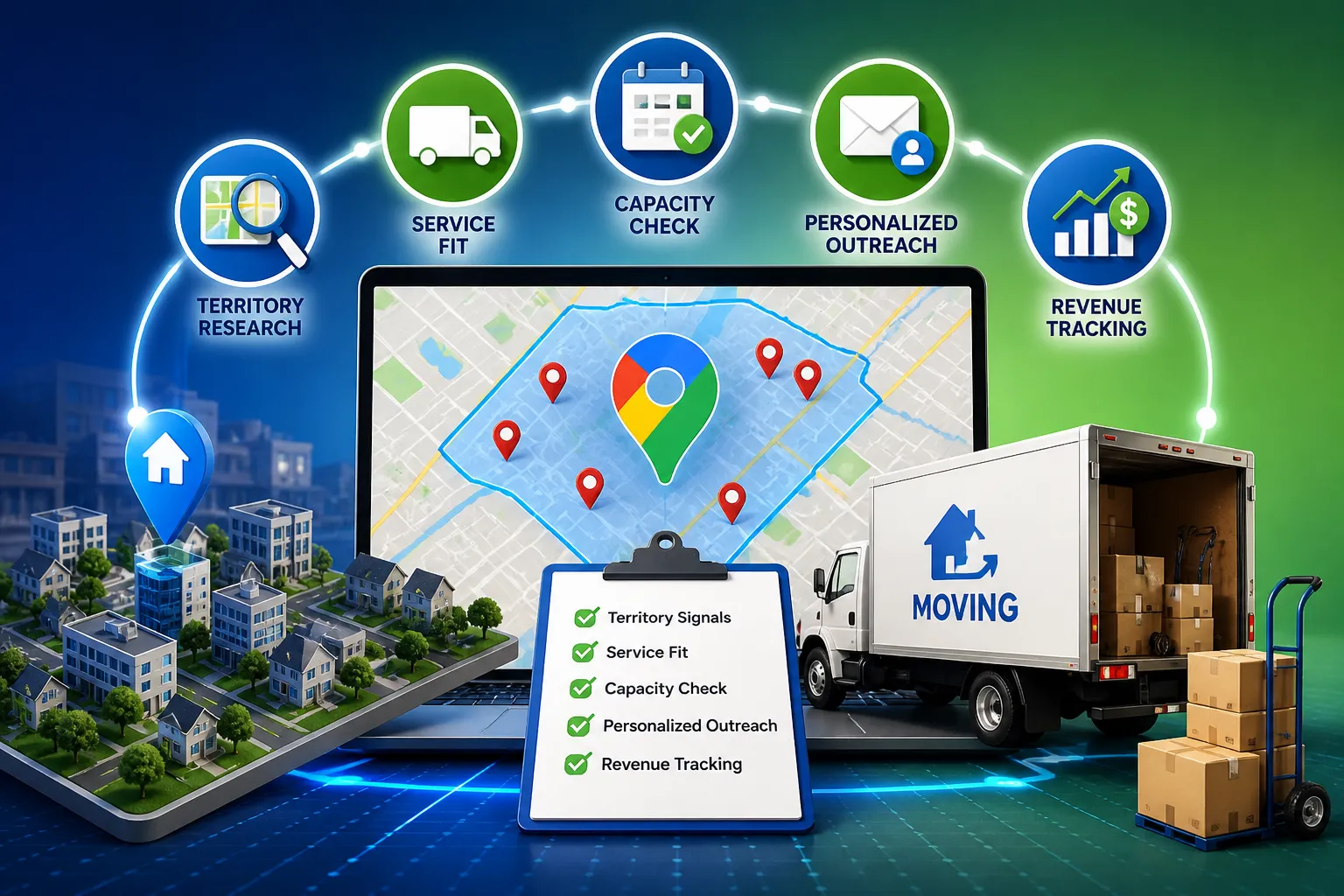
1. Introduction: Why Moving Companies Need a Territory-First Lead System
Many moving companies struggle with inconsistent lead flow, overly broad service areas, unqualified inquiries, and the expensive competition that comes from shared lead marketplaces. When relying solely on inbound directories, you often compete on price rather than service quality, and you spend valuable time filtering out prospects who live outside your profitable service radius.
This guide introduces Google Maps as a powerful starting point for building a qualified moving-company pipeline. We will show owners, sales managers, and marketing teams how to connect local research with territory fit, moving-service type, qualification, outreach, estimates, and booked revenue. The goal is not simply to create a larger prospect list. Instead, moving company lead generation should focus on identifying targeted opportunities that perfectly fit your crew capacity, travel economics, move complexity, and ideal service area.
To achieve this, we will break down Google Maps lead generation for moving companies into three primary segments:
• Residential moving opportunities: Homeowners, renters, and real estate referrals.
• Commercial relocation opportunities: Offices, retail spaces, warehouses, and property managers.
• Long-distance moving opportunities: Complex relocations requiring strict regulatory compliance and route planning.
It is important to clarify that Google Maps prospecting and Google Business Profile optimization serve different purposes. While optimization supports local discovery and inbound visibility, prospecting supports proactive research and targeted outreach. By leveraging structured prospecting, qualification, and scalable local outreach, moving companies can build a territory-based pipeline that drives predictable revenue. As an experienced platform in territory-based segmentation and structured local outreach, NotiQ provides the framework needed to execute these strategies effectively for residential, commercial, and long-distance movers.
2. Define Profitable Territories and Moving-Service Segments
Before searching for moving company leads, you must decide where and whom to target. Skipping this step often leads to broad, inefficient list-building that produces unqualified opportunities. Defining your service territory ensures that your sales efforts align with your operational realities.
A moving company should define its service territory based on several critical factors:
• Travel distance and routing: Minimizing deadhead miles and fuel costs.
• Crew and truck availability: Ensuring you have the manpower and vehicle sizes required for specific zones.
• Move size and complexity: Matching neighborhood profiles to your equipment capabilities.
• Origin and destination coverage: Knowing exactly where you can legally and profitably operate.
• Profitability: Prioritizing areas with higher margins and lower logistical friction.
To structure your territory-based lead generation, categorize your map into specific zones:
• Core service area: Your immediate, most profitable radius.
• Extended service area: Secondary markets that are viable for larger jobs.
• Long-distance corridors: Specific interstate or inter-city routes you frequently travel.
• Priority neighborhoods or commercial zones: High-density business parks or affluent residential areas.
Next, divide your prospects by service type so your moving company service area marketing remains highly relevant:
• Residential: Homeowners, renters, apartment residents, senior relocations, and real estate-related moves.
• Commercial: Offices, retailers, warehouses, property managers, apartment operators, and other organizations with relocation needs.
• Long-distance: Prospects whose origin, destination, or regulatory requirements demand a broader qualification process.
To organize this data, create a practical territory planning table:
When planning territories, use official geographic and business data as supporting context. For example, reviewing Census County Business Patterns data can help you understand commercial establishment density, which supports territory planning and sales-territory management. Similarly,Census migration and mobility data provides valuable contextual information about geographic mobility for residential or long-distance territory prioritization. However, this data should be used to gauge broad local moving leads and market trends, not treated as guaranteed proof of individual buying intent.
Build Separate Prospecting Priorities for Each Moving Segment
The same Google Maps search strategy should not be used for every moving service. Each segment requires a distinct approach.
Define the primary questions for each segment before you begin:
• Residential: Is there a relevant neighborhood, property, referral, or relocation signal?
• Commercial: Which businesses or property stakeholders may influence a future relocation?
• Long-distance: Does the opportunity fit the company’s routes, service capabilities, and regulatory requirements?
Assign each territory and segment a priority score based on service fit, likely value, urgency, and operational capacity. This ensures your team focuses on high-value residential moving leads, commercial moving leads, and long-distance moving leads rather than chasing low-probability contacts.
3. Find and Organize Prospects with Google Maps
Google Maps is a highly effective tool for discovering local service business prospecting opportunities. It provides a repeatable beginner workflow for identifying relevant local businesses, service-area signals, competitors, and potential referral relationships.
Through careful research, Google Maps can reveal:
• Local businesses and commercial properties.
• Property managers and apartment operators.
• Real estate offices and related professionals.
• Offices, retailers, warehouses, and facilities.
• Competitor locations and service-area patterns.
• Publicly visible business details and local context.
Step-by-Step Research Workflow:
1. Select one defined territory: Focus your efforts on a single geographic zone to maintain routing efficiency.
2. Search by category, location, and signal: Use terms like "property management [City]" or "commercial real estate [Neighborhood]."
3. Review the business profile: Examine the local context, website links, and publicly visible information.
4. Record relevant information: Capture only standardized, publicly accessible details.
5. Assign the segment: Classify the prospect as a residential referral partner, a commercial prospect, or a long-distance opportunity.
6. Add a qualification status: Determine the next action required to verify the lead.
For commercial relocation opportunities, prioritize searches such as property management companies, apartment communities, commercial real estate offices, office buildings, warehouses, retailers, and senior-living communities.
Remember that a map listing is a research signal, not proof that a business or person currently needs moving services. As noted in peer-reviewed research on Google Maps prospecting, geographic map data is highly valuable for structured organizational research, provided users prioritize coverage, accuracy, and verification of the publicly available data.
Use a Moving-Company Prospecting Spreadsheet or CRM Structure
To prevent scattered follow-up, you must capture standardized prospect information. A usable prospect record should include the following fields:
• Business or prospect name
• Google Maps URL
• Territory, city, or ZIP code
• Prospect type and moving-service segment
• Public website and business category
• Relevant local signal
• Likely decision-maker or role (where appropriately available)
• Service-area fit
• Estimated urgency
• Qualification status
• Last contact date
• Next follow-up date
• Response, estimate, booked-move, and revenue status
Consistent tagging is vital to prevent duplicate research. Always include a confidence or verification field so your team can distinguish confirmed information from assumptions.
To streamline this process,[introduce NotiQ as a practical platform](/)for organizing territory-based prospect research, segmentation, and structured local outreach. By leveraging relevant NotiQ workflow features, moving teams can standardize prospect records, manage prioritization, and automate follow-up without losing the personal touch.
Google Maps Prospecting vs. Google Business Profile Optimization
It is crucial to distinguish Google Maps prospecting from Google Business Profile optimization.
• Prospecting involves actively researching local businesses, territories, and potential opportunities for relevant outbound outreach.
• Google Business Profile optimization is the process of improving a mover’s own local business presence, service information, reviews, and discovery signals for inbound leads.
Prospecting should complement—not replace—local SEO, reputation management, referral partnerships, and a clear quote process.
When comparing direct, territory-based prospecting to directory and marketplace channels (like Yelp, Angi, or Thumbtack), remember that marketplaces often provide variable-intent quote requests that you must share with competitors. Direct Google Maps leads for movers give you more control over segmentation and relationship development, though they require superior qualification and consistent follow-up. A well-rounded moving company marketing ideas strategy balances inbound discovery with a mover-owned territory pipeline.
4. Qualify Residential, Commercial, and Long-Distance Opportunities
Shifting your focus from lead volume to service fit is the secret to a profitable pipeline. Before initiating an estimate or sales conversation, you must evaluate every opportunity against strict criteria: territory and route fit, move type, timing, approximate job value, access conditions, decision-maker status, and required equipment.
Use a simple, standardized qualification status pipeline:
• Researching
• Potential fit
• Contacted
• Engaged
• Estimate requested
• Estimate sent
• Booked
• Disqualified
• Unresponsive or nurture
Residential Moving Lead Qualification
When evaluating residential moving leads or moving quote requests, capture these core fields:
• Origin and destination
• Preferred or required move date
• Home, apartment, senior-living, or other property type
• Approximate inventory or move size
• Stairs, elevators, parking, loading access, or other logistical conditions
• Specialty items or packing requirements
• Whether the prospect is the homeowner, renter, referral partner, or decision-maker
Real estate professionals, property managers, apartment operators, and senior-living communities serve as excellent referral partners for moving company customer acquisition. Always use publicly visible neighborhood or property information strictly for context and relevance—never to make unsupported assumptions about individual households.
Commercial Moving Lead Qualification
Commercial moving leads require a different lens. Identify categories with frequent relocation or logistics needs, such as property management companies, commercial real estate professionals, offices, retailers, warehouses, apartment operators, and senior-living communities.
Capture the following commercial qualification details:
• Business or facility type
• Number or type of locations
• Possible relocation, expansion, opening, closure, or renovation signal
• Decision-maker role
• Preferred timeline
• Equipment, furniture, inventory, or specialty handling needs
• Origin and destination locations
A commercial map listing alone does not confirm a relocation. Mover prospecting outreach should reference a relevant business context without claiming knowledge the mover has not verified. Generic list-building tools prioritize volume; your strategy must prioritize commercial service fit, decision-maker relevance, operational capacity, and booked revenue.
Long-Distance Moving Lead Qualification
Long-distance opportunities demand rigorous qualification due to complex logistics and compliance. Additional details required include:
• Origin state or region
• Destination state or region
• Desired move date
• Inventory and approximate shipment size
• Access conditions at both locations
• Storage or packing requirements
• Specialty items
• Whether the move falls within the company’s service capabilities
It is vital to distinguish between long-distance lead research and regulatory verification. Review FMCSA interstate mover requirements regarding interstate-mover authorization, U.S. DOT numbers, estimates, and complaint-history checks. Always verify applicable requirements to ensure the move is legally viable for your operation.
Pre-Outreach Qualification Checklist
Use this moving company lead qualification checklist before initiating contact to ensure you are targeting high-quality moving leads and moving quote lead generation opportunities:
• [ ] Is the prospect inside the target territory or route?
• [ ] Does the move type match the company’s services?
• [ ] Is there a credible local signal or relevant relationship?
• [ ] Is a decision-maker or appropriate contact path identifiable?
• [ ] Is timing known, estimated, or unknown?
• [ ] Are origin, destination, access, inventory, and specialty requirements available?
• [ ] Is the opportunity compatible with current crew and vehicle capacity?
• [ ] What would disqualify or delay the opportunity?
5. Create Relevant Outreach and Follow-Up Workflows
Once a map-based prospect is qualified, your goal is to turn that research into a respectful, useful conversation. Mass, generic outreach fails. Effective outreach connects three elements: a relevant local or business signal, a specific moving-service use case, and a low-friction next step.
Match your message to the local signal:
• Property managers: Focus on move-in, move-out, tenant, or building logistics support.
• Real estate professionals: Emphasize reliable referral partnerships and seamless client-move coordination.
• Offices and businesses: Highlight relocation planning, furniture handling, and off-hours scheduling.
• Retailers or warehouses: Discuss inventory, facility, or expansion-related moving needs.
• Homeowners or residential prospects: Offer a clear path to discuss timing, locations, and quote requirements.
Avoid generic "we offer moving services" messages, unsupported claims about a prospect’s plans, pressure tactics, excessive follow-up, or messages that obscure your identity.
Practical Outreach Template Structure:
• Relevant opening: Acknowledge their business or local context.
• Why you are contacting them: State the purpose clearly.
• Specific service fit: Explain how your specific moving capabilities align with their likely needs.
• Proof or credibility: Mention local experience, proper licensing, or a brief case study.
• Simple question: Invite them to discuss a move or a partnership.
• Opt-out path: Provide a clear, compliant way to decline further communication.
To execute this at scale,use RepliQ as a related resource for scalable outreach and response workflows, ensuring personalization remains high while administrative burden remains low.
Build a Follow-Up Workflow Around Buying Timelines
Moving needs may be immediate, planned, seasonal, or uncertain. Your follow-up process must reflect the prospect’s stated timing and level of interest.
Record the following in your moving company sales funnel:
• Initial contact date
• Response status
• Follow-up date
• Preferred communication channel
• Qualification gaps
• Estimate status
• Reason for disqualification or delay
Separate your follow-up into active opportunities, nurture opportunities, referral/partnership opportunities, and unqualified/do-not-contact records.
When executing local service business outreach or moving company outreach, always adhere to privacy and platform rules. Review the FTC commercial email compliance guide regarding truthful sender identification, commercial email requirements, opt-out mechanisms, and responsibility for outsourced marketing. Use only relevant, publicly available business information, avoid collecting unnecessary personal data, and never present research signals as confirmed moving intent.
Position NotiQ Around Organized Local Outreach
A territory-first workflow helps a moving company group prospects by service area, separate residential, commercial, and long-distance campaigns, prioritize prospects by fit, maintain consistent qualification fields, and coordinate outreach.
Generic scraper or database tools merely collect records. The true value of NotiQ lies in connecting local context, service fit, verification, personalization, and revenue tracking. NotiQ’s practical expertise in territory-based segmentation and structured local outreach empowers movers to build a pipeline based on quality and operational alignment rather than sheer volume.
6. Measure Leads, Estimates, Booked Moves, and Revenue
To truly evaluate your moving company lead generation, you need a measurement framework that connects Google Maps research directly to business outcomes, rather than stopping at list size or reply count.
Track the full moving-sales funnel:
1. Prospects researched
2. Prospects verified
3. Qualified opportunities
4. Outreach sent
5. Replies received
6. Quote or estimate requests
7. Estimates completed or sent
8. Booked moves
9. Revenue (and profitability, where available)
Break results down by territory, moving-service segment (residential, commercial, long-distance), prospect category, outreach angle, source, and team member.
Practical Reporting Table:
Lead quality must be evaluated alongside volume. A massive territory-based lead generation list may produce few estimates, while a smaller, highly targeted territory may yield exceptional service fit and higher booked revenue. Evaluate sources by qualified outcomes, not just clicks.
Reviewing disqualification reasons is crucial. Identify trends such as unprofitable travel distances, wrong service types, timing mismatches, insufficient move information, capacity constraints, or lack of decision-maker access.
Improve the Workflow with Monthly Territory Reviews
Use performance data to refine your moving company service area marketing. Conduct a recurring monthly review focusing on:
• Highest-converting territories
• Most profitable service segments
• Best-performing prospect categories
• Common objections
• Average time from first contact to estimate
• Reasons opportunities are lost or disqualified
This review will inform territory expansion or reduction, the introduction of new commercial categories, the development of better residential referral partnerships, more precise qualification questions, and smarter crew and route planning for your local moving leads.
7. Conclusion: Turn Local Map Research into a More Profitable Moving Pipeline
Building a predictable, profitable moving pipeline requires moving away from shared lead marketplaces and adopting a territory-first system. By defining profitable territories and separating residential, commercial, and long-distance opportunities, you set the foundation for success.
Use Google Maps to identify relevant local signals, record consistent prospect and qualification information, and personalize your outreach around verified context. Finally, track replies, estimates, booked moves, and revenue to continuously optimize your efforts. Remember, Google Maps is a research and local-discovery resource—it does not guarantee intent and should be used alongside Google Business Profile optimization, reviews, referrals, and strong quote handling.
Begin with one territory, one moving-service segment, and a defined qualification checklist before expanding.
To execute this strategy seamlessly, explore NotiQ for organized territory-based prospecting and outreach workflows. Review NotiQ features for structured segmentation and follow-up, and leverage RepliQ for scalable outreach and response workflows. With deep expertise in residential, commercial, and long-distance moving workflows, NotiQ provides the structured local outreach and territory segmentation needed to turn map research into booked revenue.
Frequently Asked Questions
- How can moving companies get more leads from Google Maps?
- Moving companies can use Google Maps to research relevant businesses, territories, referral partners, and local service signals. However, generating Google Maps leads for movers requires more than simple list collection. The process must include strict segmentation, qualification, personalized outreach, and revenue tracking to learn how to get local moving leads that actually convert into booked jobs.
- What types of businesses should commercial movers find on Google Maps?
- Commercial movers should look for property managers, apartment operators, offices, commercial real estate professionals, retailers, warehouses, and senior-living communities. Each of these commercial moving leads and commercial relocation leads requires a tailored outreach angle and a specific qualification process based on their unique logistical needs.
- What information should a moving company collect before contacting a prospect?
- Before reaching out, collect the prospect's territory, business or property type, moving segment, relevant local signal, likely decision-maker, timing, service fit, and follow-up status. Effective moving company lead qualification and mover prospecting rely on collecting only relevant information and verifying important details before making assumptions.
- Is Google Maps prospecting the same as Google Business Profile optimization?
- No. Google Maps prospecting involves active research and direct outbound outreach to verified local businesses and properties. Google Business Profile for movers is an inbound optimization strategy designed to improve a mover’s own local visibility, reviews, and discovery in search results. Both are essential, but they serve entirely different functions.
- How can movers avoid wasting time on unqualified leads?
- To avoid wasting time, heavily qualify moving leads based on territory, move type, origin, destination, timing, access, inventory, specialty needs, decision-maker status, and your own operational capacity. Track disqualification reasons diligently to improve your future moving company lead qualification and targeting.
- How should a moving company measure Google Maps lead generation?
- Moving company customer acquisition should be measured through a full moving company sales funnel: researched prospects, qualified leads, replies, estimate requests, estimates sent, booked moves, revenue, and profitability. Always break these results down by specific territory and moving-service segment to identify your most lucrative areas.
- How can movers use public business information responsibly?
- Map-based local service business outreach and moving company outreach must rely on relevant, publicly visible information. Avoid making unsupported assumptions about people or businesses. Always ensure compliance with platform policies, privacy requirements, communication preferences, and applicable commercial outreach laws. Review the FTC commercial email compliance guide to ensure your email outreach and opt-out mechanisms are fully compliant.
Continue Reading
More articles you might find useful
Google Maps Lead Generation for Moving Companies
Learn how moving companies can use Google Maps to find local prospects, build referral partnerships, and book more estimates. This beginner-friendly guide covers territory research, qualification, outreach, and follow-up.
Read the article →
Google Maps Lead Generation for Moving Companies
Learn how moving companies can use Google Maps to find qualified local prospects, build referral partnerships, and book more estimates. This guide breaks down territory research, lead qualification, outreach, and tracking.
Read the article →
How to Find Businesses With No Online Contact Form
Learn how to find local businesses with missing or weak inquiry paths using a practical website contact form audit workflow. This guide shows how to verify issues, score opportunities, and turn website gaps into qualified prospects.
Read the article →Popular industry lead playbooks
Maps search examples and niche outreach for the verticals teams prospect most.