Technology
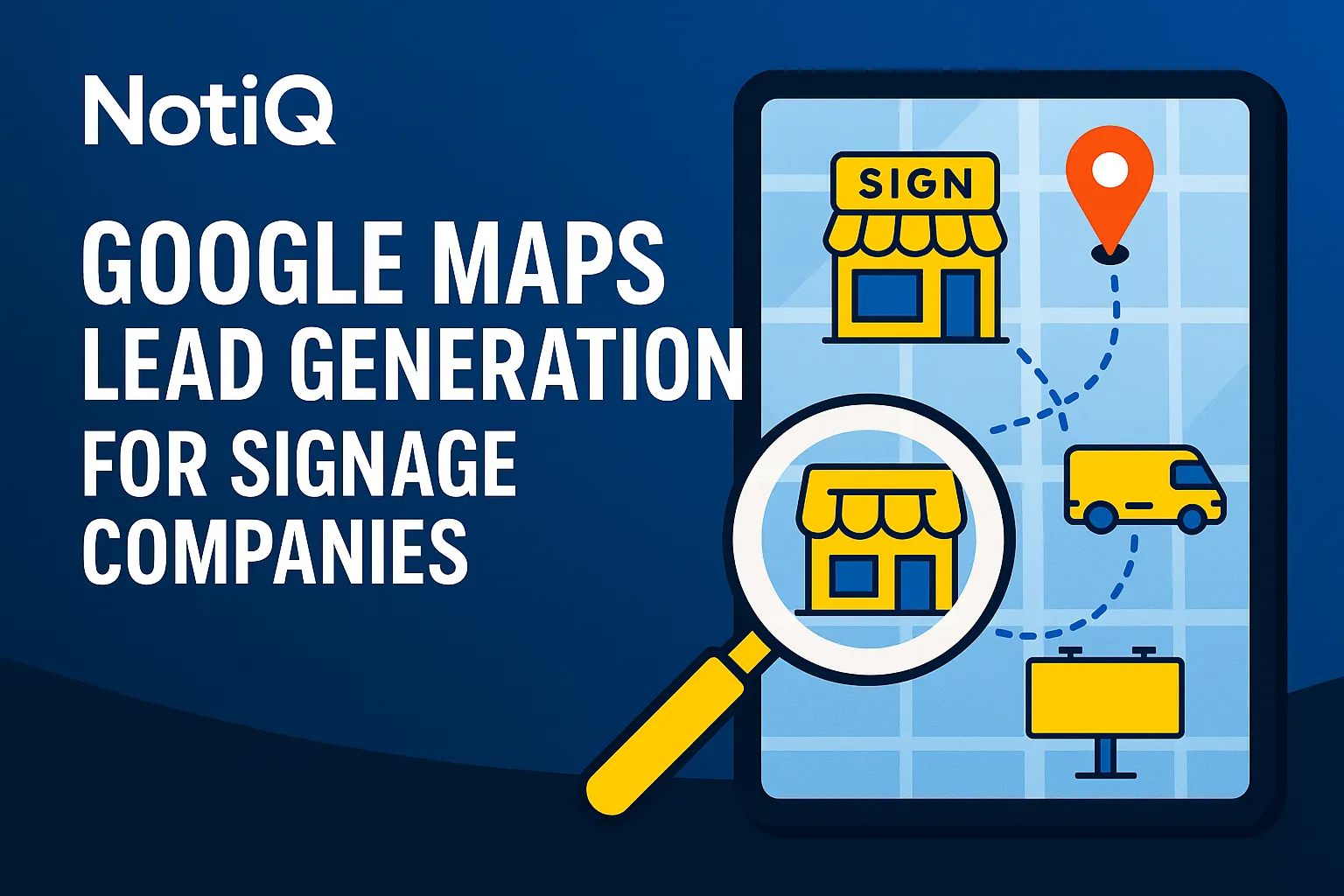
Google Maps Lead Generation for Signage Companies
Learn how sign companies can use Google Maps to find local prospects, identify visible signage gaps, and build a repeatable outreach system. This guide shows how to turn visual research into qualified leads without relying on paid ads or generic lists.
1. Introduction
Many sign shops know there are qualified buyers in their city, but the hard part is finding them consistently without burning budget on paid ads or buying generic, outdated lists. You might drive past ten businesses a day that desperately need your help, but turning those real-world observations into a scalable sales pipeline often feels overwhelming.
Enter Google Maps lead generation for signage companies. Using Google Maps is a practical, beginner-friendly prospecting system for finding businesses that visibly need storefront signage, vehicle wraps, digital signage, or commercial print support. Unlike generic lead generation advice that applies to any B2B software or service, this blueprint offers a unique angle: it shows you how to visually diagnose branding and signage gapsbeforeyou ever make outreach.
In this guide, we will set clear expectations for your sales process. You will learn exactly how to search, qualify, organize, and personalize outreach using Google Maps and Google Business Profile signals. Whether you are an owner, a sales rep, or a marketer at a sign company, you need a low-cost, repeatable local outreach workflow to generate sign company leads on demand.
As an authority in niche positioning for local business prospecting, NotiQ provides a specialized approach to this exact problem. By utilizing an organized system like[Home](/), signage professionals can seamlessly turn raw local business research into a highly structured, automated prospecting engine. Let’s dive into how you can master Google Maps prospecting to fill your pipeline with high-intent buyers.
2. Why Google Maps Works for Signage Prospecting
When you are hunting for sign company leads, generic B2B databases and broad outbound lists often fall short. They might give you a name and an email address, but they tell you absolutely nothing about the physical state of the business. Google Maps is especially useful for sign companies because it is not just a directory; it provides the visual and local context that matters most for commercial signage prospecting.
With Google Maps, sign companies can assess curb appeal, exterior visibility, branding consistency, vehicle presence, and location quality before making contact. You can look at a storefront and instantly know if they have faded channel letters, temporary banners that need replacing, or windows devoid of graphics. This visual qualification is a massive advantage over purchased lists that offer contact data but zero storefront or branding context.
Google Maps prospecting is ideal for beginners because it creates a simple, repeatable workflow: search, review, qualify, and outreach. While many generic prospecting guides stop at list building, sign companies can go further by diagnosing visible problems. Furthermore, optimizing for and understanding Google local ranking factors helps you identify businesses that are actively trying to improve their local visibility but are failing in their physical presentation. By relying on visual diagnosis rather than automated, non-compliant scraper tools or generic lead vendors, you can safely and legally pinpoint service-fit gaps that your competitors are completely missing.
What Makes Google Maps Different From Generic Lead Lists
Generic data providers help with contact discovery, but Google Maps reveals real-world signage cues. For a software company, a generic list might be enough. But for commercial signage prospecting, local context matters more than for almost any other B2B service.
Google Maps allows you to spot visible sales signals: faded signage, temporary banners, sparse photos, poor storefront readability, and missing fleet branding. When you reach out to a prospect, you aren't just guessing that they might need a sign; you know they need one because you have seen their building. This visual proof makes Google Maps lead generation for signage companies incredibly powerful for local outreach.
Why This Matters for Beginner Sign Shops
Smaller teams can generate high-quality B2B lead generation for sign shops without heavy ad spend. If you don't have thousands of dollars a month for pay-per-click campaigns, Google Maps supports hyperlocal prospecting by city, neighborhood, or commercial corridor for free.
This guide is about building a repeatable system, not random one-off searches. By structuring your local outreach, beginner sign shops can create a predictable pipeline of signage sales prospecting that relies on effort and observation rather than massive marketing budgets.
3. How to Find the Best Local Business Categories and Searches
To build initial prospect lists, you must learn how to search for the categories, locations, and business types most likely to need your services. Start with simple search patterns such as “[business type] in [city]” and “[business type] near me,” adapted to your target service area.
Category-based searches help sign companies match the right service offer to the right type of business. According to official Google Business Profile category guidance, businesses categorize themselves based on their primary operations, which directly dictates their signage needs. Searching by neighborhood, retail center, industrial area, or growth corridor will uncover concentrated pockets of opportunity. You should build separate lists for storefront signage leads, vehicle wrap leads, digital signage, and commercial print leads to keep your outreach highly relevant.
Best Business Categories for Signage Prospecting
Not every business needs a massive monument sign, and not every business needs fleet graphics. You must understand which categories are likely to buy which services:
• Restaurants, cafes, and retail: Ideal targets for storefront signage leads, window graphics, and temporary promotional banners. They rely heavily on foot traffic and curb appeal.
• Gyms, clinics, and offices: Strong candidates for wayfinding, ADA compliance signs, lobby signage, and branded displays.
• Contractors and service businesses: The absolute best targets for vehicle wraps and fleet graphics. Plumbers, HVAC technicians, and landscapers are constantly on the road.
• Multi-location brands and franchises: Perfect for consistency upgrades across sites, ensuring uniform commercial print leads and digital signage leads.
Search Patterns That Surface High-Intent Prospects
To master Google Maps prospecting, use practical search logic that surfaces high-intent prospects:
• Category + city: (e.g., "HVAC contractors in Austin")
• Category + neighborhood: (e.g., "Coffee shops in downtown Seattle")
• New businesses: Look for "recently opened" tags on Google Maps to find businesses that likely have a fresh marketing budget.
• Commercial corridors: Search around malls, high-traffic districts, and new industrial parks.
Use map zoom levels to move from broad market discovery to street-by-street local outreach. Recent openings, newly claimed Google Business Profile leads, and businesses with fresh reviews often signal active marketing investment, meaning they are more likely to spend money on visual upgrades.
Segmenting Lists by Signage Opportunity
Once you find these businesses, separate your prospects by their likely primary need: exterior signs, wraps, digital screens, banners, print collateral, or ADA/wayfinding.
Segmenting improves your outreach relevance and close rates. For a beginner executing B2B lead generation for sign shops, segmentation is how you avoid sending one generic pitch to every local business. A commercial signage prospecting strategy is only as good as its relevance; pitching a vehicle wrap to a boutique retail store makes no sense, but pitching window graphics does. Proper segmentation ensures your signage sales prospecting is always on target.
4. How to Qualify Signage Opportunities From Listing and Street View Signals
This section is the core differentiator of your prospecting strategy: visually auditing businesses from Maps before outreach. By legally and ethically inspecting Google Business Profile photos, customer photos, Street View, and visible exterior context, you can uncover massive sales clues.
You need to know what “good” versus “weak” signage signals look like. Look for pain points like outdated storefront signs, inconsistent branding, missing fleet graphics, poor curb appeal, or underused windows. To streamline this, create a simple scorecard for visual quality, branding consistency, location potential, and upsell potential. By utilizing Google Maps Street View help features, you can drop a pin in front of a business and look at their storefront exactly as a customer would, making Google Maps lead generation for signage companies incredibly accurate for identifying storefront signage leads and vehicle wrap leads.
Storefront Signage Signals to Look For
When auditing a storefront, look for hard-to-read signs, faded branding, missing monument signs, poor visibility from the road, and temporary-looking exterior materials like cheap vinyl banners that have been up for too long.
Other weak signals include mismatched logos, low-contrast lettering, weak nighttime visibility (missing illumination), or storefronts that blend into neighboring units. In retail, salons, restaurants, and clinics, these are massive red flags for the business owner, but golden sign company leads for you. A quick commercial signage prospecting audit will reveal exactly what you need to pitch.
Vehicle Wrap and Fleet Graphic Signals
Contractors, home service businesses, and delivery-related businesses constantly reveal wrap opportunities in their Google Business Profile photos. Look for the signs of missed branding potential: unmarked white vans, partial or peeling branding, inconsistent fleet graphics across multiple vehicles, or service vehicles visible in the background of team photos with zero branding.
Tie this visual observation directly to an outreach angle focused on trust, recall, and local brand visibility. Vehicle wrap leads are highly lucrative, and proving to a local outreach prospect that their unbranded van is costing them jobs is a highly effective signage sales prospecting tactic.
Digital Signage, Print, and Cross-Sell Opportunities
Look inside the business using interior photos. Sparse in-store visuals, event promotion needs, menu-style businesses (like cafes or fast-casual dining), seasonal promotions, or foot-traffic-heavy environments suggest strong digital signage leads or commercial print leads.
Businesses with active promotions but weak visual execution are ideal for bundled offers. Commercial print can act as a low-friction entry point or add-on to larger commercial signage prospecting projects.
Review Activity, Photos, and Listing Completeness as Buying Signals
Active reviews, updated photos, and complete listings indicate an engaged business that cares about customer acquisition. As noted by Google local ranking factors, complete business information is vital for local SEO. Therefore, businesses investing time into their Google Business Profile leads are prime targets for physical signage upgrades.
Conversely, incomplete listings may reveal a business with underdeveloped branding and presentation. Position listing completeness as a clue, not a final buying decision signal. A highly active listing with terrible physical signage is your best-case scenario for Google Maps prospecting and local SEO for sign companies.
5. How to Organize and Personalize Outreach at Scale
Moving from raw prospect discovery to an actionable outreach system requires organization. You must capture specific data for each lead: business name, category, location, visible signage issue, Street View/photo notes, likely service fit, and next step.
For beginners, a simple spreadsheet or CRM structure works perfectly, with columns tied to your qualification observations. Personalization must come directly from what the rep saw on the listing, not from generic templates. Relevant local outreach always beats mass outreach in the signage niche. When executing email campaigns, always ensure you are following the FTC CAN-SPAM compliance guide. To manage all this data effectively, platforms with robust Home can help you capture and act on prospect data at scale, turning B2B lead generation for sign shops into a streamlined machine for sign company leads.
What Data to Capture Before Outreach
Before you reach out, capture the following fields:
• Business category
• City/neighborhood
• Signage gap observed (e.g., faded awning, unmarked van)
• Vehicle branding opportunity
• Multi-location potential
• Street View date or image recency
• Best initial offer
• Follow-up status
Capturing these observations creates better outreach and cleaner handoffs between reps. It ensures that your Google Maps prospecting efforts translate into high-converting Google Business Profile leads and commercial signage prospecting success.
Personalization Angles That Don’t Feel Generic
Turn your specific observations into useful local outreach. Instead of saying, "We sell signs," use angles like:
• Mentioning a faded storefront sign: "I drove past your storefront on Main St on Maps and noticed the channel letters are a bit faded. We can upgrade those to improve nighttime visibility."
• Referencing inconsistent branding across locations: "I noticed your downtown location has a different window graphic style than your uptown clinic."
• Noting missing fleet graphics: "I saw the team photo with the unbranded white transit vans. Wrapping those acts as a moving billboard."
• Suggesting promotional signage for a visible seasonal push.
Keep messages short and relevant. Long pitches get ignored; specific, visually-backed observations generate storefront signage leads and vehicle wrap leads.
Staying Organized With a Simple Prospecting Workflow
A beginner workflow looks like this: search → qualify → capture notes → segment → outreach → follow up → refresh list.
This creates consistency across reps and prevents promising leads from getting lost. Manual copying and scattered notes will eventually fail you. Adopting a more structured workflow approach, utilizing tools like Home, helps scale your local outreach and signage sales prospecting operations efficiently, ensuring no sign company leads fall through the cracks.
6. How to Prioritize Verticals, Multi-Location Brands, and Service Upsells
Not all local leads are equal. Priority should go to businesses with a visible need, repeatability, and upsell potential. Vertical selection improves efficiency for smaller sign companies with limited sales capacity.
Introduce a simple prioritization lens: category fit, visual gap severity, number of locations, traffic potential, and cross-sell potential. Understanding market density and local vertical concentration—concepts supported by U.S. Census County Business Patterns—can help you decide whether to target a dense retail district or a sprawling industrial park for your commercial signage prospecting, digital signage leads, and B2B lead generation for sign shops.
Best Verticals to Target First
Focus your efforts on high-opportunity segments that naturally fit your signage offers:
• Restaurants: Need menu boards, window graphics, and A-frames.
• Retail stores: Need seasonal banners, storefront illuminated signs, and point-of-purchase displays.
• Gyms: Need privacy window film, wall wraps, and exterior channel letters.
• Medical and dental offices: Need monument signs, ADA wayfinding, and professional lobby signs.
• Contractors and field-service businesses: The goldmine for vehicle wrap leads.
• Franchises and multi-location operators: Need brand consistency and bulk digital signage leads.
Targeting these specific verticals allows a beginner to immediately act on high-probability storefront signage leads in their local market.
Why Multi-Location Businesses Deserve Special Attention
Multi-location businesses offer the value of consistency projects across several sites. Branding inconsistency between locations is a strong opening for outreach. If their northside location has modern LED signage but their southside location has a faded lightbox, point it out. One successful location-level project can easily turn into repeat work across their entire portfolio, making them the most valuable sign company leads and Google Business Profile leads in your commercial signage prospecting pipeline.
Mapping One Prospect to Multiple Service Opportunities
One business often has several possible needs. A single prospect might need an exterior storefront sign, window graphics, interior wayfinding, vehicle wraps, promotional banners, and print collateral.
Frame upsells as problem-solution matching, not aggressive selling. If you are wrapping their van, ask how their business cards look. If you are installing a monument sign, ask if they need commercial print leads for their grand reopening. This turns basic signage sales prospecting into comprehensive account management, driving digital signage leads and print revenue simultaneously.
7. Common Mistakes to Avoid When Using Google Maps for Sign Company Leads
To succeed, beginners must avoid wasted time and poor outreach habits. Many reps fail because they search too broadly, skip visual qualification, or send the exact same message to every business.
Relying only on contact discovery without evaluating visible need defeats the purpose of this strategy. Furthermore, treat old imagery or incomplete listings carefully; always try to verify the current state of the business before pitching a fix for a sign they may have already replaced. Above all, reinforce the importance of staying compliant and respectful in your local outreach for sign company leads and Google Maps prospecting.
Targeting Everyone Instead of the Right Categories
Broad prospecting creates low-quality lists and weak messaging. If you target "all businesses in Chicago," your outreach will be generic and easily ignored. Run niche-by-niche campaigns tied to clear service offers to maximize your commercial signage prospecting and B2B lead generation for sign shops.
Sending Generic Outreach With No Visual Context
The biggest advantage of Maps is visible context. Ignoring photos, Street View, and branding gaps removes the core differentiator of this strategy. If you aren't mentioning a specific visual observation, you are just another spam email. Leverage visual context to win local outreach and storefront signage leads.
Failing to Refresh and Revisit Prospect Lists
Local markets change constantly. New openings, remodels, rebrands, and seasonal campaigns create fresh opportunities. Periodically refresh your target categories and territories. A business that didn't need a sign six months ago might be rebranding today, making them prime Google Business Profile leads for Google Maps lead generation for signage companies.
8. Conclusion
Google Maps is far more than just a business directory; it is a practical, highly effective lead source for sign companies when used as a visual prospecting and qualification tool. By following this blueprint, you can build a repeatable workflow: search by category and geography, inspect photos and Street View, capture visible signage gaps, segment by offer, and personalize your outreach.
This gives you a massive niche advantage. Sign companies can visually diagnose real-world branding problems that generic marketers and broad lead vendors completely miss. Stop relying on outdated lists and start turning scattered local searches into a repeatable prospecting system. To scale this workflow and turn your local business research into highly organized, compliant outreach, explore[Home](/)and start dominating Google Maps lead generation for signage companies, driving highly qualified sign company leads and commercial signage prospecting success today.
Frequently Asked Questions
- How can signage companies use Google Maps to find local leads?
- Signage companies can use Maps by searching specific business categories in targeted geographic areas. By legally inspecting listing visuals and Street View, you can qualify prospects based on visible branding gaps (like faded signs or unmarked vans) and log these highly qualified sign company leads for personalized follow-up in your Google Maps lead generation for signage companies workflow.
- Which types of businesses are best prospects for storefront signage and vehicle wraps?
- Retail stores, restaurants, clinics, and gyms are ideal for storefront signage leads due to their reliance on foot traffic and curb appeal. Contractors, plumbers, landscapers, and multi-location service brands are the absolute best targets for vehicle wrap leads, as their fleets serve as moving billboards.
- What signals on Google Business Profiles suggest a business may need signage help?
- Look for outdated or sparse photos, weak storefront visibility from the street, incomplete branding, missing monument signs, and unbranded fleet vehicles. Additionally, high review activity on Google Business Profile leads combined with poor visual presentation indicates a business investing in marketing but failing in commercial signage prospecting execution.
- How do I personalize local outreach without spending hours on each lead?
- Keep it brief and highly relevant. Use 1–2 specific visual observations from their listing (e.g., "I noticed your channel letters are faded") followed by a clear, low-pressure service-fit suggestion. In signage sales prospecting and local outreach, brevity and visual relevance always win over long, over-customized pitches.
- Is Google Maps prospecting better than buying lead lists for sign shops?
- Yes. While purchased lead lists provide basic contact data, they offer zero context regarding the physical state of the business. Google Maps prospecting provides the local and visual context necessary to diagnose real-world branding gaps, making it vastly superior for B2B lead generation for sign shops.
Continue Reading
More articles you might find useful
How to Build Lead Lists From Businesses Near Airports
Learn how to build targeted lead lists from businesses near airports using radius planning, enrichment, and segmentation. This guide shows revenue teams how to turn airport proximity into higher-quality outbound.
Read the article →
Google Maps Prospecting for Commercial HVAC Maintenance Providers
A practical blueprint for using Google Maps to find and qualify commercial HVAC maintenance prospects. Learn how to prioritize better-fit accounts, spot multi-location opportunities, and build a repeatable outreach workflow.
Read the article →
How to Find Local Businesses With Recently Changed Categories
Learn how to spot and validate Google Business Profile category changes to find local businesses in transition. Turn these high-intent signals into smarter prospecting and better leads.
Read the article →Popular industry lead playbooks
Maps search examples and niche outreach for the verticals teams prospect most.