Technology
Google Maps Lead Generation for Property Maintenance Companies
Learn how property maintenance companies can use Google Maps to find, qualify, and prioritize commercial prospects. This guide shows how to turn local map research into a repeatable sales pipeline.
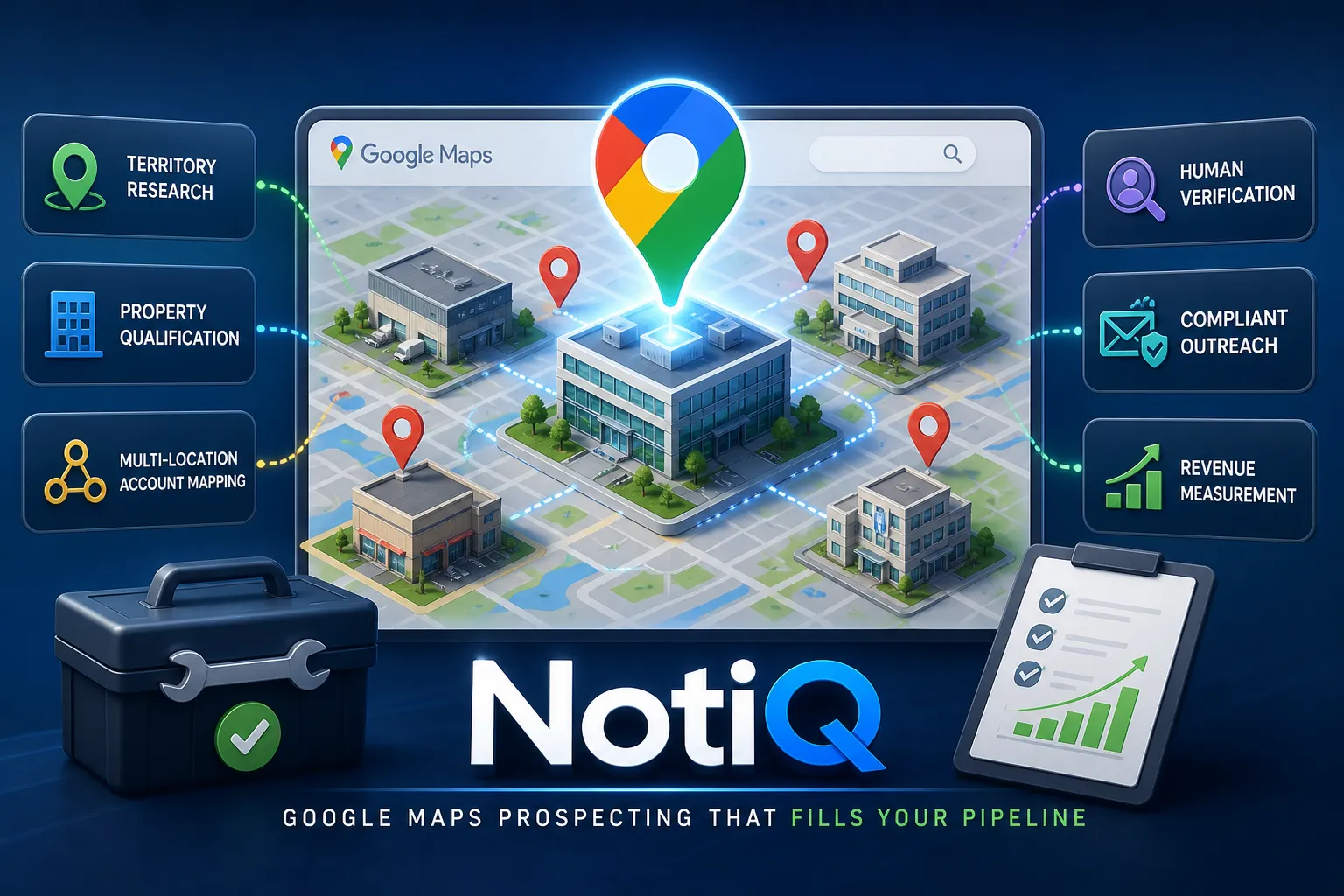
1. Introduction: Why Google Maps Can Become a Commercial Maintenance Pipeline
Building a predictable pipeline for commercial maintenance often feels like an uphill battle. Service providers frequently struggle with fragmented territories, generic lead lists that lack essential site context, and the ongoing difficulty of identifying lucrative, recurring contract opportunities. Too often, sales teams waste hours calling on businesses that simply do not have the facility footprint to warrant a commercial contract.
When approached strategically, Google Maps lead generation can solve these practical problems. Map-based research reveals much more than a business name and phone number; it uncovers commercial properties, specific business locations, operating hours, customer reviews, service areas, contextual photos, and critical multi-location signals.
However, generating qualified property maintenance leads requires more than simply collecting public business listings. This article outlines a comprehensive, intermediate-level workflow combining territory planning, property-level qualification, account mapping, human verification, compliant outreach, and revenue measurement. This approach turns local B2B lead generation from a scattered guessing game into a structured operational pipeline.
As an operational, location-intelligence solution for commercial maintenance providers, NotiQ helps streamline this process. It is important to remember that a map listing alone does not prove buying intent. Successful discovery and enrichment must always be followed by human review, privacy-aware data handling, strict adherence to applicable marketing-law compliance, and total respect for relevant platform terms. In the following five stages, we will explore how to define your market, discover ideal prospects, prioritize accounts, route verified data, and measure commercial outcomes.
2. Define Target Territories and Commercial Property Segments
To maximize efficiency, you must systematically narrow your prospecting universe before executing a single search. Defining clear parameters reduces irrelevant results and ensures your sales team focuses strictly on viable opportunities.
Set Service-Area Boundaries Before Searching
A successful facilities maintenance prospecting strategy begins with defining your company’s practical service area. This should be based on realistic operational factors: route coverage, travel time, emergency response expectations, technician availability, and your existing operating zones.
It is crucial to separate primary territories from expansion territories. By doing this, sales teams will not waste time prioritizing accounts they cannot reliably or profitably serve. Additionally, look for underserved areas where your company can offer faster response times, better coverage, or superior multi-site support compared to incumbent providers.
Territory planning should always be connected to your actual service capacity rather than relying on an arbitrary map radius. Objective business and location data can heavily support market sizing and territory decisions. For instance, leveraging Census data for small-business market research provides an authoritative baseline for understanding commercial density when seeking commercial maintenance leads near me.
Choose Commercial Verticals With Recurring Maintenance Potential
Not all commercial properties hold the same value for a maintenance provider. You must segment your searches by property type and operational need. Target environments such as offices, retail locations, industrial facilities, healthcare sites, education campuses, hospitality properties, and property management firms.
Each of these segments involves entirely different buyers, physical access requirements, compliance expectations, necessary response times, and service packages. To maximize ROI, you must distinguish recurring contract potential from one-off repair demand. Consider facility complexity, operating hours, the number of sites, and visible service requirements. Understanding the distinction between single-location entities and multi-unit businesses is critical; the County Business Patterns methodology offers excellent insight into how establishments and physical locations are classified.
To streamline your facility management prospects, create a simple priority matrix:
• High priority: Strong service fit, recurring need, accessible territory, and potential for multiple locations.
• Medium priority: Plausible fit but incomplete information or unclear contract potential.
• Low priority: Residential, one-off, out-of-area, duplicate, or operationally incompatible listings.
By filtering building maintenance companies and commercial property maintenance leads through this matrix, your pipeline remains focused on high-value targets.
Create a Territory and Segment Research Brief
To keep multiple researchers or sales representatives consistent, establish a formal Territory and Segment Research Brief. A sample brief should contain:
• Target geography (e.g., specific zip codes or counties)
• Priority property types (e.g., Class A office buildings, medical clinics)
• Services offered (e.g., HVAC maintenance, commercial landscaping)
• Minimum account-fit criteria (e.g., minimum square footage or operating hours)
• Excluded business types (e.g., residential complexes, heavy manufacturing)
• Preferred decision-maker roles (e.g., Facilities Manager, Regional Operations)
• Required CRM fields
A standardized brief ensures that everyone involved in property manager prospecting and facilities management sales prospecting is aligned, ultimately leading to higher-quality commercial maintenance contracts.
3. Find and Qualify High-Value Prospects on Google Maps
With a defined territory and segment brief, you can transition Google Maps from a broad discovery tool into a highly targeted, maintenance-specific account research workflow.
Search by Territory, Property Type, and Service Need
Effective Google Maps prospecting for contractors requires structured search patterns. Depending on your territory and vertical, utilize combinations such as:
• Commercial property types plus a city or service area (e.g., "corporate parks in Dallas")
• Property management firms plus a region (e.g., "commercial property management Orange County")
• Industrial parks, office buildings, retail centers, healthcare facilities, or hospitality properties plus a specific location
• Commercial cleaning and maintenance terms plus a service area
Because businesses may be listed under various classifications, test multiple category and service combinations. Always record the exact search phrase, territory, category, and date so researchers can easily reproduce or update the workflow.
It is vital to clarify that Google Maps discovery only identifies potential accounts; it does not automatically confirm a service need, budget, ownership, or decision-maker details. Public business profiles found via Google Business Profile provide valuable categories, hours, reviews, photos, and location information for facility management lead generation. If your team utilizes programmatic place discovery or geographic workflows, refer to the Google Maps Platform guidelines, ensuring you never make unsupported claims about access, storage, or permitted use.
Evaluate Listing and Property-Level Maintenance Signals
Once you identify a potential prospect, evaluate the listing for prioritization signals. Carefully review:
• The primary business category and property type
• The number of locations or apparent location groups
• Operating hours and operational complexity
• Customer reviews mentioning cleanliness, repairs, responsiveness, access, or general facility conditions
• Photos that provide contextual clues regarding building size, customer traffic, grounds, or specific service requirements
• Service-area information to ensure geographic fit
These elements are prioritization signals, not definitive proof that a prospect is dissatisfied with their current vendor or actively buying commercial building maintenance services. When documenting these leads, capture the specific observation that supports qualification (e.g., "Photos show complex landscaping and multiple HVAC roof units") rather than writing vague notes like "seems like a good lead." This detail is crucial for uncovering genuine maintenance contract opportunities and streamlining property maintenance prospecting.
Separate Commercial Opportunities From Low-Fit Listings
A smaller, verified list is always more valuable than a massive, unqualified export. Instruct your team to aggressively filter and remove:
• Residential properties
• Businesses strictly outside the provider’s service area
• One-off or emergency-only opportunities (when recurring contracts are the core goal)
• Duplicate listings and duplicate locations
• Closed, inactive, or incorrectly categorized businesses
• Businesses whose facility requirements simply do not match your available services
Implementing a mandatory human review step before a prospect enters the sales queue ensures that you are only dealing with qualified property maintenance leads, vastly improving your local B2B lead generation and commercial maintenance prospecting efforts.
Apply a Maintenance-Specific Lead Score
To further refine your pipeline, apply a practical scoring model. Assign points or tiers based on factors such as:
• Service-area fit
• Property type and facility complexity
• Recurring-service potential
• Number of locations
• Evidence of operational need
• Likely contract value
• Availability of a relevant business or operations contact
Assign simple priority tiers (e.g., Tier 1, Tier 2, Tier 3) rather than presenting a false sense of precision with overly complex numerical scores. Always document exactly why a prospect received its score and set a date for when it should be reviewed again. This keeps your property maintenance leads and facility management prospects highly organized, ensuring commercial property maintenance leads are pursued efficiently.
4. Prioritize Multi-Location Accounts and Recurring Contract Potential
Moving from isolated map listings to account-based prospecting is how providers land larger commercial opportunities.
Map Parent Organizations to Individual Sites
When researching multi-location business leads, you must understand the hierarchy of the organization. Clearly differentiate between:
• The individual property or site
• The operating company
• The property owner or landlord
• The property management company
• The facilities or operations team
One parent organization may represent several locations, multiple contracts, or highly lucrative referral paths. Create a parent-account record connected to individual site records in your CRM. This prevents duplicate outreach to separate locations, which creates a poor buyer experience and muddles your reporting. Understanding the structural differences between establishments, physical locations, and multi-unit organizations—as outlined in the County Business Patterns methodology—is vital for effective multi-location property maintenance marketing and generating property manager leads.
Identify Signals of Recurring Contract Potential
Recurring maintenance contracts are the lifeblood of a commercial maintenance business. Connect recurring potential to specific map and listing signals:
• Multiple operating locations
• High-traffic or extended-hours facilities (e.g., 24/7 gyms, urgent care centers)
• Complex buildings or grounds requiring specialized upkeep
• Distributed service areas
• Industries that require strictly documented response, upkeep, or compliance processes
• Existing operational pain signals found in public reviews or Q&A sections
However, exercise caution. Warn your sales team against claiming that a review or photo definitively proves dissatisfaction with an incumbent provider. Use cautious language in your CRM, noting that a prospect "may warrant qualification" or "could indicate a need for further research" regarding commercial maintenance contracts and facility management sales prospecting.
Match Property Types to Likely Decision-Makers
To successfully engage these accounts, you must map the property type to the correct decision-maker. Utilize this role-mapping framework:
• Offices: Facilities, workplace, operations, or property management contacts
• Retail portfolios: Regional operations, facilities, real estate, or store development teams
• Industrial sites: Facilities, plant operations, site management, or property contacts
• Healthcare and education: Facilities, estates, campus operations, or procurement teams
• Property management firms: Portfolio managers, property managers, vendor management, or operations leaders
Remember that job titles vary wildly and must be rigorously verified before outreach. Conduct thorough account-level research rather than blindly assuming the first publicly visible employee is the buyer. Accurate verification of facilities manager leads, property manager prospecting targets, and commercial property maintenance leads is non-negotiable.
5. Enrich, Organize, and Route Prospects Into a CRM Workflow
Converting map research into usable sales records without losing site context or creating compliance risks requires a structured data workflow.
Capture Organization, Site, and Qualification Fields
Your CRM or prospecting spreadsheet must be built to handle property-specific nuances. Ensure your schema contains:
• Organization name
• Parent account
• Site name and address
• Property type
• Service area
• Google Maps or listing source
• Website and public business details
• Location count or portfolio notes
• Relevant service need
• Qualification score
• Contact role and verification status
• Outreach status
• Next action
• Research date
Recording the source, date, and verification status is essential for maintaining pristine data quality for facilities maintenance prospecting and CRM lead qualification. Utilizing a platform like[NotiQ](/)provides a structured workflow for organizing location, service-area, review, and multi-location prospecting signals seamlessly, ensuring your property maintenance leads are always actionable.
Separate Discovery, Enrichment, Verification, and Outreach
To maintain compliance and quality, clearly define and separate your workflow stages:
1. Discover a possible account or site.
2. Qualify the property and service fit.
3. Enrich the organization and likely contact.
4. Human-verify important fields.
5. Route the record to sales or account ownership.
6. Record outreach and next actions.
Map data should never automatically trigger outreach without a quality check. This operational process stands in stark contrast to generic list-building tools that often provide company or contact data entirely devoid of property-level context. For a deeper look at how to manage this, explore NotiQ's features to see how enrichment, verification, workflow routing, and structured prospect data function in a professional local B2B lead generation environment. Always highlight the critical difference between automated assistance and human approval; accuracy, privacy, consent, applicable marketing laws, and platform-policy requirements must be reviewed before any contact enrichment or outreach for property management company leads.
Create Relevant and Compliant Outreach
When initiating commercial maintenance outreach, tailor your message directly to the property type, service area, operational context, and possible maintenance need discovered during your research. Use a low-pressure Call to Action (CTA), such as asking to confirm the correct facilities contact or briefly discussing local coverage requirements.
Never claim that a business has a known maintenance problem based solely on public reviews, photos, or map data. Furthermore, strict adherence to B2B maintenance prospecting compliance is mandatory. Your commercial email checklist must include:
• Accurate sender information
• Non-deceptive subject lines
• A valid physical mailing address
• A clear, easy-to-use opt-out mechanism
• Appropriate suppression and follow-up handling
Familiarize yourself with the FTC commercial email requirements to ensure total compliance with opt-out obligations in your property maintenance sales process.
6. Measure Outreach Performance, Revenue, and ROI
To truly evaluate your local lead generation for service businesses, you must move beyond tracking mere activity metrics and focus on evidence of commercial pipeline and actual contract value.
Track the Funnel From Account Discovery to Closed Revenue
Raw lead volume does not demonstrate prospecting success. A high volume of unqualified leads only drains sales resources. Instead, measure the full maintenance sales pipeline by tracking:
• Prospects discovered
• Qualified accounts
• Verified contacts
• Conversations or replies
• Meetings booked
• Proposals or site assessments delivered
• Won contracts
• Recurring contract value
• Customer acquisition cost (CAC)
Connect every single stage back to the original source, territory, vertical, account size, and specific campaign to accurately gauge commercial maintenance ROI.
Compare Territory, Segment, and Account Performance
Routinely analyze your data to compare the performance of different segments, such as offices, retail, industrial, healthcare, education, hospitality, and property management. Evaluate which territories produce the highest ratio of qualified accounts, meetings, proposals, and actual wins.
Always track multi-location accounts separately from single-site opportunities to understand where your most profitable facility management lead generation originates. Use reviews, location counts, and service-area signals strictly as research attributes—not as guaranteed predictors of conversion for multi-location business leads or commercial property maintenance leads. External economic data, such as BLS establishment and wage data, can beautifully inform territory prioritization by showing local establishment concentration, but it never replaces the need for rigorous, account-level qualification.
Improve the Workflow Based on Sales Feedback
A successful facilities maintenance prospecting system is iterative. Regularly review rejected or stalled prospects to identify recurring causes, such as:
• Incorrect property type
• No service-area coverage
• Wrong contact role
• No recurring need
• Duplicate account
• Inaccurate or outdated listing
Use these insights to continually update your search terms, refine your lead qualification framework, adjust routing rules, and shift vertical priorities. Set a regular refresh schedule for your CRM records and always revalidate high-value accounts before launching new property maintenance sales process campaigns. For teams looking to scale this further,ScaliQ serves as a related resource for scalable location intelligence, territory research, and account discovery.
7. Conclusion: Turn Local Map Research Into a Repeatable Sales System
Google Maps is an incredibly powerful tool, but it is most useful when treated as the discovery layer of a much larger, highly structured maintenance prospecting system. By treating map data as the starting point rather than the finish line, service providers can build a highly lucrative commercial pipeline.
To execute this successfully, you must consistently apply the five core actions: define your service territories, segment your commercial properties, qualify map signals rigorously, map multi-location accounts, and route verified records into a measurable CRM process. The ultimate success of your property maintenance leads depends entirely on operational fit, recurring potential, accurate contacts, highly relevant outreach, and strict revenue attribution.
If you are new to this methodology, begin with just one territory and one commercial segment. Test the workflow, refine your messaging, and measure your results before expanding. For commercial maintenance providers ready to upgrade their Google Maps lead generation and facilities maintenance prospecting, we invite you to explore NotiQ. As a trusted solution for commercial maintenance providers, NotiQ brings a structured, highly operational approach to location-based account discovery, service area qualification, and workflow management, helping you target multi-location businesses with precision and compliance.
Frequently Asked Questions
- Can property maintenance companies really use Google Maps for B2B lead generation?
- Yes, Google Maps can heavily support local business and property discovery. However, listings must be rigorously qualified, human-verified, and connected to a broader sales workflow. It is critical to distinguish public location research from confirmed buyer intent. Google Maps lead generation is the top of the funnel for local B2B lead generation, not the final step.
- What types of businesses need recurring property maintenance services?
- High-value commercial segments include offices, retail footprints, industrial parks, healthcare facilities, education campuses, hospitality properties, and property management portfolios. The ideal service fit depends on your company's specific capabilities, territory coverage, property complexity, and emergency response model. These segments yield the best commercial property maintenance leads and commercial maintenance contracts.
- What information should a property maintenance prospecting list include?
- A robust list must include the organization name, parent account, site name, property type, physical address, service area, location count, map source, qualification notes, verified contact role, outreach stage, and next action. Maintaining separate parent-account and individual-site records is crucial for organized property maintenance prospecting and facilities maintenance prospecting.
- How do I identify property managers or facilities managers near me?
- Begin with the organization and the specific property, then research the likely operating, facilities, property, procurement, or portfolio role on platforms like LinkedIn or corporate websites. Because job titles and responsibilities vary greatly, contact information and role relevance must be manually verified before outreach to ensure you are contacting the right property manager leads and facilities manager leads.
- How should Google Maps prospects be prioritized?
- Prioritize prospects using a scoring model based on territory fit, property type, recurring-service potential, facility complexity, location count, operational signals (like hours or reviews), and contact availability. Remember that scoring aids in prioritization for your property maintenance leads and facility management prospects; it is not proof of purchase intent.
- Is automated Google Maps prospecting compliant?
- Compliance depends entirely on your workflow, data handling, platform terms, privacy expectations, and applicable marketing laws. To maintain compliant B2B prospecting, you must separate discovery from automated outreach and always add a human verification step before contacting prospects. For current guidelines on Google Business Profile prospecting and data use, consult the Google Maps Platform terms, and adhere strictly to the FTC commercial email requirements for all commercial email outreach.
Continue Reading
More articles you might find useful
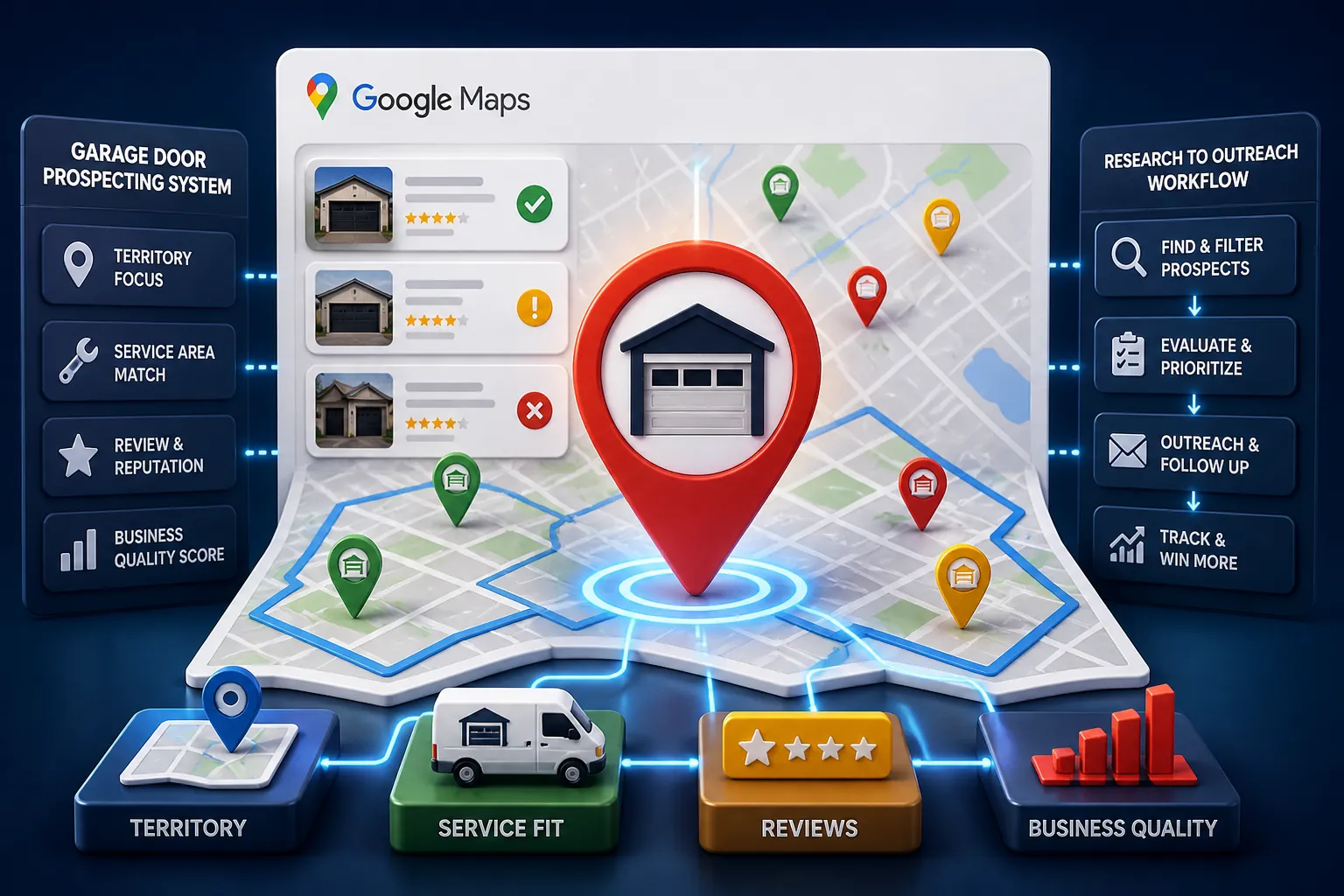
Google Maps Lead Generation for Garage Door Companies
Learn a practical workflow for using Google Maps to find, verify, and prioritize local garage door prospects. This beginner-friendly guide shows how to turn public listing signals into better outreach and more qualified leads.
Read the article →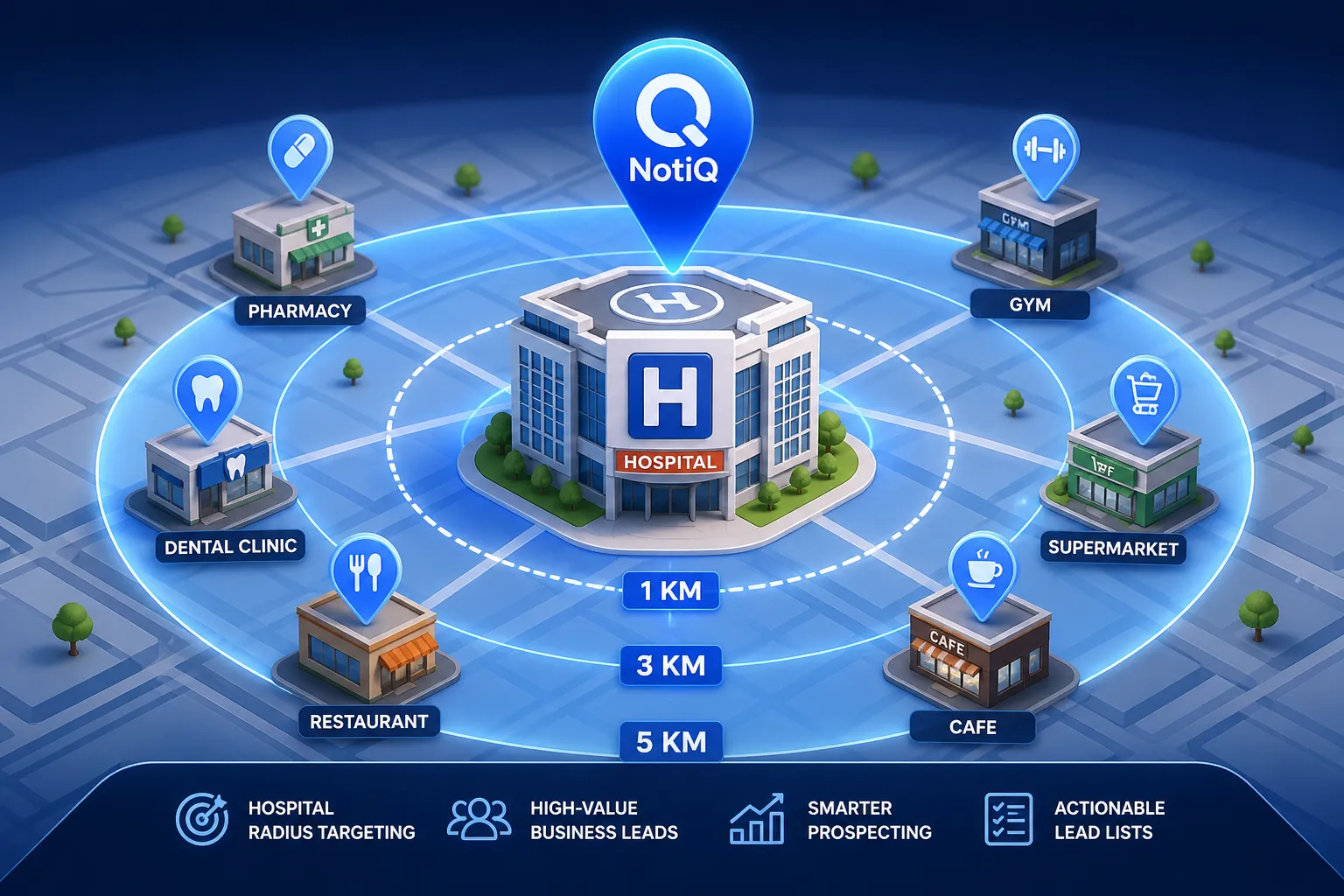
How to Build Lead Lists From Businesses Near Hospitals
Learn how to turn hospitals into high-value prospecting anchors. This guide shows how to find, qualify, and prioritize nearby businesses for cleaner local lead lists.
Read the article →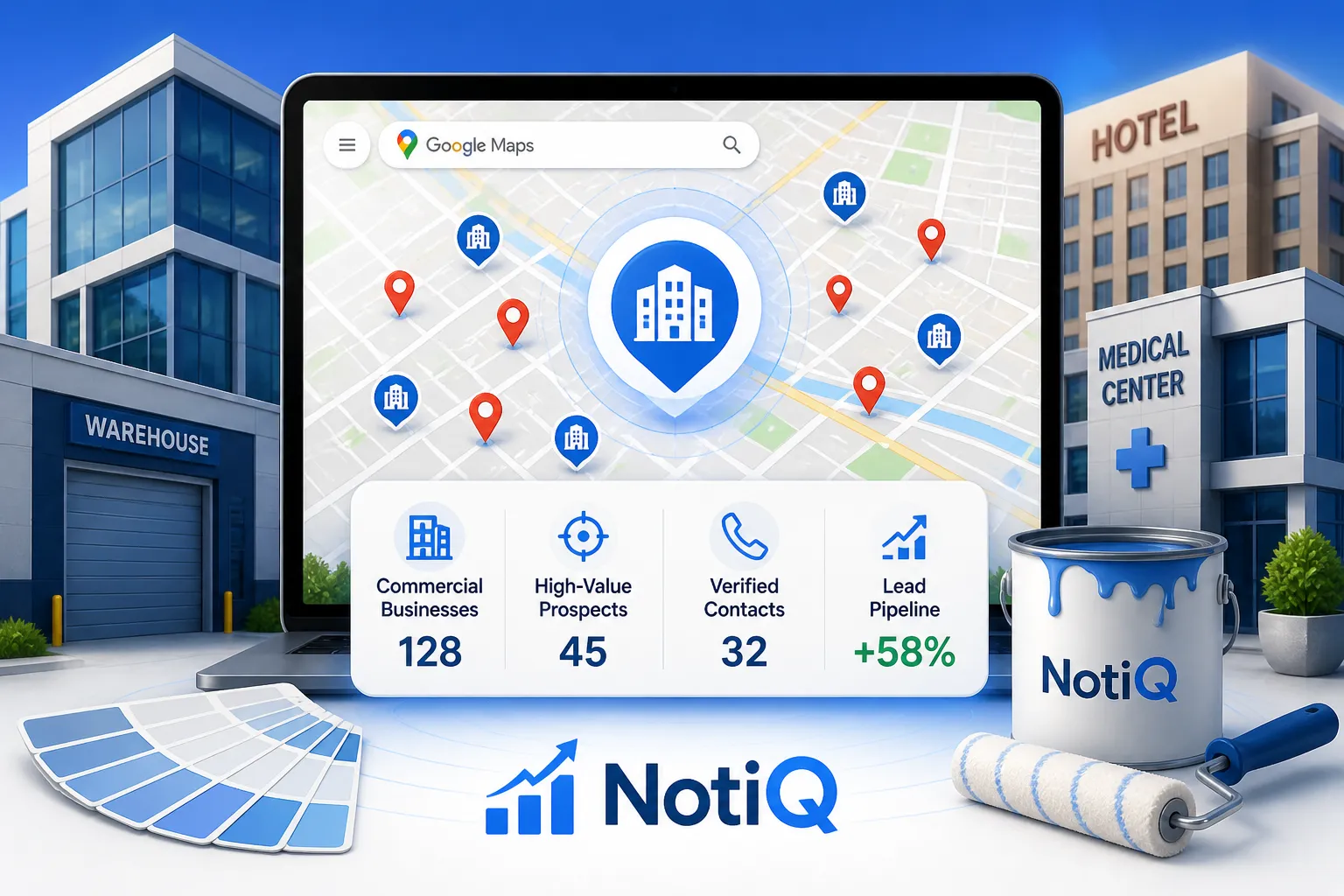
Google Maps Prospecting for Commercial Painting Contractors
Learn how commercial painting contractors can use Google Maps to build a smarter local prospecting system. This guide covers qualification, scoring, prioritization, and outreach for better-fit B2B leads.
Read the article →Popular industry lead playbooks
Maps search examples and niche outreach for the verticals teams prospect most.