Technology
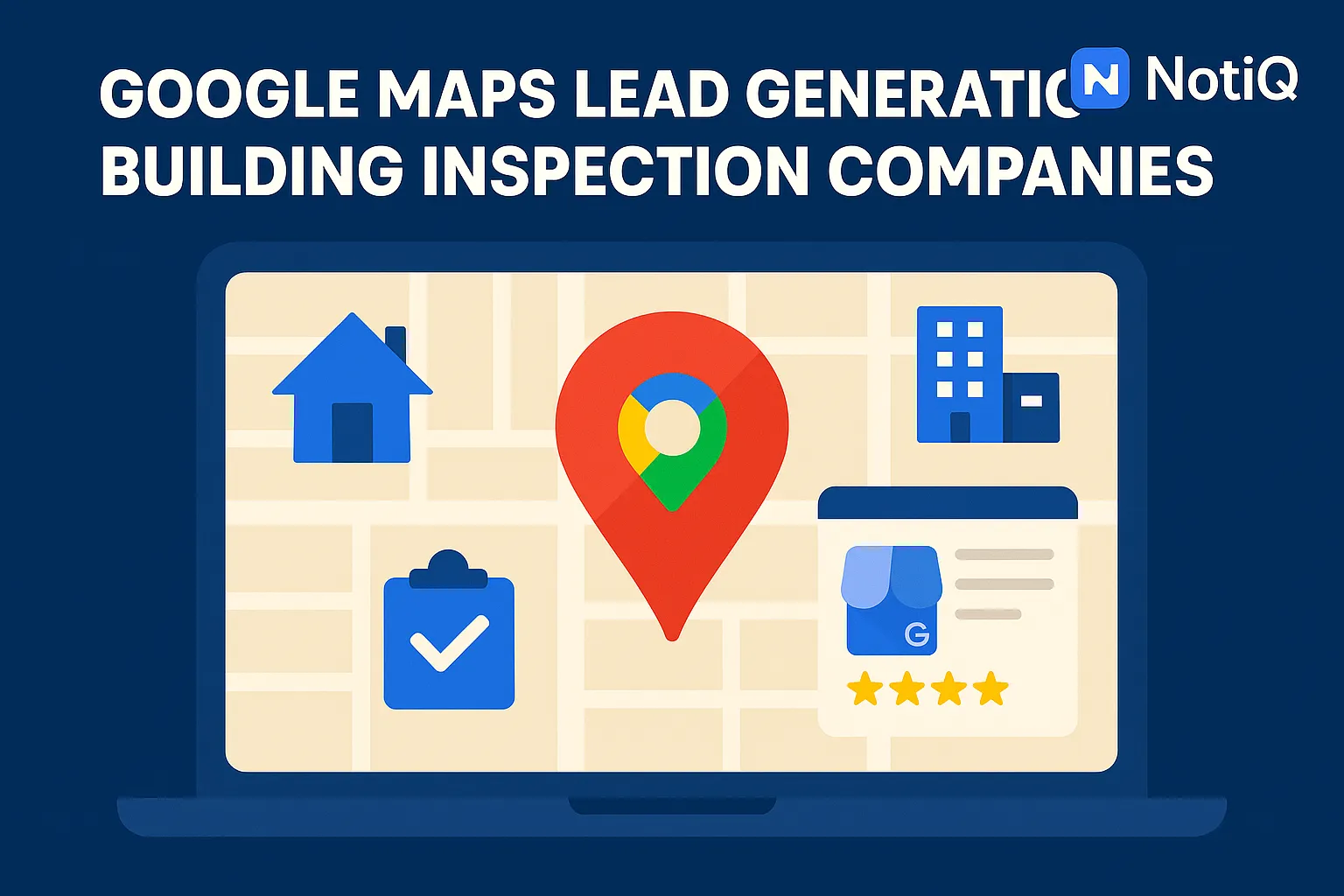
Google Maps Lead Generation for Building Inspection Companies
Learn how building inspection companies can use Google Maps to find, qualify, and segment local prospects. This step-by-step guide shows how to turn public listing data into a repeatable lead pipeline.
1. Introduction
For small building inspection firms, relying strictly on word-of-mouth referrals is a recipe for inconsistent revenue. Paid ads can quickly drain a marketing budget, and generic B2B contact lists rarely provide the hyperlocal focus required for field service businesses. Inspection teams need a repeatable, cost-effective way to find and qualify local opportunities.
Google Maps serves as a highly practical prospecting database for discovering nearby businesses, property stakeholders, and inspection-relevant buyers by city and category. Unlike broad national directories, Google Maps lead generation for building inspection companies allows you to pinpoint exact service areas and evaluate visible business signals before you ever make a call.
This guide provides a step-by-step blueprint for beginners to find, qualify, segment, and contact prospects using publicly available Google Business Profile data. Unlike generic local lead generation guides, this workflow is tailored specifically to building inspection companies and organized by service line. You will learn how to search for targets, collect listing data, segment by inspection need, prioritize high-fit leads, and personalize your outreach.
By leveraging a structured approach to residential, commercial, and compliance segmentation, inspection firms can build practical market credibility. Platforms like NotiQ are designed with this exact inspection-specific positioning in mind, helping teams turn raw local data into a refined pipeline of property inspection prospecting opportunities.
2. Why Google Maps Works for Inspection Lead Generation
Google Maps is a remarkably strong top-of-funnel channel for inspection companies that require local, targeted outreach. Rather than buying broad national databases filled with outdated contacts, Google Maps allows you to identify active local businesses, property managers, contractors, real estate investors, and facility-related prospects within your specific service areas.
For beginner teams looking to build a pipeline before investing in expensive outbound enterprise systems, map-based prospecting offers a simple and accessible starting point. While referrals are passive and paid ads require constant capital, map-first discovery puts you in control of your outreach. Furthermore, a company’s presence on Google Maps reveals highly useful qualification clues. By reviewing categories, customer reviews, website links, photos, and service-area language, you can gauge a prospect's exact needs.
Understanding how these profiles function is key; you can refer to the official Google Business Profile guidelines to see exactly what information Google is designed to display. While many competing guides offer generic local B2B outreach advice, inspection firms require service-line-specific targeting. Once you understand this workflow, using a tool to[organize and segment local inspection prospects](/)becomes the logical next step to scale your local lead generation efforts.
What Makes Google Maps Different From Generic Lead Sources
Google Maps is fundamentally location-first and category-first. This makes it an unparalleled resource for hyperlocal service businesses. Because inspection firms need buyers within a specific service radius, the geographic search behavior of Google Maps perfectly aligns with their operational limits.
Additionally, the visible business context found on a map listing dramatically improves outreach relevance. A generic B2B database might give you a name and an email, but a map listing provides photos of the properties they manage, recent reviews detailing their current projects, and exact operating hours. This context is what separates successful google maps lead generation from easily ignored cold emails. Map-based local business prospecting allows you to see the reality of the business before you reach out.
Best Use Cases for Inspection Companies
Map-based prospecting is highly versatile. It is the perfect strategy when your building inspection company is entering a new city and needs to establish a foothold quickly. It is equally effective for diversifying your pipeline beyond residential referrals, allowing you to test new service lines or build a dedicated pipeline for commercial and compliance work.
Because this process relies on publicly accessible data, it works flawlessly for a beginner persona who does not yet have advanced sales tooling. When your team already knows its territory and understands its ideal local buyer types, extracting building inspector leads, commercial inspection leads, and residential inspection leads directly from the map is both intuitive and highly profitable.
3. Who to Target by Inspection Service Line
To maximize your success, you must identify the best local targets based on the specific type of inspections you sell. A rigid segmentation framework is essential here: residential, commercial, and compliance inspections each involve entirely different buyer types, urgency levels, and outreach messaging.
This is where inspection firms can significantly outperform generic prospecting methods. By matching visible listing signals to likely service needs, you can ensure your pitch lands with the right person. According to official building inspection service classifications, inspection work spans vastly different operational requirements, meaning your outreach must be segmented accordingly. Using a platform's segmentation capabilities can help you cleanly separate residential, commercial, and compliance prospects for highly targeted campaigns.
Residential Inspection Targets
When sourcing residential inspection leads, your primary targets on Google Maps are real estate agents, brokerages, property investors, and local property-buying companies. You can spot these opportunities by searching for specific category labels (e.g., "Real Estate Agency" or "Property Investment"), looking at neighborhood relevance, and reading their website language to see if they frequently flip or list homes.
It is important to note that residential work generated through map prospecting often comes via partnership prospecting rather than direct homeowner outreach. A beginner might run a search like "real estate brokerages in [City Name]" or "property investors near [Neighborhood]" to build a list of potential referral partners. This approach transforms google business profile leads into long-term home inspection marketing assets.
Commercial Inspection Targets
Commercial inspection leads require a different focus. Here, you are targeting property managers, commercial real estate (CRE) firms, facility management teams, general contractors, developers, and multi-site retail operators. Commercial opportunities are highly lucrative because they often carry higher repeat potential and are a stronger fit for structured local outreach.
You can identify commercial relevance through business naming conventions (e.g., names ending in "Properties," "Holdings," or "Facilities"), review language mentioning tenant improvements, photos of large-scale buildings, and website copy focused on commercial leasing. Practical searches include office park management, retail property operators, warehouse logistics managers, and mixed-use property stakeholders. Effective property manager lead generation starts with recognizing these commercial property prospecting signals on the map.
Compliance and Specialty Inspection Targets
Compliance and specialty inspections involve buyers tied to regulated, recurring, or safety-driven needs. This includes public housing operators, specialty environmental concerns, and facility managers bound by strict safety codes. Compliance work differs drastically from one-off transactional inspections because it is tied to strict standards, certifications, and recurring legal requirements.
For example, discovering properties that must adhere to HUD NSPIRE inspection standards or contractors requiring EPA lead inspection certification requirements allows you to tailor a highly specific pitch. While local listings serve as the entry point to find these organizations, your compliance inspection marketing outreach must be precise, highly professional, and built on trust. Property inspection prospecting in this tier is the definition of high-value local B2B outreach.
4. How to Build and Qualify a Local Prospect List
Turning map searches into a usable, prioritized prospect list requires a structured workflow. You need to know how to search efficiently, what data to extract, and how to filter out the noise. List quality matters far more than volume, especially for small teams with limited outreach capacity.
By following this step-by-step process, you can ensure your google maps prospecting yields high-quality building inspector leads. Relying on accurate interpretations of listings—as outlined in the Google Business Profile guidelines—will keep your data clean and your outreach relevant.
Step 1 — Search by City, Category, and Buyer Type
Begin by combining geography with likely buyer categories. If you are targeting commercial work, search for terms like "property management [City]," "commercial real estate [City]," "facility management [City]," or "apartment management [Neighborhood]."
Beginners should focus on testing search variations rather than worrying about technical data extraction. Using different category modifiers helps uncover different buyer groups for the exact same service line. Testing neighboring cities and utilizing service-area modifiers (e.g., "contractors serving [County]") will yield a rich list of property inspection prospecting targets, forming the foundation of your google maps lead generation and local business prospecting.
Step 2 — Capture the Right Data From Each Listing
Once you find relevant listings, you must capture the right data fields. Record the business name, Google category, physical address or stated service area, phone number, website URL, review count, recurring review themes, and notable photos.
These fields help you determine whether the business is currently active, professionally established, locally grounded, and potentially relevant to your services. Visible public data should be used to guide your research and qualification process, not to replace sound outreach practices. Capturing this context is what turns raw google business profile leads into actionable local lead generation intelligence.
Step 3 — Qualify Leads Using Visible Signals
Not every business on the map is a good fit. Qualify and score your listings based on category fit, signs of property scale, the professionalism of their website, review quality, and evidence of commercial or regulated operations.
Recognize low-fit leads early: businesses with unclear categories, weak local relevance, or broken websites should be skipped. Create simple lead tiers: High-Fit (e.g., a property management firm with 50+ reviews and a polished website listing multiple commercial properties), Possible-Fit, and Low-Priority (e.g., a loosely related contractor with no reviews and a residential address). This tiering ensures your local B2B outreach is focused on the best commercial inspection leads and building inspector leads.
Step 4 — Segment by Service Line and Outreach Priority
Before any outreach begins, sort your qualified list into residential, commercial, and compliance buckets. Add columns in your tracker for the specific buyer type, their likely inspection need, city, urgency, and the outreach message angle you plan to use.
Segmentation drastically improves reply rates because the outreach becomes hyper-relevant to the recipient's daily reality. This is a critical market gap that competitors often miss—they focus heavily on bulk data extraction rather than inspection-specific prioritization. Proper segmentation is the secret weapon for effective residential inspection leads, commercial inspection leads, and compliance inspection marketing.
5. How to Turn Map Data Into Personalized Outreach
Moving from raw listing data to thoughtful, relevant outreach is where the actual revenue is generated. Your messaging must feel local, useful, and meticulously researched rather than generic and automated.
Visible profile data supports this message personalization. You can reference their location, property type, business category, or operational context to prove you are a local peer, not a spammer. Always match your outreach to the buyer type and their likely inspection need. Furthermore, ensure all commercial email outreach complies with legal standards by reviewing the FTC CAN-SPAM compliance guide. Establishing personalized outreach workflows acts as a natural bridge from prospect data to high-converting message creation.
What Personalization Data to Use
Personalize your messages using the prospect's city, property focus, business type, stated service area, recent review themes, or specific website messaging. For instance, mentioning that you noticed their recent expansion into a specific neighborhood shows genuine interest.
The goal is relevance, not over-personalization. Avoid generic, transparently automated openers like, "I saw your business on Google." Instead, provide a clear, business-driven reason for reaching out. Effective google maps prospecting relies on using visible property inspection prospecting clues to drive meaningful local B2B outreach.
Outreach Angles for Different Buyer Types
Different buyers care about different outcomes. You cannot use one script for everyone. Break out your message angles accordingly:
• Property Managers: Focus on speed, tenant safety, and minimizing liability. (Angle: "We help local PMs reduce tenant turnover by ensuring rapid turnaround on move-in/move-out safety inspections.")
• Facility Managers: Focus on recurring coverage and operational uptime. (Angle: "We provide recurring structural and safety audits so your maintenance team can focus on daily operations.")
• General Contractors: Focus on due diligence, code readiness, and keeping projects on schedule. (Angle: "We offer pre-drywall and final phase inspections that keep your builds moving without municipal delays.")
• Real Estate Investors: Focus on transaction support and risk mitigation. (Angle: "We deliver 24-hour inspection reports so your capital isn't tied up in risky acquisitions.")
• Residential Referral Partners: Focus on making them look good to their buyers. (Angle: "We provide white-glove home inspections that give your buyers peace of mind and protect your commission.")
Tailoring these angles is the core of effective property manager lead generation, commercial inspection leads, and home inspection marketing.
How to Avoid Generic Outreach Mistakes
The most common mistake in local B2B outreach is sending the exact same message to every segment. Failing to reference the prospect’s context or pitching a residential home inspection to a commercial warehouse facility manager will instantly ruin your credibility.
Maintain professional frequency, ensure your tone is consultative, and always include clear opt-out practices to build trustworthiness. This targeted, research-backed approach stands in stark contrast to the high-volume, generic outbound methods that competitors often rely on. Doing it right yields higher quality building inspector leads and stronger compliance inspection marketing results.
6. When to Use Manual Prospecting vs Enrichment Tools
As your inspection firm grows, you will inevitably face a choice between continuing with manual Google Maps research or investing in enrichment and workflow tools. This is a strategic decision framework based on your team size, territory, and lead volume goals.
Manual prospecting is often best for beginners, small territories, and testing new messaging. However, tools become necessary when your team is covering multiple cities, handling higher prospect volumes, or requiring strict workflow consistency. Whether manual or automated, the goal is compliance and efficiency. For teams ready to scale, utilizing a[workflow option for segmenting and organizing inspection prospects](/)ensures that data remains clean and actionable.
When Manual Prospecting Is Enough
Manual workflows are perfectly suited for small teams, one-city campaigns, and the early stages of learning which business categories convert best. Using simple spreadsheets or a basic CRM is highly recommended at the start.
The manual review process actually improves your business judgment, teaching you how to recognize high-fit inspection buyers just by looking at a map listing. For early-stage property inspection prospecting, manual google maps prospecting is the most cost-effective way to generate local lead generation.
When Enrichment Tools Start Adding Value
Enrichment tools start adding massive value when your team needs faster list building, contact organization, territory expansion, or highly repeatable segmentation. If you are targeting multiple cities, assigning distinct territories to multiple sales reps, or connecting prospect data to automated outreach systems, software becomes essential.
Enrichment tools fill the gaps by verifying contact data, categorizing business types automatically, and structuring the data for seamless CRM import. These advantages in enrichment, verification, and segmentation are crucial for scaling google business profile leads into consistent commercial property prospecting and local B2B outreach.
A Practical Decision Framework for Small Inspection Firms
To decide which path to take, evaluate these simple criteria: the number of cities you serve, your target number of prospects per week, the need for team handoff (e.g., a researcher handing leads to a closer), and the importance of service-line segmentation.
While broad prospecting tools exist, inspection-specific workflows that prioritize local relevance will always outperform generic scrapers. Ultimately, the best system is the one your team can run consistently and ethically. Mastering this balance is how you secure a steady stream of building inspector leads and local business prospecting opportunities.
7. Future Trends in Local Inspection Prospecting
Local prospecting is rapidly evolving, and inspection companies must build smarter workflows now to stay competitive. The most significant trend is the rise of AI-assisted prospect research, enrichment, and personalization, which allows small B2B teams to punch above their weight class by automating the heavy lifting of data qualification.
Simultaneously, there is a growing market demand for recurring commercial and compliance-related inspection services. As businesses seek more targeted, privacy-conscious prospecting methods, first-party local data workflows—like legally sourcing public data from Google Maps—are becoming far more important than buying third-party lists.
These trends point to a clear set of practical next steps: inspection firms must adopt better segmentation, execute more precise outreach, and engage in stronger territory planning. Embracing ai-assisted local prospecting will be the defining factor in successful compliance inspection marketing and local lead generation over the next decade.
8. Conclusion
Google Maps is a practical, repeatable source of local inspection opportunities, provided that firms utilize a structured, compliant workflow. By moving away from ad hoc guessing and adopting a systematic approach, you can transform public map data into a predictable revenue pipeline.
The step-by-step process is clear: identify the right local categories, collect the necessary listing data, qualify the prospects based on visible signals, segment them by service line, and personalize your outreach based on their specific needs. The biggest advantage in this space comes from accurately matching residential, commercial, and compliance opportunities to the exact right buyer types.
If you are currently relying on passive referrals, now is the time to move toward a more organized outbound workflow. Teams that are ready to scale should look for ways to streamline their segmentation, enrichment, and follow-up without ever losing that critical local relevance. Platforms like NotiQ provide the exact inspection segmentation and practical workflow support needed to master google maps lead generation for building inspection companies, generating high-quality building inspector leads through strategic local B2B outreach.
Frequently Asked Questions
- How can building inspection companies use Google Maps to find leads?
- Building inspection companies can use Google Maps to search by city, category, and buyer type to identify nearby businesses and property stakeholders who are likely to need inspections. By collecting visible data from Google Business Profiles and qualifying those leads before reaching out, firms can build a highly targeted pipeline of building inspector leads and execute effective google maps lead generation for building inspection companies.
- Which businesses are the best fit for inspection outreach on Google Maps?
- The best-fit targets depend entirely on the inspection service line being sold. For residential work, target real estate brokerages and investors. For commercial work, target property managers, facility operators, and general contractors. For compliance work, target regulated housing operators and specialty facilities. Success requires matching commercial inspection leads, residential inspection leads, and property manager lead generation to the correct service.
- What information should I collect from Google Business Profiles?
- You should collect the business name, primary category, website URL, phone number, stated service area, review count and themes, photos, and any visible clues regarding their operational scale or specialization. This data supports strict qualification and allows for highly personalized outreach, maximizing the value of your google business profile leads and google maps prospecting.
- Is Google Maps better than a general B2B database for local inspection prospecting?
- Google Maps is generally better for local discovery because it provides visible business context, geographic precision, and proof of active local operations. Broader B2B databases may help later with scale and workflow efficiency, but for initial local business prospecting and highly relevant local B2B outreach, the contextual data found on Maps is unmatched for finding building inspector leads.
- How do I avoid wasting time on low-fit prospects?
- To avoid wasting time, you must qualify leads before conducting any outreach. Score prospects based on category fit, website quality, review signals, property relevance, and their likely service-line match. Tier your prospects by fit and urgency (e.g., High-Fit vs. Low-Priority) so your energy is spent only on the highest-probability property inspection prospecting targets, ensuring efficient commercial property prospecting and better building inspector leads.
Continue Reading
More articles you might find useful
How to Find Local Businesses With Very Few Website Pages
Learn how to find local businesses with very few website pages using a repeatable audit framework. This guide shows how to validate page count, spot missing pages, and prioritize the best outreach opportunities.
Read the article →
Google Maps Lead Generation for Window and Door Installers
Learn how window and door installers can use Google Maps to find, qualify, and prioritize better local prospects. This beginner-friendly guide shows a repeatable workflow for smarter local outreach.
Read the article →
How to Prioritize Businesses With Verified Google Profiles
A practical framework for ranking local leads beyond the verified badge. Learn how to prioritize Google Business Profiles using fit, freshness, completeness, and activity signals.
Read the article →Popular industry lead playbooks
Maps search examples and niche outreach for the verticals teams prospect most.