Technology
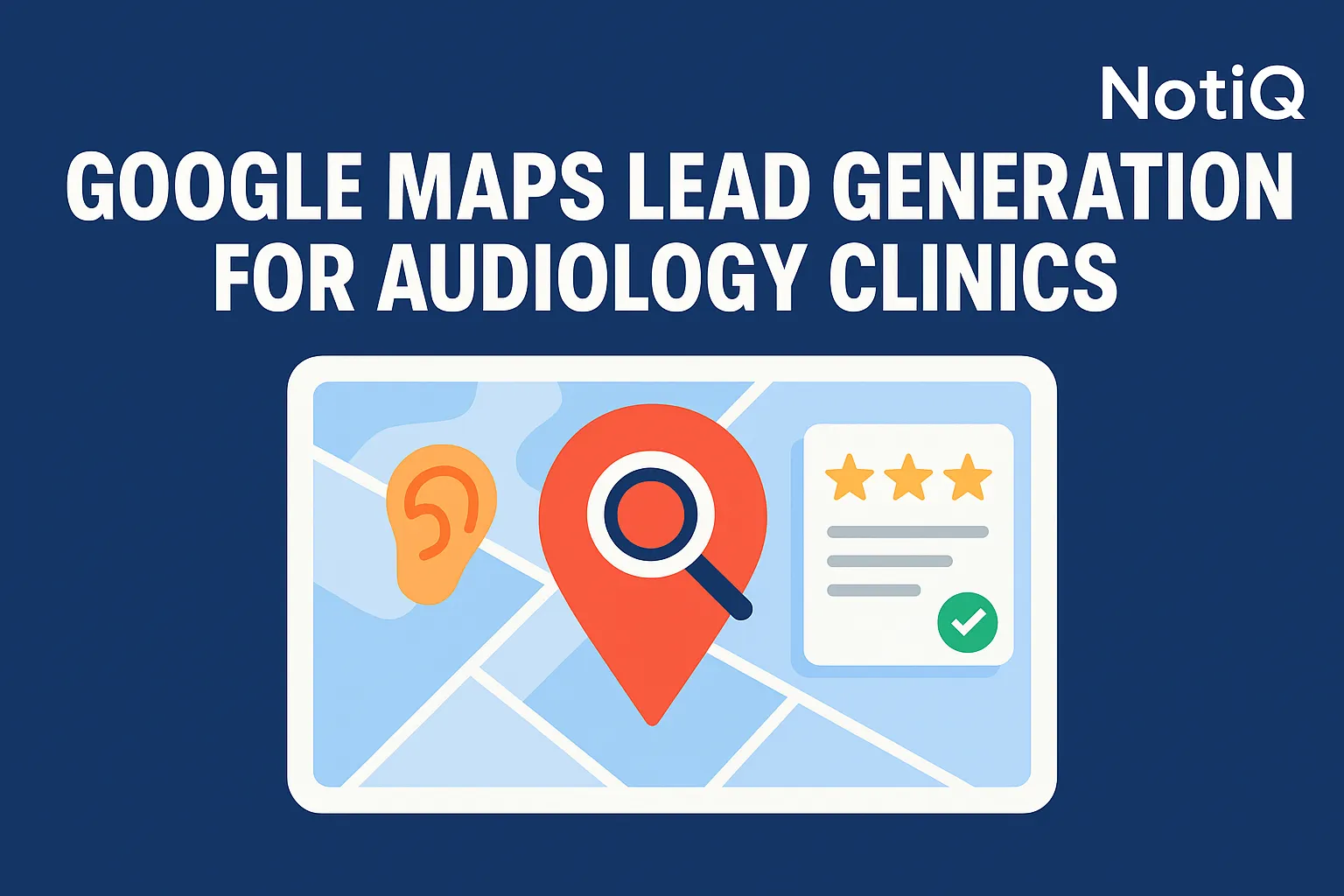
Google Maps Lead Generation for Audiology Clinics
A practical guide to finding, segmenting, and prioritizing audiology clinic leads using Google Maps data. Learn how to spot local SEO gaps, qualify better prospects, and personalize outreach more effectively.
1. Introduction
If you sell marketing, software, or business services to healthcare practices, you already know the core challenge: generic healthcare lead lists rarely tell you the whole story. A flat database might give you a clinic name and an email address, but it won’t tell you if the practice is an independent audiology clinic, what specific hearing services they offer, or whether they have visible local marketing gaps.
Audiology is a highly local, reputation-driven category. Patients choose hearing centers based on proximity, trust, and visible expertise. Because of this, Google Maps and Google Business Profiles often reveal the exact context needed for better targeting. This article provides a comprehensive blueprint for google maps lead generation for audiology clinics. We will show you how to use publicly accessible Google Maps data to find, segment, and prioritize audiology clinic leads, turning those local signals into highly relevant, personalized outreach.
This is not a generic guide to scraping the web; it is a niche-specific workflow tailored for hearing center prospecting. By leveraging[Home](/), you can transform raw Maps data into segmented, highly qualified clinic prospect lists based on independence, service segmentation, and review-profile analysis.
2. Why Google Maps Works for Audiology Prospecting
Google Maps is an unparalleled top-of-funnel source for local healthcare prospecting. Audiology clinics compete in tightly localized markets where visibility, reviews, service breadth, and trust signals directly influence patient demand. Unlike a flat B2B lead database, Google Maps surfaces rich contextual data: business categories, patient reviews, listed services, photos, operating hours, and brand cues.
Marketers and sales teams need faster ways to identify likely-fit clinics without wasting time on low-context lists. Google Maps prospecting provides this by acting as a real-time snapshot of a clinic's local market presence. You can immediately see how well a clinic aligns with Google’s local ranking factors—relevance, distance, and prominence—and use that information to drive healthcare local lead generation and audiology patient acquisition strategies.
Why local intent makes audiology a strong Maps prospecting niche
Hearing care decisions are geographically constrained. Patients rarely travel across state lines for a standard hearing test or hearing aid fitting; they search locally. This local intent makes local SEO for audiologists incredibly important.
A patient’s choice is heavily tied to trust factors like average ratings, the recency of reviews, and overall profile completeness. Because hearing aid clinic marketing relies so heavily on local search visibility, there is a massive overlap between prospecting and local SEO opportunity discovery. When you evaluate a clinic on Maps, you are seeing exactly what their prospective patients see.
Why generic healthcare lists fall short
Generic databases are notorious for missing the nuanced details required for effective local healthcare outreach. They often fail to capture ownership type (independent vs. corporate), service mix (pediatric vs. adult, tinnitus vs. cochlear), and local reputation context.
Without these local signals, manual prospecting for audiology clinics becomes a guessing game. Outreach becomes broad, generic, and easily ignored by busy clinic owners. Relying on basic audiology clinic leads without local context means missing out on the very pain points you could be solving. Google Maps serves as a crucial qualification layer, allowing you to filter and segment before you ever spend a dime on data enrichment or outbound email.
What competitor content usually misses
Most guides on google maps lead generation for audiology clinics offer broad advice that applies to any local business, completely missing the nuances of healthcare. They tell you to look for a Google Business Profile, but they don't explain how to qualify audiology clinics specifically.
What sets a successful workflow apart is the ability to identify ownership signals, segment by specific hearing services, and use review-based personalization. By understanding the unique dynamics of a google business profile for audiology clinics, you can craft outreach that speaks directly to a clinic's specific market position, rather than sending a generic "we can improve your SEO" pitch.
3. How to Find and Segment Audiology Clinics
Building a high-fit prospect list requires a practical, repeatable workflow. Finding clinics is only the first step; the real value lies in segmenting them so your outreach lands with precision. By categorizing clinics based on their services and ownership structure, you can dramatically increase your response rates.
Start with the right search patterns in Google Maps
To master google maps lead generation for audiology clinics, you must start with the right search queries. Broad terms are a good starting point, but you need to dig deeper. Use direct terms like "audiologist," "hearing center," and "hearing aid clinic," combined with local modifiers (e.g., "audiologist in Austin, TX").
However, to uncover more specialized audiology clinic leads, search for related service keywords. Queries like "tinnitus treatment," "pediatric audiologist," or "cochlear implant mapping" will surface clinics that might not rank for broad terms but are highly relevant to your prospecting goals. Remember that category labels and service wording vary widely between clinics, so varying your google maps prospecting searches is essential.
Separate independent clinics from chains and retail networks
One of the biggest challenges in local healthcare outreach is that it is often hard to distinguish independent audiology clinics from chains. However, there are observable public signals.
Signals of independence often include single-location branding, a localized domain name, locally focused profile descriptions, and a lack of corporate boilerplate language. Conversely, chains and retail networks often exhibit repeated brand names across multiple cities, standardized profile descriptions, and complex multi-location website structures.
Knowing how to find independent audiology clinics on google maps matters because independent owners have different buying cycles, distinct personalization needs, and are generally more receptive to external marketing support than a corporate-owned branch.Note: These are observational clues for qualification, not definitive legal proof of ownership.
Segment by service mix, not just by business category
Don't just group prospects by their primary category. Segment them by the specific services mentioned on their profiles or websites. Effective hearing center prospecting involves building sub-groups around offerings like hearing tests, tinnitus treatment, pediatric audiology, cochlear implant support, and hearing aid fitting.
Service-line segmentation improves message relevance. A clinic aggressively promoting pediatric audiology has different growth goals than a clinic focused entirely on adult hearing aid sales. Tailoring your audiology clinic outreach using google maps data to these specific service lines ensures your message resonates with their current business objectives, bridging the gap between hearing aid clinic local seo and lead generation.
Build a simple prospect scoring framework
To organize your findings, build a lightweight prospect scoring framework. Score audiology clinic leads based on ownership type, service breadth, review profile health, and profile completeness.
The goal isn't mathematical perfection; it's prioritization. A clinic with a high-value service mix but a weak review profile is a high-priority prospect for reputation management services. Add a "sales angle" column to your tracking sheet—such as "needs review growth," "hidden service visibility," or "incomplete profile." For structured segmentation, enrichment, and workflow automation, tools like Home can help turn this manual scoring into a scalable, repeatable google business profile for audiology clinics workflow.
4. Which Google Business Profile Signals Qualify the Best Leads
Public signals from a Google Business Profile are invaluable for deciding whether a clinic is a strong prospect. By analyzing these signals, you can move beyond simple contact collection and start qualifying leads based on their actual need for your services.
Categories, attributes, and listed services
Categories and listed services reveal how a clinic positions itself and which search intents it wants to capture. Understanding how Google Business Profile data is sourced helps you realize that what a clinic inputs directly impacts their visibility.
If a google business profile for audiology clinics has incomplete, vague, or mismatched categories, it indicates an immediate optimization opportunity. For example, if a clinic mentions tinnitus care on their website but fails to list it as a service on their GBP, they are losing local SEO for audiologists traffic. These service gaps are perfect hooks for hearing center prospecting outreach.
Ratings, review count, and review recency
Review quantity, freshness, and average ratings are powerful indicators of a clinic's trust strength and marketing maturity. Knowing how to qualify audiology clinics using reviews and ratings allows you to spot healthcare review management for clinics opportunities.
A low review count or stale review activity (no new reviews in the last 6 months) creates a natural outreach opportunity around reputation growth and audiology patient acquisition. Use review velocity as a directional signal. A clinic that used to get five reviews a month but has gotten none this year is a prime candidate for a reactivation or review-generation campaign.
Review themes that reveal clinic priorities
Don't just look at the star rating; read the text. Review themes can uncover recurring operational strengths or weaknesses, such as staff friendliness, hearing aid support, pediatric care patience, wait times, or follow-up quality.
Identifying these themes cures the problem of low personalization in clinic outreach. If patients consistently praise a clinic's tinnitus support, you can reference that specific strength in your outreach. Turning review insights into messaging angles tied to patient experience makes your audiology clinic outreach using google maps data feel bespoke and highly relevant to that specific hearing center prospecting effort.
Profile completeness as a sales-readiness signal
An incomplete google business profile for clinics is a massive sales-readiness signal. Missing services, weak descriptions, limited photos, or outdated hours indicate a clear local SEO gap.
Frame these gaps as opportunity signals rather than criticisms. Adhering to Google Business Profile representation guidelines is crucial for patient discovery and trust. When you reach out to discuss a google business profile for audiology clinics, position profile completeness as the fastest path to capturing existing local SEO for audiologists demand.
5. How to Personalize Outreach for Hearing Centers
Better segmentation should lead to better messaging, not just better spreadsheets. Healthcare outreach must be professional, respectful, and highly specific. Here is how to turn Maps and review data into outreach that feels incredibly relevant to audiology clinics.
Match the message to the clinic segment
Your messaging must adapt to the clinic type. An email to an independent audiology clinic should sound vastly different from an email to a larger multi-location hearing brand.
Service-line context also changes the outreach angle. If you are targeting audiology clinic leads based on tinnitus visibility, your message should focus on capturing high-intent specialty searches. If you are targeting based on hearing aid sales, focus on review growth and competitive positioning. Knowing how to find independent audiology clinics on google maps is useless if your local healthcare outreach treats them like a corporate chain.
Use reviews and services to create relevant opening lines
Generic opening lines kill conversion rates. Combat low personalization in clinic outreach by using review themes, listed services, or profile gaps to craft your hooks.
Good personalization references observed context without sounding invasive or automated. For example:"I noticed your recent reviews highlighting your team's patience with pediatric audiology, but I saw that pediatric services aren't listed on your Google profile's main service menu."This proves you actually looked at their business. Using audiology clinic outreach using google maps data properly means leveraging these details to start a conversation about hearing aid clinic marketing.
Turn profile weaknesses into constructive outreach angles
When you spot an incomplete google business profile for clinics, use it constructively. Message around low review volume, thin service listings, or weak photo coverage with an opportunity-focused tone, not a judgmental one.
Instead of saying, "Your local SEO is bad," say, "I noticed you offer comprehensive tinnitus care on your site, but it's not optimized on your Google profile, which might be causing you to miss local searches." Connect each weakness directly to an outcome the clinic cares about: audiology patient acquisition, local SEO for audiologists discovery, and patient trust.
Keep outreach compliant and trustworthy
All local healthcare outreach and clinic outreach automation must be lawful and non-deceptive. Ensure you have a clear sender identity, make honest claims, and provide easy opt-out handling.
Always adhere to the FTC CAN-SPAM compliance guide to maintain trust and protect your sender reputation. B2B outreach to audiology clinic leads is highly effective when done ethically. If you are looking to scale this process, platforms like Home can help ensure that personalized outbound and message customization remain manageable and compliant as your segmented data turns into tailored outreach.
6. When Local SEO Gaps Create Sales Opportunities
Prospecting and local SEO are deeply intertwined. Some of the best prospects are not the absolute worst clinics, but rather established clinics with a strong service depth that simply have visible room for improvement. Identifying these gaps allows you to position your services as the bridge to better local visibility.
Missing categories, weak descriptions, and thin service coverage
When a google business profile for audiology clinics has missing categories or thin descriptions, it reduces clarity for both Google's algorithm and potential patients.
Incomplete service coverage hides valuable, high-margin offerings like tinnitus care or pediatric audiology. If a patient searches for a specific treatment and the clinic hasn't explicitly listed it, they will likely go to a competitor who has. Frame an incomplete google business profile for clinics as a strong outreach hook for visibility improvement, directly impacting their local SEO for audiologists.
Low review momentum and underdeveloped trust signals
Weak review recency or low overall volume directly damages local credibility. In local healthcare, patient decision-making is heavily reliant on peer trust.
If a clinic hasn't generated a review in eight months, potential patients may wonder if the practice is still open or if the quality of care has dropped. Outreach focusing on healthcare review management for clinics and reputation growth is highly effective here. By understanding how to qualify audiology clinics using reviews and ratings, you can directly tie review momentum to audiology patient acquisition.
Local competitor density as a prioritization signal
Clinics operating in dense, highly competitive map environments feel visibility pressure much more strongly than a solo practitioner in a rural town.
Nearby competitors with stronger profiles can sharpen your sales narrative. If a prospect has 20 reviews and the three clinics closest to them have 150+, the urgency for local healthcare outreach becomes obvious. Use competitor density as context for your google maps prospecting, showing the clinic exactly what Google’s local ranking factors demand in their specific neighborhood to win audiology clinic leads.
Mini example of a high-opportunity audiology prospect
Consider this hypothetical example of a high-opportunity prospect found during google maps lead generation for audiology clinics:
• Context: An independent clinic in a mid-sized suburb.
• Strengths: Their website shows a strong, comprehensive service offering, including specialized tinnitus matching.
• Gaps: They have a low review count (only 12 reviews, none in the last year), weak service descriptions on their GBP, and face moderate local competition from a nearby corporate chain.
This combination creates both fit and urgency. The manual prospecting for audiology clinics phase identified a great business that is currently losing visibility. Because of this segmentation, your audiology clinic outreach using google maps data can specifically address how updating their service descriptions and activating a review campaign will help them compete against the nearby chain.
7. Tools, Workflow Tips, and Scaling Considerations
Moving from one-off manual research to a repeatable, scalable workflow is the key to sustained success. Establishing standard operating procedures for data collection ensures that your outreach remains high-quality even as your volume increases.
What to capture in your prospect sheet
To make your clinic outreach automation effective, your prospect sheet needs structured data. Capture fields such as: clinic name, location, ownership type (independent vs. chain), primary categories, listed services, average rating, review count, review recency, specific profile gaps, and a designated outreach angle.
Structured notes make follow-up and personalization significantly easier. Use tags for specific services (e.g., #Pediatric, #Tinnitus) and sales opportunities (e.g., #LowReviews, #MissingServices). This structured approach turns raw audiology clinic leads into a highly actionable database based on the reality of their google business profile for audiology clinics.
When to stay manual vs when to systematize
If you are testing a new market or a new outreach angle, start manually. Small-volume testing allows you to refine your messaging. However, repeated niche manual prospecting for audiology clinics quickly becomes a bottleneck.
The real challenge is rarely finding the clinics; it is qualifying and personalizing the data at scale. To improve operational efficiency for your marketing and sales teams, you must transition to a systematized workflow. Automating the segmentation of your google maps lead generation for audiology clinics allows your team to focus on closing deals rather than copying and pasting data, making clinic outreach automation viable.
How NotiQ fits the workflow
To truly scale this process, you need a system that orchestrates the data.[Home](/)serves as the orchestrator for segmenting clinics by independence, service lines, and review-profile signals.
Instead of relying on one-size-fits-all list building, NotiQ supports highly targeted local healthcare outreach. By automating the qualification layer, it ensures you are only spending time on the most viable audiology clinic leads, streamlining your entire hearing center prospecting workflow.
8. Conclusion
Google Maps is far more than just a directory to find audiology clinics; it is a rich qualification layer. By analyzing publicly available data, you can identify better-fit leads and craft outreach that is genuinely relevant to a clinic's immediate needs.
The differentiator in modern prospecting is context. Utilizing ownership signals, service mix segmentation, review velocity, and profile completeness is what makes your google maps lead generation for audiology clinics precise and effective. Stop relying on generic lists. Start with a small test market, build a basic scoring model, and refine your outreach based on actual clinic context.
For teams ready to move beyond manual spreadsheets and build a more structured, efficient workflow for segmenting and prioritizing audiology clinic leads, leveraging specialized tools is the next logical step. By adopting a process tailored for local SEO for audiologists and healthcare prospecting, you can turn public Maps data into your most reliable revenue pipeline.
Frequently Asked Questions
- How can audiology clinics generate leads from Google Maps?
- Google Maps helps identify clinics, service offerings, review health, and visibility gaps that inform prospecting and outreach. The real value in learning how to generate audiology clinic leads from google maps comes from segmenting this data to understand a clinic's local market position, allowing you to personalize outreach rather than just collecting names to spam with generic audiology clinic leads pitches.
- What information on Google Maps helps qualify audiology clinics as prospects?
- Key qualifying signals include primary categories, listed services, average ratings, total review count, review recency, profile completeness, and brand/ownership clues. Knowing how to qualify audiology clinics using reviews and ratings helps estimate their fit and potential need for marketing support, making the google business profile for audiology clinics the ultimate qualification tool.
- How do you segment independent audiology clinics from large chains?
- You can spot independent clinics through observable signals: unique local branding patterns, single or dual-location footprints, localized website structures, and bespoke profile descriptions. While it is sometimes hard to distinguish independent audiology clinics from chains, these cues are strong indicators. Note that these are qualification cues for how to find independent audiology clinics on google maps, not legal proof of ownership.
- What makes a good outreach strategy for hearing centers?
- A strong outreach strategy is highly specific to the clinic’s actual services, patient reviews, and visible profile gaps. Instead of sending generic sales copy, tie each message to a visible opportunity, such as missing service listings or stale reviews. Effective hearing center prospecting relies on audiology clinic outreach using google maps data to prove you understand their specific practice.
- How can local SEO improve lead generation for audiology clinics?
- Stronger categories, detailed service listings, consistent positive reviews, and overall profile completeness directly improve a clinic's discovery and trust in local search results. Because local SEO for audiologists dictates who gets the patient phone call, identifying a clinic's local SEO gaps provides the perfect, value-driven sales opportunity for hearing aid clinic local seo and lead generation services.
Continue Reading
More articles you might find useful
How to Find Local Businesses With Very Few Website Pages
Learn how to find local businesses with very few website pages using a repeatable audit framework. This guide shows how to validate page count, spot missing pages, and prioritize the best outreach opportunities.
Read the article →
Google Maps Lead Generation for Window and Door Installers
Learn how window and door installers can use Google Maps to find, qualify, and prioritize better local prospects. This beginner-friendly guide shows a repeatable workflow for smarter local outreach.
Read the article →
How to Prioritize Businesses With Verified Google Profiles
A practical framework for ranking local leads beyond the verified badge. Learn how to prioritize Google Business Profiles using fit, freshness, completeness, and activity signals.
Read the article →Popular industry lead playbooks
Maps search examples and niche outreach for the verticals teams prospect most.