Technology
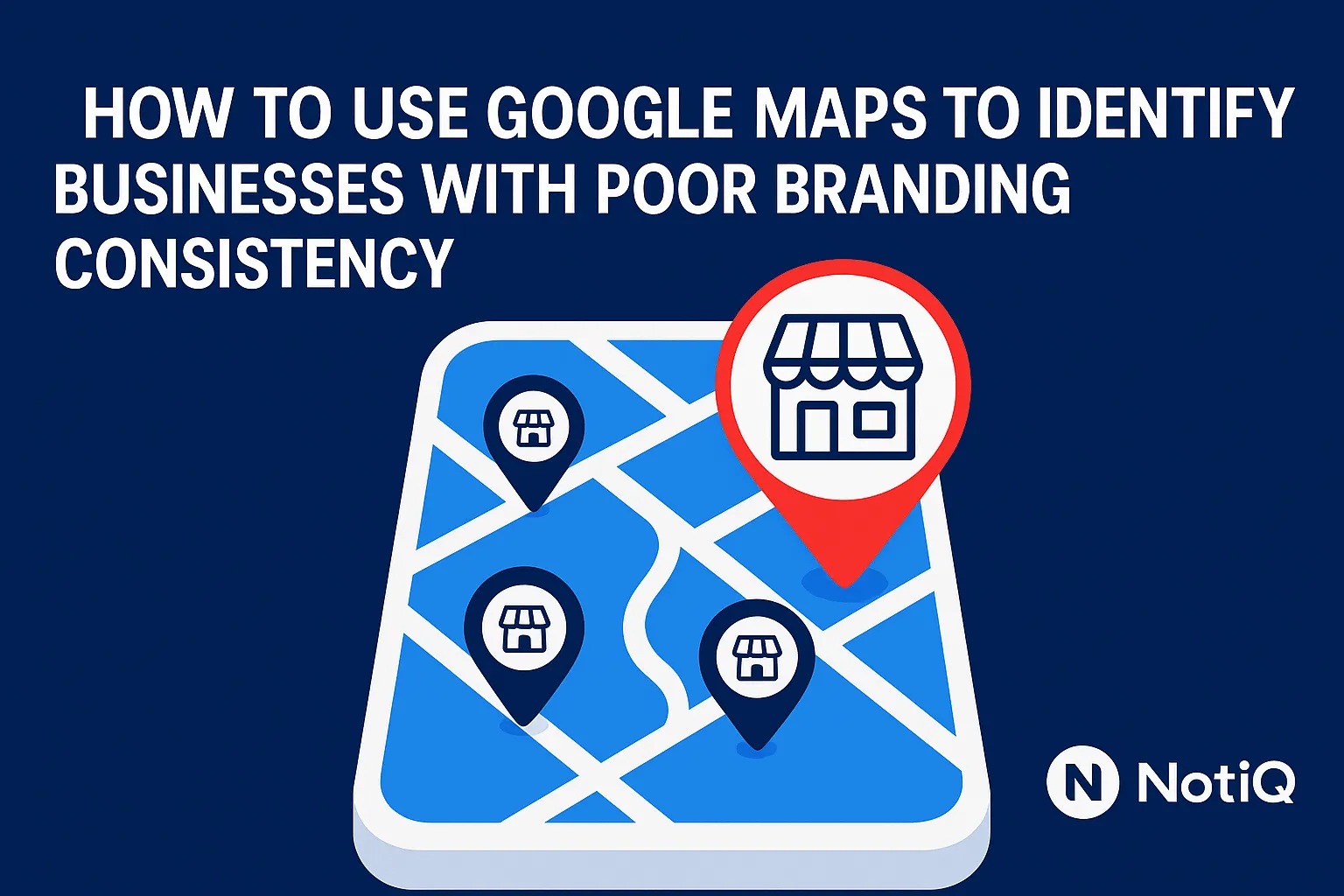
How to Use Google Maps to Identify Businesses With Poor Branding Consistency
Learn how to use Google Maps as a fast, evidence-based prospecting tool. This guide shows how to audit branding consistency across Google Business Profiles, websites, and social channels to uncover high-fit local SEO opportunities.
1. Introduction
Google Maps is far more than a simple navigation tool—it is a live, publicly accessible database of local businesses continuously broadcasting visible trust signals. Every day, consumers make rapid purchasing decisions based on the visual assets, reviews, and messaging displayed on a company’s Google Business Profile (GBP). Yet, many local businesses present glaring branding issues in these public spaces, inadvertently turning away potential customers before they ever click through to a website or make a phone call.
The core problem for agencies and consultants is that most prospecting approaches rely on scraping generic lead data rather than identifying observable brand inconsistency. Buying a list of 1,000 local plumbers tells you nothing about which ones actually need your help. However, learning how to use google maps to identify businesses with poor branding consistency allows you to discover highly qualified leads based on visible evidence.
This guide provides a practical, step-by-step framework for google maps prospecting. You will learn how to spot weak branding consistency directly from Google Maps, verify those gaps across websites and social channels, score the opportunities, and turn your findings into credible, personalized outreach. Designed for intermediate marketers and growth professionals, this workflow moves beyond basic GBP setup to focus on repeatable audit logic and lead qualification.
This is not just another local SEO checklist; it is a Maps-first workflow specifically engineered for finding outreach-ready businesses. As experts in identifying these vital outreach signals and transforming them into creative personalization workflows, NotiQ [Home](/)] provides the broader workflow layer needed to act on these insights efficiently and ethically.
2. Why Google Maps Is a Branding Prospecting Tool
Google Maps and the Google Business Profile serve as the ultimate frontline for local business branding. Before launching a cold outreach campaign, reviewing Maps results allows you to evaluate a business’s visual assets, operational details, reviews, category selections, and website links all in one centralized environment. This makes Maps an incredibly fast and effective first-pass prospecting tool.
There is a vast difference between simply finding businesses on a map and finding businesses with evidence-based improvement opportunities. Public branding signals matter immensely because customers make immediate trust judgments based on profile coherence. When a business exhibits poor branding consistency—such as mismatched logos, contradictory messaging, or unprofessional imagery—it directly impacts their bottom line. These inconsistencies lead to lower consumer trust, weaker click-through behavior, market confusion, and missed conversion opportunities.
Unlike typical manual scraper-style prospecting, which blindly collects contact information without context, this methodology focuses on qualifying outreach signals through visible evidence. The goal of local lead generation should not be volume alone, but relevance. By adhering to Google’s business representation guidelines, you can accurately assess whether a business is presenting itself completely and accurately. For further insights into adjacent education on personalization, creative outreach, and prospecting strategy, explore the resources available at Blog].
What makes Google Maps different from a standard local SEO audit
A standard local SEO audit typically focuses on technical completeness, keyword rankings, and citation uniformity. In contrast, a branding consistency audit asks a more fundamental question: does this business look coherent, professional, and trustworthy across all customer touchpoints?
The same local SEO signals can be interpreted differently depending on your objective. For instance, missing photos might be flagged as a simple GBP optimization gap in an SEO audit. However, in a branding context, a mismatched photo style, outdated storefront images, or off-brand visual tones represent a severe brand inconsistency issue. In practical terms, branding inconsistency encompasses disjointed naming conventions, conflicting visual identities, erratic brand tones, and misaligned customer-facing details that degrade the overall brand experience.
Who should use this workflow
This workflow is tailor-made for agencies, consultants, and growth-focused service providers who sell branding, web design, GBP optimization, local SEO, or creative services. If you are tired of sending generic outreach to every local business in a specific category, this approach provides a mechanism for superior prospect qualification. By leveraging google maps lead generation techniques to identify specific outreach signals, you can pinpoint businesses that visibly need your expertise in local business branding, ensuring your pitches are relevant, timely, and highly converting.
3. The Fastest Branding Inconsistency Signals to Audit
To operationalize this workflow, you need a fast, repeatable checklist of the most obvious signals that can be spotted in minutes directly from Google Maps. Approaching the profile methodically ensures your audit is operational rather than theoretical. Capturing screenshots or annotated examples during this phase makes signal recognition easier and provides undeniable proof for your outreach. Remember, a single isolated issue may not justify an email, but clusters of branding consistency gaps typically indicate a highly qualified prospect.
Business name, category, and description mismatches
The first step is to verify the core business identity. Compare the business name shown on Maps with the name displayed on the company's website homepage, title tags, and other visible brand assets. Inconsistent naming often indicates weak brand governance, outdated listings, or a fundamental lack of clear positioning.
Next, evaluate the business description. Weak, keyword-stuffed, or generic descriptions that fail to communicate a distinct value proposition—or that contradict the website’s messaging—are prime indicators of brand inconsistency. Furthermore, category selection serves as a vital context signal. If a business's chosen categories feel misaligned with its stated messaging, it likely suffers from deeper positioning issues. When evaluating these elements, always cross-reference with Google’s business representation guidelines to ensure your assessment of citation consistency and GBP optimization aligns with platform standards.
Logo absence, low-quality images, and inconsistent visual identity
Visuals dictate first impressions. Missing logos, reliance on generic stock images, inconsistent color palettes, or outdated storefront photos are massive red flags for weak visual brand identity. It is crucial to distinguish between a profile that simply "does not have enough photos" and one where the business profile photos actively undermine consumer trust.
Consider mobile behavior: on the Maps app, users judge a local business branding presence visually within seconds. If the imagery looks unprofessional, the user scrolls past. Identifying these gaps opens the door to pitching service opportunities like branding refreshes, image enhancement, or comprehensive GBP media strategies. If a prospect struggles with creating cohesive visual assets, tools like Ai Images] can be instrumental in improving weak or inconsistent brand imagery.
Review patterns that hint at brand or experience inconsistency
Customer reviews are not solely reputation management metrics; they are vital outreach signals that reveal disconnects between a company's brand promise and the actual customer experience. Look for recurring review signals where customers praise the core service but criticize peripheral brand elements—such as outdated operational details, poor communication, or a lack of professionalism.
Nuance is required here. While reviews can highlight local SEO signals and brand gaps, they may also point to internal operational issues. Avoid treating every negative review trend purely as a branding problem, but use them to build a comprehensive picture of how the brand is perceived by the public.
Missing or outdated business details
Finally, audit the profile for visible data gaps. Outdated operating hours, broken website links, sparse attributes, missing social links, or generally incomplete profile information are clear signs of a neglected presence. According to Google’s official documentation, complete and accurate profiles heavily support findability and user engagement.
These missing details severely impact both trust and discoverability. Frame these issues as customer experience problems first, rather than just technical GBP optimization or citation consistency misses. When a customer drives to a location based on outdated Maps hours only to find it closed, the brand suffers immediate, sometimes irreparable, damage.
5. A Simple Scorecard for Prioritizing Outreach-Ready Businesses
To scale your google maps lead generation without losing quality, you need a repeatable scoring rubric. A scorecard allows you to qualify leads faster, reduce subjectivity in your google maps prospecting, and focus your energy on the highest-value targets. This proprietary NotiQ framework is designed as a practical guide rather than a rigid mathematical formula, ensuring you target businesses where visible brand inconsistency meets clear commercial upside.
Suggested scoring criteria
When building your scorecard, evaluate the profile across several core categories. Assign a simple score (e.g., 0–3 or 0–5) to keep the process rapid during live audits. Recommended criteria include:
• Logo and Visual Consistency: Does the logo match across all platforms?
• Photo Quality: Are business profile photos professional and on-brand?
• Name and Citation Consistency: Is the business name identical across Maps, website, and social?
• Description Clarity: Does the GBP description clearly state the value proposition?
• Website Alignment: Do the GBP and website present a unified branding consistency?
• Social Alignment: Are connected social profiles coherent with the main brand?
• Trust Modifiers: Add or subtract points based on review-response consistency and the presence of outdated information.
How to weight signals by outreach potential
Not all outreach signals carry the same commercial weight. A logo mismatch combined with weak, unprofessional photos represents a much stronger outreach opportunity than a single missing profile attribute. Weight your criteria to prioritize businesses exhibiting multiple visible inconsistencies across different channels. Favor prospects where the visual brand identity issue is both easy to demonstrate to the owner and straightforward for your agency to improve, maximizing your local lead generation ROI.
Example of a high-priority vs low-priority lead
To illustrate the scorecard in action, consider these contrasting examples:
6. How to Turn Audit Findings Into Ethical Personalized Outreach
Identifying gaps is only half the battle; translating those observed issues into compelling, non-spammy outreach messaging is where deals are won. Ethical personalized outreach must be grounded in public, observable facts. Never rely on invasive assumptions, scraped private data, or exaggerated claims. By tying every outreach angle to a tangible business outcome—such as trust, discoverability, conversion, or customer clarity—you position yourself as a strategic partner rather than a nuisance.
When crafting your messages, always adhere to truthful communication standards, such as those outlined in the FTC endorsement guidance, ensuring your claims are honest and non-misleading. Avoid shaming language; instead, frame your outreach as a helpful observation paired with a practical next step.
Build outreach around observable evidence
The most effective outreach signals are the ones the business owner can see with their own eyes. Tactfully reference visible issues, such as mismatched profile imagery, inconsistent naming conventions, or unclear positioning between the GBP and the website. Evidence-based outreach feels inherently more credible because it proves you have done actual research during your google maps prospecting. Keep your messaging concise and focused on one or two high-impact findings rather than overwhelming the prospect with a comprehensive, unsolicited brand teardown.
Connect issues to trust and conversion, not just aesthetics
Business owners rarely buy "design" for design's sake; they buy growth. Explain precisely how weak branding consistency directly affects click confidence, call intent, and initial customer impressions. Avoid vague aesthetic critiques. Instead, tie your observations to real customer behavior, demonstrating that local business branding is a critical growth lever. Explain how conflicting review signals or poor local SEO signals create friction that drives potential customers to competitors with more coherent profiles.
Sample ethical outreach framework
Instead of relying on rigid, overused scripts, use this adaptable framework for your personalized outreach:
1. Observed Signal: Mention the specific, public inconsistency you found.
2. Why it Matters: Connect the finding to trust, conversion, or customer clarity.
3. Practical Improvement Idea: Offer one actionable piece of advice they can use immediately.
4. Invitation to Review: Ask a low-friction question to open a dialogue.
Example Angle (GBP Visual Refresh):"Hi [Name], I was looking for local [Industry] services on Google Maps and noticed your Business Profile uses a different logo and imagery style than your main website. Inconsistent branding consistency often causes potential customers to hesitate before clicking 'call.' I put together a quick 2-minute video showing how aligning these visuals can improve your map conversion rates. Mind if I send the link?"
7. Tools, Resources, and Workflow Enhancers
To scale this strategy, you must transition from ad-hoc searches to an orchestrated workflow. Utilizing the right tools and resources ensures your google maps prospecting remains efficient, accurate, and repeatable. By leveraging checklists, screenshot annotation tools, audit templates, and AI-assisted enrichment, a team can turn manual local lead generation into a high-converting pipeline. For teams looking to seamlessly connect Maps-based research directly to outreach execution, [Home](/)] provides the ideal workflow layer, while Blog] offers advanced tactics on creative outbound improvement.
What to document during each audit
Standardized documentation is critical for maintaining consistency across team members and ensuring your outreach feels highly specific. During an audit, always capture:
• Screenshots of the specific brand inconsistency.
• The exact URLs for the GBP, website, and social channels.
• A bulleted list of observed outreach signals (e.g., citation consistency errors, visual mismatches).
• The final scorecard rating.
Proper documentation ensures that when the prospect replies, you have the exact context readily available to continue the conversation intelligently.
Where AI can help without replacing judgment
Artificial intelligence is a powerful accelerator for AI-assisted local listing audits. AI can rapidly assist with organizing raw findings, clustering similar issues, summarizing messaging mismatches between a website and a GBP, and drafting the initial variations of personalized outreach.
However, AI should enhance, not replace, human judgment. Final qualification requires a human to interpret the nuance between a severe branding problem and a minor operational hiccup. This contextual validation is what separates highly effective google maps prospecting from generic, automation-first approaches that blindly spam businesses based on raw data scraping.
8. Future Trends in Maps-Based Branding Audits
The landscape of local search is evolving rapidly, making this workflow more critical than ever. We are witnessing the convergence of local SEO, reputation management, brand consistency, and AI-assisted prospecting. As mobile-first local search behavior dominates, businesses increasingly rely on their public profiles to act as their primary digital storefront. Moving forward, businesses will be forced to maintain strict consistency across their GBP, website, and social channels just to appear credible in a crowded market.
Why visual trust signals matter more now
Customers frequently encounter a business first through search and map interfaces, bypassing brand-owned channels entirely. Because of this shift, business profile photos, review signals, and overall visual brand identity increasingly dictate first impressions. If a business fails to establish visual trust directly on the map, they lose the customer before their website ever has a chance to load.
Why agencies need a blended audit model
Future prospecting will heavily reward teams that abandon siloed thinking. Agencies must adopt a blended audit model that combines brand analysis, local SEO awareness, and highly targeted personalized outreach. This Maps-first workflow is a major differentiator; it surfaces practical, revenue-generating opportunities much faster than traditional, isolated SEO audits. By mastering google maps lead generation through the lens of branding consistency, agencies position themselves as strategic growth partners capable of interpreting and acting on complex outreach signals.
9. Conclusion
Google Maps is undeniably one of the fastest, most effective environments for spotting local businesses with visible branding consistency problems—provided you know exactly which signals to audit. By shifting your focus from generic data scraping to evidence-based observation, you unlock a highly qualified pool of prospects.
The workflow is straightforward but powerful: start by analyzing the Google Business Profile, validate those findings against the company's website and social channels, score the opportunity using a standardized rubric, and turn that public evidence into ethical, personalized outreach. The most successful prospecting is never about contacting the highest volume of businesses; it is about identifying the right businesses with the clearest, most actionable improvement opportunities.
Adopt this repeatable audit system today to fundamentally improve how you qualify branding and local growth leads. With extensive practical experience connecting Maps-based research to outreach-ready workflows, NotiQ ensures that once you know how to use google maps to identify businesses with poor branding consistency, you have the infrastructure to turn those outreach signals into closed deals.
Frequently Asked Questions
- How can Google Maps help identify businesses with weak branding?
- Google Maps acts as a centralized hub that surfaces public trust signals, including business names, photos, descriptions, reviews, website links, and profile completeness. By evaluating these elements in one place, you can quickly spot branding consistency gaps and visual mismatches, making it a highly effective tool for google maps prospecting.
- What branding inconsistency signals should I check first on a Google Business Profile?
- When auditing a profile, start by checking business name consistency, the presence of a professional logo, overall business profile photos quality, description clarity, website alignment, and any obvious outdated operational details. Remember that multiple weak signals clustered together indicate a much stronger need for GBP optimization than a single isolated issue.
- What is the difference between a branding inconsistency issue and a local SEO issue?
- Local SEO signals primarily affect search visibility, ranking, and data accuracy (like citation consistency). Branding consistency, however, affects consumer clarity, trust, and coherence across touchpoints. While some issues overlap—such as a missing website link—a blended audit framework ensures you address both findability and the customer's visual experience.
- Can inconsistent photos and listings hurt local trust or performance?
- Yes. Inconsistent visual brand identity and inaccurate listing information confuse users and severely weaken consumer trust. Industry data consistently shows that poor review signals and unprofessional local business branding reduce click-through rates, diminish call intent, and ultimately lower overall engagement and conversion performance.
- How do I turn Google Maps findings into personalized outreach without sounding spammy?
- To ensure your personalized outreach is well-received, reference only public, observable issues you found during your google maps lead generation efforts. Keep the message concise, avoid shaming language, and directly connect each observed gap to a practical growth outcome, such as improved trust or higher conversion rates. Always maintain an ethical tone and rely on truthful communication based on your outreach signals.
Continue Reading
More articles you might find useful
Google Maps Lead Generation for Window and Door Installers
Learn how window and door installers can use Google Maps to find, qualify, and prioritize better local prospects. This beginner-friendly guide shows a repeatable workflow for smarter local outreach.
Read the article →
How to Prioritize Businesses With Verified Google Profiles
A practical framework for ranking local leads beyond the verified badge. Learn how to prioritize Google Business Profiles using fit, freshness, completeness, and activity signals.
Read the article →
Google Maps Prospecting for Commercial Waste Management Companies
Learn how commercial waste haulers can use Google Maps to find, qualify, and prioritize better local accounts. This guide shows how to build denser routes and improve outreach with waste-stream and service-area insights.
Read the article →Popular industry lead playbooks
Maps search examples and niche outreach for the verticals teams prospect most.