Technology
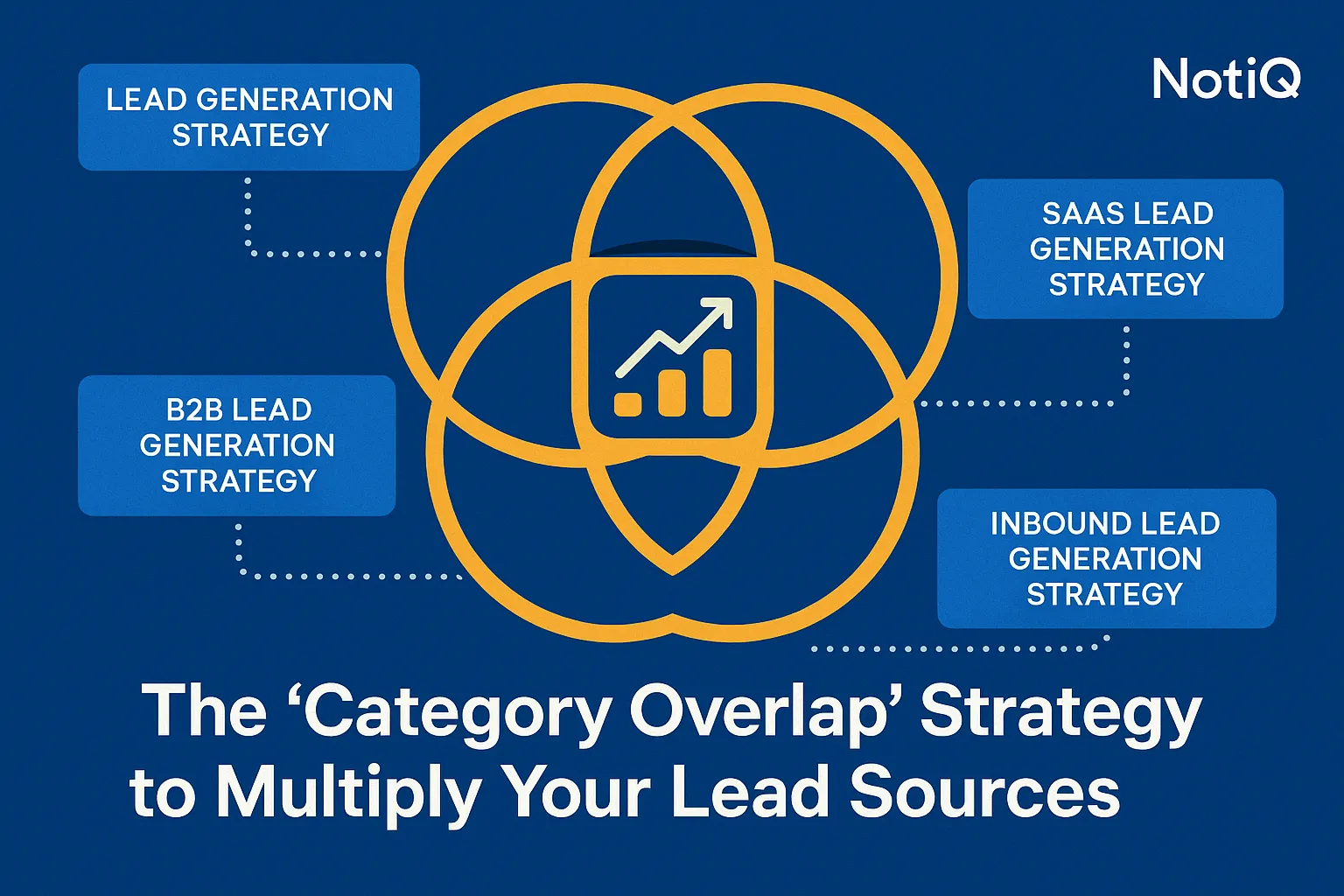
The “Category Overlap” Strategy to Multiply Your Lead Sources
Lead volume often stalls when you rely on a single category. This guide shows how to use category overlap to uncover adjacent niches, diversify lead sources, and scale qualified demand.
1. Introduction
It is a familiar and frustrating scenario for B2B SaaS teams: lead volume slows down to a crawl, even when your core SEO pages are ranking, your outbound motions are dialed in, and your primary category messaging is working perfectly. You have optimized your landing pages and saturated your main keyword clusters, yet the pipeline has plateaued.
Many marketing and revenue teams hit this ceiling because they only publish and position their brand around a single software category. However, buyers rarely confine their workflows to one rigid label. They experience the same underlying problem across adjacent workflows, alternative tools, and neighboring niches.
The category overlap strategy is a systematic way to scale lead gen by multiplying your discoverability and pipeline sources without having to launch a brand-new product line. By identifying where your ideal customer profile (ICP) experiences shared pain points across different software categories, you can capture high-intent demand that your competitors are ignoring.
This guide is designed for intermediate B2B SaaS marketers and revenue leaders who need a structured, scalable expansion model rather than generic "do more SEO" advice. We will walk through how to map shared ICP pain points, score adjacent categories, validate the market before investing heavily, and build overlap-driven content assets. At[NotiQ](/), we have seen firsthand how connecting adjacent Go-To-Market (GTM) workflows—such as personalization, outreach, and demand capture—into scalable growth systems can revitalize a stagnant pipeline.
2. Why Lead Generation Stalls in a Single Category
Growth plateaus often stem from an over-reliance on a narrow keyword set, a single ICP framing, or one specific acquisition motion. When a company saturates its primary market category, marginal growth becomes exponentially harder and more expensive to achieve. This single-category dependence creates significant traffic and pipeline risk.
Buyers do not always search using the category label your product marketing team selected. More often, they search by their immediate pain point, an adjacent workflow they are trying to optimize, or alternative framing. Narrow positioning limits your ability to capture this buyer intent, even when your product is perfectly capable of solving related problems in neighboring categories.
Marketing and revenue leaders need pipeline diversification and resilience, not just more traffic from an already exhausted topic cluster. A successful lead generation strategy must look beyond the immediate category boundaries. For a foundational understanding of market sizing and competitive discovery logic, the SBA market research and competitive analysis guide provides excellent baselines for evaluating new market segments.
In our practical experience, a brand might gain early traction in a category like "email outreach," but eventually, that demand caps out. However, by targeting problem-aware queries in adjacent categories—like "CRM data enrichment" or "sales engagement automation"—they unlock entirely new streams of qualified demand. You can find supporting examples of how adjacent workflow content drives demand capture on the Repliq blog.
The hidden cost of relying on one category or channel
Depending on a single acquisition channel is a massive risk. Your pipeline becomes fragile when one Search Engine Results Page (SERP) cluster drops in rankings, an outbound list source dries up, or a specific messaging angle underperforms. Category concentration creates blind spots in content planning and misalignment in paid or outbound strategies.
How to diversify lead generation across adjacent categories comes down to increasing resilience. Overlap-driven growth opens multiple entry points into the same buyer journey, ensuring that if one channel or category label falters, your pipeline diversification strategy keeps revenue flowing.
Why adjacent categories often share the same buyer problem
The secret to adjacent market expansion is understanding that the same buyer persona frequently experiences similar "jobs-to-be-done" across multiple software categories. A marketing operations manager, for instance, faces data-silo friction whether they are evaluating a CRM, an email marketing tool, or a webinar platform.
Shared buyer pain points are a much stronger expansion signal than category labels alone. Overlapping niches are born from these shared struggles. As outlined in the Harvard Business School Jobs to Be Done toolbox, mapping the specific decision context and friction points of your buyer is the most reliable foundation for discovering overlap opportunities.
3. How to Map Category Overlap Opportunities
To execute a category overlap strategy effectively, you need a repeatable framework for identifying adjacent categories that share buyer pain points, workflow needs, and commercial intent. The goal is not to become an "all-in-one" tool that tries to be everything to everyone. Instead, market category mapping is about finding credible intersections where your product already delivers value.
According to U.S. Census data on products sold across industries, the same product or service frequently applies across multiple industry contexts and use cases. By building a structured overlap map, you can operationalize how to map category overlap opportunities with precision.
Step 1 — Start with the core buyer problem, not the category label
Begin by defining the main problem your product solves in plain, jargon-free language. Narrow positioning limits buyer intent capture because it forces buyers to use your terminology. Instead, separate your product category jargon from the actual friction the buyer is experiencing.
List the recurring buyer pain points you hear on sales calls, during onboarding, in demo objections, or in customer support conversations. Focus strictly on the jobs to be done and the desired outcomes.
Step 2 — List adjacent workflows, tools, and categories tied to that problem
Once you have the core problem, identify neighboring categories where the same buyer encounters similar friction. These overlapping niches can take several forms:
• Alternatives: Tools that solve the problem differently (e.g., spreadsheets vs. database software).
• Complementary tools: Software used immediately before or after your product in a workflow.
• Use-case adjacencies: Different departments using similar data (e.g., sales vs. customer success).
• Workflow bridges: Integrations that connect two distinct categories.
For successful adjacent market expansion, emphasize credibility signals. Your product must genuinely and effectively connect to these adjacent needs, or the strategy will fail.
Step 3 — Build a category overlap map
Create a category overlap map using a simple matrix. Set up a table with the following columns: Adjacent Category, Shared ICP, Core Pain Point, Likely Search Intent, and Commercial Relevance.
For example, if your core category is "Proposal Software," overlapping opportunities might include "E-Signature Tools," "CPQ Software," or "Sales Onboarding." This visual matrix becomes the bridge between your GTM strategy and your SEO planning. For further guidance on value-proposition-led expansion, the NIST guide to market scouting and value proposition review is a valuable resource to ensure your ICP expansion is grounded in reality, not guesswork.
4. How to Prioritize Adjacent Niches and Validate Them
A common pitfall is chasing every adjacent category at once. To scale lead gen sustainably, you must use a scoring framework to prioritize overlapping niches based on relevance, competition, and conversion potential. Validation must happen before you commit to large-scale content production or major positioning changes.
The best overlap opportunities are not simply those with the highest search volume; they are the topics your brand can credibly win and monetize, driving true pipeline diversification. As recommended by the SBA market research and competitive analysis guide, rigorous market validation ensures you are investing in profitable segments.
Build a simple overlap scoring matrix
To combat the lack of framework for overlap opportunities, score each potential niche from 1 to 5 across the following criteria:
• ICP Match: Is this the exact buyer we already sell to?
• Problem Intensity: Is the pain point urgent enough to drive a purchase?
• Conversion Intent: Are they looking for a solution or just browsing?
• Content Competition: Can we realistically rank for these terms?
• Strategic Fit: Does this align with our product roadmap?
• Brand Credibility: Do we have the authority to speak on this topic?
Relevance and conversion quality must outweigh raw search volume. Tally the scores to create a quick "Go / Test / Ignore" output for your category overlap strategy.
Validate with SERP patterns, internal insights, and early signals
Learn how to validate a new overlapping niche before investing in content by observing actual search behavior. Look for comparison intent keywords, alternative pages for SaaS SEO, and keyword research content gaps.
Cross-reference SERP data with internal insights. Look at sales objections, feature adoption rates, demo themes, and support tickets to confirm the overlap exists in your customer base. Run a low-risk test: publish one highly targeted article or landing page before building out an entire topic cluster.
Red flags that an adjacent niche is a bad fit
Not all traffic is good traffic. Be wary of targeting categories with weak product relevance, mismatched buyers, or messaging that requires an exhausting amount of explanation.
Red flags include:
• Missed traffic from adjacent use cases that never converts.
• Unclear messaging when expanding categories, causing brand confusion.
• High search volume but zero commercial intent.
Understanding how to expand into adjacent categories without losing focus means knowing when to say no to a high-traffic, low-converting niche.
5. Best Content Formats for Overlap-Driven SEO
With your overlap map built and validated, it is time to translate it into content assets. SEO category expansion works best when your content formats match how buyers actually search: by problem, by comparison, by alternative, by workflow, and by category bridge.
This is where the category overlap strategy becomes truly scalable. One well-researched overlap map can fuel multiple bottom-of-funnel (BOFU) assets. Keep your focus on pipeline quality, ensuring your content aligns with Google’s people-first content guidance by being genuinely useful and not just thin keyword expansion.
Problem-aware content clusters
Create comprehensive articles around the recurring pain points shared across adjacent categories. A problem-aware pain point SEO strategy captures readers before they have self-identified with a specific software category label.
For example, an article on "How to eliminate manual data entry in sales" appeals to buyers looking at CRMs, automation tools, and data enrichment platforms. Link these shared buyer pain points articles directly to your use-case and solution pages to drive them down the funnel.
Comparison and alternative pages
Overlapping categories naturally generate high-intent searches for "X vs Y," "best alternatives to Z," and "when to choose A over B." These comparison keyword strategy for adjacent categories capture buyers who are actively evaluating solutions across traditional software boundaries.
When building alternative pages for SaaS SEO, prioritize accuracy, fair framing, and clarity over aggressive competitor takedowns. Balanced, specific, and evidence-based comparisons build trust. If you want to see how seamlessly a tool can fit into adjacent GTM workflows,explore a NotiQ demo to see overlap-driven solutions in action.
Use-case pages and category bridge articles
Category bridge articles explain how one single solution supports multiple related workflows or buyer contexts. These are vital for an adjacent market strategy.
Develop use-case pages for adjacent verticals, teams, or workflow combinations that show clear search intent. Use a standalone landing page when the intent is highly commercial and transactional; use a longer-form category bridge article when the buyer needs education on how the workflows connect to solve workflow-specific pain points.
Programmatic or scalable content opportunities
Repeated overlap patterns open the door for programmatic SEO. If your product integrates with 50 different adjacent tools, you can create a scalable template for "How to connect [Your Product] with [Adjacent Tool] to solve [Pain Point]."
This drives organic traffic growth and SEO category expansion rapidly. However, scale must never come at the expense of quality. Ensure every programmatically generated page maintains deep relevance, differentiation, and a tactical tone.
6. How to Expand Without Confusing Buyers
The most common objection to category-overlap expansion is the fear of losing competitive positioning. Marketing teams worry that by talking about adjacent workflows, they will dilute their core brand identity.
The solution is not to use broader messaging everywhere. Instead, you must build tighter message architecture across different page types and funnel stages. Readers must immediately understand what your company actually does, even while recognizing its broader relevance. The NIST guide to market scouting and value proposition review highlights that value proposition clarity must remain intact during any market expansion.
Keep one core narrative spine
Define the single, core buyer problem your brand solves best, and weave that narrative spine through all adjacent-category content. Adjacent pages should feel like natural extensions of your core value story, not disconnected bets.
Use a simple messaging framework for these pages: state your core promise, introduce the adjacent problem, provide proof that your tool solves it, and offer a clear next step. This ensures your brand positioning and shared ICP remain aligned.
Decide when to integrate vs. separate pages
Knowing how to expand into adjacent categories without losing focus requires smart site architecture. Decide carefully whether an adjacent topic deserves a simple H2 subsection on an existing page, a dedicated SEO content cluster, or a distinct landing page.
This decision should be based on intent specificity, buyer segment differences, and commercial significance. Your navigation strategy and internal linking structure play a massive role in maintaining positioning clarity, ensuring category bridge articles point back to your core product offerings.
Use proof to maintain credibility in adjacent categories
You cannot simply claim authority in adjacent categories; you must prove it. To maintain trustworthiness, embed concrete proof into every piece of overlap content.
Use workflow examples, product screenshots, verbatim customer language, and mini case studies to back up every claim. Avoid making broad, sweeping statements about markets you cannot clearly serve. Frame your proof-based messaging around tangible outcomes rather than vague claims of category ownership.
7. Tools, Workflow Ideas, and a Simple Operating System for Category Overlap
To turn this strategy into an operational playbook, you need a repeatable system that aligns SEO, outbound, and personalization around shared ICP signals. Scaling lead gen requires orchestrating these demand generation channels seamlessly.
At[NotiQ](/), we specialize in operationalizing lead-gen workflows across multiple segments, ensuring your pipeline diversification efforts are scalable and compliant. For more thought leadership on executing personalized outreach across adjacent markets, check out the Repliq blog.
A 5-step execution checklist
Follow this execution checklist to implement your category overlap strategy:
1. Identify the core buyer problem and determine where your current category ceiling exists.
2. Map adjacent categories using market mapping for B2B SaaS to find shared ICP and workflow relevance.
3. Score each opportunity based on relevance, competition, and conversion potential to ensure a sound pipeline diversification strategy.
4. Validate with test assets (like a single comparison page) and monitor early pipeline signals.
5. Scale the winners into comprehensive topic clusters, BOFU landing pages, and cross-channel outbound campaigns.
What to measure after launch
Tracking rankings and organic traffic growth is not enough. Adjacent-category content must be judged by its revenue relevance.
Monitor qualified demand metrics: assisted conversions, demo request quality, influenced pipeline, and content-to-opportunity conversion rates. Compare the conversion potential of your early overlap pages against your core-category benchmarks to ensure the new niches are pulling their weight commercially.
8. Future Trends in Overlap-Driven Demand Generation
Category overlap is not a fleeting content tactic; it is a durable, long-term growth model. As search engines and buyer behaviors evolve, multi-source demand generation will become mandatory for survival.
AI-assisted market mapping and topic clustering are making overlap discovery significantly faster. Teams can now analyze thousands of SERPs and customer transcripts in minutes to find hidden workflow adjacencies. Furthermore, there is a growing, necessary alignment between SEO, outbound sales, and account personalization. When all three motions target the exact same shared ICP signals across adjacent categories, the result is deep pipeline resilience that can withstand market fluctuations.
9. Conclusion
When lead generation plateaus, the answer is rarely "more of the same." Scaling lead gen effectively requires smarter, strategic expansion into adjacent categories that share your exact buyer's pain points.
By executing a structured category overlap strategy—mapping overlaps, scoring them for commercial viability, validating them with test assets, and building high-intent content formats—you capture demand that competitors miss. This approach increases your brand's discoverability, broadens your pipeline sources, and drastically reduces your reliance on a single channel.
Audit your current category boundaries today and identify three adjacent niches worth scoring this quarter. To see how a scalable platform can orchestrate and support your overlap-driven growth,book a NotiQ demo.
Frequently Asked Questions
- What is category overlap in lead generation?
- Category overlap in lead generation is the process of identifying adjacent categories, workflows, or search intents that share the same buyer pain points and can produce qualified demand. It is not random market expansion; an effective category overlap strategy requires strict ICP and value-proposition alignment.
- How do you map category overlap opportunities?
- To map category overlap opportunities, start by defining the core buyer problem. Next, identify neighboring software categories and workflows that touch that problem. Finally, organize them into a market category mapping matrix based on shared ICP, pain points, and commercial search intent. Always use a scoring framework before investing in content.
- How can overlapping niches help scale lead gen?
- Overlapping niches help scale lead gen by unlocking new search demand, creating more pain-point entry points, and providing fresh opportunities for BOFU content. This pipeline diversification reduces channel dependence and builds stronger pipeline resilience.
- What are the best ways to diversify lead sources?
- The best ways to diversify lead sources include creating a mix of problem-aware content, comparison pages, alternative lists, and use-case pages. These demand generation channels work best when aligned with outbound or personalization motions that target the same underlying ICP problems.
- How do companies expand into adjacent categories without losing focus?
- Companies expand into adjacent categories without losing focus by maintaining one clear narrative spine. You should only expand where your product can credibly solve a related problem. Guard against unclear messaging when expanding categories by using tight message architecture, logical page structures, and heavy product proof.
- How do you validate a new overlapping niche before investing in content?
- You validate a new overlapping niche before investing in content by checking SERP intent, analyzing internal buyer signals (like sales objections), and running a small-scale test with a single landing page. High adjacent traffic is meaningless unless the niche also demonstrates strong conversion potential and commercial fit.
Continue Reading
More articles you might find useful

How to Find Local Businesses With Very Few Website Pages
Learn how to find local businesses with very few website pages using a repeatable audit framework. This guide shows how to validate page count, spot missing pages, and prioritize the best outreach opportunities.
Read the article →
Google Maps Lead Generation for Window and Door Installers
Learn how window and door installers can use Google Maps to find, qualify, and prioritize better local prospects. This beginner-friendly guide shows a repeatable workflow for smarter local outreach.
Read the article →
How to Prioritize Businesses With Verified Google Profiles
A practical framework for ranking local leads beyond the verified badge. Learn how to prioritize Google Business Profiles using fit, freshness, completeness, and activity signals.
Read the article →Popular industry lead playbooks
Maps search examples and niche outreach for the verticals teams prospect most.