Technology
How to Use Google Maps to Detect Businesses With Poor Brand Consistency Across Locations
Learn how to use Google Maps and Google Business Profiles to detect brand inconsistency across multiple locations. This guide shows what to audit, how to score issues, and how to scale the process.
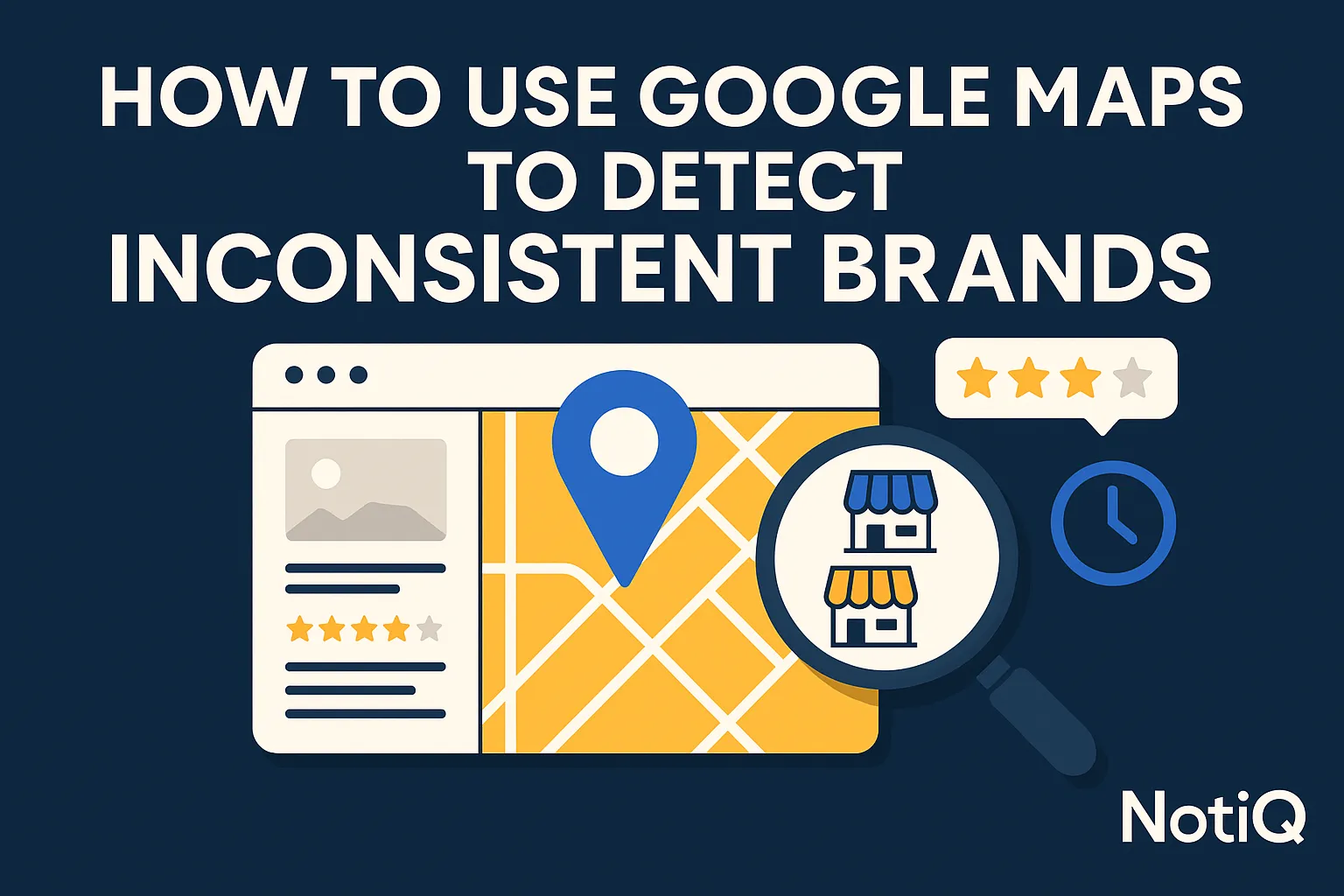
1. Introduction
Multi-location brand inconsistency often shows up in public before it shows up in internal dashboards—on Google Maps, in Google Business Profiles, in customer photos, and in review patterns. While most marketing teams treat Google Maps strictly as a local SEO surface, advanced marketers recognize it as a powerful, fast external audit layer. By analyzing public-facing location data, teams can spot naming drift, category mismatches, weak visuals, uneven review handling, and operational inconsistencies across hundreds of locations.
This guide is designed for advanced marketers, local SEO teams, brand managers, and distributed operators who need a repeatable workflow rather than a one-off checklist. We will cover exactly what to audit, how to separate acceptable local variation from damaging inconsistency, how to score the severity of these issues, and how to scale the entire process using templates and AI-assisted analysis.
For advanced teams looking to move from manual spot-checks to a repeatable analysis workflow,[NotiQ](/)acts as a strategic intelligence layer, turning manual Google Maps observations into scalable multi-location inconsistency detection.
2. Why Google Maps Reveals Multi-Location Brand Gaps
Google Maps and Google Business Profile (GBP) data are highly reliable external indicators of a company's brand governance, customer experience, and local operational discipline. Google Maps surfaces the customer-facing version of your brand: business names, categories, operating hours, storefront images, available amenities, promotional offers, and review responses.
When a brand relies on decentralized listing management, allows franchise variation without strict guidelines, or lacks local oversight, visible differences between locations inevitably emerge. A Google Maps brand audit goes far beyond local SEO accuracy; it reveals systemic issues in brand standards, service delivery, and legal or visual compliance. While generic listing management advice often stops at basic profile optimization, advanced multi-location branding consistency requires a proactive strategy to detect and resolve these gaps.
To maintain compliance and trust, all locations must adhere to Google’s business representation guidelines, which dictate how fields should remain accurate, aligned, and professionally represented across all business locations.
Why Maps Is More Than a Local SEO Channel
Google Maps functions as an open-source intelligence hub for SEO, brand governance, and customer experience teams. Public inconsistencies across business profiles directly influence consumer trust, click-through behavior, and the perceived professionalism of a brand across different markets. A comprehensive Google Business Profile audit allows teams to identify systemic patterns of neglect or misalignment across regions, rather than just fixing isolated errors. When you monitor brand governance across locations, Maps becomes a diagnostic tool for broader operational health.
Common Causes of Cross-Location Brand Drift
Brand drift rarely happens overnight; it compounds as location counts grow. The most common causes include franchise flexibility gone too far, rogue local manager edits, the persistence of outdated digital assets, uneven review response processes, and inconsistent category selection. As a brand expands, manual audits become fragmented because data is spread across listings, photos, and reviews. These multi-location gaps highlight the critical need for franchise brand consistency, proving that location listing inconsistencies are often a symptom of disconnected internal operations.
3. What Profile Signals to Audit Across Locations
To inspect locations consistently, teams need a core field-by-field framework. A comprehensive Google Maps brand audit organizes the inspection around the most revealing public signals: business names, primary and secondary categories, descriptions, hours, attributes, images, offers, and service information.
The goal is not perfect sameness in every single field. Instead, the objective is controlled variation aligned with brand standards and local reality. Identifying GBP inconsistency detection means understanding what "good consistency" looks like compared to problematic "brand drift." Location listing inconsistencies must be evaluated through the lens of Google’s business representation guidelines to ensure chain-location presentation remains accurate and compliant.
Business Names, Categories, and Core Identity Fields
Inconsistent business naming conventions across locations signal weak governance and confuse search engines and users alike. If one location is named "BrandX Coffee" and another is "BrandX Coffee & Roastery - Downtown," the brand identity fractures. Primary and secondary category mismatches matter just as much, especially when similar branches present themselves differently in search results, leading to category inconsistencies across locations.
When auditing, compare like-for-like branches rather than contrasting completely different formats (e.g., a drive-thru kiosk versus a flagship dine-in location). Look out for problematic drift such as unauthorized branded naming changes, NAP inconsistencies, and unclear service labeling that disrupt store locator brand consistency.
Hours, Attributes, Services, and Amenities
Inconsistent operating hours, missing accessibility attributes, mismatched service options, and varying amenities often suggest operational inconsistency or stale profile management. While some local variation is valid—a mall location will have different hours than a standalone store—unexplained differences across comparable stores damage trust and create customer friction. A meticulous business profile audit reveals how these fields affect both user expectations and local search relevance, ensuring local SEO brand consistency is maintained alongside operational accuracy.
Descriptions, Offers, and Messaging Consistency
Profile descriptions and promotional language easily expose uneven positioning across regions. Mismatched offers, outdated marketing copy, or wildly different tones of voice signal weak campaign coordination. When executing a Google Business Profile audit, document whether local customization actually supports the brand's overarching message or simply fragments it. Multi-location branding consistency requires that all locations utilize current, approved messaging, ensuring brand consistency maps perfectly to corporate marketing initiatives.
Photos, Storefront Imagery, and Visual Compliance
Profile photos, user-uploaded images, and storefront visuals are the fastest ways to spot uneven brand execution. A visual audit should look for signage quality, proper logo usage, interior presentation, cleanliness, staff uniforms, merchandising, and the recency of the photos. It is vital to distinguish between authentic local context and obvious visual noncompliance. Managing photos and signage consistency ensures that the store locator brand consistency aligns with the physical reality of the business. For best practices on maintaining these visual assets, refer to the Google Business Profile photo and video guidelines.
4. How to Score Consistency vs Acceptable Local Variation
Moving from basic observation to a repeatable scoring model is the hallmark of an advanced audit. The core challenge is that not every difference is a problem; teams need a definitive way to separate legitimate local adaptation from harmful inconsistency. By creating a scorecard across key dimensions—name, category, hours, attributes, imagery, reviews, messaging, and offers—auditors can assign severity levels to multi-location gaps: cosmetic, moderate, high-impact, and urgent. This location listing quality score helps prioritize fixes for marketing, operations, and brand teams, functioning as a robust franchise brand consistency checklist.
Define Your Audit Criteria Before You Compare
Before scoring, group comparable locations by format, market, ownership model, or service type. Urban locations should not be judged identically to suburban ones; flagship stores have different standards than standard kiosks, and corporate-owned branches may have stricter rules than franchise operations. Documenting acceptable local variation under brand policy ensures that brand governance across locations is measured fairly, maintaining multi-location branding consistency without stifling necessary local adaptations.
Build a Weighted Consistency Scorecard
Score each location across a fixed set of dimensions, weighting the most important ones heavily. Identity fields, category accuracy, review sentiment, and visual presentation should carry higher weights because they directly affect customer trust and search discoverability. Use a simple framework, such as a pass/fail metric, a 1–5 scoring system, or a weighted percentage score. By aggregating these location listing quality scores by region, franchise group, or operator, teams can move beyond a basic business profile audit to achieve true GBP inconsistency detection at scale.
Prioritize Gaps by Business Impact
Once scored, rank issues based on customer confusion, search visibility risk, brand damage, and operational urgency. Inconsistent naming or incorrect categories severely affect discovery and should be treated as high-impact. Poor visual presentation or weak review responses may not hide the listing, but they severely impact conversion and trust. Turn the audit into a remediation roadmap rather than a static spreadsheet. This approach prioritizes multi-location gaps and local listing inconsistency examples, allowing teams to build actionable brand consistency maps enriched by clear verification and prioritization.
5. How Reviews, Photos, and Competitors Expose Deeper Issues
A comprehensive audit expands beyond official profile fields into richer signals that reveal the true customer experience and operational realities. Reviews and photos often expose issues that static listing data hides, such as service quality differences, location maintenance problems, or inconsistent staff behavior. Furthermore, competitor benchmarking provides critical context for what "good" consistency looks like in a specific category and geography.
Review Language as a Brand Consistency Signal
Review themes are powerful indicators of uneven service quality, staffing issues, wait times, product availability, and overall review sentiment by location. The quality and speed of management responses also signal differences in local operational discipline. Cluster recurring review themes by location, region, or operator group to pinpoint systemic franchise brand consistency issues. Proper Google Business Profile review management is essential for maintaining trust. Additionally, teams must ensure review integrity and avoid manipulation risks by adhering to FTC guidance on consumer reviews and testimonials.
User Photos and Storefront Images as Operational Evidence
Customer-uploaded images frequently reveal what official, highly polished brand assets miss. Look for recurring visual issues in user-generated content: inconsistent signage, outdated branding, poor merchandising, cleanliness gaps, or nonstandard layout cues. By comparing user-generated imagery to official profile photos, auditors can easily spot visual brand compliance drift, ensuring photos and signage consistency align with the expected store locator brand consistency.
Competitor Benchmarking to Set a Real Standard
Compare competitor locations in the same category and geography to benchmark consistency. Stronger competitors often maintain more uniform primary categories, strict visual identity, disciplined review response habits, and high listing completeness. Emphasize what competitors do better operationally rather than over-focusing on their brand names. This Google Maps competitor analysis elevates a standard multi-location local SEO audit into an exercise in brand governance across locations. To dive deeper into competitive intelligence and scalable analysis workflows, exploring educational content on adjacent strategies can provide valuable context.
6. How to Scale Audits With Templates and AI-Assisted Analysis
Manual inspection works for ten locations, but it breaks down at a hundred. To turn the inspection process into a repeatable workflow for dozens or hundreds of locations, teams must progress from manual sampling to spreadsheet-based audits, and finally to AI-assisted pattern detection across listings, photos, and reviews. A practical workflow involves selecting a location sample, capturing fields, scoring each location, summarizing issue patterns, and routing actions to the appropriate teams. AI should accelerate synthesis and prioritization, but humans must perform the final field-level verification.
Build a Repeatable Audit Template
Create a standardized database or spreadsheet with dedicated columns for names, categories, hours, attributes, descriptions, reviews, photo quality, and compliance notes. Grouping the data by region, operator, or business format makes macro-trends instantly visible. A standardized template reduces subjective evaluation and speeds up recurring business profile audits, acting as a definitive franchise brand consistency checklist. For structuring field collection at scale, utilize a bulk upload spreadsheet for Business Profiles.
Use AI to Summarize Patterns Across Reviews, Images, and Metadata
AI-assisted analysis workflows excel at identifying recurring themes in review sentiment, detecting visual inconsistencies in massive photo libraries, and spotting field-level data drift across thousands of locations. While AI is incredibly useful for clustering and summarizing patterns for review analysis by store location, human operators must still validate the findings. This synthesis creates faster executive reporting and clearer prioritization for cross-functional teams. By utilizing[NotiQ](/)as the core workflow orchestration solution, brands can seamlessly scale this analysis to guarantee multi-location branding consistency.
Turn Findings Into an Action Plan
Audit outputs are useless unless they map to specific owners. Route local SEO fixes to the search team, brand asset updates to marketing, operations coaching to regional managers, and rebranding decisions to the executive team. Establish a cadence for recurring audits—such as quarterly, post-rebrand, or immediately following location expansion. Package the results into scorecards, dashboards, and location-level remediation lists to close multi-location gaps. When addressing visual consistency, leveraging scalable remediation workflows like AI image tools can help standardize creative assets after a Google Maps brand audit identifies deficiencies.
7. Best Practices and Expert Guidance for a More Trustworthy Audit
To ensure the highest level of credibility and compliance, public-facing Google Maps signals must be validated before major operational decisions are made. A trustworthy Google Maps brand audit relies on documented methodologies. Use annotated screenshots, side-by-side location comparisons, and strictly defined audit criteria to make your findings defensible to regional managers and franchisees.
The most effective audits do not isolate findings in one department; they connect SEO, brand, and operational data. Multi-location branding consistency is a continuous discipline. This framework works best when repeated over time as part of standard brand governance across locations, rather than treated as a one-time, reactive cleanup project.
8. Conclusion
Google Maps is far more than a local SEO channel; it is a powerful, publicly accessible detection system for poor brand consistency across locations. By auditing core profile fields, evaluating customer reviews and photos, benchmarking against local competitors, and scoring the severity of issues, brands can detect operational drift early. Scaling this process with structured templates and AI-assisted analysis transforms an overwhelming manual task into a streamlined operational advantage.
The true value of this audit is not just finding data inaccuracies, but uncovering brand, customer experience, and operational inconsistency before it impacts revenue and customer trust. Stop relying on ad hoc spot checks. Systematize your audit process to ensure every location reflects the true standard of your brand. Explore how[NotiQ](/)can help operationalize multi-location brand consistency audits and serve as your intelligence layer for repeatable detection.
Frequently Asked Questions
- How can Google Maps reveal brand consistency issues across multiple locations?
- Google Maps exposes public-facing brand signals—such as business names, categories, hours, photos, amenities, and customer review behavior. By systematically comparing these signals location by location, brands can quickly identify operational and visual drift, making brand consistency maps a vital tool for a Google Maps brand audit.
- What Google Business Profile fields are most useful for spotting inconsistency?
- For effective GBP inconsistency detection, auditors should focus heavily on business names, primary and secondary categories, operating hours, business attributes, profile descriptions, storefront photos, and review-response patterns during a business profile audit.
- How do you tell the difference between local customization and brand drift?
- Acceptable local variation is intentional, documented in corporate policy, and tied to market reality (e.g., a mall kiosk vs. a standalone store). Harmful brand drift is usually unmanaged, outdated, and confusing to customers, ultimately damaging multi-location branding consistency.
- Can reviews really be used to detect operational or brand issues?
- Yes. When repeated themes—such as complaints about wait times or cleanliness—appear in the review sentiment by location or region, they highlight operational gaps. Furthermore, if response quality differs significantly across branches, it indicates a lack of franchise brand consistency in customer service.
- When should teams move from manual audits to AI-assisted workflows?
- Teams should transition to AI-assisted local listing audits when location counts, review volume, or image uploads make manual review too slow to sustain consistently. AI helps cluster and summarize data rapidly, making a multi-location local SEO audit actionable at scale.
Continue Reading
More articles you might find useful
Google Maps Prospecting for Commercial Waste Management Companies
Learn how commercial waste haulers can use Google Maps to find, qualify, and prioritize better local accounts. This guide shows how to build denser routes and improve outreach with waste-stream and service-area insights.
Read the article →
How to Find Local Businesses With Broken Website Links
Learn how to find local businesses with broken website links using Google Maps, quick validation checks, and proof-based outreach. This guide shows agencies how to turn visible site issues into qualified leads.
Read the article →
Google Maps Lead Generation for Signage Companies
Learn how sign companies can use Google Maps to find local prospects, identify visible signage gaps, and build a repeatable outreach system. This guide shows how to turn visual research into qualified leads without relying on paid ads or generic lists.
Read the article →Popular industry lead playbooks
Maps search examples and niche outreach for the verticals teams prospect most.