Technology
How to Find Businesses With Strong Ratings but Almost No Reviews
Learn how to find local businesses with strong ratings but too few reviews. This guide shows how to qualify better review-growth leads using competitor gaps, recency, and activity signals.
1. Introduction
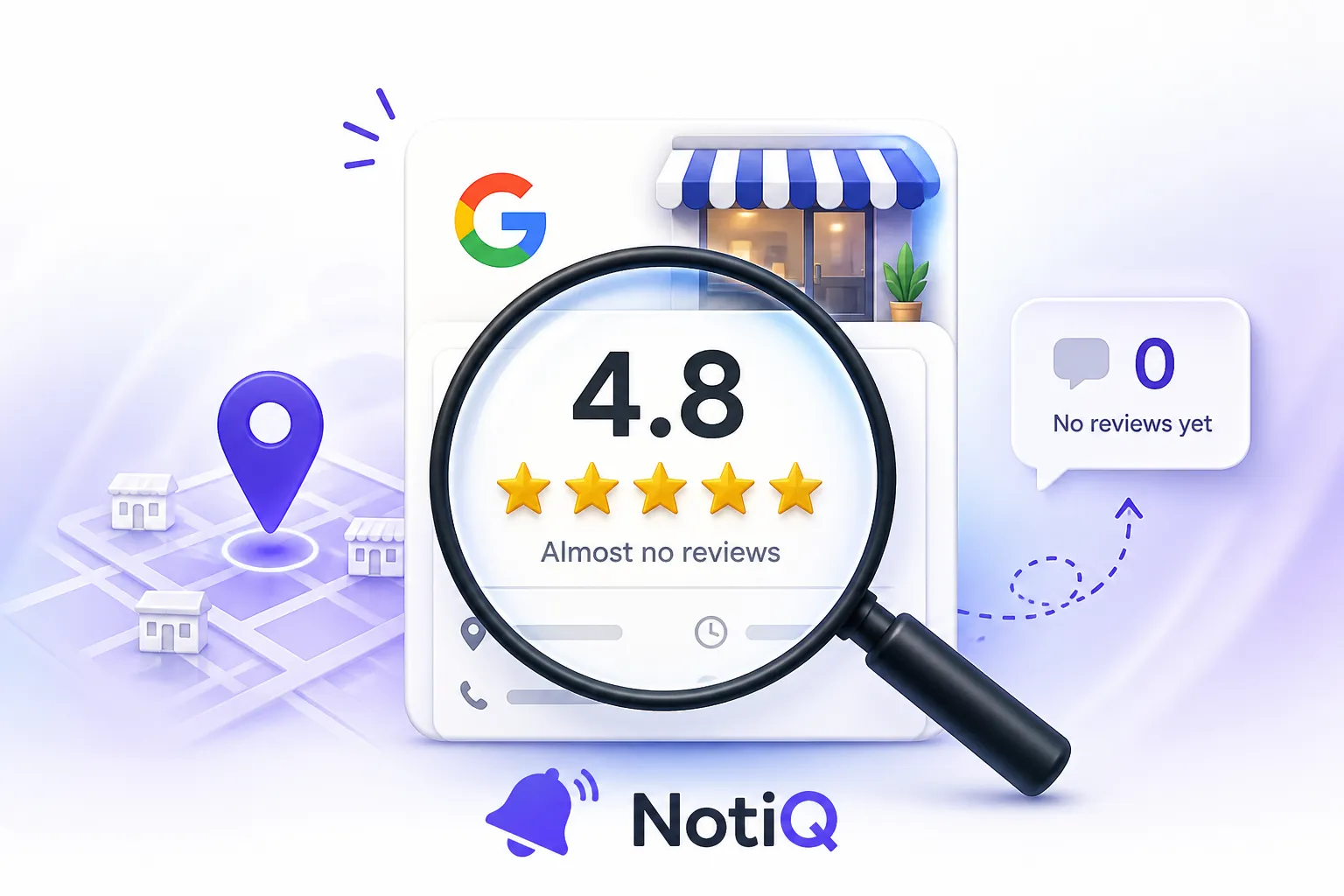
When searching for local reputation prospecting opportunities, many sales teams and agencies focus entirely on businesses with terrible ratings, assuming they are the most desperate for help. However, a much stronger opportunity often lies in the opposite direction: high rating low review businesses. A business with excellent customer sentiment but very few reviews is rarely a struggling company—it is usually a successful business that simply lacks a system to make its customer satisfaction visible.
Relying on a star rating alone is an incomplete strategy. Without analyzing review count, recency, review velocity, competitor context, and business activity, you only see a fraction of the picture. The goal of this prospecting method is not to criticize local businesses for poor marketing. Instead, it is to identify companies that already provide exceptional service and would benefit from a repeatable, ethical review-growth process.
Because low review volume is an indicator of an opportunity to amplify positive customer sentiment, every prospect must be thoroughly verified before outreach. This guide covers a comprehensive workflow to discover high-quality review growth leads, normalize listing data, compare competitors, qualify opportunities, score leads, verify information, and personalize your outreach.
2. What Does “High Rating, Low Review Volume” Actually Mean?
To successfully identify local businesses with low review volume, you must define the prospecting pattern and avoid treating a single rating or review-count threshold as a universal rule. A business’s reputation profile is made up of several distinct elements:
• Rating: The average customer score displayed on a business profile.
• Review count: The total amount of public customer feedback supporting that rating.
• Review velocity: How frequently new reviews appear over a given period.
• Review recency: How recently customers have actually shared their feedback.
A perfect five-star rating supported by a small number of reviews communicates something entirely different from a five-star rating supported by a large, recent, and highly active review base. Furthermore, "low" review volume must always be evaluated relative to the business category, location and market size, business age, customer volume, and nearby competitor performance.
There are many reasons why businesses with high ratings and few reviews exist. They may deliver excellent service without consistently requesting feedback, or they might be newly opened or recently relocated. Some serve a highly specialized, limited customer base, while others rely heavily on word-of-mouth referrals and repeat business. In most cases, their review-generation process is simply inconsistent. It is critical to remember that any low review count high star rating threshold is a working qualification rule, not an absolute fact, unless supported by a specific, market-tested dataset.
Why Rating Alone Is Not Enough for Lead Qualification
Two businesses with the identical five-star rating can have vastly different prospecting potential depending on their review depth, activity, visibility, and competitive context. A low review volume can represent either a prime opportunity for review growth or a legitimate low-demand situation where the business simply lacks the customer base to generate more feedback.
Effective reputation management prospects are found by combining multiple signals—such as review velocity local SEO metrics and market context—instead of relying on a single, isolated filter.
When a Low Review Count Is Not a Good Opportunity
Not every under-reviewed local business is a good lead. You must watch out for false positives, such as recently opened businesses with limited operating history, or businesses with very few customers due to a highly specialized service. Inactive, closed, duplicated, or incorrectly categorized listings will also skew your data.
Before recommending outreach, use a Google Business Profile audit checklist to distinguish an "under-reviewed" business from a "low-demand" business. If a listing has outdated contact information or shows absolutely no visible customer activity, it is likely not a viable prospect for local business review analysis.
3. The Signals That Identify a Genuine Review-Growth Lead
To find businesses that need more reviews, you need a practical qualification framework that reveals positive sentiment and realistic growth potential. The strongest local reputation prospecting opportunities feature a combination of:
• A strong overall rating.
• Low or below-peer review volume.
• Recent customer activity.
• Evidence of ongoing operations.
• A visible competitor review gap.
• An identifiable decision-maker or contact path.
These signals must be interpreted together, not used as rigid pass/fail rules. Because ratings and review counts fluctuate, always record the date each listing is reviewed to ensure your review growth leads are based on current data.
Rating and Review Count
When evaluating high rating low review businesses, capture both the visible rating and the total review count for each candidate. Compare these candidates with businesses operating in the exact same category and geographic market. Flag businesses whose positive rating is supported by noticeably less review depth than comparable nearby listings. When conducting Google Maps review prospecting, avoid implying that a low review count proves poor marketing or poor business performance; it simply indicates untapped potential.
Review Recency and Review Velocity
Always check whether recent reviews exist, even if the overall review count is small. Review recency and review velocity local SEO metrics add crucial context to the aggregate rating. You must distinguish between an active business receiving occasional reviews, a business with an old review base and little recent activity, and a business that has never established a consistent review-request process. These nuances will dictate how you approach your local business review generation leads.
Competitor Review Gap
Compare your candidate against nearby businesses serving a similar customer need, keeping comparisons strictly category-specific and location-specific. A business may have excellent sentiment but significantly weaker social proof than competing listings. This competitor volume should be used as context to highlight an opportunity, not as a reason to pressure or shame the prospect.
Understanding market saturation and customer context is critical. For foundational strategies on evaluating market landscapes and competitors, refer to the SBA market research guidance. Proper competitor review analysis transforms businesses with high ratings and few reviews into highly qualified local SEO lead generation targets.
Listing Activity, Completeness, and Business Fit
A thorough Google Business Profile audit checklist should include a review of visible indicators such as current business hours, category accuracy, website and contact information, photos, recent profile activity, service descriptions, and owner responses to reviews. An active listing with limited reviews is far more actionable than an abandoned listing. Consider whether the business has enough ongoing customer interaction to support a sustainable review-growth program before adding them to your list of reputation management prospects for local business prospecting.
4. A Repeatable Workflow for Finding High-Rating, Low-Review Businesses
To turn this qualification framework into a practical discovery and research process for agencies, consultants, and sales teams, follow a structured, six-step workflow. While local SEO prospecting tools can assist with gathering data, human judgment remains essential for validating review growth leads.
Step 1 — Define the Category, Market, and Ideal Prospect
Select one business category and geographic market at a time. Before collecting data, define the desired prospect profile, including the specific service type, location or service area, minimum evidence of active operations, and your working filters for positive rating range and review-volume range. Broad, unstructured searches produce noisy, difficult-to-qualify lists, making targeted local reputation prospecting essential for high-quality reputation management agency leads and local SEO lead generation.
Step 2 — Discover Candidate Businesses
Use map and business-profile search results to identify businesses in your selected category and location. Record the business name, location, category, rating, review count, website, contact details, and listing URL. Note whether the business appears to serve local customers at a storefront, operates within a defined service area, or targets a specialized market.
Google Maps review prospecting data should be treated as a changing discovery input. Always check current information and follow applicable platform terms rather than assuming that scraped or exported data is permanently accurate. This ensures your efforts to find businesses that need more reviews result in legitimate local business lead generation.
Step 3 — Normalize and Clean the Data
Once you have your list, standardize rating formats, review-count fields, business categories, locations, and URLs. Remove duplicates caused by multiple listings for one business, different branches or locations, variations in business names, or duplicate records from multiple search queries. Flag closed, relocated, incomplete, or potentially miscategorized businesses. Add a “last verified” field to your prospecting sheet to maintain the integrity of your reputation management prospects and local SEO prospecting tools data.
Step 4 — Benchmark Against Comparable Businesses
Compare each candidate with nearby businesses that offer similar services. Record peer review counts, ratings, recent review activity, and visible listing completeness. Avoid comparing fundamentally different categories, customer volumes, or market types. Proper competitor review analysis shows how competitor context turns a vague observation about local business review volume into a defensible, highly targeted local SEO lead generation hypothesis.
Step 5 — Verify Business Activity and Decision-Maker Fit
Confirm that the business appears operational and relevant to the intended service. Check the website, contact page, social presence, and visible business information for consistency. Identify the most appropriate outreach contact without making unsupported assumptions about ownership or job title. Record evidence that can be used in a personalized audit.
This is a critical trust checkpoint: do not contact reputation management prospects based solely on automated data. Human verification is necessary to reduce inaccurate, duplicate, or irrelevant local business prospecting outreach.
5. How to Score and Prioritize Review-Growth Leads
Not every low-review business is an equal opportunity. To focus on the most promising local reputation prospecting targets, introduce an opportunity score using qualitative or weighted criteria rather than asserting a universal formula.
• Positive sentiment: Rating and review themes appear highly favorable.
• Review gap: Review volume is low relative to comparable local businesses.
• Recent activity: The business appears active and is currently serving customers.
• Growth potential: The business has visible customer-facing operations or multiple services.
• Listing opportunity: Review responses, profile completeness, or recency have clear room for improvement.
• Business fit: The prospect matches your agency’s category, market, and service capabilities.
• Verification confidence: Contact and business information appear current and accurate.
Apply a simple priority label—such as high, medium, or low—rather than presenting the score as an objective, flawless measurement of review-growth leads.
Suggested Prospecting Spreadsheet Fields
To organize your local SEO prospecting tools and Google Business Profile audit checklist, your spreadsheet should include:
• Business name
• Category
• Location
• Rating
• Review count
• Most recent review date (when available)
• Review-velocity observation
• Comparable competitor review counts
• Website and contact details
• Listing completeness notes
• Owner-response observations
• Opportunity score
• Verification date
• Outreach status
Additionally, add a short “evidence” field containing the specific reason the business was prioritized. This data structure can easily be converted into a downloadable spreadsheet template or review-opportunity calculator to streamline finding review growth leads.
Worked Comparison — Two Businesses With Similar Ratings
Consider a hypothetical example of two local plumbers, both boasting a 4.8-star rating.
• Business A: Has 12 reviews, the most recent being from last week. Competitors average 80 reviews. The listing is fully active, with a modern website and clear service areas.
• Business B: Has 14 reviews, but the most recent is from three years ago. Competitors average 30 reviews. The website is broken, and business hours are missing.
While both are high rating low review businesses, Business A is a much stronger review-growth lead due to recent customer activity, a clear competitor gap, and verifiable customer-volume indicators. Business B requires extensive validation before outreach. The opportunity score prioritizes investigation; it does not replace the need for thorough competitor review analysis and qualification.
6. Turning the Review Gap Into a Helpful Outreach Message
When approaching reputation management prospects, you must avoid implying that their strong customer service is deficient. Instead, frame your message around amplification. Use phrases like, “Your customer sentiment appears strong,” or “There may be an opportunity to make that satisfaction more visible.” Explain that a consistent process could help more eligible customers share feedback.
Include evidence from the prospect’s listing and local competitor context. Avoid generic, spammy claims such as “you need more reviews” without explaining exactly how the opportunity was identified. To streamline this workflow and organize AI-assisted local-business research, qualification, and prospecting workflows, you can utilize resources like[NotiQ](/).
A concise outreach structure should include:
1. A positive observation.
2. A specific review-volume or recency insight.
3. A business impact hypothesis.
4. A practical next step.
5. A low-pressure call to action (CTA).
This tailored approach is the most effective way to learn how to get more Google reviews for a business while generating high-quality review generation leads.
Outreach Template Direction for Agencies and Consultants
When writing an outreach template for local business review generation, open with an authentic positive observation about their current rating. Reference the review opportunity (e.g., the gap between them and a competitor) without insulting the business. Strictly avoid guaranteeing rankings, conversions, or a specific number of new reviews. Offer a brief audit or a casual conversation.
Create variations for different scenarios:
• Strong ratings but low total volume: Focus on closing the gap with competitors.
• Strong ratings but outdated reviews: Focus on refreshing their local relevance and review recency.
• Good review volume but limited owner responses: Focus on engagement and profile optimization.
These nuanced angles yield much higher response rates for review-growth leads during local reputation prospecting.
7. Ethical and Compliant Review-Growth Practices
The transition from prospect identification to service delivery must be accurate, transparent, and policy-conscious. The prospecting opportunity should lead to an authentic review-request process, never manufactured social proof.
When executing a strategy on how to get more Google reviews for a business, recommend asking eligible customers neutrally for honest feedback and using a consistent process across appropriate customer interactions. Avoid incentives that could distort feedback where prohibited, and never engage in review gating (selectively requesting only positive reviews). Never fabricate, buy, or edit customer reviews, and always be clear about disclosures and relationships in testimonials.
For comprehensive rules on truthful reviews, disclosures, incentives, and deceptive practices, strictly adhere to the FTC guidance on reviews and endorsements.
Note: Platform rules and applicable laws can change. Always review current policies and obtain appropriate legal guidance for your specific ethical review acquisition strategy.
Data Quality, Privacy, and Platform-Use Considerations
Prospecting teams should collect only the information strictly needed for legitimate business outreach. Encourage current-data checks, duplicate handling, and transparent sourcing. Always separate public business information from personal data about employees or owners. Avoid promising that automated extraction will always be complete, current, or permitted, ensuring your Google Maps lead generation and local SEO prospecting tools support a fully compliant reputation management process.
8. Manual Research Versus Automated Prospecting Workflows
Understanding where tools and automation help—without presenting automation as a replacement for research judgment—is key to scaling your agency.
• Manual map research: Accessible and highly useful for small batches, but slow and inconsistent at scale.
• Local SEO platforms: Helpful for benchmarking, visibility analysis, and listing audits.
• Data-enrichment workflows: Useful for combining listing data with websites, categories, locations, and contact fields.
• Reputation-management platforms: More relevant after a business becomes a client and needs review-request execution or monitoring.
It is crucial to differentiate prospect discovery from post-sale review management. For insights on workflow design and prospect research, explore the NotiQ blog. A properly orchestrated workflow focuses on opportunity interpretation, verification, scoring, and outreach readiness—it does not imply that automation alone validates a business or guarantees lead quality. Human-in-the-loop verification remains mandatory for category accuracy, business status, duplicate records, service-area nuances, and compliance in Google Maps review prospecting.
Where AI-Assisted Workflow Orchestration Adds Value
An orchestrated workflow helps organize searches by category and location, normalize ratings and review-count fields, identify likely duplicates, compare candidates with peer businesses, and summarize evidence for a prospect record. It can efficiently route higher-priority review growth leads for human review.
However, AI-generated summaries must always be checked against source information. There is a massive difference between simply finding data and making a defensible prospecting recommendation. AI workflow orchestration and local reputation prospecting tools are resources for organization, not magic solutions that guarantee lead outcomes.
9. Common Mistakes When Finding Review-Growth Prospects
To ensure accurate qualification and effective outreach, avoid these common pitfalls when you find businesses that need more reviews:
• Mistake: Treating every high-rating, low-review business as a qualified lead.
• Correction: Verify business activity, customer volume, category, and competitive context.
• Mistake: Using one universal review-count threshold.
• Correction: Compare with relevant local peers and market conditions.
• Mistake: Ignoring review recency.
• Correction: Examine whether the business is currently receiving customer feedback.
• Mistake: Contacting closed, duplicate, or miscategorized listings.
• Correction: Add rigorous data-cleaning and verification steps to your Google Business Profile audit checklist.
• Mistake: Framing the business as having a reputation problem.
• Correction: Lead with positive sentiment and growth potential.
• Mistake: Promising ranking or revenue outcomes.
• Correction: Describe the evidence and opportunity without overclaiming.
• Mistake: Recommending selective or incentivized review requests.
• Correction: Use transparent, honest, and policy-conscious ethical review acquisition processes.
10. From Prospect List to Review-Growth Program
Once a prospect responds to your outreach, the focus shifts from qualification to client readiness. To transition reputation management prospects into active campaigns, follow this process:
1. Confirm business goals and map the customer journey.
2. Audit existing review sources and request touchpoints.
3. Identify eligible customer interactions for feedback requests.
4. Design a neutral, automated review-request workflow.
5. Monitor review recency, response behavior, and consistency.
6. Reassess progress against comparable businesses without making guarantees.
Review growth is an ongoing operating process, not a one-time campaign. Review responses and listing consistency serve as complementary opportunities beyond just increasing the review count. For readers moving from prospect identification to review-request execution and reputation management, platforms like Repliq offer related solutions for executing local business review generation. Always reinforce that the downstream process must preserve review authenticity and comply with applicable platform policies to maintain local SEO review velocity safely.
11. Conclusion — Use Positive Sentiment as the Starting Point for Better Prospecting
The strongest opportunities in local reputation prospecting combine positive ratings, limited review depth, recent business activity, a meaningful competitor gap, and a verifiable contact and service fit. Low review volume is a signal for investigation—not proof that a business is failing.
By targeting high rating low review businesses, you position yourself as a growth partner rather than a critic. Build a small, verified prospect list manually before attempting to scale your research. Use this review-opportunity framework to organize and prioritize your research with NotiQ, ensuring every lead is backed by evidence-based prioritization, AI-assisted workflow organization, and human verification. Once you are ready to execute your review-growth workflows, utilize dedicated reputation resources to help your review growth leads shine.
Frequently Asked Questions
- How do I find businesses with high ratings but few reviews?
- To find these businesses, search by specific category and location using map platforms. Record the rating and review count, compare the business against nearby competitors to identify a gap, and manually verify business activity and contact details. Remember that map discovery is only the first stage of qualification in Google Maps review prospecting.
- Why do some businesses have excellent ratings but very few reviews?
- Businesses with high ratings and few reviews often suffer from an underdeveloped reputation process. Explanations include a low review count high star rating due to limited customer volume, recent opening, referral-driven growth, or inconsistent review requests. The exact reason must be validated before initiating outreach.
- Are businesses with low review volume good reputation-management leads?
- Yes, they can be excellent review growth leads when their strong sentiment is paired with active operations, steady customer demand, a relevant competitor gap, and a realistic ability to implement a review process. Low volume alone is insufficient; context is what qualifies reputation management prospects.
- How many reviews should a local business have?
- There is no universal number. The ideal local business review volume depends entirely on the business category, location, business age, customer volume, review recency, and the performance of nearby competitors.
- How can I qualify a business before contacting it?
- Use a Google Business Profile audit checklist to check listing accuracy, business activity, category fit, website and contact information, review recency, competitor context, and decision-maker relevance. Always document the evidence used so you can personalize your local reputation prospecting outreach message.
- How should I discuss more reviews without sounding critical?
- Lead with positive customer sentiment. Position review-generation outreach as a visibility and trust opportunity rather than a fix for a broken reputation. When discussing how to get more Google reviews for a business, avoid describing the business as deficient or guaranteeing specific business results.
- What review-growth practices should businesses avoid?
- Businesses must avoid fabricated reviews, review buying, review gating, undisclosed incentives, selective solicitation, and misleading endorsements. For ethical review acquisition, always direct clients to current platform policies and the FTC guidance on reviews and endorsements.
Continue Reading
More articles you might find useful
How to Find Local Businesses With Missing Email Addresses
Learn how to find and verify missing email addresses for local businesses discovered on Google Maps. This guide covers enrichment, verification, and cleaner lead generation workflows.
Read the article →
Google Maps Prospecting for Commercial Kitchen Equipment Suppliers
A practical blueprint for commercial kitchen equipment suppliers to use Google Maps and Google Business Profiles to find, score, and target better local hospitality leads. Learn how to turn public business signals into CRM-ready outreach opportunities.
Read the article →
How to Find Businesses With Inconsistent Opening Hours
Learn how to spot inconsistent business hours across Google Business Profiles, websites, and directories using a repeatable audit workflow. This guide shows how to turn hours mismatches into qualified local SEO opportunities.
Read the article →Popular industry lead playbooks
Maps search examples and niche outreach for the verticals teams prospect most.