Technology
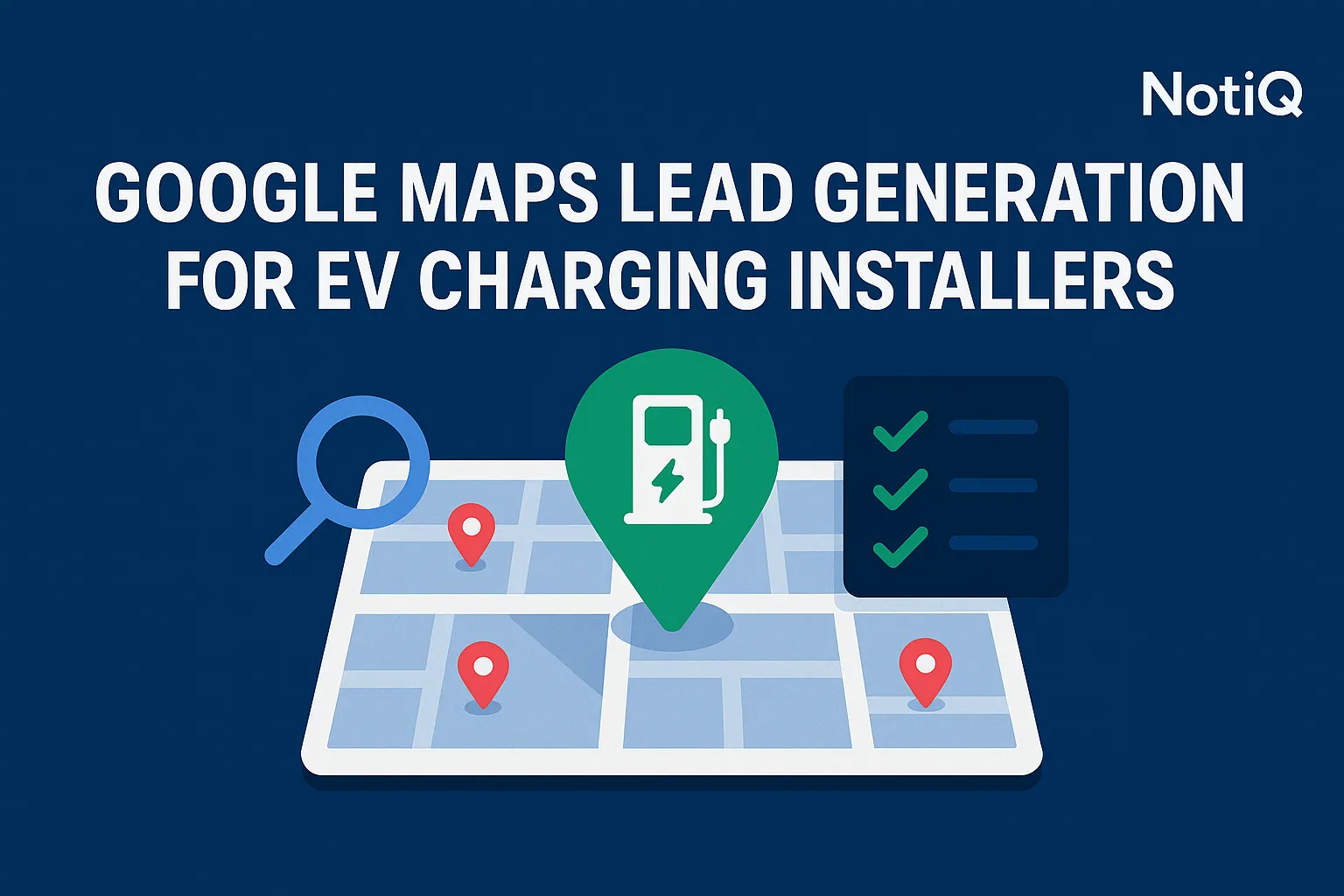
Google Maps Lead Generation for EV Charging Installers
A practical blueprint for EV charging installers who want better local prospects than generic lead lists. Learn how to find, qualify, and prioritize high-fit commercial sites using Google Maps.
1. Introduction
Most EV charging installers do not have a lead generation problem; they have a lead quality problem. The industry is saturated with broad databases and generic outbound lists that look promising on paper but fail in practice. What installers truly need are better-fit site hosts—properties that actually have the parking capacity, vehicle dwell time, traffic flow, and realistic use cases to justify an installation.
Generic prospecting tools often miss the critical, property-level context required for commercial EV charging sales. This is where Google Maps lead generation for EV charging installers changes the game. By leveraging publicly accessible, map-based visual intelligence, installers can spot high-fit opportunities significantly faster than they could by dialing through a purchased list.
This definitive blueprint covers the entire map-based prospecting workflow. You will learn how to find target properties, segment them by vertical, qualify sites using visible signals, prioritize territories, and ultimately turn mapped prospects into booked meetings. Designed for intermediate to advanced professionals, this guide moves beyond basic EV charging leads to focus on a sharper, repeatable prospecting system for commercial and fleet opportunities.
To streamline this process, modern installers are turning to advanced platforms like[NotiQ](/), a smarter prospecting workflow platform for EV charging opportunity discovery. By utilizing commercial property, fleet, and geographic expansion criteria, NotiQ acts as a practical lens for better prospect qualification.
2. Why Google Maps Works for EV Charging Prospecting
Map-based prospecting is exceptionally effective for EV charging installers compared to static lead lists or generic local prospecting methods. The reason is simple: EV charging is inherently site-dependent. An opportunity is shaped by physical realities—parking layout, traffic patterns, property use, vehicle dwell time, and surrounding demand—not just the size or revenue of a company.
Google Maps prospecting allows installers to spot this visible context, acting as a powerful first-pass qualification layer before investing time in deeper outreach and contact research. While manual list-buying often results in wasted effort on incompatible properties, map-based workflows reveal whether a commercial EV charging leads campaign is actually viable at the ground level.
Why site-level context matters more in EV charging than in many other B2B categories
In traditional B2B sales, a company's revenue and employee headcount might qualify them as a lead. In EV charging, a business can look perfect on paper but be a terrible candidate for charger deployment if parking is severely limited, vehicle turnover is too fast, or fleet patterns are non-existent.
Site fit directly dictates the likely charger type. A location's physical footprint determines whether it is suited for destination, workplace, multifamily, fleet, or public-facing charging. Relying on lists with unclear site fit for charger deployment is a primary pain point for installers, making effective site host outreach nearly impossible without visual context. EV charger installation leads must be qualified by their physical environment first.
What Google Maps reveals that broad lead databases do not
Purchased lead databases lack property context. Conversely, Google Maps provides immediate, visible signals. Installers can assess parking scale, lot layout, proximity to major highways, loading dock activity, multi-building footprints, hotel or multifamily density, and clear fleet indicators.
Using Street View and map listings informs highly personalized messaging long before the first outreach attempt. By visually verifying a site, installers save immense manual research time for EV charger prospecting. Furthermore, map-based workflows naturally integrate with AI enrichment, verification, and compliance standards—key advantages for property owner prospecting and local outreach.
When Google Maps is better than generic list building
Map-led research wins decisively when building out local territories, identifying underserved charging markets, targeting new verticals, and launching installer-led outbound campaigns. While static B2B tools might provide names and emails, they cannot provide charger-fit signals.
Google Maps lead generation for B2B sales is the antidote to inefficient territory planning for EV installers. It ensures that every prospect added to your pipeline actually has the physical infrastructure to support the EV charging leads you are trying to close.
3. Best Commercial Property Types to Target
To succeed in commercial EV charging installation, installers need a segmentation model for high-opportunity site host categories. Not every vertical requires the same charger type, nor do they respond to the same outreach framing.
By organizing your prospecting around specific property types, you can tailor your approach to the unique business motivations and map-visible buying signals of each category. For authoritative validation on what businesses are best targets for commercial EV charger installation, the USDOT site host examples provide excellent baseline criteria for site host outreach.
Hotels and hospitality sites
Hotels are premier targets for destination charging due to longer guest dwell times and the need for amenity differentiation. On Google Maps, look for large surface parking lots, proximity to major highways, multiple guest buildings, event spaces, and premium amenity positioning. When pursuing hotel EV charging installation prospects, focus your messaging on guest convenience, competitive differentiation, and filling regional hospitality EV charging gaps.
Multifamily properties and apartment communities
As EV adoption expands beyond single-family homeowners, multifamily EV charging is becoming critical. Map qualification cues include gated surface lots, structured parking garages, high unit density, professionally managed communities, and signs of premium amenities. When conducting multifamily EV charging sales outreach, emphasize resident retention, property value enhancement, and future-proofing the asset. These are highly lucrative commercial EV charging leads. For further validation, align your pitches with DOE multifamily EV charging guidance.
Workplaces and office campuses
Employer locations are exceptional candidates for Level 2 workplace EV charging due to highly predictable dwell times. Visually, look for large staff parking lots, campus-style office parks, medical complexes, or regional headquarters. Outreach should highlight employee attraction, corporate sustainability goals, and commuter convenience. To support your commercial EV charging installation proposals, reference the DOE workplace EV charging guide.
Retail, restaurants, and destination commerce
Retail centers, shopping plazas, and dining clusters offer strong potential when dwell time aligns with customer behavior. However, quick-stop retail differs vastly from longer-stay mixed-use environments. Use Google Maps prospecting to distinguish between a fast-food lot and a sprawling lifestyle center. Retail EV charging pitches should focus on increasing customer dwell time and capturing destination charging traffic.
Fleet depots, service yards, and logistics-heavy properties
Fleet electrification requires a distinct prospecting motion. Instead of customer-facing amenities, these sites need operational charging. Look for clear fleet markers on Maps: service bays, expansive yard space, depot layouts, warehouse loading zones, and branded commercial vehicles. Fleet depot electrification leads often justify high-capacity fleet charging solutions rather than standard public stations.
Municipal, civic, and public-adjacent properties
Municipal buildings, public parking garages, libraries, community centers, and transit-adjacent sites are prime targets driven by public access goals, government grants, and local infrastructure gaps. These commercial EV charging leads require site host outreach focused on community benefit and leveraging available public funding for municipal sites.
4. How to Qualify Sites Using Map Signals
The goal of Google Maps prospecting is not to perform perfect engineering diligence from your browser, but to execute smart, early-stage screening. By utilizing a practical scorecard, installers can quickly assess charger viability.
For a comprehensive understanding of site selection and feasibility, the USDOT EV infrastructure planning checklist is an invaluable resource to guide how installers score mapped properties by charger fit ROI potential and ease of deployment.
Parking layout and vehicle access
A site's parking count, layout simplicity, and entry/exit patterns heavily impact installation complexity. Note whether the property relies on surface lots, multi-level garages, or shared parking. Look for awkward circulation or loading conflicts. Visible parking density indicates both customer utility and potential friction for commercial EV charging installation. Avoid sites with unclear site fit for charger deployment to maximize your Google Maps lead generation for EV Charging Installers.
Dwell time and charger-use-case fit
Dwell time dictates the charging model. Hotels, offices, and multifamily properties typically suit Level 2 charging, whereas quick-turn retail or highway-adjacent sites might require DC fast charging. Connect the visible use case to charger economics; destination charging and workplace EV charging have vastly different ROI models compared to Level 2 versus DC fast charging decisions.
Fleet indicators and operational activity
Visible vans, box trucks, service yards, and route-based business models signal strong fleet electrification potential. Look beyond obvious logistics hubs to identify less obvious service-heavy businesses like HVAC or plumbing fleets. These electric vehicle installer prospecting efforts yield high-value fleet depot electrification leads.
Location context and surrounding demand drivers
A property is only part of the equation; surrounding geography matters. Assess corridor proximity, nearby attractions, residential density, commuter routes, and regional charging scarcity. Local outreach is more effective when you leverage geographic expansion signals to prove to commercial EV charging leads that their specific location is primed for user demand.
Visible signs of expansion or investment readiness
Look for new developments, recent grand openings, corporate rebrands, new amenities, and active construction. Fast-growing chains and properties showing geographic expansion signals indicate a willingness to invest in facility upgrades. This makes your property owner prospecting and site host outreach far more timely.
A simple prospect scoring model installers can use
To avoid inefficient territory planning for EV installers, use a practical 3-factor scoring method:
1. Property Type Fit: Does the vertical match your ideal customer profile?
2. Parking & Dwell Time: Is there adequate space and appropriate visit duration?
3. Territory Opportunity: Does it align with your geographic focus?
Tier prospects into Tier 1 (Ideal), Tier 2 (Viable), and Tier 3 (Low Priority). Emphasize speed and consistency over false precision when determining how to find EV charger installation customers from EV charging leads.
5. How to Prioritize Territories and Outreach
Finding one-off prospects is not enough; installers must build repeatable territories that yield dense, high-quality local pipelines. Even strong prospects become inefficient if they are scattered across fragmented markets.
By utilizing platforms like NotiQ, installers can seamlessly score opportunities by property, fleet, and geographic expansion criteria, ensuring that local outreach and Google Maps prospecting efforts are focused on the highest-yield zones.
How to define a prospecting territory
Installers can define a territory by city limits, highway corridors, zip code clusters, utility service regions, or a specific radius around existing jobs. Depending on your strategy, you may choose to concentrate on a single vertical (e.g., all hotels in a county) or geographic convenience (e.g., all viable commercial sites within 20 miles). This focused approach improves local SEO for EV installers and streamlines Google Maps lead generation for B2B sales.
How to find underserved charging pockets
Look for gaps in visible charging availability or under-targeted site host categories. Corridor gaps between major cities, suburban business clusters, and overlooked secondary markets often hide massive opportunities. Targeting these underserved geographies yields highly receptive commercial EV charging leads and untapped EV charging leads.
How to prioritize by vertical + geography together
Combining property categories with local density creates repeatable route efficiency. Target hotel clusters near interstates, multifamily corridors in growth districts, office submarkets, or fleet-heavy industrial zones. This property type segmentation combined with geographic focus beats random prospecting, allowing you to scale fleet electrification and Google Maps prospecting efforts systematically.
How to avoid low-fit territories
Avoid the temptation to chase every pin on the map. Warning signs of a low-fit territory include sparse commercial density, weak parking availability, poor vertical alignment, and a lack of site-host patterns. Chasing these areas results in low-quality EV charging lead lists, poor segmentation by property type, and excessive manual research time for EV charger prospecting.
What smarter territory planning looks like in practice
Smarter territory planning focuses on high-density use cases, such as:
• A hospitality corridor featuring 15+ highway-adjacent hotels.
• A rapidly developing multifamily district with gated surface lots.
• An industrial park showcasing visible service fleets and depot yards.
This targeted approach—central to advanced platforms—far outperforms typical manual scraper tools, resulting in superior electric vehicle installer prospecting, better commercial EV charging leads, and highly relevant site host outreach.
6. How to Turn Mapped Prospects Into Meetings
Bridging the gap between finding a promising property and booking a sales conversation requires strategic decision-maker discovery and personalized outreach. Map-based insights should drastically improve your message quality, not just inflate your list size.
Identifying likely decision-makers
Decision-makers vary by property type. You may need to target the property owner, asset manager, facilities director, operations manager, fleet manager, or a regional property group. Start your property owner prospecting with the physical site, then move outward to uncover the ownership or operations context to overcome the difficulty finding EV charging decision-makers for commercial EV charging leads.
Personalizing outreach from map-visible context
Use visible details—parking lot size, guest orientation, fleet presence, highway adjacency, or premium amenities—as personalization hooks. The goal is to show genuine observation, not surveillance. Relevance prevents your local outreach from sounding like generic outreach messaging for site hosts, dramatically increasing response rates for site host outreach.
Messaging by vertical
Your pitch must adapt to the vertical:
• Hotels: Focus on guest amenities, competitive advantage, and destination charging.
• Multifamily: Highlight resident experience, lease retention, and property value.
• Workplaces: Emphasize employee benefits, sustainability, and corporate modernism.
• Fleets: Discuss operational readiness, route efficiency, and depot strategy.
• Retail: Pitch increased customer dwell time and destination traffic.
Tailoring your message secures better hotel EV charging installation prospects, multifamily EV charging sales outreach success, and fleet charging solutions meetings.
Turning map observations into a first-call agenda
Visible site clues should guide your discovery questions regarding parking control, electrical panel access, host goals, and user demand. The first meeting should be used to validate assumptions made via Maps, rather than presenting a generic pitch deck. This approach positions you as an expert in electric vehicle installer prospecting and site host outreach, converting EV charger installation leads efficiently.
Common outreach mistakes to avoid
Never pitch every site the same way, skip qualification, or rely on generic "EVs are the future" messaging. Wasting sales time on properties with poor fit or low organizational readiness is a direct result of low-quality EV charging lead lists and poor segmentation by property type. To understand buyer concerns and objections, particularly for employers, review the DOE workplace charging host handbook to refine your approach and avoid generic outreach messaging for site hosts.
7. Tools, Validation Sources, and Workflow Enhancers
Google Maps is the ultimate visual discovery layer, but it must fit into a broader, compliant prospecting workflow. By pairing Maps with enrichment and automation tools, installers can scale their operations efficiently.
What to validate beyond Google Maps
Map findings must be paired with public planning data, host-category research, and local charging-program context before deeper outreach. Utilize authority-backed screening and public records rather than guesswork to validate property owner prospecting, commercial EV charging installation viability, and site host outreach readiness.
Where workflow automation adds value
Automation reduces manual research time for EV charger prospecting by collecting prospects, tagging verticals, scoring territories, enriching contact records, and organizing compliant outreach sequences. For teams looking to scale enrichment and outbound operations seamlessly, platforms like ScaliQ provide the necessary workflow continuation to manage EV charging leads and maximize Google Maps prospecting efforts.
8. Future Trends & Expert Predictions for EV Charging Prospecting
To maintain a competitive edge, installers must look ahead at how lead generation is evolving based on current market data.
Property-level segmentation will matter more
Broad lead lists are becoming obsolete. Installers will increasingly need to rely on property type segmentation, ranking opportunities by specific use cases, dwell times, and host economics to secure viable commercial EV charging installation projects and high-intent EV charging leads.
Fleet and depot opportunities will become more strategic
As commercial fleets electrify at scale, the demand for route-aware and depot-centered charging will surge. Identifying fleet depot electrification leads and offering tailored fleet charging solutions will become a primary driver of revenue in fleet electrification.
Geographic rollout signals will shape outreach timing
Expanding businesses, underserved regions, and local infrastructure gaps will dictate outreach priority. Installers who monitor geographic expansion signals will win local outreach campaigns by being the first to engage prospects during critical electric vehicle installer prospecting windows.
9. Conclusion
Google Maps is not just a list-building tool; it is a vital visual qualification engine for finding better commercial site hosts. By identifying the right property types, scoring visible fit signals, prioritizing strong territories, and personalizing outreach by vertical, installers can build a highly lucrative pipeline.
Installers who combine map signals with commercial property, fleet, and geographic expansion criteria will consistently outperform competitors relying on generic lead-list prospecting. Do not settle for one-off searches; operationalize this workflow into a repeatable system. To see how technology can automate and prioritize this exact process, explore how[NotiQ](/)helps identify and prioritize high-fit EV charging opportunities, transforming your Google Maps Lead Generation for EV Charging Installers into a scalable revenue engine for EV charging leads and site host outreach.
Frequently Asked Questions
- How do EV charging installers find leads using Google Maps?
- Installers execute Google Maps prospecting by searching for target property types, reviewing visible site signals (like parking and layout), segmenting by the likely charging use case, and prioritizing outreach based on territory fit. This compliant workflow answers exactly how do EV charging installers find leads using Google Maps.
- What businesses are the best targets for commercial EV charger installation?
- The best targets include hotels, multifamily properties, workplaces, retail destinations, logistics fleets, and municipal or public-adjacent sites. Identifying these specific verticals is the key to generating high-quality commercial EV charging leads and understanding what businesses are best targets for commercial EV charger installation.
- What map signals indicate a strong EV charging prospect?
- Strong signals include large parking scale, clues indicating long dwell times, proximity to highways or demand centers, visible fleet activity, and signs of property expansion or premium amenities. Knowing what map signals indicate a good EV charging prospect is crucial for qualifying EV charger installation leads.
- How do you tell whether a property is better for Level 2 or DC fast charging?
- Dwell time, visit duration, traffic patterns, and operational use cases guide this decision. Hotels and workplaces generally suit Level 2 destination charging, while highway retail or rapid-turnover fleets often require DC fast charging and specialized fleet charging solutions. This dictates the choice of Level 2 versus DC fast charging.
- How is map-based prospecting different from buying EV charging lead lists?
- Map-based prospecting provides crucial physical property context and visual qualification cues that static databases lack. Because purchased lead databases lack property context, Google Maps lead generation for B2B sales ensures you only spend time on EV charging leads that actually have the infrastructure to support a charger.
Continue Reading
More articles you might find useful

How to Find Local Businesses With Very Few Website Pages
Learn how to find local businesses with very few website pages using a repeatable audit framework. This guide shows how to validate page count, spot missing pages, and prioritize the best outreach opportunities.
Read the article →
Google Maps Lead Generation for Window and Door Installers
Learn how window and door installers can use Google Maps to find, qualify, and prioritize better local prospects. This beginner-friendly guide shows a repeatable workflow for smarter local outreach.
Read the article →
How to Prioritize Businesses With Verified Google Profiles
A practical framework for ranking local leads beyond the verified badge. Learn how to prioritize Google Business Profiles using fit, freshness, completeness, and activity signals.
Read the article →Popular industry lead playbooks
Maps search examples and niche outreach for the verticals teams prospect most.