Technology
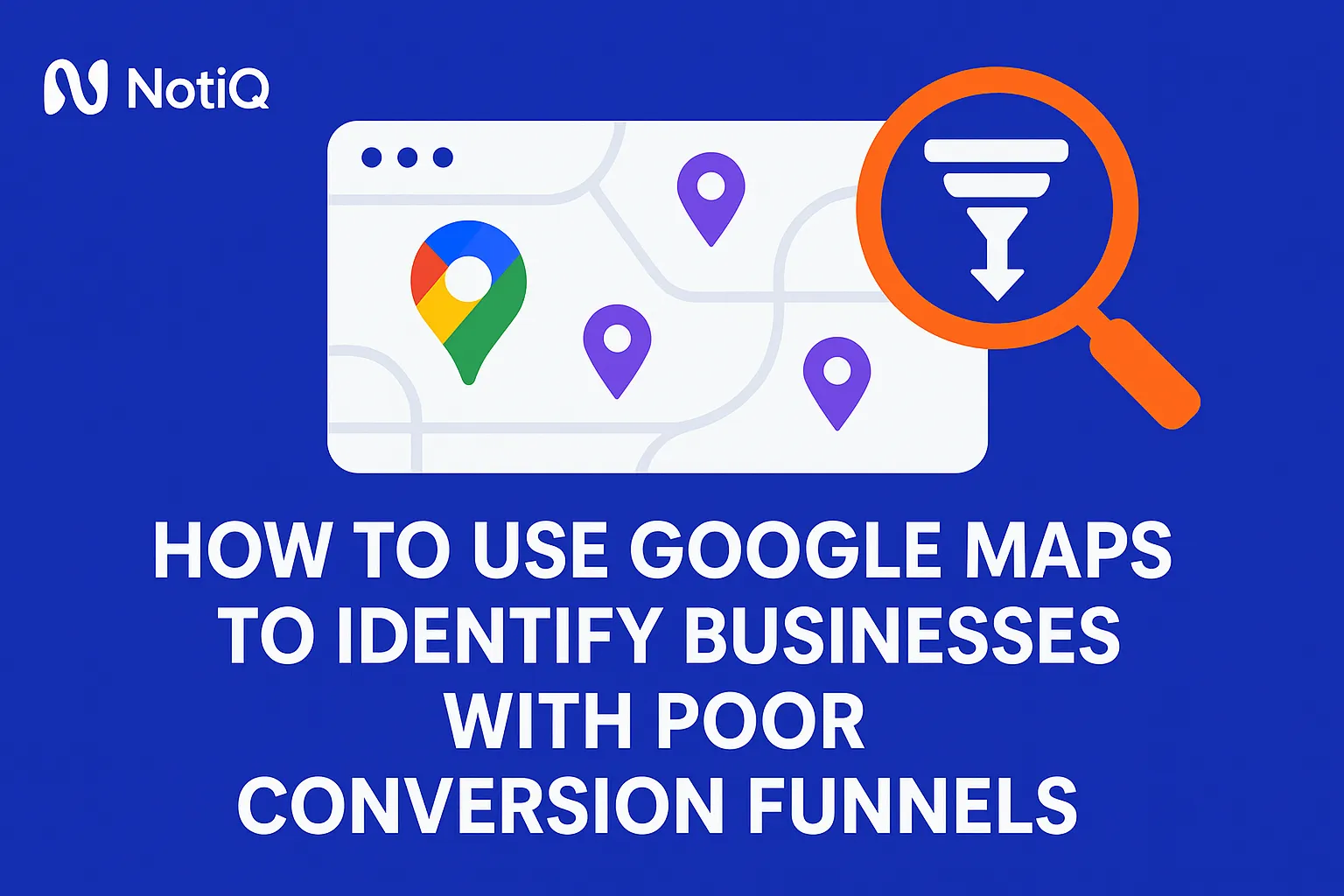
How to Use Google Maps to Identify Businesses With Poor Conversion Funnels
Discover how to use Google Maps and a local SEO audit to find businesses that rank well but lose leads through weak conversion paths. This guide shows how to spot funnel gaps and turn them into targeted outreach opportunities.
1. Introduction
Many local businesses are highly visible in Google Maps but still bleed leads daily because their conversion funnel breaks the moment a user clicks. Generating impressions is only half the battle; if a prospect cannot easily transition from discovery to action, that visibility is wasted.
For agencies, consultants, and growth teams, this reality presents a massive opportunity. Maps visibility alone does not equal calls, form fills, bookings, or purchases. While most marketers focus purely on ranking higher, the true revenue-generating play is learning how to use Google Maps to identify businesses with poor conversion funnels. By diagnosing where the user journey falls apart, you can pinpoint high-value prospects who already have traffic but desperately need help capturing it.
This article provides a practical, step-by-step framework for Google Maps lead generation. You will learn how to start in Google Maps, audit public Google Business Profile signals, review the on-site user journey, score conversion gaps, and turn those findings into highly personalized outreach. Unlike generic local SEO advice that stops at keyword rankings, this methodology positions Google Maps as a powerful prospecting and funnel-diagnosis system.
Think with Google research consistently shows that local-intent searches carry immense immediacy—users are often ready to act within 24 hours. When you identify SMB funnel gaps blocking that immediate action, you uncover highly lucrative consulting opportunities. From the perspective of NotiQ, an intelligence and workflow layer designed to identify journey gaps and operationalize outreach, finding these weaknesses is the ultimate way to build pipeline. Let’s dive into how to execute this strategy effectively.
2. Why Google Maps Reveals Conversion Opportunities
To build a high-converting pipeline, you must understand the difference between a traffic problem and a funnel problem. Many SMBs already have excellent local exposure, but their listing-to-site journey leaks demand. Google Maps is the premier starting point for identifying these businesses because it captures intent-rich discovery. Users searching locally are often moments away from making a purchase decision. When friction exists in that critical window, it has a direct and immediate impact on revenue.
This introduces the core framework of our methodology: the "visibility-to-conversion mismatch." By looking for businesses with high visibility but poor usability, you adopt a hybrid local SEO and CRO (Conversion Rate Optimization) approach. Instead of merely tracking rankings, you are diagnosing the commercial action path.
According to Google’s local ranking guidance, profile completeness, relevance, and prominence dictate visibility. But visibility is useless if the user abandons the journey. To operationalize this data effectively, you need an ecosystem that bridges the gap between identifying conversion issues maps and executing outreach. The broader[NotiQ](/)and RepliQ ecosystem—including insights from the RepliQ blog and campaign assets like RepliQ AI images—serves as the operational layer that turns these audit findings into automated workflows and personalized campaigns. Unlike standard rank-tracking tools that stop at visibility, this workflow inspects the downstream conversion friction that actually costs businesses money.
Google Maps surfaces demand, not just listings
Maps data is a direct reflection of real commercial intent. It is not just a directory; it is an engine for business discovery on Google Maps. Because the platform surfaces businesses based on proximity and relevance, it is the perfect tool for spotting companies that should be converting a high volume of local attention.
The goal here is not to prove a business is failing overall, but to identify likely leakage points in their customer journey. In fact, the strongest targets for Google Maps prospecting often look "good enough" on the surface. They have a solid local presence, but the experience breaks down the moment a user clicks through to their website. These poor conversion funnel signals are exactly what you want to look for when evaluating a small business marketing funnel.
The hidden opportunity is the gap between visibility and action
The most lucrative opportunities lie in the visibility-to-conversion mismatch. Common patterns include a business with a high review volume but terrible website UX, a strong ranking presence but a weak call-to-action (CTA) flow, or a fully completed profile that offers no clear booking path.
When conducting a website conversion audit, frame these gaps as an opportunity lens for outreach, rather than a criticism of the business owner. Pointing out that a company has successfully built local demand but is missing out on easy revenue due to minor friction points makes your outreach highly relevant. For agencies and RevOps-minded teams, this approach to local business conversion optimization shifts the conversation from "let us fix your SEO" to "let us help you capture the revenue you are already generating."
3. Google Business Profile Signals to Audit First
Before you even click through to a business's website, you can build the first stage of your audit workflow directly within their Google Business Profile (GBP). Certain public signals reliably suggest downstream conversion issues.
This stage should function as a rapid qualification layer for Google Maps prospecting. Speed is critical. By quickly scanning incomplete or misaligned profile elements, you can predict weak conversion journeys. As highlighted by Google Business Profile performance metrics, user engagement—such as calls, website clicks, and direction requests—relies heavily on profile clarity. While standard Google Business Profile analysis guides stop at rankings, this workflow uses these early poor conversion funnel signals to predict site-level friction.
Category fit, business description, and offer clarity
Start by checking whether the primary category aligns with the likely search intent of the user. Does the business description clearly communicate what the company does and who it serves?
Look for vague positioning, an unclear specialization, or a mismatched service presentation. If a user searches for "emergency plumber" but the profile description focuses vaguely on "general home maintenance," drop-off will occur before the site visit. Category misalignment creates poor lead quality and user hesitation, negatively impacting local business conversion optimization even when business discovery on Google Maps is high.
Reviews, review responsiveness, and trust cues
Assess the business's review quantity, recency, and sentiment patterns. Just as importantly, check whether the business responds consistently to both positive and negative feedback, adhering to Google review management guidance.
Weak review hygiene destroys trust before a user ever clicks the website link. Look for reputation mismatches—such as a business ranking in the top three but sporting stale, unmanaged, or heavily negative reviews. These trust signals local business buyers rely on are critical; an unmanaged reputation is one of the most glaring SMB funnel gaps you can leverage in outreach.
Photos, attributes, contact methods, and booking signals
Check whether the profile features current photos, useful attributes (e.g., "women-led," "wheelchair accessible"), and frictionless contact or booking options.
Missing photos or the absence of immediate action buttons (like a "Book Online" or "Call Now" feature) are early indicators of a weak conversion posture. Industries that depend heavily on booking, quote requests, or immediate calls—such as HVAC, salons, or legal services—are especially vulnerable when these paths are absent. Spotting these omissions is a cornerstone of effective Google Maps lead generation and highlights poor conversion funnel signals ripe for local business conversion optimization.
Website click-through potential from the listing
Finally, evaluate whether the listing gives users a compelling reason to click through to the site. Does it project clear relevance, trust, and obvious next-step cues?
A profile can rank highly in the local pack while still underperforming drastically at the click stage. If the GBP lacks a compelling hook, the transition to the website conversion audit will likely reveal even deeper issues. Identifying these conversion issues maps perfectly to the next step: evaluating the on-site experience.
4. How to Review the Website and Conversion Path
Once a prospect passes the rapid GBP qualification, move from Maps discovery into a fast, meaningful CRO audit of the business website. Because local-intent searches predominantly happen on mobile devices, you must emphasize a mobile-first review.
Audit the exact page the user lands on from the profile link, not just the homepage in isolation. You must separate minor cosmetic issues from true conversion blockers, relying on established NIST human-centered design principles regarding usability and task completion. This sets your website conversion audit apart from standard local SEO advice that focuses on citations but ignores action-path usability.
Start with the landing experience from a Maps click
Review the first page a user reaches. Does it match the promise implied by the Google Business Profile?
Check for immediate clarity: within three seconds, can the user tell what the business offers, who it serves, where it operates, and what the exact next step is? Flag mismatches between local intent and generic landing pages. If a user clicks a listing for "roof repair Miami" and lands on a generic corporate homepage with no mention of Miami or roofing repairs, that is a severe failure in local SEO and CRO, wasting the initial business discovery on Google Maps.
Evaluate CTA strength and next-step clarity
Check whether the landing page features a visible, relevant CTA above the fold and logically placed throughout the scroll depth.
Look for missing, passive, or confusing next steps. A user should never have to hunt to call, book, request a quote, schedule an appointment, or submit a form. CTA mismatch varies heavily by business model—for example, a home service business needs aggressive "Request a Quote" or "Book Now" clarity, whereas a generic "Learn More" button is a major poor conversion funnel signal that destroys a small business marketing funnel. This is a primary target for local business conversion optimization.
Audit mobile UX, speed, and friction
Review the mobile load speed perception, tap targets, text readability, and the presence of sticky contact options. Can users complete an action without pinching or zooming?
Mobile friction matters exponentially more in local searches because the immediacy of the intent is so high. Approach this with a fast-review checklist mentality rather than a deep, technical core-web-vitals audit. If the mobile UX local business buyers experience is clunky, they will immediately bounce back to Maps, rendering the website conversion audit a clear diagnosis of conversion issues maps.
Check trust elements and proof of legitimacy
Local buyers require reassurance before they hand over their phone number or credit card. Look for reviews, testimonials, industry certifications, guarantees, service-area proof, team photos, location cues, and before-and-after examples.
Weak trust presentation can make a business appear significantly less credible on their website than their Maps visibility initially suggested. Missing trust signals local business owners easily overlook are major SMB funnel gaps that prevent local business conversion optimization.
Inspect forms, calls, and booking flows
Test the actual action paths. Are the forms too long? Do the required fields feel invasive or unnecessary? Do the CTAs route to broken links or dead ends?
Note whether phone numbers are hyperlinked for easy click-to-call access and whether third-party booking or quote flows are actually usable on a mobile screen. Broken or high-friction lead capture is often the fastest quick win you can offer. Spotting these poor conversion funnel signals allows you to immediately improve the small business marketing funnel during a website conversion audit.
Verify consistency between profile details and the site
Finally, check whether the business name, physical location, service areas, operating hours, and contact information are perfectly consistent between the GBP and the website.
Inconsistency destroys trust and creates hesitation, even if rankings remain solid. Utilizing LocalBusiness structured data documentation ensures that search engines and users alike see a unified, credible entity. Consistency is the bedrock of combining local SEO and CRO alongside a thorough Google Business Profile analysis.
5. Scoring Visibility-to-Conversion Mismatch
To scale this methodology, you need a repeatable scoring model to prioritize which businesses are worth your outreach efforts. A practical rubric evaluates three dimensions: visibility strength, site quality, and conversion readiness.
This score is for rapid prioritization, not scientific certainty. The goal is to rank opportunities consistently so agencies can adapt the framework by niche. By leveraging engagement indicators found in Google Business Profile performance metrics, you can identify SMB funnel gaps faster than competitors who completely lack a visibility-to-conversion mismatch model.
Dimension 1 — Visibility strength
Score signals such as review volume and velocity, listing completeness, map pack presence, and apparent local demand potential.
Strong visibility paired with weak funnel execution is the ultimate sweet spot. Conversely, avoid prioritizing businesses with zero visibility and no funnel readiness; those require fundamental business overhauls, not just optimization. Focus your Google Maps prospecting and Google Business Profile analysis on companies already winning the battle for business discovery on Google Maps.
Dimension 2 — Website quality and user journey
Score the site based on message clarity, mobile usability, trust presentation, message match, and CTA prominence.
Keep your scoring criteria concise so they can be applied in minutes. Consistency across your website conversion audit process ensures that your outreach prioritization remains reliable. When you systematically identify conversion issues maps, you streamline local business conversion optimization efforts.
Dimension 3 — Conversion readiness
Score whether the business has clear next steps, usable forms, functional booking paths, click-to-call access, and overall low friction.
Identify "fixable now" opportunities versus businesses that need a structural $10,000 website redesign. Quick-win readiness makes a lead significantly more attractive for outreach, as you can deliver ROI immediately by fixing poor conversion funnel signals within the small business marketing funnel.
Build a simple priority matrix
Create a matrix to segment your findings. For example: High Visibility + Low Conversion Readiness = Top Outreach Priority.
Add further guidance by segmenting these leads by niche, location, and service urgency. Turn this score into a repeatable lead list for your sales or consulting teams. A workflow platform like[NotiQ](/)can help standardize this scoring and enrichment process, while integrating with tools highlighted on the RepliQ blog or utilizing RepliQ AI images to execute personalized follow-ups at scale for seamless Google Maps lead generation and prospecting local businesses.
6. Turning Audit Findings Into High-Value Outreach
Identifying the gaps is only the first step; the real value is converting those audit observations into personalized outreach that feels relevant, evidence-based, and commercially useful.
Generic local SEO outreach underperforms because it lacks proof and prioritization. By translating observed friction into concise, high-value messaging, you adopt a consultative angle. You are pointing out a revenue opportunity, not criticizing a failure. This workflow, native to intelligence-to-action systems like NotiQ, pulls far ahead of educational local SEO articles and CRO-only content.
Turn observations into outreach-ready insight
Summarize your findings in a few punchy bullets: state what the business is doing well (e.g., great Maps visibility), where leads are likely leaking, and what quick wins are visible.
Use undeniable evidence like profile screenshots, missing CTAs, mobile friction recordings, or omitted trust signals. Avoid overclaiming outcomes without access to their private conversion data; instead, focus on the undeniable SMB funnel gaps found during your website conversion audit that highlight poor conversion funnel signals.
Personalize by business model and likely intent
Tailor your messaging based on whether the business depends on phone calls, scheduled appointments, quote requests, walk-ins, or direct purchases.
Outreach must map directly to the most relevant funnel gap. For instance, tell a roofer: "You have a strong Maps presence, but there is no clear quote flow on mobile." Tell a clinic: "You have high review credibility, but a weak mobile CTA is preventing online bookings." This local business conversion optimization approach proves you understand their specific small business marketing funnel and elevates your Google Maps prospecting.
Focus on quick wins first
Highlight 1 to 3 fixes that will have an immediate business impact. Recommend clearer booking CTAs, shorter contact forms, stronger trust proof, or better landing-page match.
SMBs respond significantly better to focused, actionable recommendations than to overwhelming, 40-page technical audits. Structure your outreach with a "fix this first" mentality to immediately resolve website conversion issues local business owners face, proving your expertise in local SEO and CRO.
Use personalized assets to improve response rates
Pair your audit findings with personalized landing pages, imagery, or bespoke outreach assets to skyrocket relevance and response rates.
This is the natural extension of Maps-based prospecting into actual campaign execution. By keeping the explanation tactical and funnel-focused, you avoid sounding overly promotional. Leveraging platforms like[NotiQ](/)alongside insights from the RepliQ blog and dynamic RepliQ AI images allows you to automate these personalized outreach assets, dominating Google Maps lead generation and effectively prospecting local businesses to fix SMB funnel gaps.
7. Tools, Templates, and Workflow Notes
To make this methodology immediately actionable, you need a lightweight operating model that your team can implement today. This workflow—moving from Maps search, to profile audit, to website review, to scoring, and finally to outreach—should be highly repeatable.
Whether you are a solo consultant or running a RevOps function for an agency, using reusable operating templates makes this process scalable and vastly more effective than theory-heavy Google Maps prospecting.
Rapid audit checklist
Run this sequence in under 10 minutes per business:
1. Profile Review: Check category, description, and reviews.
2. Landing-Page Review: Verify message match from the Maps click.
3. CTA Check: Ensure next steps are visible and primary.
4. Trust Check: Look for social proof and guarantees.
5. Score Assignment: Rank the visibility-to-conversion mismatch.
Using a standardized Google Business Profile audit checklist ensures you quickly capture data for your website conversion audit and streamline Google Maps lead prospecting.
Suggested scorecard fields
Keep scoring simple for team-wide consistency. Inputs should include:
• Category fit (1-5)
• Review hygiene (1-5)
• Photo/Attribute utilization (1-5)
• CTA clarity (1-5)
• Mobile usability (1-5)
• Trust signals (1-5)
• Form/Booking flow friction (1-5)
This basic SMB conversion funnel audit quickly surfaces poor conversion funnel signals, guiding your local business conversion optimization strategy.
8. Future Trends in Maps-Based Funnel Prospecting
The space is rapidly evolving toward the convergence of local SEO, CRO, and sales intelligence. In the near future, identifying visibility-to-conversion mismatches will rely heavily on AI-assisted workflows that enrich Maps research with website and funnel observations at scale.
As mobile-first local journeys become even more dominant, the tolerance for friction will drop to zero. Businesses that rank well but fail to convert will lose market share to competitors with seamless booking flows. Agencies that utilize AI-assisted prospecting to execute personalized outreach based on these specific gaps will dominate Google Maps lead generation, proving that the future belongs to those who master both local SEO and CRO.
9. Conclusion
Google Maps is not just a visibility channel; it is a high-intent discovery surface perfect for identifying businesses with hidden funnel leakage. By auditing public GBP signals, reviewing the mobile website path, and scoring the visibility-to-conversion mismatch, you can pinpoint exactly where local businesses are losing money.
The best prospecting opportunities are often businesses that already have demand but lack a frictionless path to conversion. By turning these findings into evidence-based, consultative outreach, you position yourself as a revenue partner rather than just another SEO vendor.
Operationalize this process inside your prospecting workflow today. Leverage tools like NotiQ to identify journey gaps, prioritize high-value opportunities, and turn audit insights into compliant, automated action. Start diagnosing conversion issues maps, master Google Maps lead generation, and close the SMB funnel gaps that are costing local businesses thousands.
Frequently Asked Questions
- How can Google Maps help identify businesses with poor conversion funnels?
- Google Maps reveals high-intent local visibility. By assessing a business that ranks well, you can click through to their linked profile and website to expose friction points—like broken forms or missing CTAs—that prevent calls, bookings, or form fills. This is the essence of how to use Google Maps to identify businesses with poor conversion funnels during Google Maps prospecting.
- What signs on a Google Business Profile suggest conversion issues?
- Key indicators include incomplete profiles, weak or missing photos, unclear primary categories, unmanaged or negative reviews, and missing contact or booking options. These Google Business Profile analysis findings are strong poor conversion funnel signals.
- What should I check first after clicking through from a Maps listing?
- Start with message match (does the page reflect the Maps listing?), CTA clarity, mobile usability, trust cues (like reviews and guarantees), and the overall ease of taking the next step. This forms the foundation of a strong website conversion audit for local business conversion optimization.
- How do you separate a visibility problem from a conversion problem?
- Visibility problems show weak discoverability—the business simply doesn't rank in Maps. Conversion problems show strong exposure and high rankings, but weak action paths and high friction after the user discovers the business. Identifying this difference bridges conversion issues maps with local SEO and CRO.
- Which local businesses tend to show the largest funnel gaps?
- Focus on businesses that rely heavily on immediate calls, bookings, quote requests, or high initial trust (e.g., plumbers, lawyers, clinics, salons). In these niches, mobile friction and weak proof drastically hurt action rates, exposing massive SMB funnel gaps within the small business marketing funnel.
Continue Reading
More articles you might find useful
How to Find Local Businesses With Very Few Website Pages
Learn how to find local businesses with very few website pages using a repeatable audit framework. This guide shows how to validate page count, spot missing pages, and prioritize the best outreach opportunities.
Read the article →
Google Maps Lead Generation for Window and Door Installers
Learn how window and door installers can use Google Maps to find, qualify, and prioritize better local prospects. This beginner-friendly guide shows a repeatable workflow for smarter local outreach.
Read the article →
How to Prioritize Businesses With Verified Google Profiles
A practical framework for ranking local leads beyond the verified badge. Learn how to prioritize Google Business Profiles using fit, freshness, completeness, and activity signals.
Read the article →Popular industry lead playbooks
Maps search examples and niche outreach for the verticals teams prospect most.