Technology
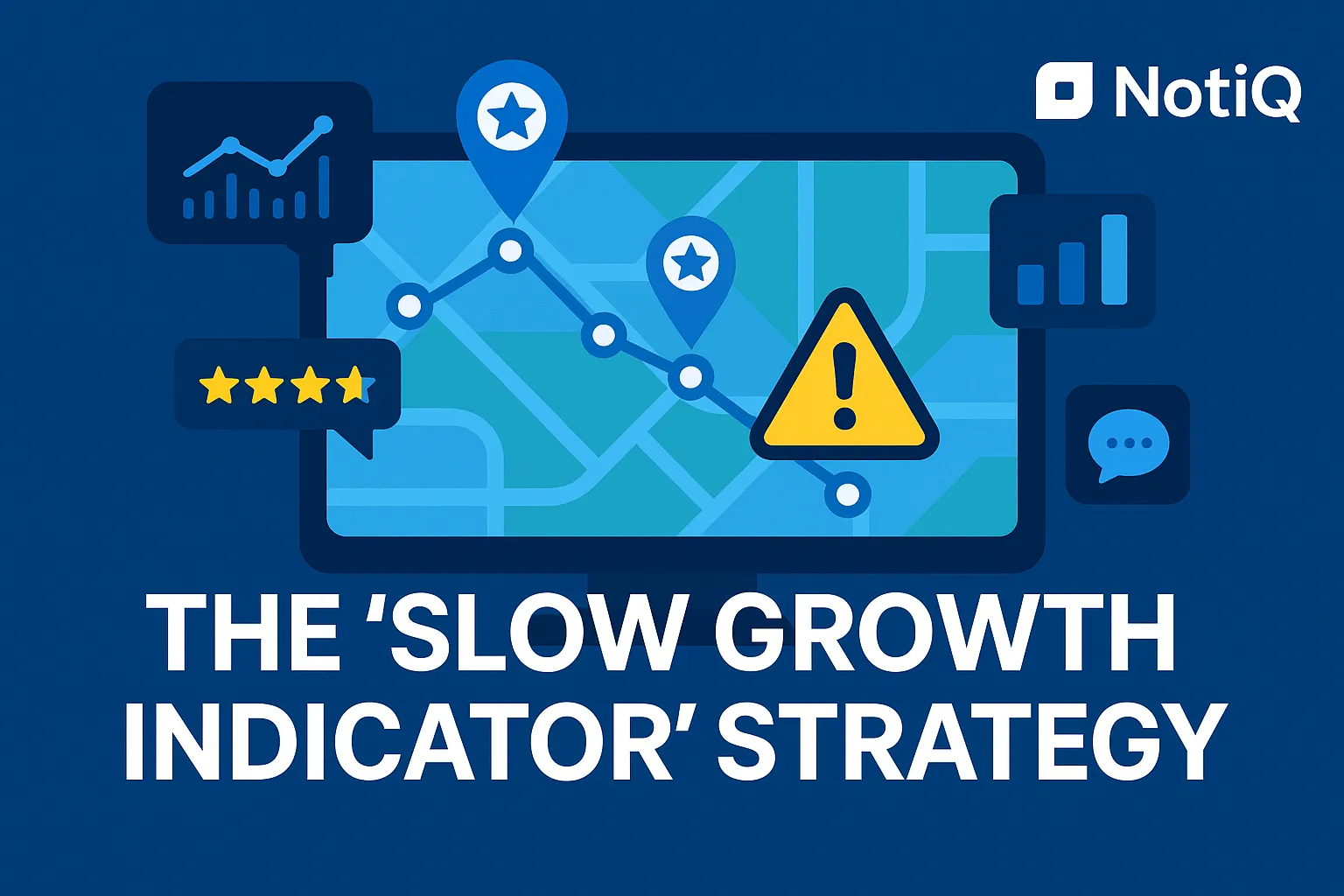
The “Slow Growth Indicator” Strategy Using Maps Review Trends
Learn how to use review velocity, recency gaps, ratings, and competitor benchmarks to spot slow growth early in Google Maps. This framework helps local teams protect visibility before performance declines.
1. Introduction
Slow growth rarely announces itself with a sudden, catastrophic drop in revenue. Instead, it quietly erodes visibility, local trust, and review momentum long before it appears in lagging indicators like booked calls or sales. For local marketers, agency partners, franchise teams, and multi-location operators, catching these early warning signals is critical to maintaining a competitive advantage.
This guide introduces a practical slow growth indicator strategy using maps review trends. Built on five core pillars—review velocity, recency gaps, rating drift, response behavior, and competitor momentum—this framework serves as a diagnostic model for identifying listings that are growing, plateauing, or stagnating.
This is not generic reputation advice. It is a systematic approach to early stagnation detection in slow growth maps environments. We will cover how to separate seasonality from structural decline, benchmark against competitors, and deploy targeted response playbooks. To operationalize these insights, platforms like[NotiQ](/)offer a data-driven methodology for turning these complex review patterns into actionable alerts, ensuring local teams can prioritize interventions before performance drops become expensive.
2. What a Slow Growth Indicator Means in Maps Review Data
Why review trends are an early signal, not just social proof
Customer reviews do far more than build a brand’s reputation; they serve as a live pulse of customer activity, local trust, and overall business momentum. Flat review growth or declining freshness often precedes weaker local SEO performance and diminished conversion confidence.
Unlike lagging indicators such as revenue or lead volume, google maps reviews and local SEO review trends act as leading local business growth signals. Identifying a drop in review momentum allows teams to course-correct before a decline impacts the bottom line. According to Google’s local ranking factors, prominence and review activity are critical for visibility. When review momentum stalls, visibility is usually the next metric to fall.
A practical definition of the Slow Growth Indicator
The Slow Growth Indicator is a composite diagnostic signal built from five distinct elements: review velocity, recency gap, rating drift, response rate, and competitor momentum. No single metric proves stagnation on its own. The true value of review trend analysis lies in reading patterns across these business stagnation indicators over several months.
To make this framework actionable, businesses should categorize their locations into a simple status model:
• Healthy: Strong momentum and active engagement.
• Watchlist: Early signs of slowing velocity or widening recency gaps.
• Critical: Multi-metric decline requiring immediate intervention.
What “healthy,” “plateauing,” and “stagnating” can look like
Understanding the nuances of review trend monitoring requires clear definitions of listing health:
• Healthy: The listing enjoys steady review inflow, recent customer feedback, stable or improving ratings, and active owner responses.
• Plateauing: The listing shows inconsistent review inflow or occasional flat review volume, and review recency gaps are slightly widening, but no severe decline has taken root.
• Stagnating: The listing suffers from completely flat review volume, severe recency gaps, weak owner response behavior, and competitors are visibly pulling ahead in market share.
Why this angle is different from generic review management advice
Most competitor content focuses strictly on tactical advice like "how to get more reviews." This framework takes a different approach: it teaches readers how to diagnose a loss of momentum first. By focusing on business stagnation indicators and advanced google business profile reviews analysis, this methodology prioritizes operational triage.
While manual spreadsheet tracking or broad reputation tools simply aggregate data, a structured early-warning model—like the one utilized by NotiQ—provides specific thresholds, automated alerts, and operational prioritization that generic tools lack.
3. The Review Metrics That Signal Stagnation First
Review velocity: the first momentum metric to watch
Review velocity is the rate at which new google maps reviews are acquired over a specific time window, ideally measured monthly. Declining review velocity is a primary signal of demand slowdown, weaker review capture processes, or fading customer engagement.
For accurate review trend analysis, compare the current 3-month average velocity against the previous 3-month period rather than relying on a single month.
• Stable: 15 reviews/month average over 6 months.
• Dropping: Velocity falls from 15 to 8 reviews/month.
• Collapsed: Velocity drops from 15 to 1 review/month.
Recency gaps: when freshness starts to disappear
Long periods without new reviews erode consumer trust and indicate weak internal review operations. Review recency gaps matter because searchers equate freshness with current business quality.
Acceptable gaps vary by industry—a high-volume coffee shop should not go a week without a review, whereas a specialized B2B consultant might naturally see a 30-day gap. Effective review trend monitoring flags unusual gaps across a single location or an entire portfolio, preventing local search visibility decline.
Rating drift and sentiment consistency
Stagnation is not always about volume. A listing maintaining stable volume but suffering from rating drift—a gradual softening of the average star rating over time—is also stagnating.
Deep review trend analysis and customer sentiment tracking can uncover issues hidden behind a seemingly stable 4.2-star average. It is vital to differentiate between operational issues (e.g., long wait times), service quality issues (e.g., rude staff), and review solicitation issues (e.g., asking unhappy customers for feedback).
Response rate and owner responsiveness
A weak owner response rate signals internal neglect, low reputation-management maturity, and poor customer-care discipline. Response rate is a critical reputation management metrics component because it directly impacts consumer trust and team accountability.
In advanced google business profile reviews analysis, separating "response rate" (percentage of reviews answered) from "response speed" (how quickly they are answered) adds deeper operational nuance. Engaging with reviews transparently and consistently is vital for multi-location teams.
Competitor momentum as the context layer
Stagnation is relative. A flat listing becomes a critical liability if nearby competitors continue to gain reviews and maintain freshness. Conducting google maps competitor analysis for review growth benchmarks reveals whether a slowdown is an internal execution gap or a broad market shift.
Effective competitor benchmarking requires a side-by-side view of your listing's maps review patterns against the top 3 local competitors by category and geography.
A simple Slow Growth Indicator scoring model
To operationalize stagnation detection, utilize a scoring approach incorporating velocity, recency gap, rating drift, response rate, and competitor momentum.
Rather than a rigid universal formula, use a weighted scoring or banding system tailored to your industry. Calculate this slow growth indicator monthly—or biweekly for highly active markets. Note that this is a practical internal decision framework based on review velocity and momentum, not an official Google metric.
4. How to Separate Seasonality From True Slow Growth
Why seasonality causes misreads in review data
Some industries naturally experience review surges and droughts tied to demand cycles, holidays, weather, or appointment volume. Knowing how to separate seasonality from true stagnation in maps review activity is crucial. A single weak month in a slow growth maps environment should not automatically trigger a stagnation label. Contextual review trend analysis prevents false alarms.
Use rolling 3-month comparisons before drawing conclusions
To smooth out seasonal noise, compare the most recent 3 months to the prior 3 months. Rolling windows are significantly more reliable for review velocity tracking than one-month snapshots. This method provides a clearer picture of review trend monitoring and acts as a more accurate gauge of business stagnation indicators.
Add year-over-year context when possible
Year-over-year comparison accounts for recurring seasonal behavior in cyclical categories. A listing may be down month-over-month due to natural seasonality but remain incredibly healthy year-over-year. Multi-location review monitoring and franchise reporting rely heavily on this year-over-year review trend analysis to avoid overreacting to expected seasonal dips.
Look for multi-signal decline, not one isolated dip
True stagnation detection relies on convergence. A structural decline is credible when multiple signals move together: lower velocity, wider review recency gaps, rating drift, weaker response behavior, and competitors pulling ahead. Never label a location as declining based on review count alone.
Connect review trends to downstream performance signals
Validate falling review momentum against actual Business Profile performance metrics such as clicks, calls, or direction requests. Review patterns are leading signals; interaction data confirms the impact of local search visibility decline. To ensure data accuracy, teams can apply principles similar to the seasonal adjustment methodology used by economists to separate recurring seasonal patterns from underlying trend changes during advanced google business profile reviews analysis.
5. How to Benchmark Review Momentum Against Competitors
Why competitor benchmarking matters for stagnation detection
Flat review growth might be acceptable in a temporarily slow market, but it is dangerous if competing listings are gaining momentum. Competitor benchmarking helps distinguish internal execution failures from broad market shifts. For agency teams and franchise operators, this google maps competitor analysis provides the logic needed to prioritize which business stagnation indicators require immediate action.
Which competitor metrics to compare
When conducting review trend analysis, compare the most useful benchmark dimensions: total review growth, monthly review velocity, recency, average rating stability, and owner response behavior. Group competitors by category, geography, and similar business models to ensure fair comparisons. Relevant local benchmarks matter far more than comparing a single location to a national brand's flagship store.
Build a simple benchmark dashboard
Intermediate readers benefit from a repeatable operating view. Build a benchmark dashboard with columns for location, current reviews, 3-month growth, days since last review, average rating trend, response rate, and top competitor delta. This multi-location review monitoring setup flags outliers quickly. To see how an automated platform visualizes review trend benchmarks and outlier alerts, explore the NotiQ demo.
What “internal problem” vs “market-wide slowdown” looks like
If all comparable businesses in a market slow down simultaneously, seasonality or category softness is likely the cause. However, if your listing stalls while competitors continue to grow, you are facing an internal operational, reputational, or local SEO issue. Accurate stagnation detection relies on understanding these local business growth signals through google maps competitor analysis for review growth benchmarks.
Differentiate NotiQ’s approach from generic tools
The value of the slow growth indicator lies not just in collecting data, but in turning google business profile reviews analysis into prioritization, alerting, and next-step decisions. Unlike fragmented manual reporting or broad automation tools, NotiQ’s review trend analysis emphasizes AI enrichment, verification, and compliance—transforming raw review momentum into an operational growth intelligence layer.
6. What Actions to Take When Review Growth Slows
If review velocity falls but ratings stay strong
When review velocity drops but ratings remain high, it typically points to weak review capture processes rather than poor service. To fix flat review volume, tighten review request campaigns, improve the timing of the ask, and standardize workflows across all locations. Often, a breakdown in staff consistency or channel delivery is the root cause.
If recency gaps widen and response rate declines
Widening review recency gaps paired with a weak owner response rate almost always indicates internal neglect or a lack of ownership over the listing. Assign clear accountability for responses, establish SLAs, and audit inactive locations. Visible owner engagement reinforces trust and improves reputation management metrics even before new review volume fully recovers.
If volume is stable but ratings or sentiment drift downward
Stable volume combined with rating drift points directly to operational or customer experience issues. Use review trend analysis to surface recurring themes—such as wait times, staff behavior, or service inconsistency—and route these insights to operations or location managers. Customer sentiment analysis is key to uncovering issues hidden inside stable volume.
If competitors are gaining while your listing is flat
When google maps competitor analysis shows rivals pulling ahead while your growth is flat, prioritize local SEO, listing optimization, and aggressive (but compliant) review generation. Audit business profile completeness and local landing pages. Local SEO review trends dictate that fading momentum will eventually cause a local search visibility decline if left unchecked.
Create staged intervention playbooks
Organize your response actions by severity: Watchlist, At Risk, and Critical. Map each slow growth indicator status to specific actions, internal owners, and an audit cadence. Staged playbooks turn stagnation detection from a one-off analysis into a scalable system for multi-location review monitoring.
Keep actions compliant and trustworthy
Never use fake reviews, selective solicitation (review gating), or prohibited tactics to artificially inflate momentum. Always adhere to FTC guidance on online customer reviews to maintain transparency. Furthermore, ensure all google business profile reviews analysis and collection practices strictly follow Google review policy rules to protect your listings from suspension.
7. Tools, Dashboards, and Workflow Ideas
What a useful review trend dashboard should include
A practical review trend dashboard must include core fields: monthly review count change, 3-month rolling velocity, days since last review, rating trend, response rate, and competitor delta. Utilize color-coded status bands to accelerate prioritization for busy teams. This setup supports robust review trend monitoring and google business profile reviews analysis for both single-location operators and portfolio managers.
How agencies and multi-location teams can use the framework
Agencies can leverage the slow growth indicator score to identify accounts at risk long before clients notice declining results. Franchise and multi-location review monitoring teams can rank locations by urgency, allocating support efficiently based on concrete business stagnation indicators. Establish a recurring audit cadence to ensure consistent oversight.
Turning analysis into recurring workflows
The true value of review trend analysis comes from consistency. Implement monthly audits, automated alerts, and standard action logs for flagged locations. Connect review velocity tracking and local SEO review trends to broader customer-experience workflows. For additional context on workflow automation and AI-driven outreach, explore the Repliq blog.
8. Future Trends in Review-Based Growth Monitoring
AI-assisted review summarization and anomaly detection
As review volumes grow, teams need help turning raw data into usable trend signals. AI-assisted review summarization and anomaly detection will soon be standard, identifying unusual drops in velocity, recency, or sentiment much faster than manual review trend analysis.
Unified local performance dashboards
The future of review trend monitoring lies in unified dashboards that combine review data with ranking, click, call, and conversion signals. Merging local SEO review trends with Business Profile performance metrics improves prioritization and reduces reliance on lagging indicators, fulfilling the promise of early stagnation detection.
Why named frameworks will outperform generic advice
The next wave of local marketing content will be diagnostic, not just tactical. The slow growth indicator is a repeatable system that readers can adopt, adapt, and scale. Frameworks that proactively identify stagnation detection in slow growth maps environments will consistently outperform generic "get more reviews" advice.
9. Conclusion
Maps review trends can reveal slow growth earlier than revenue or lead data alone. By utilizing the five-part Slow Growth Indicator framework—tracking review velocity, recency gaps, rating drift, response behavior, and competitor momentum—businesses can detect stagnation as a developing pattern over time rather than reacting to a one-metric snapshot.
Start with a simple monthly dashboard and clear status thresholds before advancing to complex benchmarking. To evaluate your current listings, identify at-risk locations, and deploy a data-driven approach to reversing slow growth indicator strategy using maps review trends, explore how[NotiQ](/)can automate your review trend analysis and stagnation detection workflows today.
Frequently Asked Questions
- How can Maps review trends reveal slow business growth?
- Slowing review velocity, widening recency gaps, weaker response behavior, and negative competitor deltas all serve as leading indicators. These signals reveal weakening momentum and stagnation detection long before downstream revenue drops occur.
- What review metrics matter most for detecting stagnation?
- Effective review trend analysis relies on tracking review velocity, days since the last review (recency), rating drift, owner response rate, and competitor review growth. Together, these form the core business stagnation indicators.
- How many months of review data do you need to identify slow growth?
- You need at least a rolling 3-month window for initial review trend monitoring. Ideally, you should incorporate year-over-year context to account for seasonality in slow growth maps analysis.
- How often should businesses monitor review trends on Maps listings?
- Businesses should perform review velocity tracking and monitor google maps reviews at least monthly. High-volume categories or multi-location portfolios should monitor trends biweekly.
- Can review velocity predict local SEO performance?
- While review velocity is not a guaranteed ranking predictor on its own, it is a highly useful leading signal. According to Google’s local ranking factors, review activity impacts prominence. Pairing local SEO review trends with Business Profile performance metrics provides a reliable forecast of future visibility.
Continue Reading
More articles you might find useful
Google Maps Prospecting for Commercial Waste Management Companies
Learn how commercial waste haulers can use Google Maps to find, qualify, and prioritize better local accounts. This guide shows how to build denser routes and improve outreach with waste-stream and service-area insights.
Read the article →
How to Find Local Businesses With Broken Website Links
Learn how to find local businesses with broken website links using Google Maps, quick validation checks, and proof-based outreach. This guide shows agencies how to turn visible site issues into qualified leads.
Read the article →
Google Maps Lead Generation for Signage Companies
Learn how sign companies can use Google Maps to find local prospects, identify visible signage gaps, and build a repeatable outreach system. This guide shows how to turn visual research into qualified leads without relying on paid ads or generic lists.
Read the article →Popular industry lead playbooks
Maps search examples and niche outreach for the verticals teams prospect most.