Technology
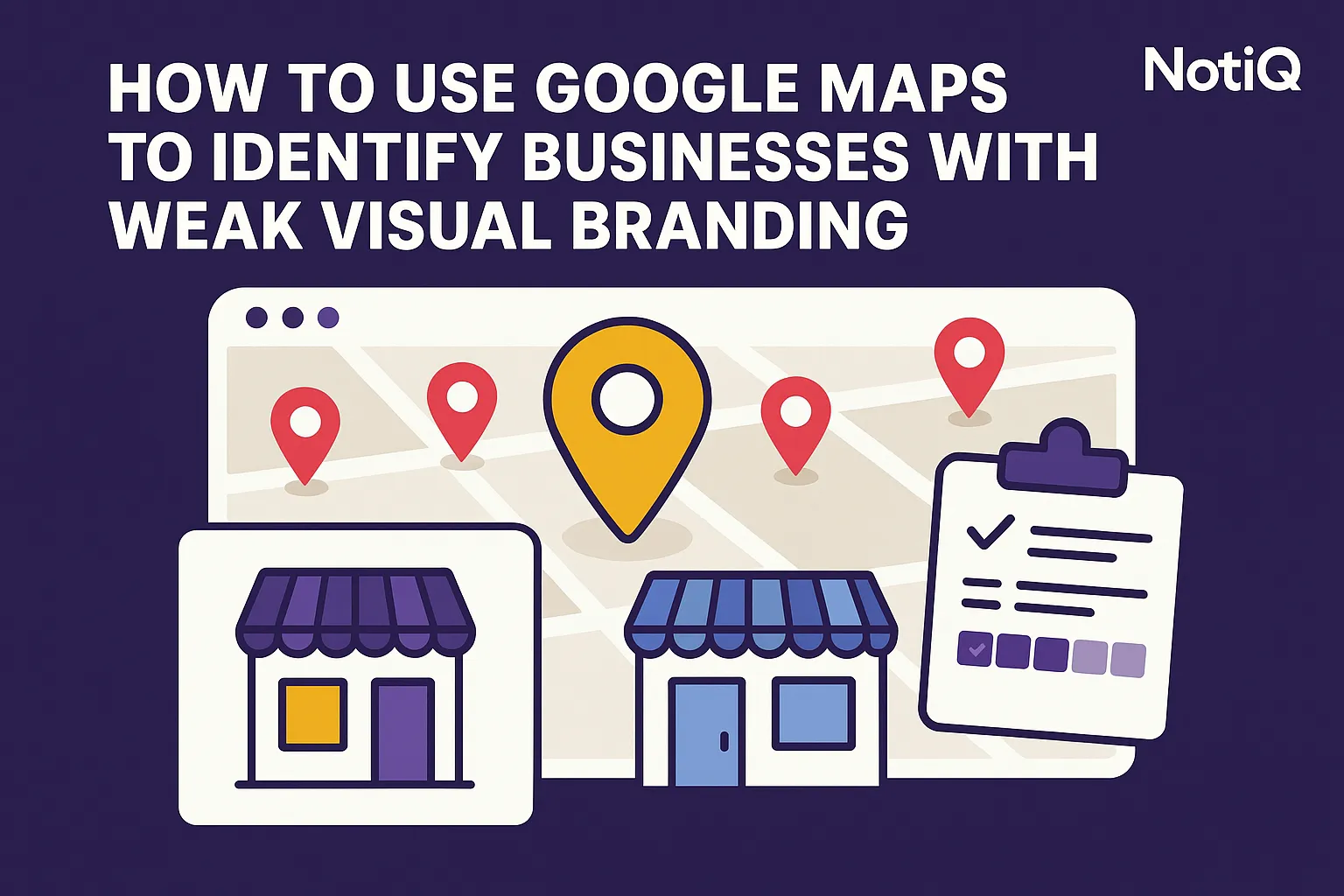
How to Use Google Maps to Identify Businesses With Weak Visual Branding
Learn how to use Google Maps to spot businesses with weak visual branding, score listings quickly, and turn visible flaws into personalized outreach opportunities.
1. Introduction
Google Maps is far more than a navigation tool—it is a live visual directory of local businesses where weak branding is often visible within seconds. While many agencies, freelancers, and consultants prospect randomly by scraping generic lists, Google Maps offers a structured, evidence-based way to spot businesses struggling with blurry photos, missing logos, inconsistent visuals, and weak first impressions.
This guide covers a beginner-friendly workflow for finding weak visual branding signals, scoring listings consistently, comparing them with nearby competitors, and turning those observations into highly personalized outreach. Unlike another generic Google Business Profile optimization guide, this article focuses on a visual-branding-first prospecting method. By analyzing poor visuals, you can leverage[NotiQ](/)and its creative prospecting workflows to transform visual branding audits into high-converting outreach campaigns.
If you want to know how to use Google Maps to identify businesses with weak visual branding, this framework will help you master Google Maps prospecting and turn visible flaws into business opportunities.
2. Why Google Maps Works for Visual Branding Prospecting
Google Maps functions like a digital storefront. Before a customer ever visits a physical location or clicks through to a website, they are greeted by logos, cover images, exterior photos, interior shots, and user-generated images. These visual assets immediately shape first impressions.
For creative agencies and consultants, this public visibility is a goldmine. Visible branding flaws create easy entry points for personalized outreach without relying on expensive, paid lead databases. Because users can compare businesses side by side in the same category and geography, weak visuals are incredibly easy to detect.
Weak visuals directly impact trust and conversion risk. A neglected profile reduces clicks, diminishes consumer confidence, and lowers the perceived quality of the business. According to Google’s business representation guidelines, consistent, real-world branding is essential for building trust on Search and Maps. Unlike typical manual list-building or generic scraper-style prospecting, identifying these visible gaps allows you to reach out with undeniable proof of the problem.
Platforms like[NotiQ](/)take this a step further, providing a visual analysis and creative prospecting workflow platform that turns business discovery via maps into an operationalized local SEO prospecting engine.
Why visual branding is easier to diagnose on Maps than in cold lists
Cold spreadsheets of names and emails tell you nothing about a brand's public perception. Maps listings, however, surface visual evidence immediately. Beginners can quickly assess whether a local business looks modern, credible, or entirely neglected without needing advanced SEO knowledge.
These visible issues make your outreach significantly more relevant. When you point out a blurry storefront photo, the problem is observable and undeniable, not assumed. This makes creative outreach and Google Maps prospecting far more effective than blindly pitching services.
What most generic local SEO guides miss
Most competitor articles focus heavily on rankings, keyword categories, review generation, and basic optimization. While those are important, they miss a critical content gap: very few resources teach readers how to use visual branding weaknesses as qualification signals for outreach.
This guide fills that gap. By focusing on branding mistakes on business listings and weak visual branding signals, you can move past generic Google Business Profile branding tips and use a practical audit, comparison, and outreach framework to win clients.
3. The Visual Signals That Reveal Weak Branding
To successfully audit a profile, you need to know what weak visual branding actually looks like. Weak branding on Google Maps generally falls into a few visible categories: poor image quality, missing logos, lack of consistency, low professionalism, and weak trust cues.
It is important to distinguish an isolated bad photograph from a broader brand inconsistency across the entire listing. Always look at both owner-uploaded and customer-uploaded content to get an accurate picture of the brand's public presence. The best weak visual branding signals are public, fast to verify, and easy to document with screenshots.
Low-quality or outdated photos
When evaluating Google Business Profile images, look for photos that are blurry, dark, low-resolution, cluttered, off-angle, or obviously outdated. Poor storefront photos or messy interior imagery can make a business appear less trustworthy or lower quality than the pristine competitors located just down the street.
Furthermore, sparse galleries can be just as revealing as bad galleries. If a business only has one or two low-quality listing images, they are missing a massive opportunity to control their narrative. According to Google Business Profile photo guidelines, high-quality images are critical for helping customers make informed decisions.
Missing logo or weak brand identity
A missing logo, a generic placeholder icon, or an unclear brand mark instantly weakens brand recognition. If the physical storefront sign, the digital profile name, and the uploaded visual assets do not align, it signals deep brand inconsistency.
Recognizable branding builds immediate trust, whereas forgettable listing visuals make a business blend into the background. A proper visual branding audit should always check for a clear, professional logo. For more context on the technical requirements, you can review how logos and cover photos work on GBP.
Inconsistent colors, style, and presentation
Brand inconsistency appears when colors, signage, menu boards, staff uniforms, interiors, and cover images clash. While one isolated visual flaw is normal, a broader lack of a cohesive brand system is a major red flag.
Inconsistency makes a local business feel fragmented and unprofessional compared to polished competitors. Spotting these weak visual branding signals provides excellent local business visual identity examples to reference during your outreach.
Weak trust cues around the listing
Visuals do not exist in a vacuum; they interact with reviews, profile recency, and overall completeness to create a holistic first impression. Outdated or neglected visuals often sit right beside other trust gaps, such as unanswered negative reviews or missing business hours.
While poor visuals indicate a strong outreach opportunity, avoid framing them as guaranteed proof of poor business quality. Instead, position them as a bottleneck to customer trust. As noted in Google’s review best practices, managing your reputation alongside your visual presentation is key to maintaining a trustworthy presence.
4. A Simple Scorecard for Auditing Listings Consistently
To avoid random, subjective prospecting, you need a repeatable framework. A visual branding audit should be fast and objective.
By using a simple scorecard with four core criteria—logo quality, photo quality, consistency, and credibility—you can evaluate listings quickly. Rate each business using a 1–5 scale or a simple Red/Yellow/Green system. Remember, the goal is not perfection; it is to spot businesses where visible improvements could make a meaningful difference.
Category 1 — Logo and brand recognition
Assess whether the business has a visible, legible, and recognizable logo or brand mark. Do the Google Business Profile images reinforce the same identity seen on their physical signage and storefront imagery? Flag any missing, generic, or highly inconsistent brand marks. High logo quality is the foundation of local business branding.
Category 2 — Photo quality and freshness
Evaluate photo clarity, lighting, composition, and recency. Do the images match the service quality the business likely wants to project? Exterior and interior images should help customers understand exactly what to expect. Note the "gallery depth"—a business with only two poor storefront photos or low-quality listing images is a prime candidate for a pitch on how to improve storefront photos for local SEO.
Category 3 — Visual consistency
Evaluate whether the colors, signage, interiors, promotional materials, and profile imagery feel cohesive. Consistency matters because it creates recognition and confidence. You can easily score brand inconsistency without needing access to the business’s internal brand guidelines. If the visual branding audit reveals clashing fonts and colors, note it as one of your primary weak visual branding signals.
Category 4 — Credibility and first-impression strength
Assess whether the listing feels cared for, current, and trustworthy at a glance. Look at complete imagery, visual professionalism, and whether the listing looks competitive in its local market. Prospects with multiple weak outreach signals should rank highest on your contact list. Customer trust is won or lost here.
A quick sample scoring rubric
Use this simple scoring rubric to keep your audits fast and actionable. Total the scores to sort prospects into “Ignore,” “Watch,” and “Contact Now.”
If a business scores a 4-6 out of 12, they are prime targets for creative outreach. For more insights on building effective prospecting workflows, visit the Repliq blog to refine your business discovery via maps.
5. How to Compare Weak Listings Against Local Competitors
A listing might look acceptable in isolation, but terribly weak when placed next to stronger competitors in the local pack. Comparing businesses side by side reduces subjectivity and validates whether a listing is truly underperforming.
To do this, search by niche and location (e.g., "dentists in Austin, TX") and review the top visible listings side by side. Ensure you use industry-specific comparisons so your standard of local business branding feels fair and relevant.
The side-by-side comparison method
Search a category, open three to five listings, and compare their thumbnails, logos, galleries, and storefront images. Competitor context quickly reveals whether the issue is weak photography, weak positioning, or weak consistency. Document the "best in area" listing to use as the benchmark for your Google Maps prospecting.
What strong competitors usually do better
Strong competitors usually feature cleaner photos, more complete galleries, clearer logos, better signage visibility, and highly consistent presentation. When communicating this, show patterns rather than mocking individual businesses. The goal of referencing Google Business Profile branding tips is opportunity spotting to build customer trust, not shaming local brands.
Industry examples to make comparisons easier
Visual standards differ heavily by niche. When looking for weak visual branding signals and branding mistakes on business listings, use these local business visual identity examples:
• Restaurants: Look for appetizing menu imagery, warm ambiance, and professional food photography.
• Salons: Check for interior cleanliness, high-quality service-result images, and consistent stylist branding.
• Dentists: Look for reception and interior trust cues, alongside clean, professional signage.
• Realtors: Evaluate professional headshots, office presentation, and listing photo consistency.
• Home services: Check for branded trucks, clean uniforms, and clear before-and-after visuals.
6. How to Turn Branding Gaps Into Personalized Outreach
The strongest outreach is specific, observational, and genuinely helpful. Generic, overly critical cold emails get deleted.
To succeed, connect the branding gaps you observed to likely business outcomes—such as weaker first impressions, lower trust, or reduced click interest. Personalize your outreach based on your screenshots, comparison notes, and scorecard findings. This is where[NotiQ](/)stands out, allowing you to operationalize visual findings into creative outreach for Google Maps lead generation for agencies.
How to document the opportunity
Capture screenshots of the listing, note missing assets, and summarize the top two or three visible issues. Pair each issue with a possible improvement angle. Concise, visual notes make your personalized outreach faster, more credible, and highly relevant. A documented visual branding audit provides undeniable outreach signals.
How to write outreach that feels helpful, not harsh
Structure your creative outreach to be helpful and consultative:
1. Quick observation: "I was looking at local [Niche] on Maps..."
2. Specific visual gap: "...and noticed your profile photos are a bit dark compared to your actual storefront."
3. Why it may matter: "This can sometimes cause potential customers to click on competitors with brighter galleries."
4. One practical idea: "Updating these with a few well-lit exterior shots could make a big difference."
5. Low-friction next step: "Would you be open to a quick chat on how to fix this?"
Avoid insulting language. Frame the local business branding issue as a highly fixable opportunity. Ensure any claims about performance improvements align with FTC guidance on advertising and testimonials.
Sample outreach angles based on visible signals
Here are proven outreach angles based on weak visual branding signals:
• Photo Quality: “Your profile photos don’t reflect the high quality of your actual storefront.”
• Competitor Benchmarking: “Nearby competitors look a bit more visually current on Maps, which might be stealing your clicks.”
• Logo Missing: “A stronger logo and cover image could immediately improve your digital first impressions.”
• Consistency: “Your listing could benefit from a more consistent visual identity to match your great reviews.”
These Google Business Profile branding tips map perfectly back to your scorecard, making business discovery via maps highly actionable.
Where AI-enhanced personalization fits
To make your outreach even more compelling, leverage AI-assisted image enhancement, mockups, or tailored creative suggestions. Sending a prospect a mockup of what their enhanced cover photocouldlook like is a massive differentiator versus generic cold outreach.
AI enrichment, verification, and creative personalization provide undeniable value. You can explore AI image personalization as a natural extension of your outreach workflow to maximize your outreach signals.
7. Tools, Workflow Tips, and Common Mistakes to Avoid
To successfully operationalize this method, follow a strict workflow: search, scan, open the listing, score it, benchmark against competitors, document the gaps, and send your outreach.
You do not need to audit every business. Focus your time on listings with multiple visible weaknesses and enough commercial upside to afford your services. Keep the workflow ethical, efficient, and evidence-based.
Common mistakes beginners make
• Auditing a business in isolation without checking local competitors.
• Treating one single weak photo as absolute proof of brand inconsistency.
• Sending generic outreach with no visible evidence or screenshots.
• Ignoring niche-specific standards (expecting a plumber's profile to look like a luxury salon).
Avoid these errors to ensure your visual branding audit yields positive outreach signals.
How to prioritize the best opportunities
Prioritize businesses that exhibit:
• Multiple visual weaknesses (e.g., bad photos and no logo).
• High local competition (where a visual edge actually matters).
• Clear service value (high-ticket niches like dentists or roofers).
• An obvious mismatch between their actual business quality (e.g., great reviews) and their poor visual presentation.
Using the scorecard speeds up this local SEO prospecting, ensuring your creative outreach hits the best targets found during business discovery via maps.
Ethical and practical guardrails
Always maintain respectful analysis and accurately represent what is visibly public. This process relies strictly on publicly accessible business information and should never rely on deceptive claims.
When conducting a visual branding audit, ensure your outreach recommendations stay compliant. Never promise guaranteed ranking outcomes. Focus on building customer trust through observable, ethical outreach signals.
8. Conclusion
Google Maps is not just a local search tool; it is a highly effective, visual prospecting engine. By identifying visible weaknesses, scoring listings consistently, comparing them with stronger local competitors, and turning those gaps into helpful outreach, you can completely transform how you acquire clients.
This method helps beginners move away from random, spammy prospecting to a visual, evidence-based system. AI-assisted platforms like NotiQ make this even easier by bridging the gap between visual analysis, creative prospecting, and personalized workflows.
Apply this scorecard to one specific niche this week. Build a shortlist of outreach-ready businesses, and see how to use Google Maps to identify businesses with weak visual branding to fuel your creative outreach.
Frequently Asked Questions
- How can Google Maps help identify businesses with weak visual branding?
- Google Maps reveals public-facing branding assets such as logos, storefront photos, galleries, and customer-uploaded imagery. Because these assets are immediately visible, weak visual branding signals and poor first impressions are incredibly easy to spot during Google Maps prospecting.
- What visual branding signals should I look for on Google Business Profiles?
- When conducting a visual branding audit, look for blurry photos, missing logos, inconsistent visuals, outdated imagery, sparse galleries, and weak credibility cues across all Google Business Profile images.
- How do poor photos on Google Maps affect customer trust?
- Low-quality visuals and poor storefront photos can severely reduce perceived professionalism. This lowers customer trust and makes a listing look significantly less competitive when placed next to stronger local alternatives.
- How do I know if it’s bad photography or a deeper branding problem?
- To distinguish between an isolated bad photo and deep brand inconsistency, compare multiple images across the profile. Check for visual alignment across all assets and benchmark the listing against nearby competitors in the same niche to confirm weak visual branding signals.
- Can agencies and freelancers use this method for outreach prospecting?
- Yes. This workflow is highly effective for agencies, consultants, and creative service providers. It provides observable, evidence-based angles for creative outreach, making it a premier strategy for Google Maps lead generation for agencies.
Continue Reading
More articles you might find useful
How to Prioritize Businesses With Verified Google Profiles
A practical framework for ranking local leads beyond the verified badge. Learn how to prioritize Google Business Profiles using fit, freshness, completeness, and activity signals.
Read the article →
Google Maps Prospecting for Commercial Waste Management Companies
Learn how commercial waste haulers can use Google Maps to find, qualify, and prioritize better local accounts. This guide shows how to build denser routes and improve outreach with waste-stream and service-area insights.
Read the article →
How to Find Local Businesses With Broken Website Links
Learn how to find local businesses with broken website links using Google Maps, quick validation checks, and proof-based outreach. This guide shows agencies how to turn visible site issues into qualified leads.
Read the article →Popular industry lead playbooks
Maps search examples and niche outreach for the verticals teams prospect most.