Technology
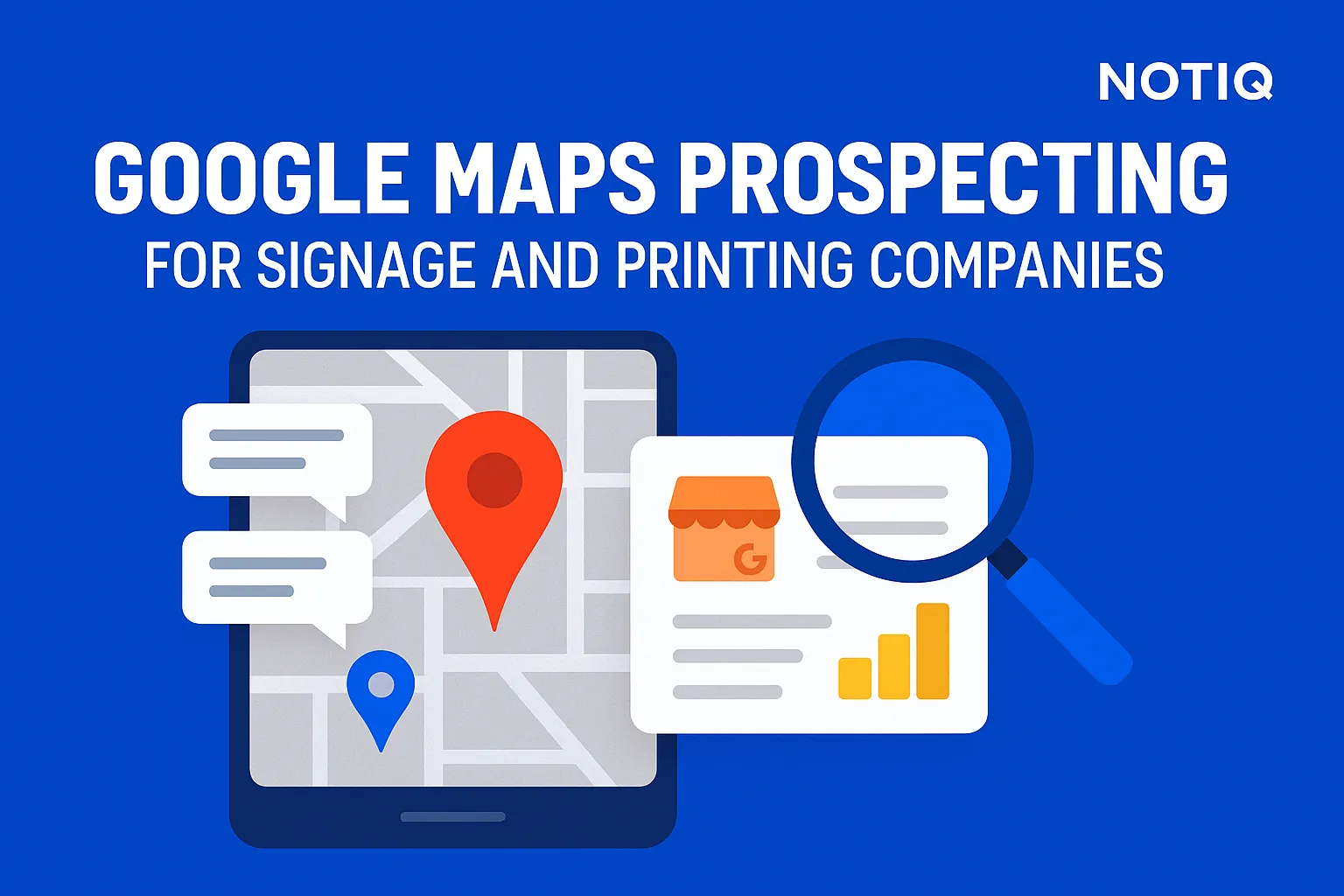
Google Maps Prospecting for Signage and Printing Companies
Learn how sign shops and printing companies can use Google Maps to find better local prospects, qualify visible needs, and send more relevant outreach. This guide breaks the process into a simple, repeatable workflow.
1. Introduction
Google Maps shows thousands of local businesses in any given city, but most sign shops and print teams still struggle to turn that visibility into qualified opportunities. The real challenge is not simply finding businesses; it is spotting exactly which ones are most likely to need storefront signs, banners, wraps, print collateral, or ongoing commercial print support.
This article provides a repeatable, beginner-friendly lead generation blueprint: search, qualify, segment, enrich, and outreach. Unlike generic B2B sales advice, this workflow is specifically tailored to the unique needs of sign companies, sign manufacturers, commercial printers, and print shops. By mastering Google Maps prospecting for signage and printing companies, you can bypass crowded referral networks and proactively build a pipeline of high-fit accounts.
To help local businesses scale these efforts, platforms like[NotiQ](/)offer a dedicated local prospecting and outreach workflow solution designed specifically for sign and print teams, ensuring your signage business prospecting translates into actual revenue. If you are looking for high-quality printing company leads, this guide will show you exactly where to start.
2. Why Google Maps Works for Sign and Print Prospecting
For physical branding services like exterior signs, wraps, banners, and marketing materials, visual context is everything. Google Maps is especially useful for local sign and print sales because it provides observable, real-world context that static purchased lists and broad lead databases completely miss. Through storefront visibility, user-uploaded photos, specific business categories, and location details, you can physically "see" a prospect's need before you ever send an email.
Relying purely on referral-only growth limits your scale, while broad-volume prospecting tools often yield low-quality, irrelevant contacts. Map-based Google Maps lead generation allows even small teams to build a strong local pipeline using publicly visible business signals, making local B2B prospecting highly targeted and incredibly efficient for sourcing printing company leads.
What Makes Google Maps Different From Broad Lead Databases
Generic databases may scale quickly, but broad lead databases lack local context. They give you a name and an email, but they cannot tell you if a storefront's awning is fading or if a local fleet is driving unbranded vans. Sign and print buyers are exponentially easier to assess when you can see their location count, storefront type, and overall brand presentation.
Furthermore, Google Business Profile prospecting is uniquely useful for fresher discovery. It helps you identify relocations, newly opened businesses, and local expansions long before they update their corporate filings. While broad SMB tools often optimize for sheer volume, this geographic lead targeting workflow prioritizes fit, relevance, and personalization—ensuring you only spend time on businesses that actually need your services.
Best-Fit Use Cases for Sign Companies vs Commercial Printers
While both sectors benefit from map-based discovery, their ideal targets often differ. Sign company lead generation typically focuses heavily on storefronts, exterior branding, vehicle fleets, and physical visibility. A sign shop might target a newly opened retail strip to pitch illuminated channel letters or monument signs.
Conversely, commercial printer sales leads often come from multi-location businesses, franchises, event-heavy companies, healthcare networks, and real estate firms that require ongoing collateral. Print shop outreach usually targets the operational need for recurring items like menus, direct mail, brochures, and training manuals.
However, overlap frequently occurs. A rapidly expanding regional restaurant chain, for example, is a perfect fit for both: they need exterior signage for their new locations and a commercial printer to handle their seasonal menu rollouts and promotional banners.
3. How to Find High-Fit Local Businesses Fast
The goal of Google Maps prospecting for signage and printing companies is not to manually review every single business in your state. Instead, you need a simple search workflow to narrow large local markets into a manageable, high-fit lead list. By searching strategically by category, city, and neighborhood, you can identify clusters of likely demand. Speed is critical; by recognizing search patterns, you can execute targeted local outreach and master Google Maps lead generation without getting bogged down in irrelevant data.
Start With the Right Search Filters and Categories
Your search should begin with specific business categories and service types. Instead of searching for "businesses in Chicago," search for high-intent categories like restaurants, retail stores, salons, gyms, general contractors, medical offices, schools, churches, and franchises.
Category specificity matters immensely for both qualification fit and outreach messaging. A pitch to a dental office about patient intake folders will look very different from a pitch to a contractor about vehicle wraps. To ensure you are targeting the right classifications, familiarize yourself with official Google Business Profile categories. Creating separate prospect lists by service area based on these categories is the foundation of effective signage business prospecting and maximizes the utility of your local business prospecting tools.
Use Geography to Reduce Noise and Improve Relevance
Geography is a powerful filter. Prioritize your searches by city, district, shopping corridor, industrial park, or franchise cluster. Nearby density matters. For route-based selling, faster site visits, and local fulfillment, grouping prospects geographically saves time and money.
Commercial printers might prioritize larger service radiuses since collateral can easily be shipped, whereas sign shops generally focus tightly on install-friendly territories to minimize crew travel time. To organize your geographic lead list building, create tags for your "core market," "secondary market," and "long-shot market." This geographic lead targeting keeps your local B2B prospecting focused and highly efficient.
Search for Business Types That Commonly Need Signage or Print
Prospecting improves dramatically when your services are matched to probable need. Focus your B2B lead generation for print shops and sign company sales leads on verticals with high, recurring demand:
• Restaurants & Bars: Need storefront signs, temporary banners, menus, table tents, and promotional flyers.
• Retail & Franchises: Require window graphics, point-of-purchase displays, and seasonal signage.
• Construction & Real Estate: Prime targets for vehicle wraps, site signs, yard signs, and architectural renderings.
• Healthcare & Medical: Need wayfinding signage, patient intake packets, and direct mail.
• Events, Schools & Churches: Frequently buy trade show materials, event banners, programs, and brochures.
Aligning your commercial printing sales strategy with these high-opportunity verticals ensures you are fishing in the right ponds.
4. Qualify Prospects Using Visual and Profile Signals
Finding businesses is only step one. The real differentiator in this workflow is learning how to prioritize businesses that need signage before you spend time on outreach. By focusing on observable buying signals from Maps and Google Business Profile data, you eliminate the guesswork. This fit-first approach is the secret to highly effective Google Business Profile prospecting and sign manufacturer prospecting.
Visual Clues That Suggest Signage Demand
When reviewing a prospect's Maps listing, look closely at the street view and user-uploaded photos. What local business signals indicate a need for exterior signs vehicle wraps banners or print collateral?
• Poor Storefront Visibility: Faded awnings, peeling window vinyl, or missing monument signs.
• Inconsistent Branding: The sign above the door doesn't match the logo on their trucks.
• Temporary Fixes: Businesses using cheap, temporary vinyl banners for months on end.
• Fleet & Construction: Unbranded white vans or bare construction trailers in the parking lot.
• New Renovations: Recently renovated locations often signal an immediate need for updated visuals.
Evaluating these visual cues—supported by understanding Google Business Profile photo guidelines—allows you to execute highly targeted signage business prospecting rather than relying on blind map scraping for sales.
Profile Clues That Suggest Print or Ongoing Commercial Demand
For print collateral, the clues are often in the profile data itself. Incomplete profiles, outdated descriptions, and low review counts often point to businesses that lack a cohesive marketing strategy and need help. Conversely, recent reviews mentioning a "grand opening" or "under new management" are massive buying signals.
Multi-location footprints are a goldmine for commercial printer sales leads. If a business has five locations, they likely need recurring collateral, standardized menus, brochures, and uniform signage updates. Check the website linked in their profile; if their physical branding appears inconsistent with their digital presence, they are a prime candidate for Google Business Profile outreach and high-value printing company leads.
How to Spot High-Value Accounts vs One-Off Jobs
It can be hard to distinguish high-value accounts from one-off jobs, but certain signals give it away. Larger, recurring-revenue prospects typically exhibit multiple locations, strong customer foot traffic, broader service areas, active hiring, or franchise operations.
Conversely, a sole proprietorship operating out of a residential address with zero web presence might only need a single $50 yard sign. Knowing how to avoid wasting time on low-fit small businesses is critical. Unlike bulk extraction approaches that prioritize volume over relevance, this workflow ensures your commercial printer sales leads actually have the budget and ongoing demand to warrant your time.
Beginner Qualification Checklist
Because there is often no clear beginner workflow for Google Maps prospecting, use this simple checklist to score leads as High-Fit, Medium-Fit, or Low-Fit before reaching out:
1. Category Fit: Does their industry typically buy what we sell?
2. Location Quality: Are they in our ideal install or shipping territory?
3. Visual Signage Cues: Do photos show missing, faded, or temporary signs?
4. Review Clues: Are they newly opened, expanding, or remodeling?
5. Likely Service Need: Can I clearly identify exactly what they need?
6. Account Value Potential: Do they have multiple locations or recurring needs?
Following this checklist streamlines your Google Maps lead generation and makes your local outreach highly intentional.
5. Segment Leads by Vertical, Geography, and Service Need
Raw map discovery is useless without organization. Segmentation is what turns a messy list into a usable, high-converting sales pipeline. If you segment leads by location and industry, your messaging becomes highly relevant, directly solving the common pain point of low response rates from generic messaging. Proper segmentation is the backbone of successful local outreach and sign company lead generation.
Segment by Vertical
Group your qualified leads into distinct verticals: retail, restaurants, healthcare, construction, real estate, events, and franchises. Map likely services to each vertical to make your outreach actionable:
• Restaurants → Menus, window graphics, temporary banners, A-frame signs.
• Contractors → Vehicle wraps, fleet graphics, yard signs, site banners.
• Healthcare → Wayfinding signage, branded intake folders, direct mailers.
This "vertical → likely needs" format ensures your signage business prospecting and commercial printer sales leads are highly targeted, making local business prospecting much easier.
Segment by Geography and Territory
Break your lists down into specific neighborhoods, trade areas, install regions, or sales rep territories. Geographic lead targeting supports route efficiency; if a rep is driving out for a site visit, they should know exactly which other prospects are on that same street. It also builds local credibility. Mentioning a nearby landmark or a shared local shopping corridor provides immediate context for your local B2B prospecting and local outreach.
Segment by Service Need and Urgency
Create tags for specific service needs based on your visual qualification. Use tags likestorefront signage, temporary banners, fleet graphics, direct mail, trade show materials, multi-location print support,orrebrand support.
Urgency can be inferred from new location openings, incomplete branding, seasonal timing, or upcoming local events. When you segment by urgency, you dictate both the priority of the lead and the specific angle of your print shop outreach. This ensures your sign manufacturer prospecting and Google Maps prospecting for signage and printing companies hit the right prospect at the right time.
Build a Simple Prospecting Spreadsheet or CRM Workflow
You do not need an enterprise system to start. Build a simple spreadsheet capturing: Business Name, Category, City, Signs of Need (e.g., faded awning), Likely Service, Priority Score (High/Med/Low), Contact Status, and Next Step.
For beginner lead qualification, this operational setup is plenty. As you scale your CRM workflows and Google Maps lead generation, you can explore advanced automation. For additional education on streamlining this process, visit the NotiQ Blog. Ultimately, leveraging a platform like[NotiQ](/)can seamlessly organize your segmentation, qualification, and follow-up workflows in one place.
6. Enrich Contacts and Send Personalized Outreach
The final step in discovery is turning qualified map-based prospects into contactable leads with messaging that feels hyper-relevant. This step solves two major pain points: incomplete contact data for local prospects and low response rates from generic outreach. Personalization must come from observable local and profile signals, not made-up assumptions. This is how you master email enrichment for local business leads, print shop outreach, and Google Business Profile outreach.
Enrich the Right Contact Details
Once a business is qualified, you must find the right person to contact—usually the buyer, location manager, owner, marketing lead, or operations director. Crucially, you should enrich contact dataonly afterqualifying for fit, not before. The goal is a clean, highly focused list, not a giant, useless exported database. For support in automating this step, tools like Repliq can assist with enrichment and workflow automation, ensuring your local business prospecting tools deliver accurate data.
Write Outreach Based on What You Can Actually See
Personalize your messaging using the visible cues you gathered during qualification. What outreach message works best for local printing and signage prospects? The one that references their reality. Mention their exterior branding, the temporary signage they currently have up, their new location signals, or their multi-location consistency.
Relevance always beats cleverness. A short, specific email about a fading monument sign will dramatically outperform a generic mass message. This visible-cue approach is the secret to successful local outreach and sign company lead generation.
Sample Outreach Angles for Sign Shops and Printers
Here are a few proven outreach angles to generate printing company leads and fuel your print shop outreach:
• Weak Storefront Visibility: "Hi [Name], I drove past your [Street Name] location yesterday. I noticed your main awning is starting to fade. We help local retailers in [City] upgrade their exterior signage—are you open to a quick mockup of what a new backlit sign would look like?"
• Upcoming Opening/Renovation: "Saw the 'Coming Soon' banner on your new location! We handle grand opening collateral (window graphics, menus, banners) for restaurants in the area. Do you have your print partner lined up yet?"
• Inconsistent Branding / Fleet: "Noticed a few of your plumbing vans around town without vehicle wraps. We help contractors turn their fleets into mobile billboards..."
• Recurring Print Need: "As you expand to your third clinic, keeping patient intake packets consistent gets tough. We handle recurring commercial print for multi-location healthcare teams..."
These angles make signage business prospecting feel consultative rather than transactional.
Track Follow-Up Without Becoming Spammy
Beginner teams need a simple, respectful cadence: Initial Outreach → Follow-up → Value-add touch → Close-the-loop message. Do not become aggressive. Low response rates from generic cold outreach happen when you blast irrelevant pitches. Follow-ups should reference the business context, not just repeat the same generic pitch.
Always ensure your Google Business Profile outreach and local outreach adhere to ethical, compliant communication standards. For complete rules on opt-outs and respectful data use, refer to the FTC CAN-SPAM compliance guide.
7. Common Mistakes to Avoid in Google Maps Prospecting
When there are too many local businesses to review manually, beginners often make efficiency and quality errors that lead to low response rates from generic cold outreach. Avoid these common Google Maps lead generation pitfalls.
Chasing Volume Instead of Fit
Bulk lead extraction from Google Maps might give you 10,000 emails, but large, low-quality lists create more work and terrible reply rates. Sign and print sales benefit significantly more from relevance than sheer contact count. Learn how to avoid wasting time on low-fit small businesses by strictly prioritizing high-intent local B2B prospecting.
Ignoring Visual and Category Signals
Many teams collect names and addresses but never evaluate storefront photos, signage quality, or exact category fit. Ignoring these signals defeats the purpose of Google Business Profile prospecting. Evaluating visual context is exactly where niche signage business prospecting gains its edge over broad Google Business Profile categories searches.
Sending Generic Outreach
Sending an email that says, "We help businesses grow with great marketing," will fail. What outreach message works best for local printing and signage prospects? Specificity. If you do not connect your messaging directly to observed local needs, your local outreach will be ignored, and you will struggle to generate printing company leads.
Skipping Compliance and Data Hygiene
A smaller, cleaner list is infinitely more useful than a massive, messy one. Keep your records accurate, immediately remove bad fits or bounces, and always follow outreach rules. Familiarize yourself with the FTC CAN-SPAM compliance guide to ensure your email enrichment for local business leads and overall outreach workflows remain compliant, trustworthy, and free of incomplete contact data for local prospects.
8. Conclusion
A successful local sales pipeline relies on a repeatable workflow: use Google Maps to discover local businesses, qualify them using visual and profile signals, segment by fit and service need, enrich the right contacts, and send highly relevant outreach. Sign companies and commercial printers can easily outperform generic prospecting by leveraging the local physical-business context that broader lead tools miss.
Start small. Pick one city, one vertical, and one specific service offer before expanding your efforts. Focus on building a repeatable system rather than chasing volume. To organize, scale, and automate this exact workflow, explore[NotiQ](/), a platform dedicated to local segmentation, Google Maps prospecting for signage and printing companies, and beginner-friendly outreach designed specifically to generate printing company leads and drive sign company lead generation.
Frequently Asked Questions
- How can printing companies use Google Maps to find new leads?
- How can printing companies use Google Maps to find new leads? They can search by specific business categories and geography, then qualify those companies based on multi-location presence, review activity, branding consistency, and likely ongoing print needs. This ensures a steady stream of highly targeted printing company leads.
- What is the best way for sign companies to prospect local businesses?
- What is the best way for sign companies to prospect local businesses? The most effective method is a fit-first workflow: conduct targeted geographic searches, use Street View and photos for visual qualification, apply service tags (e.g., "needs new awning"), and send personalized outreach based directly on those observed storefront signals to drive sign company lead generation.
- Which businesses are the best prospects for signage services?
- Which businesses are good prospects for signage services? The best targets are verticals with high physical visibility needs, including retail stores, restaurants, general contractors, franchises, healthcare facilities, real estate agencies, event venues, schools, and churches. Focusing here maximizes the ROI of your signage business prospecting.
- How can commercial printers segment leads by location and industry?
- How can commercial printers segment leads by location and industry? You can group prospects by city, trade area, and vertical (e.g., "Chicago Restaurants"). From there, tag them with their likely service needs, such as recurring collateral, direct mail, menus, or multi-location training materials, ensuring highly relevant commercial printer sales leads.
- Is Google Maps prospecting compliant and scalable for B2B outreach?
- Is Google Maps prospecting compliant and scalable for B2B outreach? Yes, if you separate discovery from outreach. Google Maps safely supports scalable, public-data discovery. However, the subsequent outreach must stay accurate, relevant, and compliant with data privacy laws. Always reference the FTC CAN-SPAM compliance guide to ensure responsible data handling and ethical Google Maps lead generation.
Continue Reading
More articles you might find useful
Google Maps Lead Generation for Window and Door Installers
Learn how window and door installers can use Google Maps to find, qualify, and prioritize better local prospects. This beginner-friendly guide shows a repeatable workflow for smarter local outreach.
Read the article →
How to Prioritize Businesses With Verified Google Profiles
A practical framework for ranking local leads beyond the verified badge. Learn how to prioritize Google Business Profiles using fit, freshness, completeness, and activity signals.
Read the article →
Google Maps Prospecting for Commercial Waste Management Companies
Learn how commercial waste haulers can use Google Maps to find, qualify, and prioritize better local accounts. This guide shows how to build denser routes and improve outreach with waste-stream and service-area insights.
Read the article →Popular industry lead playbooks
Maps search examples and niche outreach for the verticals teams prospect most.