Technology
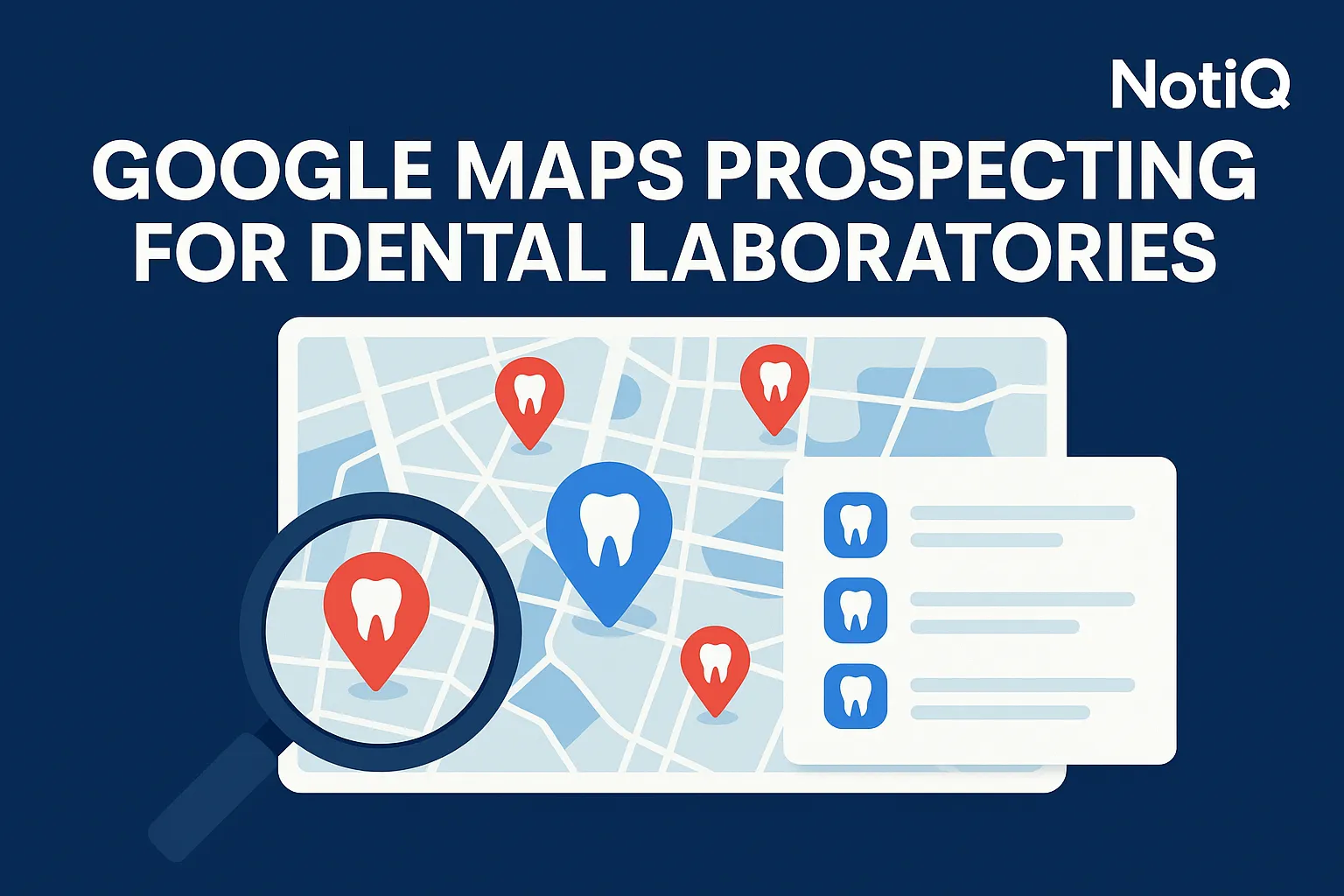
Google Maps Prospecting for Dental Laboratories
Learn how dental laboratories can use Google Maps to build more accurate, high-fit dentist prospect lists by city and specialty. This framework shows how to qualify, score, and verify practices before outreach.
1. Introduction
Most dental lab prospecting fails before outreach even starts. The reason? The list is too broad, outdated, or filled with practices that simply are not a strong geographic or specialty fit.
Independent and regional labs do not need the largest database in the industry; they need therightnearby practices displaying visible signals of outsourcing potential, patient growth, or specialty demand. Using Google Maps prospecting for dental laboratories serves as a powerful, map-first discovery layer. By leveraging public local data, you can qualify, score, and prioritize dental practices to ensure highly relevant outreach.
This is not a generic lead generation guide. It is a practical, compliant workflow specifically designed for dental laboratories that compete through local serviceability, specialization, and relationship-based outreach. Whether you are an owner, sales leader, or business development professional, this framework will help you build a repeatable, high-fit process.
To organize and operationalize this map-first prospecting workflow effectively, niche prospecting solutions like[NotiQ](/)help independent and regional dental laboratories focus on geography, specialization, and outreach readiness. Keep in mind that all qualification signals discussed in this guide come from visible public sources and should always be manually verified before you initiate contact.
2. Why Google Maps Works for Dental Lab Prospecting
When a lab needs fresh, local, and context-rich prospect data, Google Maps is a far better starting point than a generic dentist list. Google Maps reflects real local market presence through business categories, patient reviews, office photos, linked websites, operating hours, and precise practice locations.
A map-first workflow helps smaller labs prioritize serviceable territories instead of chasing national-scale lists with weak geographic alignment. Live local listing signals offer immediate context about a practice's current operations, which stands in stark contrast to the stale, purchased data often found in broad prospecting databases. While Google Maps lead generation is unmatched for initial discovery and prioritization, enrichment and final validation may still require cross-referencing additional public sources.
Understanding Google’s local ranking factors for Business Profiles highlights why Maps visibility signals matter. Practices that actively manage their profiles are often more digitally mature and growth-oriented. While database-first tools like Apollo, ZoomInfo, and UpLead are excellent for finding contact information at scale, they lack the territory logic, specialty fit, and dental-lab-specific qualification that a local business outreach strategy requires.
Why local visibility signals are more useful than generic contact lists
Purchased lists provide names and numbers, but they lack context. Reviews, photos, website links, and business categories give immediate insight into a practice’s daily reality. Public listing activity indicates whether a practice is active, growing, digitally mature, or worth a deeper review.
Because local signals reveal what the practice publicly emphasizes—such as cosmetic dentistry or implant restorations—reps can use this context for better personalization. This transforms standard dental practice prospecting into a highly targeted conversation based on actual practice needs.
When Google Maps is enough—and when you need additional enrichment
Google Maps is highly effective for identifying and prioritizing practices, but it does not always provide every contact detail or decision-maker email required for B2B dental sales.
Maps should be your discovery engine. Once a practice is identified, you must validate their specialty, digital maturity, and reputation using their practice websites, Healthgrades, Yelp, or Zocdoc. The most effective dental practice contact list is built on a simple rule: discovery first, verification second, outreach third.
3. How to Find and Segment Dental Practices by Geography and Specialty
Building a segmented prospect pool requires a repeatable framework for searching Google Maps by territory and practice type. By grouping targets logically, regional dental labs can tailor their messaging and service offerings to perfectly match local demand.
Define your serviceable territory before you search
Before searching for dentist office targeting opportunities, define your radius in practical terms. Consider courier distances, sales rep travel times, turnaround promises, and your capacity for local relationship-building.
A regional lab should prioritize market density and convenience over vanity list size. Segment your geographic targets into core (immediate vicinity), adjacent (short drive), and expansion (requires strategic shipping or extended travel) territories. For robust market density planning, consult state-level dentist and specialty data to understand regional saturation.
Search by practice type and buying relevance
Not every dental practice needs the same lab services. Search variations reveal entirely different prospect pools. You can search for general dentists, cosmetic dentists, implant-focused practices, orthodontists, or pediatric dentists.
Not every specialty is equally valuable for every lab. The right mix depends on your service lines, case strengths, and operational capabilities. Connect the practice type directly to likely lab needs—an implant dentist directory search yields prospects requiring complex restorative volume, while cosmetic dentist local listings point toward esthetic cases and veneer demand. Always align your targeting with ADA-recognized dental specialties to avoid loose or inaccurate labeling.
Separate independents, specialty offices, and multi-location groups
Ownership structure and location footprint drastically affect your outreach strategy, sales cycle, and likely vendor decision-making process.
Independent dental laboratories often find that solo practices allow for faster, relationship-based sales cycles. Conversely, multi-location groups usually require more formal qualification and broader proof of capacity. When building your dental laboratory leads, create specific tags in your list for solo practices, specialty groups, and multi-location brands to ensure your outreach approach matches their organizational structure.
4. How to Qualify Listings Using Reviews, Websites, Photos, and Booking Signals
Extracting raw data is not enough; you must interpret visible public signals from listings and linked assets to identify high-fit practices before spending time on outreach. By examining review themes, website maturity, photos, and booking links, you can gauge buying intent and practice positioning.
Never over-rely on a single signal. Qualification comes from pattern recognition across multiple public indicators. For every data point, ask one practical question: “Does this practice look like a good local client fit for our lab?”
Review signals that may indicate growth, specialization, or strong patient demand
Review volume, recency, and repeated service themes reveal whether a practice is active and what they are known for locally. Mentions of implants, smile makeovers, complex restorations, or advanced cases suggest greater relevance for certain specialized lab offerings.
Remember that reviews are indicators, not absolute proof of outsourcing behavior. However, a practice generating consistent positive feedback for restorative work is an ideal target for dental laboratory leads.
Website quality as a proxy for digital maturity and positioning
A Google Business Profile links directly to a practice's website, which serves as a proxy for digital maturity. Look for modern design, clear service pages, patient financing options, online intake forms, case galleries, team pages, and strong calls to action.
Stronger websites indicate active patient acquisition and an investment in practice growth. Identify specific service pages that reveal a cosmetic, restorative, implant, or full-arch focus to ensure your dental lab prospecting aligns with their marketing data.
Photos, categories, and office presentation cues
Office photos, equipment imagery, branding consistency, and category choices reveal a practice’s positioning and emphasis on patient experience. Look for signs of premium care, cosmetic marketing, or advanced clinical technology (such as intraoral scanners). These visual elements are valuable qualification clues that help refine your dentist office targeting.
Booking links and conversion-ready signals
Online booking availability, appointment links, and active contact pathways indicate a practice that invests heavily in operations and patient flow. According to documentation on Google Business Profile booking and appointment links, these features suggest a practice is actively managing growth and lead conversion. Note whether the listing connects smoothly to booking actions, as this supports higher prioritization for your outreach.
Check for in-house lab signals or low-fit indicators
Look for language on websites or listings suggesting in-house milling capabilities (like CEREC), highly limited service scopes, or weak alignment with your lab’s offerings. Some practices may simply be a poor fit due to geographic hurdles, specialty mismatches, outdated digital presences, or signs of minimal growth. Disqualify these low-fit indicators early to save time and focus your B2B dental sales efforts on high-probability targets.
5. How to Score, Enrich, and Verify Prospects Before Outreach
Turning raw map discoveries into a structured, CRM-ready prospect list requires scoring, enrichment, and strict verification. By organizing your B2B local prospecting workflow, you ensure your sales team only acts on accurate, prioritized data.
To streamline this organization and enrichment process, tools like NotiQ can help turn raw map findings into usable, structured prospect records. Adhering to NIST information quality standards ensures your prospect data remains accurate, complete, and trustworthy through visible public sources and manual verification.
Build a practical scoring model for dental lab prospecting
Implement a simple 3-part scoring model weighted to match your lab’s niche strengths:
• Fit: Geography, specialty relevance, and service alignment.
• Growth/activity: Review volume, website quality, booking readiness, and visible service expansion.
• Outreach readiness: Available website contact pathways, clear positioning, and enough public context for personalization.
Assign labels such as A-priority (immediate outreach), B-priority (secondary targets), and nurture (monitor for future growth).
What fields to capture in your worksheet or CRM
Your CRM enrichment process should capture practical data points to build a reliable dental practice contact list. Include: practice name, location, specialty tag, website URL, review count, standout review themes, booking presence, territory classification, notes on service fit, and verification status.
Crucially, include a personalization field so reps can reference something specific in their initial outreach, and always note who verified the record and when.
Use secondary directories to validate reputation and specialty claims
When Google Maps details are incomplete, supplement your research using secondary directories like Healthgrades, Yelp for Business, and Zocdoc. These directories help confirm office details, specialties, digital maturity, and consistency across platforms. Any discrepancies across platforms should trigger a manual review, not assumptions.
Verification checklist before a prospect enters outreach
Before any prospect enters active outreach, run them through a short manual verification checklist:
1. Correct geography and serviceable territory.
2. Relevant specialty confirmed via website.
3. Active website and recent listing signals.
4. No obvious in-house-lab indicators.
5. Enough public context for personalized messaging.
Verification protects your outreach quality, prevents wasted effort, and preserves your lab's brand credibility.
6. How Smaller Labs Can Personalize Outreach and Compete Locally
A refined, verified Google Maps list translates into outreach that feels relevant, timely, and entirely differentiated from generic vendor spam. Smaller independent dental laboratories can win through local knowledge, serviceability, responsiveness, and specialty relevance rather than sheer scale. Complementary outbound tools like Repliq can be highly useful when executing this personalized messaging after your list is fully qualified.
Personalize by specialty, geography, and visible practice priorities
Segmentation directly improves email, call, and follow-up messaging. An implant-focused office should receive a vastly different message than a general family practice.
Use local context to strengthen outreach. Mention your fast turnaround times, nearby support, shade-matching convenience, or regional familiarity. Reference their public signals carefully and professionally—complimenting a recent review about their cosmetic work shows you did your homework without feeling invasive.
Messaging angles that smaller labs can own
Smaller labs should position themselves as precise, relationship-driven partners rather than lower-scale alternatives to national mega-labs. Own value propositions such as direct case communication with technicians, specialty consistency, local pickup/delivery logic, premium esthetic quality, and partnership flexibility. In B2B dental sales, these specific, localized messages resonate far more than broad "full-service" claims.
Why map-first prospecting beats generic list buying for local outreach
While databases like Apollo, ZoomInfo, and UpLead are excellent for contact enrichment, map-first prospecting provides distinct advantages for local outreach:
• Better geographic fit: You target by actual driving/shipping routes.
• Fresher public context: Live reviews and updated websites beat static database fields.
• More relevant personalization: You can reference real, current practice activities.
• Easier prioritization: You instantly see local opportunity and specialty focus.
Databases support the workflow, but they should not replace local-fit discovery.
Mini example workflow from search to outreach
To see this B2B local prospecting workflow in action:
1. Search a target radius: Look for "dentists near [City]" within a 20-mile radius.
2. Segment: Filter out general practices to isolate cosmetic and implant-focused offices.
3. Review signals: Check their Google Business Profile for recent cosmetic reviews and verify their website's smile gallery.
4. Score and verify: Ensure they don't mill in-house and log their details into your CRM.
5. Draft a personalized first-touch message: "Hi Dr. Smith, I saw your recent patient reviews highlighting your anterior cosmetic cases. As a local lab just 15 miles away specializing in highly esthetic anterior restorations with custom shade matching..."
7. Conclusion
Google Maps is not just a lead source; it is a vital qualification layer that helps dental labs build better local prospect lists than generic databases alone. By discovering practices by territory, segmenting by specialty, qualifying with public signals, verifying for accuracy, and personalizing outreach, you create a highly efficient sales pipeline.
The strategic takeaway for independent and regional labs is clear: you can compete effectively against national competitors by being more targeted, more relevant, and more local. Stop relying on ad hoc manual research and generic lists. Systematize this process to ensure every outreach effort is backed by verified, high-fit data.
To operationalize this workflow and build a more intelligent pipeline, explore how niche-focused solutions like[NotiQ](/)streamline Google Maps prospecting for dental laboratories.
Frequently Asked Questions
- How can dental laboratories use Google Maps to find new dentist clients?
- Dental labs can use Maps to discover nearby practices, assess public signals (like reviews and photos), and build territory-based prospect lists before moving to contact enrichment. The best results come from careful segmentation and manual verification, not simple data extraction.
- What Google Maps signals matter most for dental lab prospecting?
- The most critical signals include business categories, patient reviews, website quality, office photos, booking links, and multi-location footprints. While no single signal proves a practice needs to outsource, combining these signals drastically improves your prioritization and dentist office targeting.
- How do independent labs separate high-value specialty practices from general low-fit accounts?
- Independent dental laboratories separate high-value targets by conducting specialty-based searches, checking ADA-aligned classifications, reviewing website service pages, and scoring prospects based on service alignment. Always match the practice type to your lab’s strongest case categories, such as using an implant dentist directory to find complex restorative leads.
- Is Google Maps better than buying dentist lists from a database?
- Google Maps is better for determining local fit, ensuring data freshness, and enabling deep personalization. However, databases like Apollo, ZoomInfo, or UpLead may still be helpful later in the process for contact enrichment. Map-first discovery is especially valuable for regional sales teams focused on local relationships.
- What should a dental lab verify before outreach?
- Before initiating dental practice outreach, always verify the practice's geography, specific specialty, website activity, public positioning, booking/contact readiness, and check for obvious disqualifiers (like in-house milling). Verified data protects your CRM enrichment quality and preserves your brand's credibility.
Continue Reading
More articles you might find useful
How to Find Local Businesses With Very Few Website Pages
Learn how to find local businesses with very few website pages using a repeatable audit framework. This guide shows how to validate page count, spot missing pages, and prioritize the best outreach opportunities.
Read the article →
Google Maps Lead Generation for Window and Door Installers
Learn how window and door installers can use Google Maps to find, qualify, and prioritize better local prospects. This beginner-friendly guide shows a repeatable workflow for smarter local outreach.
Read the article →
How to Prioritize Businesses With Verified Google Profiles
A practical framework for ranking local leads beyond the verified badge. Learn how to prioritize Google Business Profiles using fit, freshness, completeness, and activity signals.
Read the article →Popular industry lead playbooks
Maps search examples and niche outreach for the verticals teams prospect most.