Technology
The “Incomplete Profile” Strategy for Fast Outreach Wins
Learn how to use a Google Business Profile audit to find incomplete listings, prioritize the best leads, and turn visible profile gaps into fast outreach wins.
1. Introduction
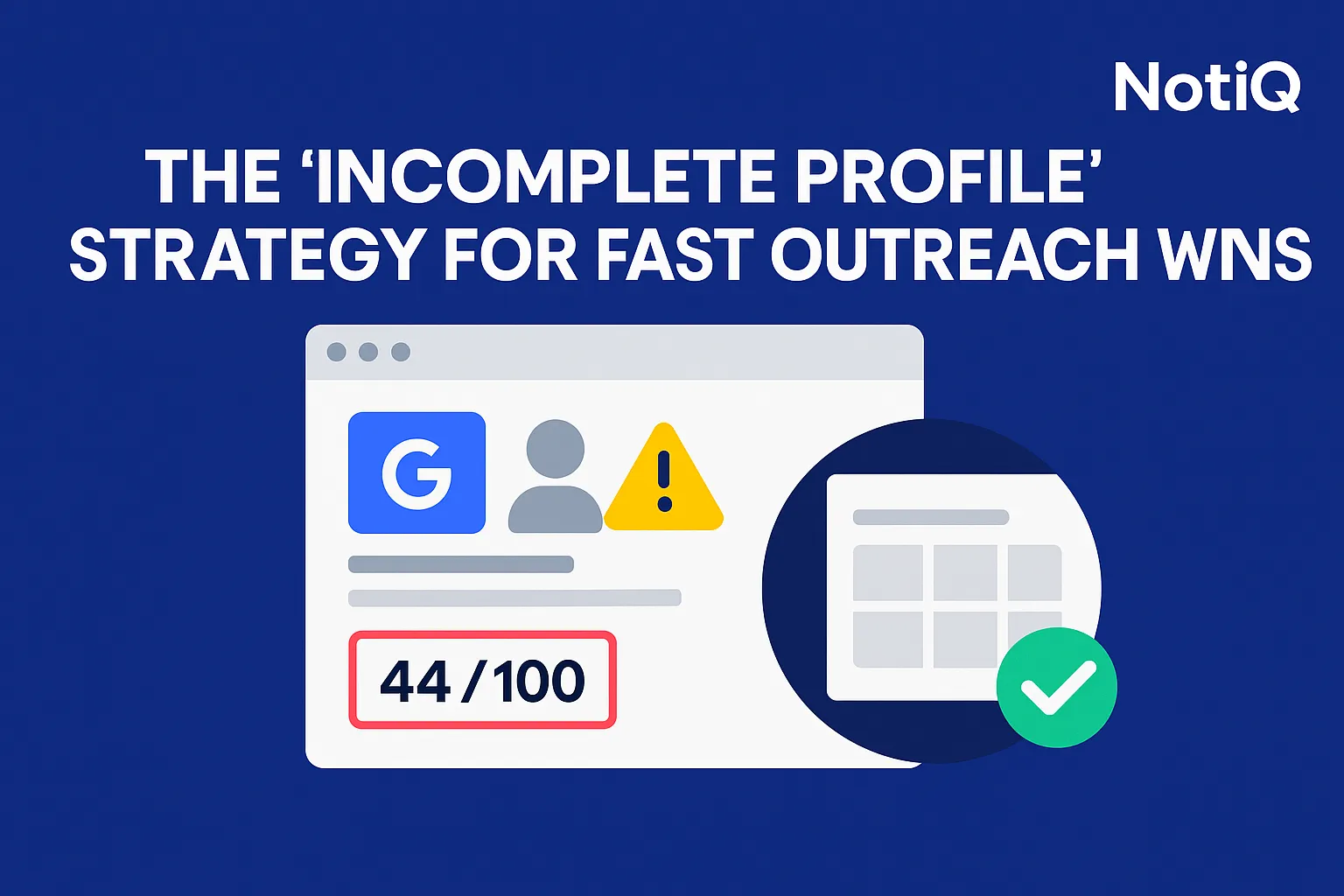
Some of the best local SEO leads are also the easiest to spot because the problem is already visible right on Google Maps. While many agencies struggle to sell abstract services or complex technical audits, targeting incomplete Google Business profiles offers a refreshing alternative. Vague SEO outreach gets ignored, but an incomplete profile provides concrete proof of a problem you can show a business owner in seconds.
This guide is not another broad local SEO tutorial. Instead, it is a fast, beginner-friendly prospecting system built around identifying missing listing fields, applying a simple scoring method, and executing screenshot-led outreach that gets replies. By the end of this article, you will know exactly how to identify incomplete profiles maps, decide which gaps matter most, rank leads quickly, and turn audit findings into productive outreach conversations.
Spotting these quick wins leads does not require a decade of experience. As a workflow layer designed for this exact process,[Home](/)helps you quickly find and organize incomplete-profile opportunities, turning visible listing gaps into highly actionable outreach campaigns.
2. What Counts as an Incomplete Google Business Profile
Before you start prospecting, you need to clearly define what makes a profile "incomplete." Beginners often confuse incomplete profiles with listings that are suspended, unverified, or simply underperforming in search results.
An incomplete profile is a listing that is missing core business information, lacks weak supporting details, or omits the trust-building fields that help customers make purchasing decisions. This is distinctly different from:
• Inaccurate information: Data that is present but wrong (like an old phone number).
• Unclaimed listings: Profiles generated by Google that the owner has not yet taken control of.
• Suspended or verification-related issues: Listings that have been penalized or flagged by Google for policy violations.
Missing basics—such as operating hours, phone numbers, website links, location details, services, attributes, and descriptions—can all qualify Google Maps listings as incomplete. For a beginner focused on Google Business Profile optimization, the best outreach opportunities are those where the missing fields in listings are obvious to both you and the prospective client.
To understand exactly what Google expects a fully optimized listing to include, you can review Google’s official Business Profile setup guidance.
Core profile elements to review first
When conducting a rapid GBP audit, start by reviewing the foundational fields: business name, primary category, address or service area, phone number, website, operating hours, and verification status.
These fields matter immensely for both discoverability and trust. If a business lacks a listed phone number or website, potential customers cannot take the next step. A profile can exist on Maps and still be fundamentally incomplete if it lacks enough information to help users act confidently. For beginner agency owners and freelancers, spotting Google Business Profile missing information at this foundational level is the easiest way to identify a prospect suffering from inaccurate business information or a poorly configured presence.
Secondary completeness signals that still influence trust
Beyond the basics, secondary completeness signals include the business description, services or products, attributes, photos, reviews, and review responses.
These fields frequently become strong outreach hooks because they are incredibly easy to show visually in an email. Visual completeness is increasingly important in local search because users judge a business's legitimacy in seconds. Think of these elements as "trust multipliers" rather than just technical checklist items. A profile with rich photos and a detailed service menu converts better than a barren listing.
When searching for local SEO lead generation targets or conducting citation cleanup for unclaimed business listings, identifying these trust gaps is highly effective. For a deeper understanding of optional but high-impact details, consult the official Google Business Profile attributes help documentation.
3. The Highest-Impact Missing Fields to Check First
To avoid overwhelm, beginners should focus their GBP audit on the missing fields in listings most likely to create quick wins and persuasive outreach talking points. Not all missing fields have an equal impact. Some directly affect ranking relevance, while others heavily influence clicks, calls, and consumer trust.
Use the following "fix first" checklist during your manual audits. By tying each missing field to a specific business impact, your outreach will feel highly practical rather than abstract. When a business owner understands how Google Business Profile categories services hours affect their bottom line, they are much more likely to respond.
Categories, hours, and contact details
Primary category accuracy is one of the very first things to check when evaluating lead quality. If a plumber is categorized generically as a "contractor," they are losing highly relevant traffic. You can verify proper categorization practices via the Google Business Profile category guidelines.
Missing or weak business hours create immediate friction for searchers, drastically reducing conversion intent. If a user does not know if a store is open, they will simply call a competitor. Similarly, consistency across the phone number, website, and address or service area is crucial. Connecting these gaps to both search relevance and customer confidence makes your pitch undeniable when pointing out inaccurate business information or weak business categories.
Services, description, attributes, and photos
Many businesses stop optimizing after filling in their basic contact details, leaving obvious conversion gaps in their service details and trust-building content.
Missing services and a weak description make it harder for prospects to understand what the business actually offers. Absent or outdated photos lower trust, especially in visually driven local categories like landscaping, remodeling, or dining. Furthermore, missing attributes (like "wheelchair accessible" or "women-led") represent missed opportunities to stand out. Spotting this Google Business Profile missing information is a core part of effective Google Business Profile optimization when dealing with a Google Maps listing incomplete situation.
Reviews and review-response gaps
When evaluating reviews, the issue is not just a low review count. You are looking for signs of weak profile activity and poor trust reinforcement.
Unanswered reviews are a fantastic outreach observation, especially when the business otherwise looks active. It shows the owner cares enough to get reviews but lacks the system to manage them. Position this as a supplemental signal in your lead prioritization. Focusing on these visible trust gaps provides quick wins leads and is far more actionable than overwhelming a beginner prospect with a massive, highly technical local SEO audit.
4. How Incomplete Profiles Hurt Visibility and Conversions
To sell the fix, you must give readers the language they need to explain why the gap matters, not just point out that it exists. Incomplete profiles hurt businesses in two distinct ways: lower chances of appearing for relevant searches, and fewer calls, clicks, or directions after someone actually sees the listing.
Businesses often ignore technical SEO claims, but they intimately understand missed customer actions. Keep your explanation beginner-friendly. To see exactly how Google tracks these customer actions, you can reference the Google Business Profile performance metrics.
Visibility impact
Incomplete or weak categories, missing details, and poor overall profile completeness significantly reduce search matching and local relevance.
When explaining this to a prospect, avoid hard ranking guarantees. Instead, frame the impact carefully as a reduced ability to compete in local discovery. Complete and accurate information helps Google understand the business better, which is a foundational concept echoed by industry authorities like Semrush, Moz, and BrightLocal. If a business category is wrong or missing, their local SEO efforts and Google Maps listings simply will not surface when potential customers search for those specific services.
Conversion impact
Even if a business ranks well, missing fields in listings destroy conversions. Missing hours, missing services, weak descriptions, and poor visuals create hesitation immediately after a user finds the listing.
Many prospects lose customers not because they are invisible, but because their profile fails to answer basic decision-making questions. Use practical examples in your outreach: "Would you call a business with no listed hours or no clear service info?" Framing the conversation around lost calls clicks directions makes your quick wins leads highly receptive to your help.
5. A Simple Lead Scoring and Prioritization Framework
To turn a loose audit idea into a repeatable prospecting workflow, you need a lightweight scoring model. This framework is based on completeness, category accuracy, review activity, and visible trust gaps.
By keeping the framework intentionally simple, beginners can use it manually before scaling up to advanced tooling. Score your leads based on three factors: obviousness of the problem, likely business impact, and ease of the pitch. This targeted approach to local SEO lead generation and GBP audit execution is far more effective for finding quick wins leads than broad, educational competitor strategies.
A beginner-friendly scoring model
Create a simple points system to evaluate incomplete Google Business profiles. Assign points for:
• Missing core fields (phone, hours, website)
• Weak or overly broad category selection
• No services or business description
• Limited or outdated photos
• Poor review engagement
Leads with multiple visible gaps are inherently easier to pitch than businesses with subtle, under-the-hood technical issues. Categorize your prospects into a sample score range—low, medium, and high-priority opportunities—focusing your outreach entirely on the high-priority targets where a Google Maps listing incomplete status is undeniable. Lead scoring keeps your prospecting efficient.
How to prioritize by industry and effort
Some industries depend far more heavily on profile completeness because users need fast answers before contacting them.
When searching for local business leads via Google Maps prospecting, prioritize high-intent local categories such as home services (plumbers, HVAC), local healthcare (dentists, chiropractors), restaurants, and salons. In these niches, users make rapid decisions based on reviews, photos, and hours. Prioritize businesses where the fix requires minimal effort on your part, but the missing information is obvious and painful for the business. Adopting a "quick win first" mindset builds confidence and momentum. Focus on which industries are most likely to have incomplete listings that directly cost them daily revenue.
When a lead is not a good fit
Not every incomplete profile is a good prospect. Some profiles may be too broken, inactive, or unclear to make good outreach candidates.
You must distinguish a simple incomplete profile from listings suffering from major issues like suspension, duplicate chaos, or unclear ownership. If a listing requires a massive citation cleanup or legal ownership battles, it is not a quick win. Avoid wasting time on prospects who likely need a full rebuild or those dealing with unclaimed business listings that have been abandoned for years. Stick to businesses that are clearly active but suffering from easily fixable inaccurate business information.
6. How to Use Screenshots and Audit Findings in Outreach
Once you have identified and scored your leads, you must convert a visible listing issue into a message that feels relevant, specific, and easy to respond to.
Screenshots work incredibly well because they reduce ambiguity; they let the prospect see the exact problem immediately. Screenshot outreach is the ultimate differentiator versus generic, text-heavy SEO cold outreach. Emphasize clarity, brevity, and helpfulness over aggressive selling. For excellent guidance on presenting visual proof clearly, review these accessible screenshot and visual content best practices.
To build robust personalization workflows around this strategy,Guides serves as a great supporting resource for outreach frameworks. Additionally, you can find practical messaging examples at Blog. When agencies ask, "How do agencies pitch fixes for incomplete business profiles?", the answer is always through highly visual, proof-based quick wins leads.
What to capture in the screenshot
Focus your screenshot on one or two obvious issues per message. Do not overwhelm the prospect. Highlight missing hours, a weak category choice, an empty services section, or outdated photos.
Annotated screenshots (using a simple red box or arrow) make the issue even easier to understand, but ensure the image stays clean and does not clutter the message. Choose proof points the prospect can verify instantly by Googling their own business. Pointing out Google Business Profile missing information on incomplete profiles maps is the cornerstone of proof-based outreach.
How to write the outreach message
Your outreach message should follow a simple, four-part structure:
1. Quick observation: "I was looking for [Service] in [City] and found your Maps listing."
2. Why it matters: "I noticed your hours aren't listed, which might be causing mobile searchers to call competitors."
3. Easy fix: "Adding these takes about five minutes inside your dashboard."
4. Offer to help: "I help local businesses fix these gaps. Mind if I send over a quick checklist?"
Emphasize helpfulness and specificity instead of making broad promises about page-one rankings. Include one small improvement idea and offer a lightweight audit plus fix implementation service. This is the essence of effective local SEO outreach for quick wins leads.
Example angles that feel low-friction
The best outreach angles feel helpful, not salesy. Try angles like:
• "I noticed your business hours are incomplete..."
• "Your services section is currently empty..."
• "Your category setup may be limiting your search relevance..."
These angles work because they are easy to understand and solve. This low-friction offer serves as the perfect entry point, allowing you to build trust through simple Google Business Profile optimization before eventually pitching a larger local SEO lead generation retainer.
7. Best Practices and Expert Notes for Making This Strategy Work
The true strength of this strategy lies in its simplicity: identify the gap, explain the impact, show the visual proof, and offer the fix.
For beginners, this approach is infinitely easier than trying to sell full-service SEO from the very first touchpoint. Broader local SEO platforms and massive audits cover everything, but they rarely teach a fast outreach system built entirely around visible gaps. Your real advantage in the market is combining audit speed, clear prioritization, and personalized proof.
Always ensure that your claims regarding profile fields, categories, and performance are supported by official Google help pages, keeping your advice compliant and accurate. To execute this efficiently at scale,[Home](/)acts as the practical system for organizing your audit findings and turning them into repeatable outreach workflows, streamlining your local SEO lead generation efforts around incomplete Google Business profiles and Google Business Profile optimization.
8. Conclusion
Incomplete Google Business Profiles are one of the absolute easiest local SEO opportunities to spot, explain, and pitch. By focusing on visible, undeniable gaps, you eliminate the need for high-pressure sales tactics.
The workflow is straightforward: define what counts as incomplete, check the highest-impact fields first, clearly explain the visibility and conversion impact to the owner, score and prioritize your leads, and use screenshot proof in your outreach. You do not need a massive local SEO audit to start conversations and win quick projects.
Turn this methodology into a repeatable prospecting process today by building a simple checklist, creating a scorecard, and drafting a screenshot-based outreach template. By leveraging tools designed to spot these visible listing gaps quickly, you can consistently convert incomplete profiles maps into highly profitable quick wins leads and sustainable local SEO lead generation.
Frequently Asked Questions
- How do you find incomplete Google Maps business profiles?
- You can find them through a simple manual review process using a short GBP audit checklist focused on visible listing fields. Search for local services in your target city and look for listings missing hours, websites, or reviews. The goal is to find obvious, verifiable gaps rather than running a full SEO engagement upfront.
- Which missing Google Business Profile fields matter most?
- Prioritize the primary category, operating hours, phone number, website, services list, business description, and photos. These specific missing fields in listings are the most important to flag because they have a clear, immediate impact on user trust and are incredibly easy to prove with a screenshot.
- Can incomplete listings become quick-win outreach leads?
- Yes, absolutely. When the issue is highly visible, easy to explain, and directly tied to trust or conversion friction, business owners are highly receptive. Pitching a fix for these quick wins leads works best as a low-friction entry offer to build trust.
- How is an incomplete profile different from an unverified or suspended profile?
- An incomplete profile simply means the listing is live but missing or featuring weak information. Unverified or suspended profiles involve complex ownership disputes or Google policy violations. For beginners targeting incomplete Google Business profiles, it is best to avoid suspended listings and unclaimed business listings, as they require significantly more time and effort to resolve.
- What tools help audit Google Business Profiles at scale?
- Beginners can easily start auditing manually using Google Maps. As you grow, workflow tools designed for local SEO lead generation help you organize your findings, capture screenshots, and streamline your outreach, allowing you to turn manual observations into a scalable prospecting system.
Continue Reading
More articles you might find useful
Google Maps Prospecting for Commercial Waste Management Companies
Learn how commercial waste haulers can use Google Maps to find, qualify, and prioritize better local accounts. This guide shows how to build denser routes and improve outreach with waste-stream and service-area insights.
Read the article →
How to Find Local Businesses With Broken Website Links
Learn how to find local businesses with broken website links using Google Maps, quick validation checks, and proof-based outreach. This guide shows agencies how to turn visible site issues into qualified leads.
Read the article →
Google Maps Lead Generation for Signage Companies
Learn how sign companies can use Google Maps to find local prospects, identify visible signage gaps, and build a repeatable outreach system. This guide shows how to turn visual research into qualified leads without relying on paid ads or generic lists.
Read the article →Popular industry lead playbooks
Maps search examples and niche outreach for the verticals teams prospect most.