Technology
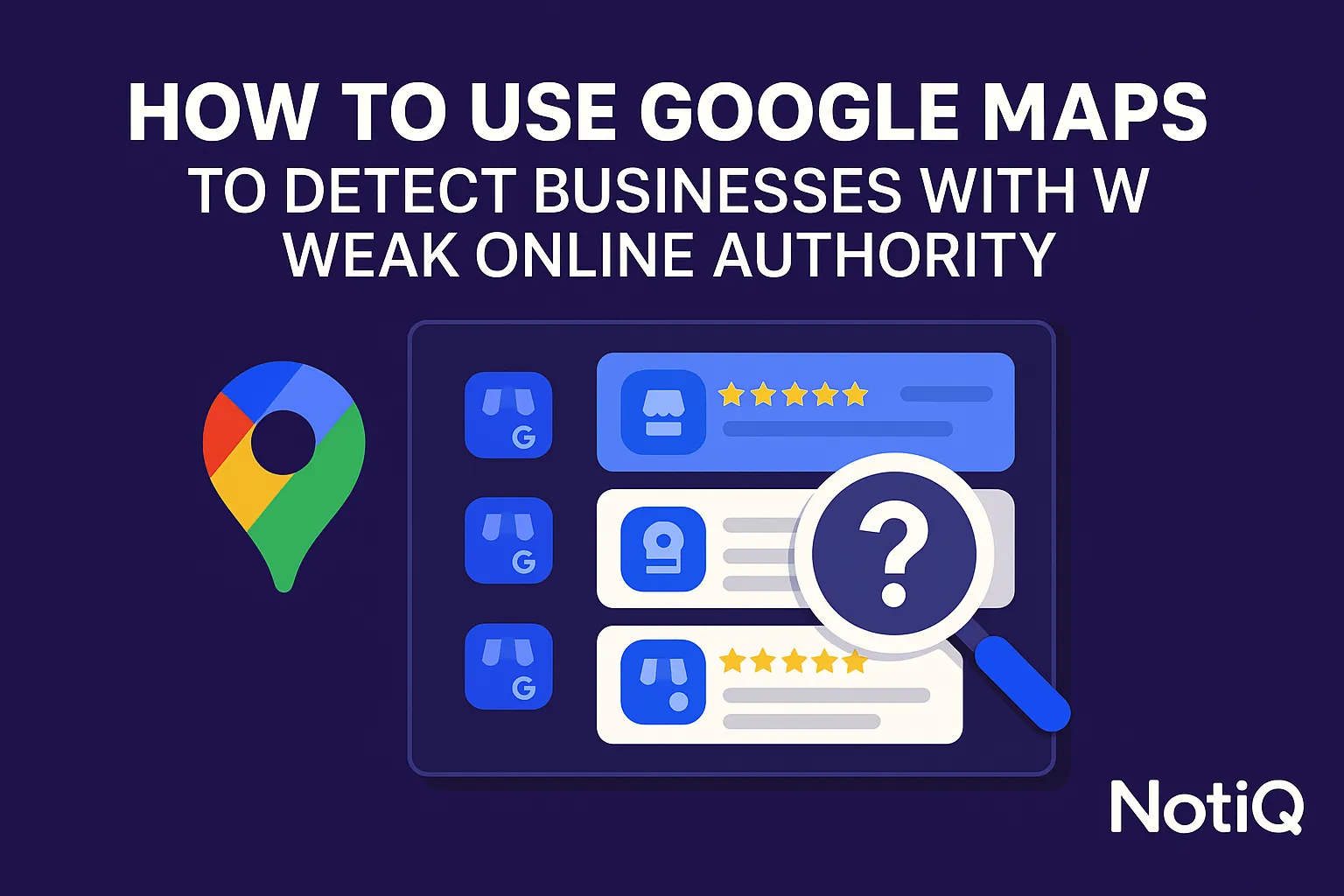
How to Use Google Maps to Detect Businesses With Weak Online Authority
Learn how to use Google Maps as a fast first-pass audit tool to spot businesses with weak online authority. This guide shows how to validate credibility gaps and prioritize the best local SEO opportunities.
1. Introduction
Google Maps is widely understood as a navigational tool and local search destination, but for strategic growth teams, it serves a much more powerful purpose: it is the fastest visible layer for spotting credibility gaps in local markets. Before investing hours into deep SEO audits or preliminary sales research, a trained eye can scan a local map pack and immediately identify which businesses possess genuine market dominance and which are merely occupying space.
The core problem for digital agencies and marketers is that many local businesses look active on the surface. They have a listing, a website, and a phone number. Yet, beneath that surface, their authority signals are weak, inconsistent, or entirely incomplete. This creates a massive opportunity for those who know what to look for.
This article provides a practical framework for learning how to use google maps to detect businesses with weak online authority. You will learn how to scan authority signals maps, verify your findings off-platform, avoid false positives, and prioritize the highest-value outreach opportunities.
To set expectations: this is not a beginner’s guide to optimizing a Google Business Profile. This is an advanced detection and validation workflow designed for professionals. This framework is grounded in recurring local SEO indicators cited by established industry authorities like Google, Moz, and BrightLocal, ensuring an evidence-backed approach rather than relying on mere opinion.
By turning this analysis into a repeatable research system, agencies can systematically uncover credibility gaps and organize local market intelligence. A strategic research workflow layer for tracking these gaps is essential for scaling this process [Home](/)].
3. Map Signals That Reveal Weak Local Credibility
To effectively audit a market, you need a practical checklist for identifying the most common authority weaknesses visible directly inside Google Maps.
Review Volume, Rating Quality, and Review Freshness
A business’s reputation is its most visible trust signal. Low review counts, stagnant review recency, weak review velocity, and poor rating distributions strongly indicate fragile credibility. However, the right benchmark is always category- and market-specific. Having 15 reviews might be considered weak online presence detection for a bustling downtown restaurant, but perfectly acceptable for a specialized B2B manufacturer.
It is crucial to distinguish between authentic low traction and suspicious review patterns. Warning signs include sudden bursts of low-quality reviews, a complete lack of owner responses, or years of review inactivity. When conducting review volume and rating analysis or broader reputation analysis, practitioners must be aware of deceptive practices. The FTC guidance on reviews and testimonials highlights the regulatory importance of authentic social proof, making manipulated reviews a severe credibility liability.
Profile Completeness and Business Detail Gaps
Missing operating hours, weak service descriptions, incomplete categories, absent attributes, or outdated contact details instantly reduce consumer trust. Incomplete profiles typically signal one of three things: operational neglect, internal inconsistency, or a very low level of local marketing maturity.
When evaluating online authority signals, examine whether the listing features the basic information expected for its category and region. According to Google Business Profile representation guidelines, accurate business representation is mandatory. Listings that fail to maintain basic google business profile optimization standards present obvious credibility gaps.
Weak Photos, Sparse Media, and Low Engagement Cues
Poor photo quality, limited media, outdated images, and a lack of visual proof correlate heavily with weak trust and low conversion readiness. Visual freshness acts as a practical proxy for operational attention and customer confidence. If a business hasn't updated its photos in five years, consumers (and search engines) may question if it is still actively operating.
While some categories (like remodeling or catering) depend on imagery more than others (like accounting), visual local seo credibility remains a key factor in google maps business research.
Category Mismatch, Service Ambiguity, and Listing Confusion
Vague categories, keyword-stuffed business names, and unclear service positioning create authority ambiguity. Category mismatch can severely distort local relevance, making a business appear less credible even if it manages to rank in the local pack analysis.
When conducting competitor analysis google business profile checks, watch for edge cases. Multi-location franchises or hybrid service-area businesses may occasionally look inconsistent on authority signals maps without actually suffering from weak authority, requiring careful contextual review.
Website Link Issues Visible From the Listing
A weak or missing website link is often the fastest authority red flag visible on Maps. Practical issues include broken links, irrelevant landing pages, generic homepages, unsecured (HTTP) pages, and websites that simply do not reinforce trust.
The trustworthiness of the linked entity is critical. As noted in Google business link policies, linked websites must be accurate and trustworthy. A poor website link immediately flags a business for the next phase of your google business profile audit checklist.
5. A Scoring Model for Prioritizing Businesses
Scattered observations are useless without a system. By turning your findings into a repeatable authority-gap scorecard, agencies and marketers can rank opportunities objectively.
The Four Core Scoring Dimensions
A highly effective scoring model evaluates businesses across four dimensions:
1. Map Credibility Weakness: Severity of on-platform gaps (reviews, photos, completeness).
2. Off-Map Authority Weakness: Severity of off-platform gaps (website UX, citations).
3. Fixability: How easily an agency can resolve the identified issues.
4. Commercial Potential: The estimated value of the client based on their industry and market.
These dimensions provide a much clearer picture than a binary "bad listing" label, allowing for weighted scoring based on vertical and local seo authority signals.
Example Scorecard Criteria
To build your google business profile audit checklist, use practical score inputs:
• Review count vs. local average
• Review freshness and owner response rate
• Profile completeness (categories, hours, attributes)
• Photo and media quality
• Website authority indicators (UX, speed, trust elements)
• Citation consistency (NAP accuracy)
• Reputation breadth across third-party platforms
How to Segment Opportunities by Severity and Revenue Potential
Once scored, segment businesses into actionable tiers:
• High-gap / High-value: Prime outreach targets (e.g., a roofing company with a broken website and zero recent reviews).
• High-gap / Low-value: Lower priority, potentially suited for automated productized services.
• Low-gap / High-competition: Strong businesses that may only need advanced link-building or PR.
• False-positive / Monitor only: New businesses or seasonal anomalies.
This segmentation prevents wasted outreach on poor-fit leads and ties directly to specific agency offers, whether that is an SEO retainer, reputation repair, a website rebuild, or basic listing optimization.
A Realistic Example of the Scoring Model in Practice
Imagine analyzing a local HVAC company. On Maps, they rank in the top 5, so a basic scraper might classify them as "strong." However, applying the scorecard reveals a different story: their website is HTTP-only and takes 6 seconds to load, their citations still list an old address, and they haven't responded to a review in three years.
After validation, their score shifts from a perceived "high authority" to a "high-gap / high-value" prospect. This demonstrates why authority signals maps analysis requires human logic and validation, contrasting sharply with typical manual scraper outputs that provide raw data without strategic interpretation.
6. How Agencies Can Turn Audits Into Scalable Prospecting
To operationalize this framework for lead generation and client qualification, agencies must build repeatable systems.
Build a Repeatable Map-to-Validation Workflow
A standard operating procedure (SOP) reduces inconsistency. The step-by-step process should be:
1. Choose a specific category and geography.
2. Scan Maps for baseline indicators.
3. Log observed authority gaps.
4. Validate websites and citations off-platform.
5. Score the opportunity.
6. Assign a specific outreach action.
Advanced teams combine manual SERP review with enrichment workflows to scale how to use google maps to detect businesses with weak online authority. Utilizing platforms to organize these checks and streamline prospecting workflows [Home](/)] is essential for maintaining data integrity.
Turn Findings Into Outreach Angles That Feel Relevant
Generic "we can help your SEO" pitches are ignored. Instead, map different authority gaps to highly specific, factual messaging:
• Review gap: Focus on lost local trust and competitor review velocity.
• Profile completeness gap: Highlight the risk of Google filtering their listing.
• Weak website trust: Point out the broken links or poor mobile UX driving away referrals.
• Citation inconsistency: Explain how confusing NAP data bleeds local relevance.
• Mixed brand signal weakness: Offer to unify their fragmented digital footprint.
Outreach must always be factual, respectful, and evidence-based, focusing on the observed credibility gaps and the likely business impact.
Scale Without Losing Accuracy
Automation is highly effective for collecting public listing URLs, enriching website contact data, organizing audit notes, and tracking follow-up sequences. However, automation without strategy creates noisy prospect lists and false positives.
The competitive difference lies in interpretation, verification, and prioritization. All data extraction must rely strictly on legal, publicly accessible information workflows, ensuring compliance with Google Maps Terms and privacy regulations. For follow-up workflow education and personalized outreach tactics, teams should study proven methodologies Blog].
How to Differentiate This Approach From Generic Local SEO Advice
Most competitor content focuses heavily on improving your own listing. This framework flips the script: it uses competitor analysis google business profile techniques to identify weak-authority businesses for research and ethical sales outreach.
By prioritizing false-positive avoidance, score-based prioritization, and agency-ready workflow design, this approach moves beyond generic checklist advice and transforms authority signals maps into a predictable revenue engine.
8. Conclusion
Google Maps serves as the fastest first-pass layer for spotting weak local authority, but the real value of this data is unlocked through rigorous validation and prioritization.
By actively scanning visible map signals, verifying website and citation strength, avoiding false positives, and scoring businesses objectively, growth teams can convert raw insights into highly profitable actions. This framework is not generic profile optimization advice; it is a systematic approach to authority-gap detection and scalable prospecting.
Rather than relying on ad hoc manual research, agencies should systematize this process. By utilizing dedicated workflow features that support research, scoring, and action Home], teams can master how to use google maps to detect businesses with weak online authority and turn credibility gaps into a consistent pipeline of high-value opportunities.
Frequently Asked Questions
- How can Google Maps reveal businesses with weak online authority?
- Google Maps exposes fast-check signals such as review strength, profile completeness, photo quality, category relevance, linked website quality, and recent activity cues. While these are excellent first-pass online authority signals, they must always be validated off-platform to confirm actual google maps business research findings.
- What authority signals matter most on a Google Business Profile?
- The most critical trust signals for local businesses include authentic reviews, review recency, active owner responses, accurate business details, relevant categories, high-quality photos, and a trustworthy, secure website link. The weighting of these signals varies depending on the specific niche and local competition levels.
- How do you tell weak authority apart from a new or seasonal business?
- Context is everything in weak online presence detection. You must evaluate the business age, seasonal demand, local competition, review norms, and clues indicating a recent closure or relocation. Always compare the listing against category peers before finalizing your review gap analysis for local seo to avoid false positives.
- What should you check after finding a weak listing on Google Maps?
- Do not act on Map data alone. Validate the website authority indicators (speed, UX, security), verify citation consistency (NAP accuracy), and conduct a broader reputation analysis across third-party directories and brand mentions. Mixed signals are incredibly common and require verification.
- Can agencies use this process for lead generation ethically?
- Yes, provided the workflow relies strictly on legal, publicly accessible information. Ethical google maps lead generation requires accurate interpretation, respectful outreach, and non-deceptive claims. When addressing credibility gaps, ensure all messaging is factual and complies with regulations, such as the FTC guidance on reviews and testimonials.
Continue Reading
More articles you might find useful
Google Maps Prospecting for Commercial Waste Management Companies
Learn how commercial waste haulers can use Google Maps to find, qualify, and prioritize better local accounts. This guide shows how to build denser routes and improve outreach with waste-stream and service-area insights.
Read the article →
How to Find Local Businesses With Broken Website Links
Learn how to find local businesses with broken website links using Google Maps, quick validation checks, and proof-based outreach. This guide shows agencies how to turn visible site issues into qualified leads.
Read the article →
Google Maps Lead Generation for Signage Companies
Learn how sign companies can use Google Maps to find local prospects, identify visible signage gaps, and build a repeatable outreach system. This guide shows how to turn visual research into qualified leads without relying on paid ads or generic lists.
Read the article →Popular industry lead playbooks
Maps search examples and niche outreach for the verticals teams prospect most.