Technology
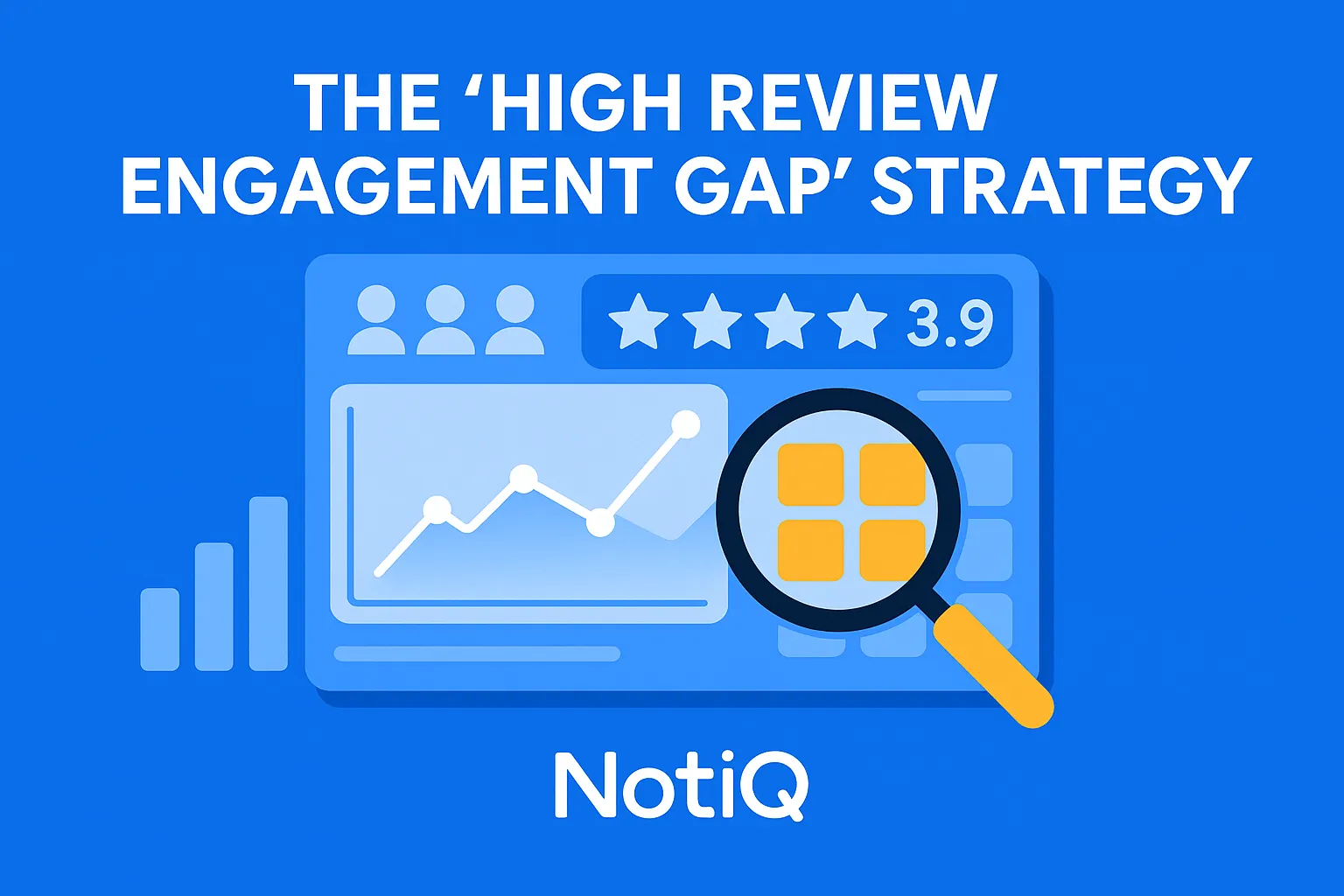
The “High Review Engagement Gap” Strategy for Targeting Leads
Learn how to use customer review analytics to find businesses with strong demand but weak response maturity. This guide shows how review engagement gaps can uncover better local SEO prospects.
1. Introduction
Many sales teams chase businesses with massive review volumes, assuming a high count equals a prime target. But volume alone does not reveal which accounts are feeling operational pain or which are most likely to buy. Public review activity is a highly visible demand signal, yet its true value emerges only when customer engagement is strong but a business’s response maturity is weak.
This article introduces the "high review engagement gap strategy." We will explore how to build review engagement maps and teach you how to prioritize leads using opportunity signals. Designed for agency leaders, local marketers, RevOps teams, and sales teams that understand local SEO basics, this guide provides a sharper, more effective prospecting method. This is not just another review management guide—it is a blueprint for reframing reviews as operational intelligence for precise lead targeting.
NotiQ is a data-driven platform that compares engagement intensity, review volume, and response behavior to surface these overlooked lead opportunities. To explore the broader platform behind this opportunity-signal approach, visit[Home](/).
2. What a High Review Engagement Gap Actually Means
A high review engagement gap occurs when a business captures visible customer attention but exhibits weak follow-through in its response behavior, operationalization, or reputation maturity. This gap is not simply defined by low star ratings or a low review count. Instead, it highlights the mismatch between customer demand and business responsiveness.
To visualize this, consider a simple conceptual formula:Engagement Intensity + Review Activity - Response Maturity = Opportunity Signal
For prospecting teams, this formula is invaluable. The gap often signals unmet demand, stretched operations, missed trust opportunities, or weak customer experience workflows. An OECD analysis of online ratings and reviews demonstrates how heavily online ratings influence consumer trust and decision-making. Furthermore,research on online listings and business performance connects public visibility directly to commercial opportunity. When a business fails to manage this visibility, it creates a prime entry point for agencies and software vendors.
The Core Components of the Gap
To accurately measure customer review analytics, you must evaluate specific inputs: review volume, review recency, response rate, response speed, rating stability, and category competitiveness.
It is critical to distinguish "engagement" from "volume." Engagement reflects active customer interaction and how the business handles that feedback, rather than relying on vanity totals alone. Response behavior serves as the maturity layer, revealing the operational follow-through—or lack thereof—within a company. When evaluating review engagement vs review volume, buyer intent signals are found in how a business interacts with its customers today, not how many reviews it collected five years ago.
What a Strong Opportunity Signal Looks Like
A strong opportunity signal often looks like a business that is "busy but under-optimized," rather than one that is outright failing. High-priority targets typically display patterns such as highly active recent reviews combined with low response consistency, multi-location performance variation, or category-level underperformance.
For example, a local clinic receiving ten detailed reviews a week but responding to none is flashing a massive local SEO opportunity signal. These businesses already have the demand; they simply lack the operational bandwidth or tools to capitalize on it, making them perfect candidates for prospect prioritization.
3. Why Review Engagement Beats Review Volume for Prospecting
Relying solely on review count for lead targeting strategy is a flawed approach. Review volume can easily hide stale demand, a lack of current urgency, or conversely, highly mature operations that have little need for outside help. Generic lead lists lack intent signals, resulting in low-converting, broad outbound enrichment workflows.
Engagement, however, reveals fresher, more actionable signals. Metrics like recency, frequency, responsiveness, and clear evidence of customer attention provide a real-time pulse of a business's operational state.Research on responsiveness and customer engagement supports the claim that business responsiveness is meaningfully tied to customer engagement behavior. Moreover,Google’s review response best practices reinforce that prompt responses are an established standard, not an invented metric. When a business falls short of these standards while receiving active feedback, they are an ideal prospect.
The Limits of Review Count as a Vanity Metric
High review totals often reflect legacy performance rather than current opportunity. A business with 2,000 reviews might look like a great lead on paper, but if 1,900 of those reviews are from three years ago, the current customer review analytics tell a different story.
Raw review volume misses vital context, such as review velocity, customer sentiment shifts, and whether the business is actively engaging with its audience. Relying on basic scraping of top-volume businesses is a trap; manual prospecting is inefficient when it assumes the biggest numbers equate to the best accounts to target.
Why Engagement Signals Surface Better Leads
Review recency and interaction patterns suggest active customer attention right now. When a business shows low response maturity alongside high engagement, it points to likely operational pain: staffing issues, weak reputation workflows, missed conversions, or fragmented ownership.
These opportunity signals create stronger, more relevant outreach angles than generic firmographic data alone. Instead of pitching a generic service, you are offering a solution to a visible, immediate problem, leveraging genuine buyer intent signals for reputation management lead generation.
How This Differs From Traditional Reputation Management Content
Most existing review management strategy content teaches businesses how to respond to reviewsafterthe fact. This article, however, teaches prospecting teams how to use review gapsbeforeoutreach.
By utilizing AI enrichment, verification, and compliant data analysis, teams can identify gaps that competitors miss. This approach aligns with NotiQ’s positioning around operational intelligence, moving beyond basic reputation improvement to advanced local SEO prospecting methods utilizing review engagement maps.
4. How to Build Review Engagement Maps and Opportunity Signals
A review engagement map is a structured, visual view of businesses organized by geography, category, and response behavior. It turns raw customer review analytics into a repeatable workflow for identifying how do review engagement maps help identify leads.
To build these maps, you must collect specific, publicly accessible data fields: business/location name, category, total reviews, recent review activity, response presence, response consistency, rating trend, and competitive context. By organizing this map by territory, city, category, or multi-location network—often using a visual matrix or scoring grid—opportunities become instantly easier to spot. For deeper execution content and step-by-step workflows, visit Blog.
Step 1 — Collect the Right Public Signals
Keep the framework practical by focusing on minimum viable inputs: review count, recent review velocity, response rate, response recency, star rating stability, and category/location tags.
These fields matter together, not in isolation. A high review velocity means nothing if the response rate is also 100%, as that indicates a mature operation. By combining Google Business Profile engagement signals and review response rate benchmarks, you gain a holistic view of the prospect's customer review analytics.
Step 2 — Segment by Geography, Category, and Location Type
A home services business in one city should not be blindly compared to a healthcare practice in another. Category and geography segmentation improve benchmark accuracy and make your outreach far more credible.
When you build a review engagement map by geography category and response behavior, you can also apply multi-location logic. One brand might have strong engagement in flagship locations but suffer from fragmented visibility across locations or categories in newer markets, revealing prime targets for competitor review analysis.
Step 3 — Flag the Gap Between Demand and Response Maturity
Identify businesses with frequent or substantive customer activity but poor operational follow-through. Use a simple visual label system—such as low, medium, and high opportunity—to categorize these accounts.
For example, a pattern of "high recent reviews + low response consistency" immediately flags an outreach-worthy account. This is the essence of the high review engagement gap strategy: finding high review activity with low business responsiveness to uncover actionable opportunity signals.
Step 4 — Turn the Map Into a Prospecting View
The map becomes a powerful tool when tied to account lists, territory ownership, or outbound campaigns. Create filters for "high activity, low response," "multi-location inconsistency," or "high demand, low maturity."
This structured approach helps justify prospect prioritization internally because the lead targeting strategy is based on observable, defensible data. It answers the critical question of how do you measure review engagement for sales prospecting with empirical evidence.
5. How to Score and Prioritize Prospects by Category and Location
Moving from observation to ranking requires a scoring framework so you can decide who to contact first. A robust framework combines review volume, recency, response rate, star rating stability, category competitiveness, and local demand.
When determining how should review engagement be weighted against review volume in lead scoring, engagement and response maturity should almost always carry more importance than total review count. Utilizing category-specific review response rate benchmarks ensures better prospect prioritization than a one-size-fits-all model.
A Simple Scoring Model Readers Can Use
Implement a practical scoring model consisting of four pillars:
1. Demand Score: Based on review velocity and search visibility.
2. Response Maturity Score: Based on response rate, speed, and consistency.
3. Competitive Pressure Score: Based on how peers in the exact category and geography are performing.
4. Total Opportunity Score: The combined metric indicating the size of the opportunity signals.
This conceptual model allows teams to leverage customer review analytics for highly accurate prospect prioritization without requiring proprietary data.
Category Examples That Reveal Different Types of Gaps
Different industries exhibit unique engagement patterns, highlighting which industries show the biggest engagement-to-optimization gaps:
• Restaurants: Often feature high review velocity and fast customer feedback loops. Gaps here indicate daily operational stress.
• Healthcare: Feature fewer, but highly trust-sensitive reviews. Responsiveness and consistency matter heavily; a gap here is a major local SEO opportunity signal.
• Home Services: Exhibit strong local demand indicators with clear territory segmentation opportunities.
• Multi-Location Brands: Location-level inconsistency on review engagement maps can reveal localized rollout or staffing gaps.
Location-Level Prioritization for Multi-Location Accounts
Not all locations within a brand deserve the same outreach priority. By identifying the highest-pain locations first—using response gaps, activity spikes, or underperforming clusters—you can execute a smarter land-and-expand strategy. This approach is highly effective for multi-location brands suffering from fragmented visibility across locations or categories, turning local failures into corporate-level opportunity signals.
6. Where Agencies and RevOps Teams Can Turn Insights Into Outreach
Bridging analysis to action makes the high review engagement gap strategy commercially useful. Agencies can use engagement gaps to identify businesses actively feeling the pain of weak review operations. Meanwhile, RevOps and sales teams can turn public signals into account tiers, outreach triggers, and highly personalized messaging.
Because every outreach angle ties back to observable evidence rather than vague assumptions, this approach makes reputation management lead generation highly defensible and superior to broad list-building. For more on turning signals into personalized campaign angles, check out Blog.
Outreach Angles Agencies Can Use
Agencies should frame the conversation around missed trust, conversion leakage, slow response operations, or inconsistent location performance.
Use "we noticed" messaging rooted in public signals. For example:"We noticed your downtown location received 15 reviews this month, but none have received a response, unlike your competitors."This consultative approach highlights missed trust and conversion opportunities from reviews without resorting to aggressive teardowns, proving your expertise in review response engagement and reputation management lead generation.
Outreach Angles for RevOps and Sales Teams
Sales teams can use gap scores for strict prospect prioritization, personalizing first touches, or justifying account selection to leadership. Tie outreach to category benchmarks or recent activity spikes. The most effective messaging connects the buyer intent signals to the operational pain, and finally to the likely ROI of fixing the problem. This answers exactly how do you measure review engagement for sales prospecting and turns it into pipeline.
What to Say Without Overclaiming
Never imply access to private business data. Use language like"publicly visible review patterns suggest..."rather than feigning unsupported certainty. By keeping claims factual, sourced, and rooted in public customer review analytics, you reinforce trustworthiness and ensure your opportunity signals are viewed as credible business intelligence.
7. Tools, Workflow Inputs, and Operational Guardrails
Executing this strategy requires specific operational inputs: public review data, category benchmarking, location tagging, and a repeatable scoring layer. Teams must verify records, normalize categories, and avoid making decisions from noisy or incomplete snapshots.
Manual prospecting is inefficient, but automated workflows must prioritize signal quality over sheer list volume to be effective for local SEO prospecting methods. For a platform that orchestrates identifying, enriching, and prioritizing these opportunity signals seamlessly, visit[Home](/).
Data Hygiene and Benchmarking Basics
Always compare like with like: category, geography, and location type matter immensely. Normalize review periods and check for recentness before scoring. Poor data hygiene creates false positives, leading to wasted outreach and skewed customer review analytics. Accurate competitor review analysis relies entirely on understanding true review response rate benchmarks within a specific local context.
Compliance and Trust Considerations
Review-derived prospecting must strictly adhere to legal, publicly accessible information workflows. It should never encourage fake, misleading, or improperly incentivized reviews. The FTC guidance on soliciting online reviews clarifies the absolute necessity of ethical review programs.
Agencies advising SMBs must provide responsible recommendations. As noted in Google’s review response best practices, legitimate review engagement workflows are about authentic customer connection. Adhering to these guidelines ensures your review management strategy maintains the highest level of trustworthiness.
8. Future Trends in Review-Based Prospecting
The industry is experiencing a massive shift away from vanity metrics and toward a growing focus on engagement quality and operational responsiveness. AI-assisted reputation monitoring now allows teams to detect under-responded activity across local and multi-location businesses at scale.
Review engagement mapping is rapidly becoming a core component of broader sales intelligence workflows, blending local SEO, reputation data, and outreach prioritization.
From Reputation Metrics to Operational Intelligence
Review data is increasingly valuable far beyond basic brand management. Growth teams care about public signals because they reveal urgency and conversion opportunity. Reviews are no longer just proof of sentiment; they are a rich prospecting surface. By focusing on opportunity signals and local SEO opportunity signals, review engagement maps provide true operational intelligence.
What Teams Should Start Doing Now
To leverage the high review engagement gap strategy immediately, teams should build a pilot map for a single category or territory. Test a simple scoring model for prospect prioritization before scaling operations. Turn these insights into messaging experiments and track the results in your pipeline reporting to refine your lead targeting strategy.
9. Conclusion
The best local-business leads are rarely the ones with the most reviews; they are the ones with strong customer attention but weak response maturity. By defining the gap, mapping engagement, benchmarking by category and location, and scoring accounts, teams can turn public signals into highly effective outreach.
This methodology helps agencies, marketers, and RevOps teams justify prospect prioritization using observable, compliant public data. The high review engagement gap strategy transforms standard metrics into actionable opportunity signals through precise review engagement maps.
NotiQ’s data-driven approach excels at comparing engagement intensity, review volume, and response behavior to discover these exact prospects. Start leveraging operational intelligence today to find the leads your competitors are missing.
Frequently Asked Questions
- What is a high review engagement gap?
- A high review engagement gap is the mismatch between strong public customer activity (like frequent new reviews) and weak business response maturity (like ignoring feedback). In the high review engagement gap strategy, it serves as a prospecting lens to find businesses experiencing operational pain, rather than just acting as a traditional reputation score.
- How do review engagement maps help identify leads?
- Review engagement maps turn scattered public review signals into a structured format, allowing teams to spot businesses with visible demand and likely operational pain. By mapping dimensions like geography, category, and response behavior, sales teams can easily visualize where the best opportunities lie.
- Why does review engagement matter more than review volume?
- Review engagement vs review volume is a critical distinction because engagement better reflects current business activity, trust opportunities, and operational maturity. Stale or context-free review totals hide the reality of a business's current state, whereas active engagement provides real-time buyer intent signals.
- How do you measure review engagement for sales prospecting?
- To measure review engagement for sales prospecting, you must track practical customer review analytics inputs: review recency, review velocity, response rate, response consistency, rating stability, and peer benchmarks. These metrics reveal if a business is actively managing its customer feedback.
- Which businesses benefit most from review engagement analysis?
- The businesses that benefit most are local service providers, restaurants, healthcare practices, and multi-location brands. These industries show the biggest engagement-to-optimization gaps. Any business with visible customer interaction but uneven response maturity provides excellent local SEO opportunity signals.
- How is this different from traditional reputation management?
- Traditional review management strategy focuses on improving operationsafterreviews happen. This strategy uses review behavior to find and prioritize leadsbeforeoutreach. It is a proactive approach focused on reputation management lead generation and prospect prioritization rather than just sentiment tracking.
Continue Reading
More articles you might find useful
Google Maps Prospecting for Commercial Waste Management Companies
Learn how commercial waste haulers can use Google Maps to find, qualify, and prioritize better local accounts. This guide shows how to build denser routes and improve outreach with waste-stream and service-area insights.
Read the article →
How to Find Local Businesses With Broken Website Links
Learn how to find local businesses with broken website links using Google Maps, quick validation checks, and proof-based outreach. This guide shows agencies how to turn visible site issues into qualified leads.
Read the article →
Google Maps Lead Generation for Signage Companies
Learn how sign companies can use Google Maps to find local prospects, identify visible signage gaps, and build a repeatable outreach system. This guide shows how to turn visual research into qualified leads without relying on paid ads or generic lists.
Read the article →Popular industry lead playbooks
Maps search examples and niche outreach for the verticals teams prospect most.