Technology
The Google Maps “Review Sentiment Gap” Strategy for Targeting Leads
Most Google Maps prospecting stops at list building. This guide shows how to use review sentiment patterns to find higher-intent local leads and personalize outreach ethically.
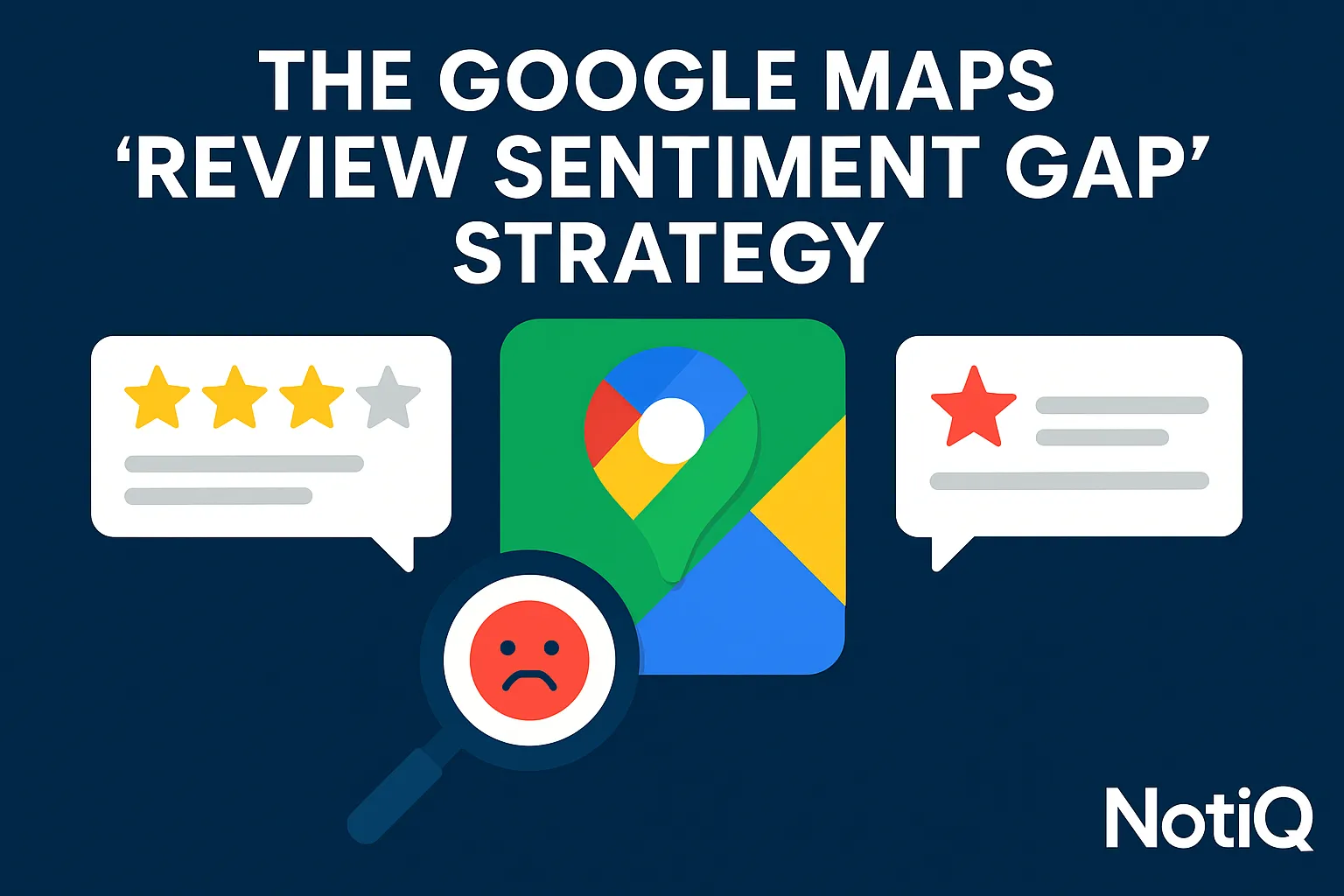
1. Introduction
Most Google Maps lead generation is just list building. Agencies and sales teams routinely pull thousands of business names, phone numbers, and websites, hoping that sheer volume will yield a few interested prospects. But lists alone do not reveal which businesses have urgent, visible problems worth solving. They provide contact information, but they completely miss intent.
The “review sentiment gap” acts as a smarter layer on top of Google Maps prospecting. It helps agencies and revenue teams find businesses that are already showing public dissatisfaction signals. By identifying local companies with unaddressed customer complaints, you can prioritize outreach based on actual operational pain rather than guessing who might need your services.
To be clear, this is not a guide for managing your own reviews. It is a strategic framework for using public review patterns to prioritize outbound opportunities. In this guide, we will cover a step-by-step model including definition, scoring, segmentation, personalization, industry fit, and ethical guardrails. Whether you are an agency, a local SEO consultant, or a SaaS growth team selling to local SMBs, this methodology will help you move past generic scraped lists and execute highly relevant outreach.
Leveraging tools like[NotiQ](/), an analytical workflow for detecting dissatisfaction patterns in Google Maps reviews, allows teams to turn these raw public signals into tactical outreach insights.
2. What a Google Maps Sentiment Gap Is
A Google Maps review sentiment gap exists when a business has visible, recurring customer dissatisfaction that is not being adequately resolved. It is the delta between the customer experience a business intends to provide and the reality reflected in public feedback.
Contrast this with a normal Google Maps lead list. A standard list might show you a company's category, location, and contact info, but it reveals nothing about urgency, pain, or buying intent. A sentiment gap strategy, however, uses negative reviews as prospecting signals because they expose operational friction, customer experience issues, and a potential demand for outside help.
A true opportunity is not “one bad review.” It is a pattern involving complaint frequency, recency, severity, and poor owner response behavior. While generic local prospecting workflows rely on manual scraper tools that extract data blindly, the Google Maps Review Sentiment Gap focuses on converting complaint patterns into lead prioritization. It is not just about finding businesses with bad reviews; it is about understandingwhythey are struggling.
According to Google’s official guidance on managing customer reviews, interacting with customer feedback is a core part of maintaining a healthy Google Business Profile. When businesses fail to manage this, the resulting sentiment gap becomes a powerful indicator of internal operational needs.
Why negative reviews are more than reputation data
Review text is a goldmine of operational intelligence. It can reveal recurring issues like slow response times, rude staff behavior, no-shows, poor cleanliness, missed follow-ups, or service inconsistency.
When you analyze these themes, they can map directly to an agency or SaaS offer, creating a much stronger outreach angle. For example, a business constantly cited for "missed calls" is a prime candidate for an AI voice receptionist or CRM automation. Public dissatisfaction is often a more actionable trigger than broad firmographic filters because it highlights a problem the business owner is actively losing money over. Using customer dissatisfaction signals for review-based outbound prospecting allows you to lead with a solution to a known problem.
What separates a sentiment gap from a weak signal
Isolated complaints happen to every business. A single one-star review from an unreasonable customer is a weak signal. A meaningful sentiment gap requires qualitative thresholds: repeated complaint categories, recent negative review activity, and a lack of owner response.
If you are wondering, “How many negative reviews indicate a meaningful opportunity?” the answer is that context matters more than raw count alone. Three detailed, unanswered reviews in the last month complaining about "hidden fees" is a much stronger negative review targeting signal than ten generic one-star ratings spread over five years. Monitoring competitor review gaps and local business review monitoring requires looking for these concentrated clusters of operational failure.
3. Core Principles of a Strong Sentiment-Gap Opportunity
Before diving into scoring and outreach, you must understand the five core components that make a review-based lead attractive: complaint frequency, complaint severity, recency, review pattern consistency, and owner response quality.
This framework helps teams focus on businesses that are both visibly struggling and more likely to act. Review sentiment analysis should be used as a qualification layer to enrich your existing local SEO prospecting, not as the sole source of truth.
Complaint frequency and clustering
One complaint type repeating across several reviewers is a significantly stronger buying signal than scattered, isolated issues. This is known as review clustering.
Common clusters include:
• Slow response times
• Poor communication
• Late service or missed appointments
• Rude staff
• Pricing confusion
When you identify these customer dissatisfaction signals through local business review monitoring, you can connect repeated complaint themes directly to potential service interventions or product value propositions.
Recency and momentum
Recent negative reviews suggest active pain, while older complaints may already be resolved. A spike in complaints over a short period can indicate a sudden operational decline, such as a key staff member quitting or a broken internal process.
Recency should be framed as a prioritization factor. A business experiencing a sudden wave of negative review targeting requires urgent intervention, making them highly receptive to a timely outreach message based on google maps review analysis.
Owner response behavior
Non-response, delayed response, or defensive response behavior dramatically increases the value of an opportunity. Owner silence often signals workflow breakdowns, understaffing, or low reputation maturity.
As noted in Google’s official guidance on managing customer reviews, responding to reviews is an established best practice that builds trust. When a business fails to do this, unresolved public issues create better openings for sales teams than businesses that are already responding well. Their lack of response behavior is an invitation for your google business profile negative reviews strategy.
4. How to Find and Score Negative Review Opportunities
To turn this concept into a repeatable workflow, you need a system to find and score these opportunities. The goal of the Google Maps review sentiment gap strategy is not perfect sentiment science; it is the faster prioritization of promising local accounts.
Using an analytical workflow like[NotiQ](/)allows teams to collect, cluster, and prioritize review-based lead signals efficiently, transforming raw review sentiment analysis into a structured pipeline.
Step 1 — Collect the right Google Maps listings
Start with a specific location, category, and service niche rather than scraping broad, low-quality lists. Focus on local SMB categories where review patterns are highly visible and operational issues are common (e.g., HVAC, dental clinics, property management). Filter listings for relevance before you even begin your review analysis to ensure your local lead generation using reviews remains highly targeted.
Step 2 — Analyze review text for recurring complaint themes
Look for repeated operational breakdowns instead of emotionally reacting to individual reviews. Group complaints into categories such as responsiveness, quality, reliability, staff behavior, cleanliness, or follow-up. This complaint categorization is the engine that makes outreach and segmentation possible later. If you want to find businesses with bad google reviews, you must categorize their customer dissatisfaction signals accurately.
Step 3 — Build a sentiment-gap score
Use a simple weighted model to score sentiment gap maps. Factors should include:
• Number of recent negative reviews: High weight for reviews within the last 60 days.
• Repeated complaint category: High weight if 3+ reviews mention the exact same issue.
• Average rating trend: Medium weight for a declining overall score.
• Owner response: High weight for absent or aggressive responses.
• Severity of issue: Medium weight for critical operational failures.
Rank accounts using a simple “High / Medium / Low opportunity” framework. This sentiment-gap scoring ensures your negative review targeting is focused on the highest-intent prospects.
Step 4 — Enrich and qualify the account
Review sentiment alone is not enough. Pair it with business category, location, profile completeness, and likely service fit. Combining review sentiment with Google Business Profile completeness signals sharpens prioritization and reduces false positives. Unlike automation-first scraping content that focuses only on extraction volume, this pain-aware qualification routes accounts into the right campaign.
Manual vs automated workflows
Manual review analysis offers deep nuance and context, making it ideal for solo consultants targeting high-ticket local accounts. However, automated workflows provide scale, consistency, and enrichment. For larger revenue teams, automation is essential. Many generic google maps scraper tools stop at extraction; advanced automation for outbound turns review monitoring for agencies into segmented pipeline opportunities.
5. How to Segment Leads by Complaint Patterns
The real value of the sentiment-gap strategy comes from grouping businesses by problem type, not just ranking them by score. By creating complaint-based lead segments, you can map prospects to a clear offer, outreach angle, or sales hypothesis. Segmentation improves message relevance and helps teams avoid generic outbound, ensuring your review-based outbound prospecting capitalizes on competitor review gaps.
Segment 1 — Responsiveness and missed follow-up
This segment includes businesses with slow response reviews, unreturned inquiries, unanswered questions, or scheduling friction. These accounts often have public evidence of missed revenue due to weak response systems. They are perfect fits for lead capture tools, CRM implementations, inbox automation, call handling, or follow-up workflow offers.
Segment 2 — Poor service quality or inconsistency
Recurring complaints about incomplete work, quality variation, rude staff, or unsatisfactory outcomes fall into this segment. These accounts may respond to offers around customer experience systems, staff training, QA workflows, or reputation repair support. Highlight pattern recognition in your review sentiment analysis rather than cherry-picking dramatic poor service quality reviews.
Segment 3 — Pricing, expectation mismatch, and trust issues
Complaints about hidden fees, unclear estimates, or overpromising signal messaging or sales-process problems. Agencies can position messaging, funnel, or conversion optimization services against these pain points. Not every pricing complaint is useful, but repeated trust breakdowns present a major review-based prospecting opportunity.
Segment 4 — Operational friction: wait times, no-shows, scheduling
This segment covers businesses where complaints point to capacity problems, scheduling breakdowns, or poor front-desk systems. Restaurants, dental clinics, med spas, and home services with wait time complaints or scheduling issues have an immediate need for automation, booking improvements, or process support.
Build complaint-to-offer mapping
To operationalize this, build a simple framework for lead prioritization based on complaint clusters:
• Complaint Cluster: Missed calls / Slow response
• Underlying Problem: Understaffed front desk
• Service Angle: AI voice receptionist or missed-call text back automation
• Outreach Positioning: "Noticed a pattern of patients struggling to get through on the phones..."
This mapping makes your outbound personalization uniquely tactical.
6. How to Personalize Outreach Without Sounding Invasive
Using public review data responsibly is the most critical part of this strategy. Outreach should reference patterns, not quote negative reviews verbatim or make prospects feel monitored. Convert complaint themes into empathetic, problem-aware messaging. The goal of review-based outbound prospecting is to be helpful and relevant, not exploitative or creepy.
Tools that help generate personalized first lines can seamlessly turn complaint patterns into natural, highly relevant introductions.
Reference the problem category, not the review itself
Use language like, “I noticed a pattern around response delays recently,” rather than, “I saw that John Doe left a one-star review yesterday about your receptionist.” This preserves relevance while reducing the risk of sounding invasive. Generalized observations backed by public review data make for highly effective personalized outreach.
Lead with a solution hypothesis
The best outreach frames a likely fix, not just the problem. Connect review themes to operational improvements, customer communication, or lead-handling workflows.
Sample Angle for Slow Response:"Noticed a recent trend in feedback mentioning delays in getting quotes back. Usually, this means your team is swamped in the field. We set up automated quoting workflows that..."
This pain-aware messaging feels consultative, leveraging review sentiment analysis to start a meaningful conversation.
Use public signals ethically in first-line personalization
Keep personalization short and respectful. The strongest first lines combine the business category, location, issue type, and a positive outcome. Implementing hyper-personalized outbound messaging requires a delicate touch. For deeper insights on crafting these messages, exploring strategies for using public signals ethically in first-line personalization can refine your approach.
What not to say in outreach
Never quote exact complaints, mention reviewer identities, shame the prospect, or imply surveillance. Manipulative framing damages trust, triggers compliance risks, and drastically reduces reply rates. Ethical outreach ensures your negative review targeting remains professional and trustworthy.
7. Best-Fit Industries for the Review Sentiment Gap Strategy
Not every local category produces equally actionable review signals. The best industries for review prospecting have high review volume, visible customer experience friction, and clear service delivery patterns.
Dental, med spas, and clinics
Appointment friction, follow-up issues, front-desk responsiveness, and expectation mismatch show up clearly in dental reviews and clinic review issues. These response time complaints connect perfectly to workflow, communication, and reputation-related offers.
Restaurants and hospitality
High review volume makes these categories incredibly rich for pattern detection. Look for restaurant negative reviews detailing wait time complaints, order accuracy, staff behavior, cleanliness, and response quality to identify customer dissatisfaction signals.
Home services and property services
Focus on no-shows, missed follow-up, quoting issues, scheduling friction, and inconsistent service quality. Home services reviews are often strong signals for CRM, automation, and lead-handling solutions, making them ideal for local lead generation using reviews.
Auto repair, legal, and other trust-heavy services
Trust issues, communication breakdowns, pricing disputes, and service clarity matter heavily in trust-heavy services. Pricing complaints and competitor review gaps in these verticals create exceptionally compelling outreach angles because trust is directly tied to revenue.
8. Risks, Ethical Guardrails, and Compliance Considerations
Public availability does not eliminate the need for restraint, privacy awareness, and non-manipulative messaging. Using public business signals for relevance is smart; overreaching into personal or sensitive territory is a liability. Ethical review prospecting is essential to sustainable outbound.
Stay within platform and policy boundaries
Teams must understand how Google expects businesses to manage reviews and where policy boundaries exist around inappropriate content. Familiarize yourself with Google’s official guidance on managing customer reviews and Google’s policy on reporting inappropriate Business Profile reviews. This ensures careful interpretation of google business profile reviews and respectful outreach.
Avoid deceptive or manipulative review tactics
This strategy is about using public sentiment as a signal, not manufacturing reviews, suppressing feedback, or incentivizing dishonest behavior. Never distort review themes to pressure prospects. Adhere strictly to consumer reviews compliance standards, such as the FTC guidance on consumer reviews and testimonials, to ensure ethical outreach.
Handle public data responsibly
Even when data is public, agencies should minimize unnecessary personal detail, avoid naming reviewers, and document clear internal use rules. Privacy-aware handling, limited retention, and purpose-based use of public review data are non-negotiable. Align your workflows with the NIST Privacy Framework for responsible data use and consult the OECD privacy guidelines for handling personal data to maintain a robust privacy framework.
Outreach guardrails that preserve trust
To ensure trustworthy outbound and non-invasive personalization, follow these rules:
• Do not quote reviews verbatim.
• Do not mention reviewer names.
• Do not overstate what you “know.”
• Focus on helping, not exposing weaknesses.
These guardrails improve both reply rates and brand credibility.
9. Case Study Style Example — From Review Pattern to Outreach Campaign
To make this framework immediately usable, let’s walk through a realistic local business example.
Example 1 — Slow response and missed follow-up
Imagine a local HVAC company with a 4.1 rating. Recently, they have received four reviews in the last 45 days complaining about unreturned calls and missed quotes.
Scoring: This is a strong opportunity. The issue is repeated (clustering), recent (momentum), and unresolved (no owner response).
Outreach Angle: Focus on lead response systems.
Message:"Hi [Name], noticed a recent pattern in public feedback regarding delays in getting quotes back to customers. Usually, this means your techs are swamped in the field. We build automated missed-call text workflows for HVAC teams that capture those lost leads instantly. Worth a quick chat?"
Example 2 — Quality inconsistency and poor owner response
Consider a roofing contractor with mixed ratings. They have recurring poor service quality reviews citing messy job sites, combined with defensive or absent owner response behavior.
Scoring: The combination of operational failure and poor reputation management indicates a highly meaningful sentiment gap.
Outreach Angle: Focus on customer experience workflows and reputation operations.
Message:"Hi [Name], noticed a recent trend in feedback mentioning inconsistencies in site cleanup. Managing crew quality at scale is tough. We implement automated QA and post-job feedback loops that catch these issues before they go public. Open to seeing how it works?"
10. Future Trends in Review-Based Prospecting
The market is shifting away from volume-based scraping toward precise, pain-aware outbound. AI-assisted review clustering, sentiment analysis, and enrichment workflows are making public review data more usable for revenue teams using local SEO intelligence.
Emerging practice areas involve combining review sentiment with Google Business Profile completeness, local SEO signals, and hyper-personalized outbound messaging systems. AI enrichment offers distinct advantages in verification and compliance, ensuring that outreach is both highly targeted and ethically sound.
11. Conclusion
Google Maps becomes exponentially more valuable for prospecting when reviews are used as a qualification and segmentation layer, not just a source of business names. By identifying recurring dissatisfaction, scoring the sentiment gap, segmenting by complaint pattern, and building respectful outreach around likely fixes, you transform negative review opportunities into high-converting pipeline.
Always pair this strategy with strict ethical guardrails and privacy-aware handling of public data. Stop relying on generic local lead lists. Operationalize this framework to find businesses that actually need your help today.
For teams looking to scale this methodology, utilizing workflows like[NotiQ](/)transforms raw public review signals into practical, actionable prospecting intelligence.
Frequently Asked Questions
- What is a review sentiment gap in Google Maps?
- A review sentiment gap is the difference between visible customer dissatisfaction and a business’s apparent ability or willingness to resolve those issues effectively. It highlights operational friction that can be solved by third-party services.
- How can negative Google reviews be used to identify sales opportunities?
- Repeated complaint themes, recent negative activity, and weak owner responses signal pain, urgency, and relevance. This allows sales teams to craft prospecting from customer complaints that leads with a specific solution to a known problem.
- How many negative reviews are enough to qualify a lead?
- Meaningful patterns matter more than raw count. A small cluster of three recent, repeated complaints about the same operational issue is far more valuable for sentiment-gap scoring than a dozen old, scattered complaints.
- Which tools help analyze Google Maps reviews for lead generation?
- Effective lead generation requires workflow categories: collection, clustering, enrichment, and personalization. Analytical workflows like[NotiQ](/)are ideal for detecting and scoring dissatisfaction patterns, while tools that generate personalized first lines help execute the outreach efficiently.
- How can agencies use review sentiment without sounding invasive?
- Agencies should use pattern-level observations, solution-led outreach, and respectful wording. Focus on the operational trend rather than quoting specific reviews or naming reviewers to ensure non-invasive personalization.
- What are the risks of using negative review data for outreach?
- Risks include privacy overreach, manipulative framing, inaccurate assumptions, and the misuse of public feedback. Always adhere to ethical review prospecting guidelines and compliance frameworks to protect both your brand and the prospect's trust.
Continue Reading
More articles you might find useful
How to Find Businesses With High Review Volume but Low Ratings
Learn how to find visible local businesses with lots of reviews but weak ratings using Google Maps signals, review trends, and owner response gaps. This blueprint helps agencies prioritize stronger reputation management leads and personalize outreach.
Read the article →
Google Maps Prospecting for Commercial Landscaping Companies
Learn how commercial landscaping companies can use Google Maps to find higher-fit commercial property leads, qualify visible need, and build denser service routes. This guide breaks down a practical workflow for smarter prospecting and better contract opportunities.
Read the article →
How to Find Businesses With Weak Google Maps Descriptions
Learn how to find businesses with weak Google Maps descriptions and turn visible GBP gaps into qualified local SEO leads. This guide covers audit criteria, scoring, and outreach angles you can use at scale.
Read the article →Popular industry lead playbooks
Maps search examples and niche outreach for the verticals teams prospect most.