Technology
The “Visual Storytelling Gap” Strategy Using Maps Listings
Your Google Maps listing is often a customer’s first impression. This guide shows how stronger visuals, reviews, and profile consistency can turn that moment into more clicks and website traffic.
1. Introduction
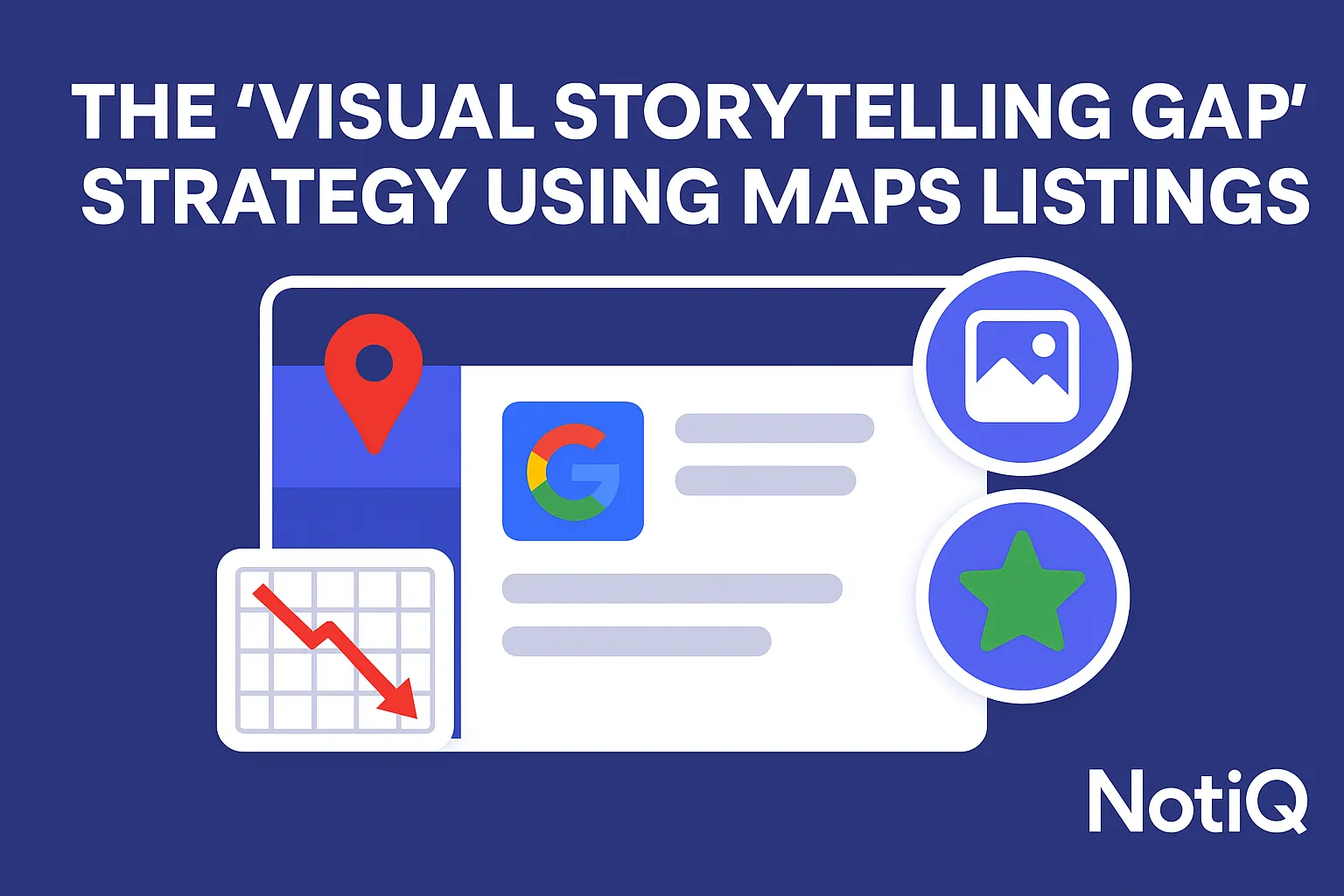
For many discovery-stage customers, Google Maps and Google Business Profiles serve as the absolute first visual encounter with your brand. Before they ever read your "About Us" page or browse your service offerings, they are evaluating your storefront photos, reading customer reviews, and deciding if your business looks credible.
Unfortunately, businesses routinely lose clicks before a website visit even occurs because their Google Maps listings feel inconsistent, outdated, or visually weak. This disconnect is known as the "visual storytelling gap"—the massive space between the premium experience a brand wants to communicate and the fragmented reality its map listing actually shows.
Closing this gap leads to stronger customer trust, clearer local differentiation, and significantly higher click-through rates from local search. While intermediate marketers understand the foundational mechanics of local SEO, achieving true visual storytelling maps requires a stronger narrative framework. It requires moving beyond standard data entry to treat your map listing as a high-converting, location-based landing page.
Connecting weak map-listing presentation to missed discovery traffic is critical. By partnering with a strategic platform like[NotiQ](/), brands can turn fragmented, inconsistent listing presentations into a cohesive, high-performing local discovery workflow, ensuring that their branding gaps are closed and their local presence drives real revenue.
2. Why Map Listings Shape First Impressions
Map listings have evolved far beyond digital phonebooks. Today, they are high-impact, first-impression surfaces that heavily influence consumer trust and click behavior.
Map listings are often the first brand touchpoint
Discovery-stage users frequently encounter a Google Maps listing long before they visit a company’s actual website. These listings act as mini landing pages where users evaluate visuals, review sentiment, category fit, and business details in a matter of seconds.
This behavior is deeply embedded in how modern consumers make location-based decisions. Mobile users rely on these snapshots to determine if a business is worth their time. In fact, Google highlights mobile search as the new front door to stores, proving that local SEO and location-based storytelling are no longer just about ranking—they are about welcoming the customer.
Visual cues influence trust faster than most brands realize
First impressions form in milliseconds. Poor photos, weak branding, or stale visuals immediately lower perceived credibility, causing users to bounce before they even read your carefully crafted descriptions. Customers infer quality, professionalism, and relevance purely from visual presentation.
This is not abstract branding theory; it directly impacts map listing engagement. When a customer journey visuals are disjointed, trust evaporates. Academic research on rapid first impressions confirms that visual brand consistency is paramount because the human brain makes snap judgments regarding trustworthiness and competence almost instantly.
Why this matters more than standard local SEO checklists suggest
A ranking-only mindset is fundamentally flawed if it ignores the conversion-and-perception mindset. Visibility alone is useless if the listing fails to communicate trust, relevance, and differentiation. While generic competitor content focuses on simple Google Business Profile optimization checklists, a narrative-driven approach to visual storytelling maps ensures that once you capture a user's attention, you actually convert it into foot traffic or a website click.
3. Where Visual Storytelling Gaps Hurt Performance
Branding gaps appear inside listings in several common ways, each systematically chipping away at consumer trust, clicks, and your ability to stand out.
Inconsistent imagery creates a weak first impression
Mismatched photos, low-resolution images, outdated storefront shots, and a total lack of branded visuals create immediate friction. When visual brand consistency breaks down across different locations or platforms, the business looks less established and less reliable. Furthermore, if your owned photos and videos for listings are weak, user-generated images will dominate your profile, effectively allowing random customers to dictate your brand narrative. Adhering to Google’s official photo guidance ensures your imagery meets the technical and qualitative standards required to project authority.
Messaging mismatch between listings and website confuses users
Your map listing descriptions, categories, offers, and visual tone must align seamlessly with your website’s positioning. Disconnects here create a narrative continuity problem: the listing promises one experience, while the website suggests another. This friction causes users to abandon their search. To maintain brand consistency in local search, your location page visual strategy and your business profile optimization must speak with one unified voice. For deeper insights on aligning broader content strategy and messaging across owned channels, exploring brand messaging alignment is a vital next step.
Reviews and user photos shape the story whether you manage them or not
Reviews, review responses, and customer-uploaded visuals are highly visible reputation signals. Silence from the brand makes the narrative feel unmanaged or even negligent. Actively managing map listing engagement through thoughtful review responses reinforces your brand's tone, highlights service quality, and demonstrates to future customers that you run a professional, attentive operation.
Competitors with better listing presentation win attention
When users compare options in the local pack, competitors with fresher activity, stronger images, and more compelling social proof instantly appear more credible. This is a visible differentiation problem, not merely a rankings problem. While typical manual Google Business Profile optimization advice stops at filling out fields, closing branding gaps requires superior visual benchmarking, AI enrichment, and rigorous consistency workflows to ensure your local listing branding outshines the competition.
4. The Core Elements of a High-Converting Listing Narrative
To turn the concept of visual storytelling maps into a usable framework, every listing element must be mapped to its specific role in your brand's story.
Photos that communicate recognition, relevance, and experience
Not all photos are created equal. The most critical photos and videos for listings include clear storefronts, welcoming interiors, professional team shots, detailed product/service images, and in-context experience shots. These visuals serve as proof, not decoration. They answer the user's immediate questions:Is this credible? Is this for me? Does this match my needs?
Always ensure your imagery complies with Google’s business profile photo guidelines to maximize visibility and impact. For brands looking to scale their visual storytelling maps without sacrificing quality, integrating AI image workflows can help create consistent, highly usable listing visuals across all locations.
Descriptions, categories, and attributes that reinforce positioning
Category selection and description clarity shape user expectations and relevance. These are vital narrative signals in your local discovery content strategy. They tell users exactly what your business is, who it serves, and why it stands out among Google Maps listings. Business profile optimization requires concise, brand-aligned copy that supports the exact same value proposition featured on your main website.
Reviews and responses as trust-building story layers
Review freshness, recurring themes, and your response tone collectively communicate your commitment to customer experience. Responses are a prime opportunity to reinforce brand voice, reduce buyer uncertainty, and demonstrate attentiveness. By actively managing these reputation signals, you build a deep layer of customer trust that enhances overall map listing engagement.
Listing completeness as the foundation of credibility
A high-converting narrative cannot exist on a broken foundation. Business hours, services, contact details, categories, and all other profile fields must be fully populated. Incomplete listings weaken both customer trust and local SEO visibility. According to Google's guidance, accurate and complete profile information is essential for improving usability. Think of business profile optimization as the baseline layer that supports all your visual storytelling efforts.
Updates, activity, and freshness signals
Stale listings feel abandoned, even if the core contact details are technically correct. A high-converting Google Maps SEO strategy requires a consistent photo refresh cadence, a regular review response schedule, and periodic profile updates via Google Posts. Freshness is a powerful competitive perception signal; active profiles look more trusted, current, and engaged in local listing branding, driving higher map listing engagement.
5. How to Audit and Benchmark Listings Against Competitors
Identifying the visual storytelling gap requires a structured approach to spot where you are losing discovery traffic.
Step 1 — Audit your listing like a first-time customer
Walk through a simple diagnostic of your Google Maps listings: What does someone notice in the first 5 to 10 seconds? Objectively evaluate your cover imagery, photo quality, category fit, description clarity, recent reviews, and visible proof. Many real-world local profiles suffer from obvious branding gaps here—pixelated logos, outdated storefronts, or unanswered negative reviews.
Step 2 — Map each listing element to a narrative role
Move your audit beyond asking, "Is this field filled out?" to asking, "What is this communicating?" Classify elements by their purpose: first impression, trust proof, differentiation, relevance, and conversion intent. This is where location-based storytelling thrives. Most brands fail because they have data fields populated, but their customer journey visuals lack a coherent, compelling story.
Step 3 — Benchmark visible competitors side by side
Compare your visual storytelling maps against local competitors. Look at photo strength, review recency, service proof, category precision, and profile freshness. Identify exactly what makes a competitor look more established before asking why they rank higher. A side-by-side competitor listing audit reveals the visible narrative branding gaps and trust cues that generic Google Business Profile optimization usually misses.
Step 4 — Connect listing quality to measurable outcomes
Once you improve visuals and copy, monitor the impact. Track profile views, website clicks, direction requests, and calls. Treat this as an ongoing test-and-improve loop rather than a one-time cleanup. While not every gain is perfectly attributable, behavior metrics will show directional improvement in local discovery traffic. Familiarize yourself with Business Profile performance metrics to accurately gauge success. To operationalize ongoing audits and Business Profile performance monitoring, leverage a workflow orchestration platform like[NotiQ](/).
Optional audit checklist to include as a breakout box
The Visual Storytelling Gap Checklist:
• Imagery: Are the logo, cover photo, and recent uploads high-resolution and on-brand? (Red/Yellow/Green)
• Copy: Does the description match the website's value proposition? (Red/Yellow/Green)
• Reviews: Are the last 5 reviews responded to with a customized, on-brand tone? (Red/Yellow/Green)
• Proof: Do photos show real people, interiors, and services in action? (Red/Yellow/Green)
• Accuracy & Freshness: Are hours correct, and has a new update/photo been posted in the last 30 days? (Red/Yellow/Green)
6. How Multi-Location Brands Maintain Visual Consistency
Scaling cohesive storytelling across dozens or hundreds of listings without losing local relevance is a major operational challenge.
Build visual standards without making every location feel generic
Brand teams must define must-have photo categories, framing standards, tone, and quality benchmarks. The goal of multi-location brand consistency is to ensure a unified identity of trust, not to force identical, stock-like imagery everywhere. Balance centralized visual brand consistency guardrails with authentic, location-specific local listing branding.
Create copy and proof guardrails for every location
Standardize messaging themes, service descriptions, response tones, and proof points across all branches. This prevents one location from feeling like a premium flagship while another feels neglected. Document clearly what elements can be localized (like specific neighborhood references in your location page visual strategy) versus what must remain strictly uniform to maintain brand consistency in local search and business profile optimization.
Use governance and refresh cadences to prevent drift
Establish scheduled photo updates, strict review response workflows, and recurring listing audits. Governance reduces the risk of stale visuals, category drift, or outright profile neglect. For brands managing numerous locations, utilizing Google bulk location management is essential for deploying updates efficiently and keeping Google Business Profile optimization on track.
Operationalize the workflow across teams
Marketing departments, local store managers, and content teams must collaborate seamlessly on approvals, uploads, refreshes, and quality control. Fragmented manual processes lead to errors. Implementing AI workflow orchestration ensures your local discovery content strategy is executed flawlessly. By utilizing[NotiQ](/)as your central workflow layer, you can coordinate repeatable, compliant listing consistency processes and execute visual storytelling maps at scale.
7. Future Trends in Visual Storytelling for Local Discovery
Local brand presentation is evolving rapidly. Acting on these trends now creates a distinct competitive advantage.
AI-assisted visual workflows are becoming more common
Teams are increasingly using AI-supported image workflows and content systems to scale listing assets efficiently. However, in the realm of visual storytelling maps, authenticity still reigns supreme. Local discovery users want real-world proof. The future lies in using AI-generated listing visuals and workflows to assist with governance, quality review, and brand-safe implementation, rather than replacing genuine photos and videos for listings entirely.
User-generated content will matter even more as a trust signal
Customer photos and reviews are increasingly shaping perceived authenticity. Brands need a proactive strategy to complement, rather than overpower, user-generated evidence. By curating excellent on-location experiences and actively managing reputation signals, you ensure that user-generated photos reinforce customer trust rather than detract from it.
Local SEO and brand design systems are converging
Map listings are no longer a pure, technical SEO task. They now sit squarely at the intersection of search visibility, conversion optimization, and brand presentation. Treating your Google Maps SEO as vital storytelling infrastructure and aligning it with your local discovery content strategy is the only way to maintain brand consistency in local search moving forward.
8. Conclusion
Google Maps listings are frequently the very first chapter of the customer journey. When a business presents weak visual storytelling maps, it creates real branding gaps that bleed discovery traffic and erode trust before a user ever clicks through to a website.
The practical path forward is clear: audit your first impressions, strengthen your visual assets, align your messaging, actively manage your proof signals, and implement repeatable governance. This is not standard local SEO maintenance; it is narrative-driven Google Business Profile optimization designed explicitly for trust and conversion.
NotiQ provides the strategic perspective and workflow-led content improvement necessary to master visual narrative and consistency. Don't let a fragmented map presence cost you customers. Review your listings today, build a repeatable audit process, and explore how[NotiQ](/)can help your team standardize and elevate your local discovery storytelling.
Frequently Asked Questions
- What is the visual storytelling gap in map listings?
- The visual storytelling gap is the disconnect between the premium brand experience a business wants to project and what users actually see in Google Maps or Google Business Profiles. Typical causes include inconsistent imagery, weak descriptions, stale updates, and unmanaged reviews, all of which create damaging branding gaps.
- How do Google Maps listings affect brand perception?
- Google Maps listings shape first impressions by presenting visuals, star ratings, review tones, and profile completeness long before a user visits your website. Strong map listing engagement and cohesive visuals directly increase consumer trust and positive brand perception, driving higher click behavior.
- What images perform best on Google Business Profile?
- The highest-performing photos and videos for listings include clear storefronts, welcoming interiors, professional team shots, and in-use product/service visuals that prove relevance and credibility. It is highly recommended to follow Google’s business profile photo guidelines to ensure optimal Google Business Profile optimization.
- How can multi-location brands keep listings consistent?
- Multi-location brand consistency is achieved through strict visual standards, copy templates, centralized governance, and scheduled refresh cadences. Utilizing tools like Google bulk location management helps balance brand-wide consistency with necessary local authenticity.
- How can businesses measure whether listing improvements are working?
- Businesses can track success by monitoring profile views, phone calls, direction requests, website clicks, and comparative before-and-after engagement trends. The ultimate goal of local discovery traffic optimization is to connect stronger storytelling to these measurable outcomes, as outlined in Google's Business Profile performance metrics.
Continue Reading
More articles you might find useful
Google Maps Prospecting for Commercial Waste Management Companies
Learn how commercial waste haulers can use Google Maps to find, qualify, and prioritize better local accounts. This guide shows how to build denser routes and improve outreach with waste-stream and service-area insights.
Read the article →
How to Find Local Businesses With Broken Website Links
Learn how to find local businesses with broken website links using Google Maps, quick validation checks, and proof-based outreach. This guide shows agencies how to turn visible site issues into qualified leads.
Read the article →
Google Maps Lead Generation for Signage Companies
Learn how sign companies can use Google Maps to find local prospects, identify visible signage gaps, and build a repeatable outreach system. This guide shows how to turn visual research into qualified leads without relying on paid ads or generic lists.
Read the article →Popular industry lead playbooks
Maps search examples and niche outreach for the verticals teams prospect most.