Technology
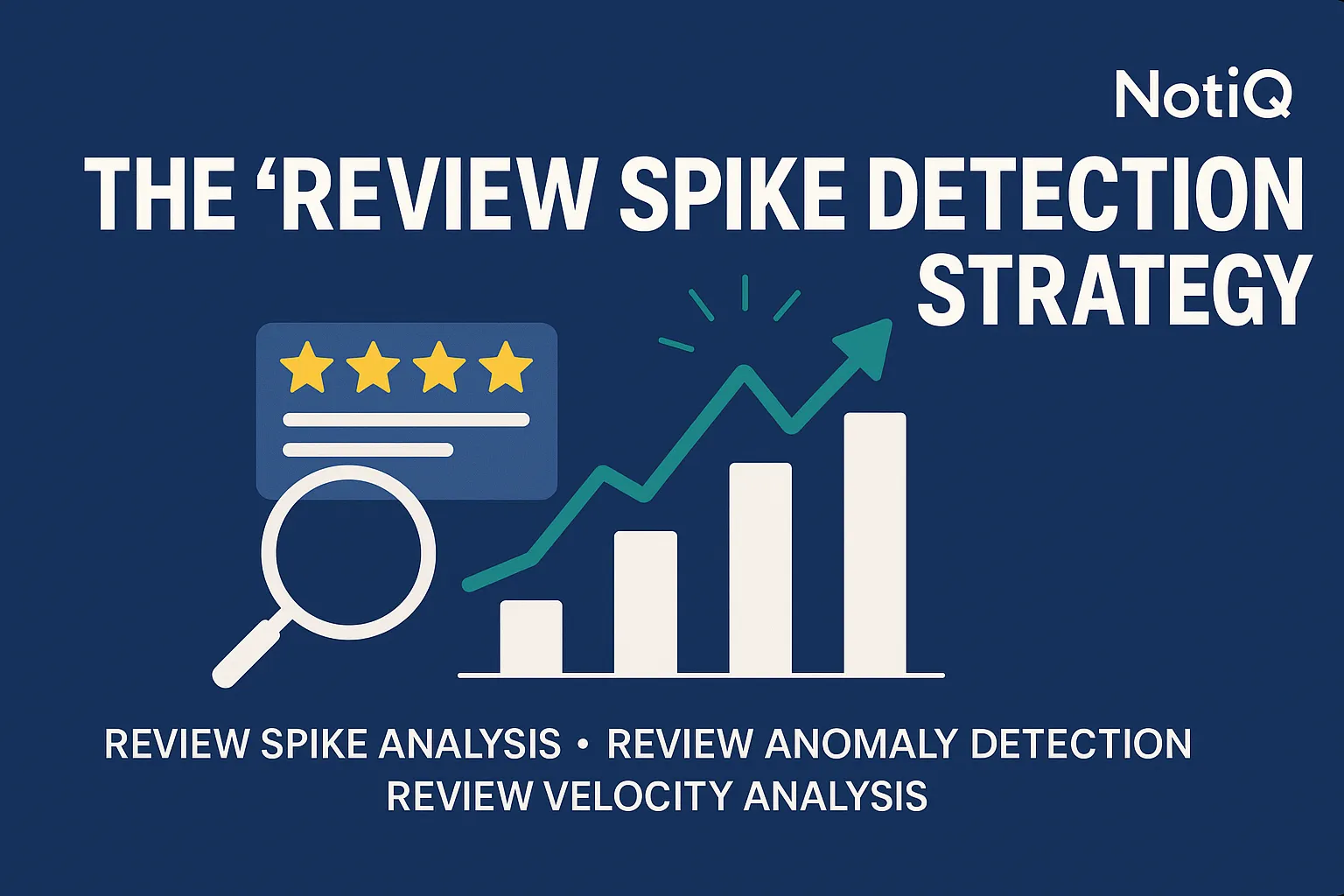
The “Review Spike Detection” Strategy for Identifying Active Campaigns
Learn how to use review velocity, thresholds, and validation checks to spot active campaigns before traditional reports do. This guide shows teams how to turn review spikes into competitive intelligence.
1. Introduction
Sudden review growth is often treated as a simple reputation metric—a reason to celebrate a higher star rating or panic over a sudden influx of complaints. However, for marketers, SEOs, agencies, and competitive intelligence teams, a sudden surge in reviews is much more. It is an early, highly visible signal of active campaigns, local market momentum, or aggressive competitor pushes.
The core problem most teams face is that they only see review volume changes after the fact. They lack a repeatable, systematic process to interpret whether these fluctuations reflect organic demand, expected seasonality, or hidden campaign activity. By the time traditional search engine ranking reports or traffic estimates reflect a competitor's strategic move, the window to proactively counter it has already closed.
This article will show you how to build a practical review spike detection strategy. By leveraging review velocity, geography, established thresholds, and rigorous validation checks, you can turn raw review data into actionable market intelligence. Unlike generic dashboards that focus purely on review management, activity detection frameworks position review spikes as a leading competitive-intelligence signal.
For teams looking to operationalize this approach,[Home](/)provides a broader workflow platform for monitoring signals, detecting sudden growth spikes, and orchestrating analysis faster than traditional SEO reporting.
2. What Review Spikes Actually Signal
A review spike is a sudden, statistically significant increase in the rate at which a business location receives customer reviews. To understand review spike analysis, you must separate raw review count from review velocity. A competitor with 5,000 total reviews might seem intimidating, but if they acquired 4,000 of those three years ago, their current momentum is stagnant. Review velocity analysis focuses on thetimingof new reviews, which reveals live market activity.
When analyzing unusual review velocity, the surges generally fall into four categories:
• Organic growth: A natural increase driven by operational improvements or viral brand awareness.
• Seasonal growth: Expected volume increases tied to holidays or peak service periods.
• Campaign-driven bursts: Surges resulting from targeted promotions, email blasts, or post-purchase review generation campaigns.
• Suspicious or manipulated surges: Inauthentic spikes generated by incentivized or fake review networks.
Review spikes often appear weeks before traffic-estimate tools or generic SEO reports update. Because reviews are a direct, real-time reflection of customer interaction, they act as an immediate footprint of local activity. Generic dashboards focus on answering "What is our average rating?" while a campaign detection framework asks, "Why did our competitor just get 50 reviews in Dallas this week?"
Review Spikes as a Leading Indicator of Market Activity
When a business launches a customer acquisition push, runs a local promotion, expands its services, or executes an aggressive offline campaign, review surges naturally follow. Active marketing campaign signals are frequently embedded in these localized review spikes.
It is crucial to connect review behavior to business activity without overstating causation. Spikes are signals to investigate, not definitive proof of a specific strategy on their own. For example, a clustered spike across several regional locations often implies a coordinated, market-wide campaign or new product rollout. Conversely, a single-location burst might point to a store-level initiative, a localized event, or a highly motivated local manager executing a review generation playbook. Campaign signal detection from reviews requires looking at the broader context of the surge.
Why This Matters for Local SEO, Reputation, and Competitor Monitoring
Reviews fundamentally dictate local trust and map pack visibility, making sudden changes commercially critical. For multi-location brands, local SEO review growth directly impacts foot traffic and conversion rates.
Monitoring these trends is not just about generic reputation advice; it is a core component of competitor review analysis. When a competitor begins dominating the local search results, it is rarely an accident. By utilizing Google reviews trend analysis, you can spot the exact moment a competitor turns on a review generation campaign, allowing you to match their operational cadence before they steal market share. Multi-location brands benefit the most from this location-level trend visibility, as it highlights exactly which markets require immediate defensive or offensive action.
Common Causes Behind Sudden Review Growth
Understanding what qualifies as a meaningful review spike starts with knowing the common catalysts. Likely causes include:
• Successful campaign activation: A new email or SMS review request sequence was just turned on.
• Operational improvements: A location fixed a major bottleneck, resulting in a sudden wave of unprompted positive feedback.
• Seasonal demand: A tax preparation service naturally spikes in April.
• Listing changes: A brand merged duplicate listings, causing a sudden influx of migrated reviews.
• Suspicious review generation: A business purchased fake reviews to artificially inflate their rating.
Each of these causes should be treated as a hypothesis category that you will test during the validation phase. Review anomaly detection must also account for industry density; a spike of 10 reviews in a week might be standard for a high-traffic restaurant but highly anomalous for a boutique B2B consultancy. Continuous review trend monitoring provides the baseline needed to tell the difference.
3. How to Build a Review Spike Map
To move from passive monitoring to active intelligence, you must build a review spike map. This practical framework organizes review activity by brand, competitor, location, and time.
By tracking the right dimensions—location, week or day, review count change, average rating shift, sentiment mix, and competitor comparison—you can visualize market momentum. Whether you use tables, heatmaps, timelines, or regional cluster maps, the goal is not just tracking reviews, but surfacing campaign footprints. A well-constructed map transforms scattered data into a clear review spike detection strategy.
Choose the Right Tracking Dimensions
To accurately map review spike detection by location and competitor, you need a minimum viable dataset. Your tracking system must include:
• Brand and location name
• Date range (segmented by week or day)
• Total review count
• Net new reviews (velocity)
• Average rating change
• Competitor benchmark data
Segmenting by location and week is the best starting point. Weekly views smooth out daily noise while keeping the data granular enough to spot campaign windows. Move to daily monitoring only for high-volume locations where the data justifies it. Geography and time-window choices ultimately determine your signal quality. If your windows are too broad (e.g., monthly), you will miss the exact start date of a competitor's campaign. Establishing a review velocity benchmark for competitors relies entirely on consistent, structured tracking using reliable review monitoring tools.
Map by Brand, Location, and Week
Structuring a simple review spike map for a specific market involves plotting locations on the Y-axis and weeks on the X-axis, filling the intersecting cells with net new reviews. This weekly view helps reduce noise while still surfacing distinct campaign windows.
When analyzing review spike maps, look for location clusters. If multiple nearby locations spike simultaneously, it highly suggests coordinated, regional marketing activity. Conversely, isolated spikes at a single location usually point to store-level initiatives, local management changes, or isolated anomalies. Mastering review velocity analysis means knowing how to read these geographic patterns.
Compare Competitors Side by Side
A true competitor review tracking system compares review movement across brands to identify which competitor is accelerating in which market. Focus on relative movement rather than absolute review volume. If Competitor A has 1,000 reviews and Competitor B has 200, but Competitor B just gained 50 reviews in a week while Competitor A gained 2, Competitor B is the active threat.
Standard SEO tools often miss this dynamic because they focus on lagging indicators like traffic estimates or map rankings rather than live review activity. Effective competitor review analysis requires workflows designed for intelligence discovery, not just reputation management. For broader insights into competitor monitoring and AI-powered research workflows, check out Blog to see how data-driven outreach and analysis intersect.
Create a Repeatable Review Spike Template
To maintain consistency, create a reusable framework or checklist that your team can apply every week. A standard spreadsheet or dashboard template should include columns for the tracking dimensions mentioned above, plus dedicated fields for notes and hypotheses.
Include a drop-down column for labels such as "seasonal," "campaign likely," "needs validation," or "possible fake/incentivized burst." This ensures that your review anomaly detection process is systematic. A repeatable template is the foundation of a scalable review spike detection strategy.
4. Set Baselines, Thresholds, and Timing Rules
Observation is not detection. To spot meaningful changes, you must define what counts as "normal" versus "abnormal." Review spike detection fails entirely without a clear understanding of baseline review velocity.
By using rolling time windows, market comparisons, and location cohorts, you can filter out false positives and focus on true signals. Because competitors are often weak on methodology, building an operational, analytical framework gives you a distinct advantage in activity detection.
Establish a Baseline for Normal Review Growth
Baseline review velocity is calculated using historical averages by location and competitor. Instead of comparing current review flow against a generic market average, compare a location's current velocity against its own recent 90-day trend.
Nuance is critical here. Newer locations, businesses in dense urban areas, and high-volume verticals (like coffee shops) will naturally have a higher baseline review flow than established locations in rural areas or low-frequency services (like roofing contractors). Accurate review trend monitoring relies on localized, context-aware review velocity analysis.
Define Practical Spike Thresholds
Once you have a baseline, you must define practical threshold logic. Avoid rigid, invented benchmarks (e.g., "anything over 5 reviews is a spike"). Instead, use adaptable frameworks. Practical thresholds might include:
• A sharp increase of 200% or more over the recent 4-week average.
• Multiple consecutive periods operating at 1.5x the normal baseline.
• Simultaneous surges of 50%+ above baseline across a cluster of regional locations.
Meaningful review anomaly detection combines magnitude, timing, and concentration. What qualifies as a meaningful review spike varies by industry, making a flexible review spike analysis framework essential.
Use Timing Rules to Separate Noise From Campaign Windows
Timing patterns reveal the nature of the activity.
• One-day bursts: Often the result of a single email blast, a localized event, or an unmoderated bot attack.
• Multi-week rises: Suggest a sustained operational push, a new automated post-purchase sequence, or an ongoing local promotion.
• Recurring weekly surges: Usually indicate a batch-processing workflow, such as a business sending out review requests every Friday afternoon.
Campaign-driven spikes typically have a visible start window and geographic concentration. Depending on the scale of the business, adjust your timing rules to prioritize weekly monitoring, scaling to daily tracking for enterprise-level activity detection.
Account for Seasonality and Market Context
Holidays, peak service periods, and cyclical demand create expected surges. Seasonality can distort spike interpretation if you are not prepared. Always compare current patterns with prior seasonal periods (e.g., comparing Q4 retail review velocity this year to Q4 of last year).
Seasonality should be treated as a context layer, not an excuse to ignore spikes. If a competitor's seasonal surge is 40% higher this year than last year, that is a critical insight for your Google reviews trend analysis.
5. Validate Organic vs Campaign-Driven Spikes
Validation is the trust layer of review spike detection. Without it, you risk misreading normal growth or manipulated, non-compliant reviews as campaign success.
To distinguish organic review growth from campaign-driven spikes, you must assess sentiment mix, source diversity, timing consistency, platform policies, and suspicious patterns. Emphasizing compliance and authenticity ensures your analysis remains grounded in reality.
Check Sentiment Mix and Review Composition
Real campaign-driven growth will increase volume, but it will rarely make every review look identical. When investigating a spike, look for abnormal patterns in star distribution. If a historically 3.8-star location suddenly receives fifty 5-star reviews with zero negative feedback in a week, validation is required.
Check for repetitive language, overly uniform praise, or a sudden lack of text (ratings-only). Compare the spike period with previous sentiment patterns at the same location. Authentic review trend monitoring acknowledges that real customers write with varied sentiment and detail.
Look for Source Diversity and Geographic Plausibility
Spikes originating from highly concentrated or illogical patterns require scrutiny. Location-level plausibility matters greatly. A sudden burst at a historically quiet location may be a meaningful signal of a new local manager, but it is also highly suspicious if the surrounding market is dead.
Check whether multiple nearby locations are rising naturally or if one massive outlier needs investigation. As noted in Wharton research on fake review alerts and geography, geographic clustering and suspicious patterns often correlate, making geographic plausibility a key factor in review velocity analysis.
Identify Platform and Policy-Related Distortions
Review volatility is not always customer-behavior volatility. Missing, filtered, delayed, or removed reviews can heavily distort apparent spike patterns. False positives often arise from duplicate listing merges, platform review moderation sweeps, delayed publishing by Google, or automated platform cleanups.
When analyzing Google Business Profile reviews, verify that the spike isn't just a backlog of delayed reviews finally publishing. Familiarize yourself with Google policy on fake engagement and unusual review patterns to better understand how platform moderation impacts review monitoring tools and anomaly detection.
Flag Fake or Incentivized Review Behavior Responsibly
Suspicious spikes deserve investigation, not public accusation. Fake or incentivized reviews reduce signal quality and create false maps of competitor strength.
Practical red flags include unusually large bursts in a narrow timeframe, repetitive phrasing across multiple accounts, abnormal reviewer behavior (e.g., accounts reviewing businesses across the country on the same day), and patterns that simply do not fit local demand. Always keep legal and platform-compliance implications in mind. For a deeper understanding of these risks, consult FTC guidance on fake review red flags and review Yelp suspicious review activity alerts to see how platforms handle non-compliant campaign signal detection from reviews.
6. Turn Review Signals Into Competitive Action
Review spike detection is only useful if it drives prioritization and action. Once a spike is detected and validated, you must move from analytics to application, integrating your findings into sales, local SEO, partnerships, expansion monitoring, and reputation response workflows.
Identify Active Campaigns Faster Than Traditional SEO Reporting
Review surges reveal live market activity weeks before rankings shift, traffic estimates update, or press releases are published. By treating reviews as a faster signal layer, you can intercept local or offline-heavy campaigns as they happen.
Active marketing campaign signals allow you to see where a competitor is spending their budget right now. While typical manual scraper tools simply pull raw data, a strategic review spike detection strategy—like the workflow orchestrated by NotiQ—interprets that data as live market momentum.
Prioritize Local SEO and Reputation Responses
When one market starts accelerating, local SEO and reputation teams must respond. If a competitor's review velocity spikes in a specific city, your team can:
• Update local landing pages to highlight competitive differentiators.
• Increase your own review-response velocity to maximize local engagement.
• Reinforce local offers, ads, or promotions in those active regions.
• Investigate the competitor's reviews to see what messaging, products, or offers are resonating.
Connecting local SEO review growth to daily reputation operations ensures you are never caught off guard.
Support Sales, Partnerships, and Market Intelligence
Sales and strategy teams can leverage competitor review surges to identify newly active markets. A sudden review spike at a competitor's B2B location might signal a new lead-gen push, a recent product launch, or an aggressive expansion strategy.
Competitive intelligence teams can use these spikes to time their own partnership outreach or adjust sales territories. If a competitor is clearly heavily investing in a specific region, your sales team should know immediately.
Build an Escalation Workflow for High-Signal Markets
To turn spikes into action, build an internal escalation workflow. A standard rule set should include:
• Watchlist: Automatically tag locations approaching threshold limits.
• Investigate: Review the raw data for context.
• Validate: Apply sentiment and compliance checks.
• Respond: Trigger local SEO or marketing counter-plays.
• Report: Distribute findings to leadership.
Define who owns each step—whether it is SEO, local operations, RevOps, or intelligence teams. To see how automation, watchlists, and signal escalation workflows can streamline this process, check out a Home.
7. Tools, Workflow Design, and Reporting
Translating this strategy into an operational system requires the right workflow design. The best approach combines continuous monitoring, anomaly detection, validation, and reporting.
Many tools in the market emphasize collection and response, but there is a significant gap when it comes to interpreting spikes as campaign signals. Building the right stack ensures you capture intelligence, not just data.
What to Measure Weekly vs Daily
For most teams, weekly tracking is the optimal default. It smooths out daily noise while providing timely insights. Weekly reporting should cover net new reviews, average rating shifts, and location cluster anomalies.
Daily tracking should be reserved for high-volume brands, enterprise locations, or highly volatile competitor markets. Daily metrics should focus strictly on sudden volume surges and immediate sentiment drops. Knowing how often should teams track review spikes prevents dashboard fatigue and keeps the focus on actionable review velocity analysis.
Reporting Format for Stakeholders
When summarizing findings for executives or growth teams, clarity is paramount. A stakeholder report should concisely detail:
• Where: The specific locations or regions that spiked.
• Who: Which competitors moved.
• Why: The likely cause (e.g., seasonal, new campaign).
• Confidence Level: How thoroughly the spike was validated.
• Action: The recommended strategic response.
Implement a simple scoring or label system (e.g., "campaign likely," "seasonal expected," "needs validation") to make competitor review tracking instantly digestible for leadership.
Differentiate From Generic Review Dashboards
Many review monitoring tools center entirely on collection, response workflows, or basic reputation health. They are not designed for campaign interpretation.
A strategic review spike detection strategy requires tools that offer AI enrichment, data verification, and compliance-aware analysis. Platforms like NotiQ fill this competitor-gap by focusing specifically on analytical positioning, identifying active campaigns, sudden growth spikes, and market momentum rather than just aggregating star ratings.
8. Future Trends in Review Activity Detection
As local search and competitive intelligence evolve, review activity detection is becoming more sophisticated. The shift toward AI-assisted anomaly detection and broader reputation intelligence means that review signals are becoming a foundational layer of the modern competitive monitoring stack.
AI-Assisted Detection and Signal Enrichment
AI-assisted anomaly detection is transforming how teams process review data. Instead of manually updating spreadsheets, AI can automatically flag unusual patterns, summarize the likely causes based on review text (e.g., "70% of new reviews mention the summer discount code"), and drastically reduce the time spent on manual tracking.
This directly addresses the pain point of noisy, time-consuming analysis, making review spike detection strategy faster and more accurate without relying on unverifiable product claims.
Reviews as One Layer in Competitive Intelligence
Review spikes are most powerful when paired with broader signals. In the future of competitive intelligence, review trend monitoring will be routinely combined with location footprint changes, pricing updates, local ad launches, and market expansion indicators.
Review activity is an early, high-frequency signal. By continuously monitoring it alongside other data points, brands can build a comprehensive, real-time map of their competitors' operational playbooks.
9. Conclusion
Review spikes are incredibly valuable, but only when treated as investigative signals tied to time, geography, and competitor context. By moving beyond raw review counts and focusing on velocity, you unlock a hidden layer of market intelligence.
To execute this effectively, you must map review activity, establish historical baselines, set practical thresholds, validate meaningful surges, and ultimately turn those findings into strategic action. Teams that systematically monitor review velocity can spot active campaigns, regional promotions, and market momentum long before teams relying solely on lagging traditional reports.
If you are ready to operationalize your signal monitoring and build a robust, compliant campaign detection workflow, explore how[Home](/)can transform your approach to competitive intelligence.
Frequently Asked Questions
- What is review spike detection?
- Review spike detection strategy is the process of identifying statistically unusual increases in review volume and interpreting what those surges reveal about active marketing campaigns, local demand shifts, or suspicious activity. It moves beyond basic reputation management into proactive review spike analysis.
- How can review spikes reveal active campaigns?
- Coordinated timing, distinct location clustering, and above-baseline growth strongly indicate organized efforts. When you know how can review spikes reveal active campaigns, you can spot local promotions, product launches, or targeted review-generation pushes in real time.
- How do you map review spikes across competitors?
- To build a review spike map, collect review velocity data by brand, location, and week. Compare net new reviews against historical baselines, looking for regional clusters and outliers to perform accurate competitor review analysis.
- What qualifies as a meaningful review spike?
- What qualifies as a meaningful review spike depends entirely on the baseline, timing, and market context. It is not about an absolute number of reviews, but rather a sharp, sustained deviation from a location's normal review velocity, requiring review anomaly detection to verify.
- How do teams distinguish organic review growth from campaign-driven spikes?
- Teams distinguish organic review growth from campaign-driven spikes by validating the data. This involves checking seasonality, analyzing sentiment mix, ensuring source diversity, reviewing timing patterns, and adjusting for platform-related review distortions during review trend monitoring.
- Which tools help with review activity detection?
- Effective review monitoring tools for this strategy must go beyond review collection. Teams need platforms that support velocity monitoring, anomaly detection, competitor comparison, and workflow reporting to enable true activity detection.
- How often should teams track review spikes?
- When determining how often should teams track review spikes, weekly tracking is recommended as the standard baseline. Daily checks should be implemented for high-volume enterprise brands or fast-moving markets where real-time review velocity analysis is critical.
Continue Reading
More articles you might find useful
Google Maps Prospecting for Commercial Waste Management Companies
Learn how commercial waste haulers can use Google Maps to find, qualify, and prioritize better local accounts. This guide shows how to build denser routes and improve outreach with waste-stream and service-area insights.
Read the article →
How to Find Local Businesses With Broken Website Links
Learn how to find local businesses with broken website links using Google Maps, quick validation checks, and proof-based outreach. This guide shows agencies how to turn visible site issues into qualified leads.
Read the article →
Google Maps Lead Generation for Signage Companies
Learn how sign companies can use Google Maps to find local prospects, identify visible signage gaps, and build a repeatable outreach system. This guide shows how to turn visual research into qualified leads without relying on paid ads or generic lists.
Read the article →Popular industry lead playbooks
Maps search examples and niche outreach for the verticals teams prospect most.