Technology
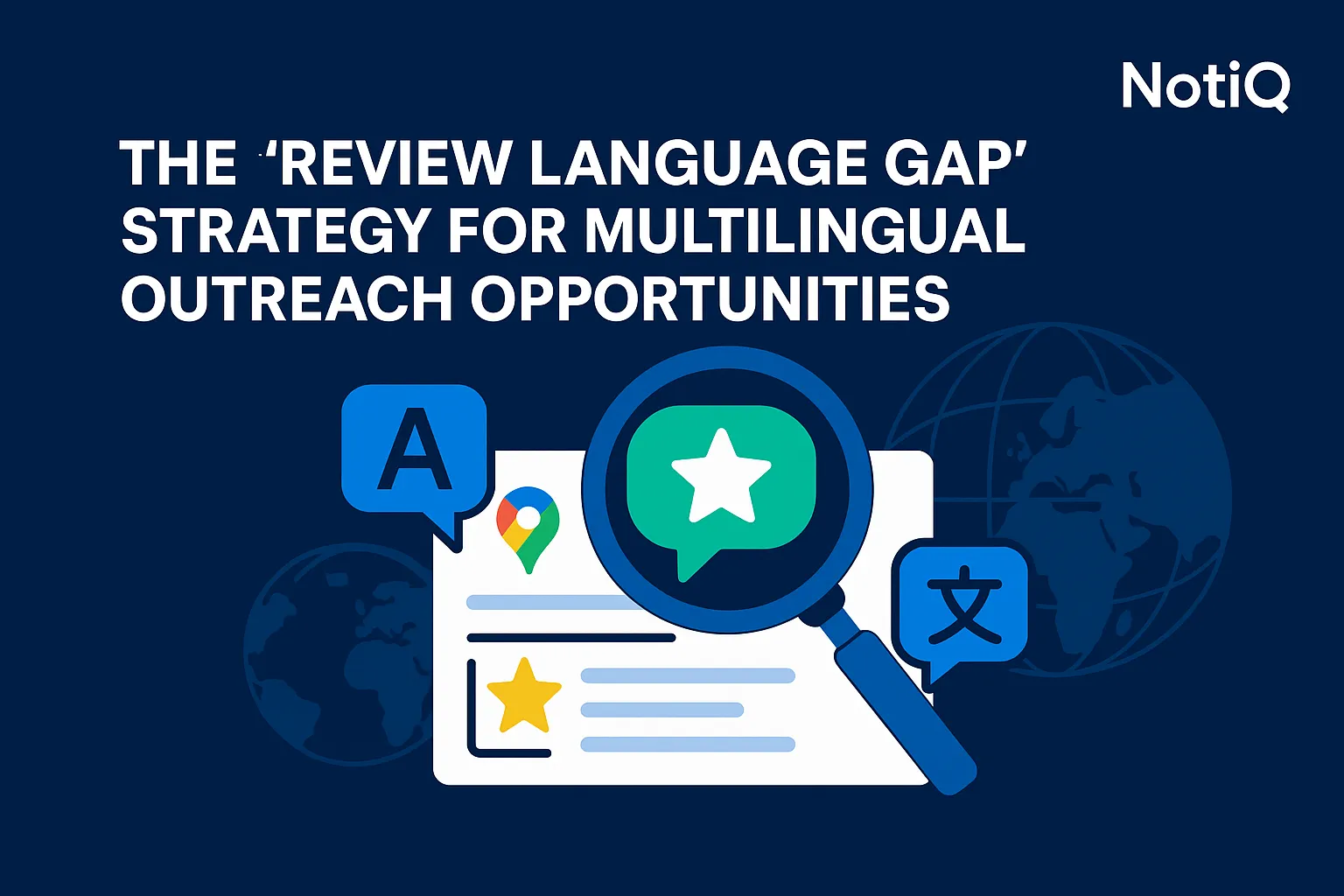
The “Review Language Gap” Strategy for Multilingual Outreach Opportunities
Discover how to turn multilingual review patterns into actionable local SEO, response, and outreach opportunities. This guide shows how to spot language gaps and prioritize the highest-impact fixes.
1. Introduction
Many businesses already have concrete proof of multilingual demand sitting plainly in their public reviews, yet they are entirely missing the opportunity to use it as an SEO, localization, or outbound signal. The problem is common: customers leave reviews in one language, while the business responds in another, publishes only one site language, or ignores the signal entirely.
This article will show advanced operators how to turn multilingual Google Maps and review patterns into a repeatable intelligence system. The core premise is simple but heavily underutilized: reviews, local SEO, and multilingual outreach should not be treated as separate workflows. By leveraging a review language gap strategy, advanced local SEO, growth, sales, and market expansion teams at multi-location or multilingual businesses can unlock hidden revenue and build localized trust.
Throughout this guide, we will explore a robust framework: how to audit your review language mix, compare it to response behavior and page localization, score the mismatch, and convert it into decisive action. With extensive experience in turning public signals into actionable research workflows and market intelligence,[NotiQ](/)serves as the workflow layer that can organize multilingual review research into repeatable execution. By observing these language signals, businesses can stop guessing about market demand and start acting on the data their customers are already providing.
2. What a Review Language Gap Is
A review language gap occurs when the customer review language distribution does not match a business’s visible communication stack. It is a highly specific customer language mismatch that reveals a disconnect between how customers naturally speak and how the business presents itself.
This mismatch typically appears across three distinct layers:
1. The language mix of the public reviews left by customers.
2. The owner's response language behavior.
3. The localization coverage of the business’s website or landing pages.
Strategically, this gap matters because it represents an unmet demand signal, creates trust friction, and leads to conversion leakage. For sales and growth teams, it also presents a highly targeted outreach personalization opportunity. Unlike standard multilingual SEO—which often relies heavily on keyword planning and search volume estimates—the review language gap strategy starts with customer-generated public language signals. It ties the concept directly back to observable local discovery journeys on Google Maps and Google Business Profile.
Why multilingual reviews are a stronger signal than assumptions
Review language reflects observable customer behavior rather than internal localization guesses. When businesses rely solely on demographic assumptions, they often miss the nuance of how local communities actually interact with their brand. Repeated non-primary-language reviews may signal sustained demand, not just a one-off anomaly.
The most useful insight here is not simply observing that "multiple languages exist" in your public feedback. The real value lies in identifying exactly where business communication lags behind customer reality. However, it is crucial to avoid overinterpreting tiny datasets. The strength of the voice of customer by language depends entirely on frequency, consistency, and context. Multilingual reviews act as potent market expansion signals only when they form a verifiable pattern.
Where the gap usually appears
Language gaps materialize in very predictable patterns across digital footprints. Common mismatches include:
• A high volume of Spanish reviews, but an English-only website.
• Multilingual reviews appearing on a listing, but no same-language owner responses.
• Localized landing pages exist, but review responses stay generic and default to the primary language.
• Strong maps visibility, but a weak language-fit conversion path that causes international or non-native users to abandon the booking process.
These patterns frequently emerge in industries like hospitality, healthcare clinics, SaaS, and local home services. This strategy sharply contrasts with generic review management playbooks that stop at applying basic response templates. True review response localization requires aligning the local SEO signals and multilingual outreach efforts with the actual language the customer used. To understand how businesses can effectively manage and respond to reviews on Google, you can refer to the Google Business Profile review management guidelines.
3. How to Audit Multilingual Review Signals
To capitalize on these insights, teams need a repeatable workflow for identifying language mismatches in public review environments. The process begins with ethical, compliant data collection from Google Maps and Google Business Profile, though other review sources can be used for pattern validation.
When auditing, you must extract:
• The review language.
• Review volume by language.
• Recency of the reviews.
• Review sentiment by language.
• Whether the business replied to the review.
• Whether the reply matched the reviewer’s language.
Always adopt a manual-first methodology before introducing automation. This validates patterns and prevents false assumptions. Furthermore, use only publicly observable geo-specific review patterns and avoid invasive personalization.
Step 1 — Capture the review language distribution
The first step is to group the reviews by language and count the percentage share per location or account. When analyzing Google Business Profile reviews language, what matters most is the ratio of primary language versus secondary language, the trend over time, and the concentration of languages by city, branch, or business category.
Look for repeated non-primary-language clusters rather than isolated, single reviews. To organize this, create a simple table with columns for location, total reviews, top languages, and the non-primary-language share. This foundational data turns raw multilingual reviews into actionable language signals.
Step 2 — Audit response behavior by language
Next, check whether the business responds to reviews at all, and more importantly, whether they respond in the same language as the reviewer. Same-language responses act as a powerful proxy for trust, attentiveness, and localization maturity.
Compare response behavior across different locations within the same brand to spot uneven execution. A customer language mismatch in the replies—or a complete lack of response—can severely damage local trust signals. Both no-response and wrong-language-response patterns indicate an immediate opportunity to improve review response localization. For best practices on engaging with customer feedback, consult the Google Business Profile review management guidelines.
Step 3 — Compare review languages to visible page coverage
Once you understand the review and response dynamics, compare the review language demand against the business’s website, local landing pages, and conversion pages. Check whether language options exist for the homepage, location pages, service pages, and booking or contact flows.
The core issue is not just translation availability, but whether the correct language path is visible, functional, and usable. A localized listing that links to a primary-language-only booking page creates instant friction. Proper multilingual local SEO ensures language-fit messaging throughout the entire user journey. For proper technical implementation, refer to the W3C guidance on language declarations for multilingual websites.
Step 4 — Validate signal quality before acting
Before acting on the data, you must validate the signal quality to avoid drawing weak conclusions from sparse data. Ensure there is enough review volume and consistency across time to justify a strategic shift.
Verify that the language demand aligns with the local market context and is relevant to the business category. Pair review evidence with broader market-level language context before prioritizing a market heavily for international lead generation or local market language targeting. For instance, you can look to official context on language use and English proficiency in U.S. communities to support why local language demand matters in real, physical communities. These market expansion signals must be grounded in reality.
4. Scoring Mismatch by Reviews, Responses, and Pages
To turn a fuzzy observation into a prioritization model that advanced teams can use across accounts or locations, you must score the language mismatch intensity. This three-part scoring framework is based on the review language mix, response language alignment, and localization coverage on key pages.
This score is designed for prioritization, not absolute certainty. Keep the first version of this model simple so teams can actually use it to analyze public review datasets effectively.
Scoring factor 1 — Review language demand
Assign more weight to locations with consistent non-primary-language review volume. Key factors to consider include the percentage of reviews in a secondary language, the number of recent reviews in that language, and the review sentiment by language. A high review count combined with high recency usually deserves significantly more attention than historical-only patterns. This ensures you are acting on current multilingual reviews and valid market expansion signals.
Scoring factor 2 — Response language alignment
Score whether the business responds in the same language, another language, or not at all. Use this layer to estimate trust friction and operational readiness. Poor response alignment often creates immediate outreach angles around reputation management and conversion support. Excelling here is the foundation of review response localization and optimizing local conversion workflows through accurate language signals.
Scoring factor 3 — Localization coverage across visible pages
Assess whether landing pages, local pages, or booking and contact pages exist in the relevant language. Define "coverage" as both presence and usability—not just scattered, machine-translated fragments. Strong review demand combined with weak page coverage is one of the clearest signs of a customer language mismatch resulting in conversion leakage. To validate multilingual page audits and ensure proper technical setup for multilingual SEO, use the W3C i18n Checker for multilingual page audits.
Example scoring rubric and prioritization tiers
A sample framework should categorize opportunities into low, medium, and high tiers to guide account prioritization and market prioritization.
• High opportunity: Strong multilingual reviews + weak same-language responses + no matching landing pages.
• Medium opportunity: Multilingual demand is visible, but partial coverage or inconsistent responses exist.
• Low opportunity: Multilingual demand is visible and is already well served by the business.
This model serves as a decision-support framework, not a guaranteed correlation between review language and revenue outcomes. However, executing this review language gap strategy allows teams to confidently prioritize accounts, cities, or locations.
5. Turning Language Gaps into SEO and Outreach Actions
With the audit and scoring complete, teams must convert these findings into practical execution across SEO, localization, and sales. The transition from "gap" to "risk" to "action" is where the real value lies. One public signal can inform content, responses, and outbound messaging simultaneously. By operationalizing multilingual review intelligence into a usable workflow, businesses can master multilingual outreach and international outreach personalization based on real local SEO signals.
SEO actions — fix the conversion path, not just the listing
Language-gap findings must directly influence local landing pages, service pages, and multilingual content priorities. Determine which pages to localize first based on the highest scoring gaps. Align visible language options with actual review demand, and strengthen location-level relevance. Multilingual review patterns provide the exact justification needed for where to invest in localized page creation before attempting broader, more expensive market expansion. This is the essence of data-driven multilingual local SEO and acting on geo-intent SEO signals.
Reputation actions — improve trust through same-language engagement
Businesses can use review language data to drastically improve owner response workflows. Responding in the customer’s language signals attentiveness and builds localized trust. Establish clear team workflows, native-speaker templates, and quality control processes for multilingual responses. Generic response templates fail to capture customer engagement; language-fit is the strategic lever that turns review response localization into a competitive advantage.
Outreach actions — personalize without sounding invasive
Sales and growth teams can reference public language patterns ethically to drive multilingual outreach. Use soft, pattern-based messaging rather than overly specific or creepy citations of individual reviewers.
Effective messaging angles include highlighting visible multilingual demand, pointing out uneven language coverage, and offering solutions to improve trust and conversion. The insight should feel strategic and helpful, not accusatory of a customer language mismatch. For guidance on crafting ethical, personalized sales personalization lines based on public signals, visit Repliq.
Cross-functional workflow for SEO, localization, and sales teams
A single audit should feed multiple teams rather than staying trapped in a local SEO silo. A mature workflow looks like this:
1. Research collects the public review datasets.
2. SEO validates market relevance and local conversion workflows.
3. Localization checks page coverage.
4. Outbound sales prioritizes accounts.
5. The reputation team updates response protocols.
This integrated approach is where AI workflow orchestration shines. To see how to orchestrate research, scoring, enrichment, and action across teams, explore[NotiQ](/). For broader personalization and outbound workflow strategy, you can also reference the Repliq blog. NotiQ's practical experience in converting public signals into repeatable workflows is vital where SEO research and outbound execution overlap.
6. Competitor Benchmarking and Market Prioritization
The review language gap strategy is not just for self-audits; it is a powerful tool for choosing which markets or accounts deserve attention first. The real advantage emerges when comparing multiple businesses, locations, or competitors in the same geography. Treating reviews, multilingual SEO, and localization as a unified dataset provides a major differentiator in competitor benchmarking and analyzing geo-specific review patterns.
How to benchmark competitors by language readiness
Compare competitor clusters based on multilingual review density, response language behavior, availability of localized location pages, and visible language-fit conversion paths. A competitor with high multilingual review demand but poor response and page coverage is highly vulnerable. Conversely, a competitor with strong alignment across their local SEO signals and competitor local presence validates the commercial relevance of that specific language market.
Using geography and category to find stronger opportunities
Certain cities, neighborhoods, or business categories will show stronger multilingual patterns than others. Verticals like clinics, hospitality, SaaS, and local home services are prime areas for testing.
Teams can prioritize based on language density, commercial value, ease of localization, and competitive weakness. These cross-border lead generation and local market language targeting efforts can be further supported by using U.S. Census language-use data for market prioritization to validate the market expansion signals.
What competitors usually miss
Most competitors operate in silos: review management content focuses purely on replying, multilingual SEO focuses on site structure, and translation focuses on language quality. Very few connect all three into a unified system for prospecting, sales personalization, and prioritization. The true advantage lies in AI enrichment, verification, and intelligent workflow design rather than generic manual data scraping.
7. Tools, Validation, and Workflow Tips
Advanced teams do not need expensive, overly complex tooling to start executing this strategy. What is required is a consistent method for analyzing public review datasets and performing multilingual page audits through structured workflow automation.
Minimum viable audit stack
Begin with a lightweight process: use basic review collection, spreadsheet scoring, and manual page checks. The initial goal is pattern recognition and account research, not perfect automation. Document the location, language share, response behavior, and page coverage in a single sheet or dashboard to track the Google Business Profile reviews language and execute the review language gap strategy effectively.
Validation and compliance guardrails
It is imperative to use public, observable signals responsibly. Avoid overclaiming what review language proves, making invasive outreach references, or assuming that all multilingual demand requires a massive, full-scale localization investment. Always apply verification, sampling, and cross-checking before taking strategic action. Ethical personalization relies on compliant data validation of public signals.
8. Future Trends in Multilingual Review Intelligence
As discovery platforms evolve, the strategies built on public customer language signals will become more sophisticated. Adopting this strategy now creates a distinct competitive advantage in review intelligence and multilingual search.
AI-assisted summarization by language
Review sets will increasingly be summarized by language cluster to accelerate research. The value is not merely translation; it is identifying recurring friction, trust patterns, and unmet demand by specific audience segments. AI-assisted review summarization by language will deeply integrate into prospect research, market intelligence, and account prioritization workflows, allowing teams to analyze review sentiment by language at scale.
Convergence of reputation, SEO, and outbound
Review data is rapidly becoming a shared source of truth for multiple teams. As multilingual discovery grows, strategies built on public customer language signals will become standard practice. The review language gap method serves as a highly practical, early framework for this shift, uniting local SEO signals, sales personalization, and multilingual outreach.
9. Conclusion
Multilingual reviews can reveal massive hidden demand, but only if teams take the time to compare review language to owner responses and page coverage. The review language gap strategy is not just a localization concept; it is a comprehensive prioritization system for SEO, localized trust, and outbound sales.
To succeed, businesses must audit review-language patterns, validate signal strength, score the mismatch intensity, prioritize accounts or markets, and execute decisively across SEO, responses, and outreach. Do not leave this as ad hoc research. To systematize your multilingual outreach and market prioritization, explore how[NotiQ](/)can help operationalize your multilingual review intelligence workflows today.
Frequently Asked Questions
- How can multilingual reviews reveal outreach opportunities?
- Multilingual reviews reveal observable language demand that may not be reflected in the business’s site, responses, or sales messaging. The opportunity for multilingual outreach is strongest when these language signals show that the review-language demand is consistent, yet underserved by the business.
- What are language signals in reviews and maps listings?
- Language signals are visible patterns in review language, response language, listing behavior, and localization coverage. To effectively harness these local SEO signals and Google Maps reviews language data, they must be analyzed in combination rather than in isolation.
- How do you identify a review language gap in local markets?
- You identify a review language gap strategy by using an audit framework that assesses review distribution, response alignment, and page coverage comparison. This must always be paired with local market language targeting validation and category context to ensure the customer language mismatch is a genuine opportunity.
- Can Google Maps review languages indicate unmet demand?
- Yes, Google Maps reviews language can indicate potential unmet demand, especially when repeated consistently over time. However, these market expansion signals should always be validated with broader market context and conversion-path analysis to avoid overstating causality.
- What tools help analyze language mismatch opportunities across locations?
- To analyze these opportunities, teams can use review collection tools, simple scoring sheets, multilingual page audits, and workflow automation systems. These tools help operationalize public review datasets into a structured process for research, enrichment, and action.
Continue Reading
More articles you might find useful
Google Maps Prospecting for Commercial Waste Management Companies
Learn how commercial waste haulers can use Google Maps to find, qualify, and prioritize better local accounts. This guide shows how to build denser routes and improve outreach with waste-stream and service-area insights.
Read the article →
How to Find Local Businesses With Broken Website Links
Learn how to find local businesses with broken website links using Google Maps, quick validation checks, and proof-based outreach. This guide shows agencies how to turn visible site issues into qualified leads.
Read the article →
Google Maps Lead Generation for Signage Companies
Learn how sign companies can use Google Maps to find local prospects, identify visible signage gaps, and build a repeatable outreach system. This guide shows how to turn visual research into qualified leads without relying on paid ads or generic lists.
Read the article →Popular industry lead playbooks
Maps search examples and niche outreach for the verticals teams prospect most.