Technology
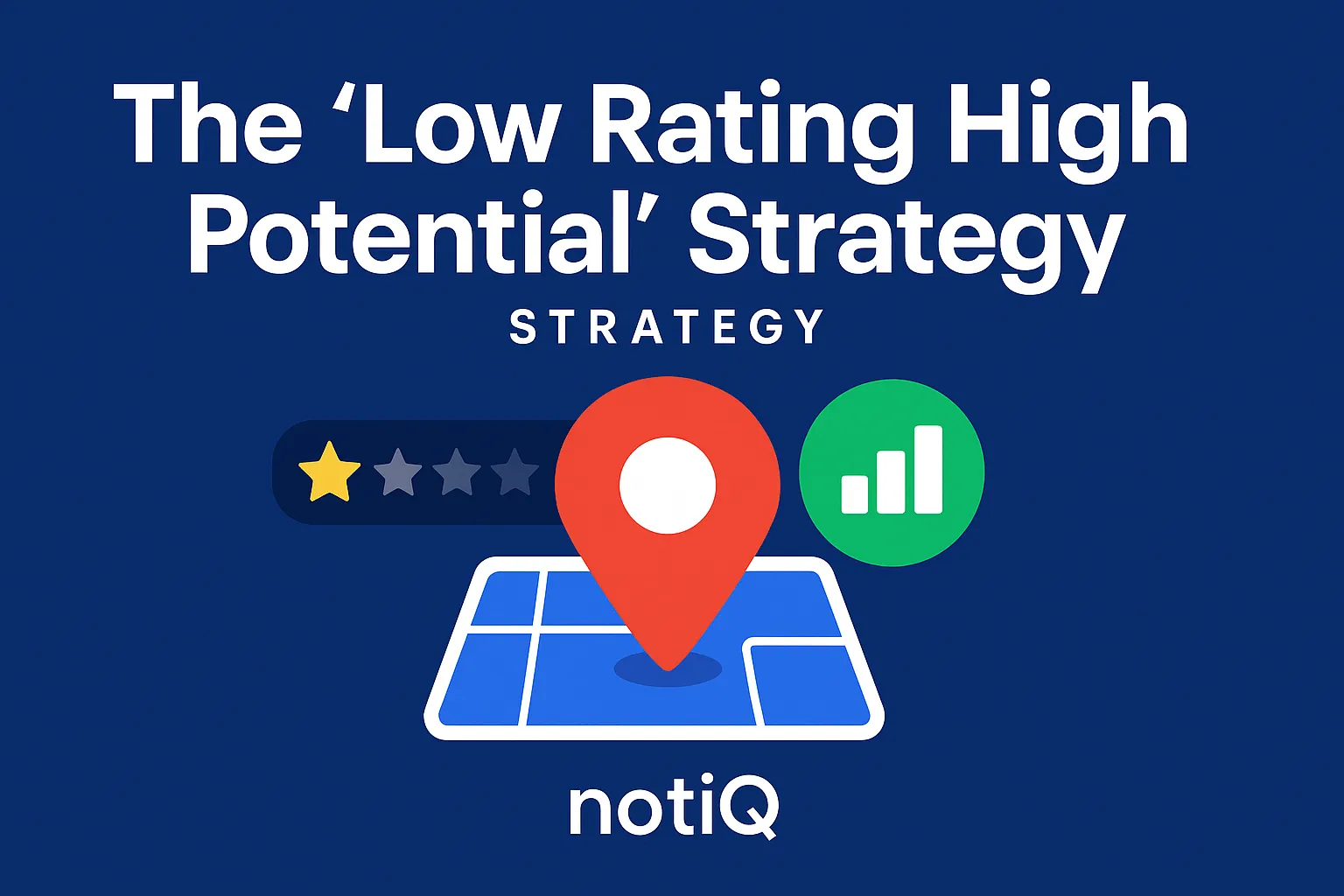
The “Low Rating High Potential” Strategy Using Google Maps Data
Learn how to find low-rated local businesses that still have strong upside using Google Maps, reviews, GBP gaps, and website signals. This guide shows how to qualify turnaround opportunities and personalize outreach with visible evidence.
1. Introduction
Most Google Maps prospecting guides stop at list building, but the better opportunity is often hiding in plain sight: businesses with clear demand, weak reputation signals, and visible issues you can actually help fix. Generic Google Maps lead generation workflows prioritize volume over qualification, resulting in outreach that feels like spam. This article will show you how to spot low-rated local businesses that are still strong turnaround opportunities.
By combining star ratings, review sentiment, profile quality, website issues, and local demand indicators, you can identify “low rating, high potential” leads. This definitive blueprint is designed for agencies, consultants, and outbound growth teams selling local SEO, reputation management, Google Business Profile (GBP) optimization, or website conversion improvements.
In this guide, you will learn the framework for what makes a lead promising, which signals to review, how to separate recoverable from structural issues, how to score prospects, and how to personalize your outreach. To operationalize this method, systems like[NotiQ](/)provide a workflow for turning public Maps, review, and website audit signals into opportunity-driven outreach grounded in visible evidence.
2. What Makes a Low-Rated Business a High-Potential Lead
A low rating alone is not enough to qualify a prospect. The core qualification logic behind finding turnaround opportunities is that a great lead usually has demand signals suggesting the market wants their service, but trust and conversion signals showing the business is underperforming.
There is a distinct difference between a fundamentally "bad business" and a "fixable business." Low-rated business leads are only useful when paired with signs of recoverability. The best-fit pattern involves businesses with meaningful review volume, active category demand, and visible profile or website gaps. This approach vastly outperforms generic scraped lists because it gives your outreach context, urgency, and a highly specific service angle. While standard data extraction workflows collect contact information without indicating upside, this strategy focuses entirely on identifying high-potential local businesses that can actually benefit from your intervention.
The Demand + Dissatisfaction Pattern
The ideal lead profile has enough reviews to trust the signal, enough visibility to indicate real demand, but enough negative sentiment to show lost revenue potential. Review count matters just as much as the rating itself. A low rating with 150 reviews indicates a much stronger opportunity than a low rating based on only three reviews.
Poor ratings often mean, “there is demand here, but execution is weak.” When you find this pattern, the visible upside is clear. A targeted review recovery strategy can lead to more calls, more bookings, better click-through rates from Maps, and stronger local trust. These reputation improvement leads represent businesses that are already generating foot traffic or inquiries but are failing to convert them due to manageable friction points.
Why Generic Lead Lists Miss the Best Opportunities
Bulk prospecting tools are optimized for quantity, not strategic fit. Contact data alone does not reveal whether a business has a fixable issue, an urgent pain point, or a measurable upside. A generic Google Maps scraper for leads might give you 1,000 emails, but it won't tell you which of those businesses are bleeding revenue due to an unoptimized profile.
This is where a qualification-first workflow shines. By using platforms like NotiQ, your approach shifts from scrape-first to strategy-first. Instead of blindly blasting generic pitches, you are identifying Google Maps lead generation targets based on visible business signals, allowing you to highlight highly relevant local SEO opportunities.
3. The Core Signals to Check in Google Maps and Reviews
To identify underperforming local businesses with recoverable potential, you must evaluate prospects across multiple layers: ratings, review patterns, owner behavior, profile quality, website quality, and local demand clues. This is a practical audit checklist. No single signal should make the decision on its own; instead, look for intersecting patterns that reveal a clear path for Google Business Profile optimization and a review recovery strategy.
Star Rating and Review Count
A low rating indicates a trust gap, but rating thresholds should be interpreted in context rather than as rigid rules. Review volume directly affects your confidence in the signal. A 3.2-star rating with 200 reviews is a highly reliable indicator of systemic friction, whereas a 2.0-star rating with two reviews is statistically insignificant.
How low should a rating be before it becomes a viable lead? There is no universal threshold. Instead, look for a pattern-based assessment. A 3.8-star rating in a highly competitive market where competitors average 4.8 stars is a massive liability. To understand why these metrics are so critical for local visibility and trust, you can review Google’s local ranking factors. When targeting low rating leads maps, the goal is to find bad review local businesses where the rating is actively suppressing an otherwise healthy demand curve.
Review Sentiment and Repeated Complaint Themes
You must analyze the content of the reviews, not just the average rating. Repeated themes reveal fixable issues. Look for patterns such as response delays, rude staff behavior, poor communication, booking friction, or inconsistent expectations.
Patterns across multiple reviews are infinitely more actionable than isolated complaints. Distinguish between one-off emotional reviews and repeated trust or conversion problems. According to research on complaint handling and customer loyalty, structured recovery processes can materially affect customer loyalty and business outcomes. By analyzing review sentiment, you can identify prime reputation management prospects who need a formalized system for handling customer reviews.
Owner Responses and Reputation Recovery Signals
Owner responses reveal whether a business is ignoring, mishandling, or actively managing customer dissatisfaction. Unanswered negative reviews are one of the strongest outreach angles for agencies offering reputation management or process improvement.
Conversely, thoughtful response behavior may indicate the business is coachable, engaged, and ready for professional help. Proper response protocols are vital; you can reference Google’s guidance on managing customer reviews to understand best practices. Businesses that fail to manage customer reviews effectively are prime reputation improvement leads and ideal candidates for a comprehensive review recovery strategy.
Google Business Profile Completeness and Local Trust Signals
Always review profile basics: categories, business descriptions, photos, hours, service details, and listing completeness. An incomplete or weak profile amplifies the damage of a low rating by further reducing trust and conversion.
Profile quality often creates quick-win opportunities for agencies. Adding missing information, optimizing categories, and uploading high-quality photos align directly with Google’s local ranking factors. These gaps represent immediate Google Business Profile optimization tasks and high-value local SEO opportunities for Google Business Profile lead generation.
Website Quality and Conversion Friction
A Maps listing should never be analyzed in isolation from the business website. Check for outdated design, slow page load speeds, weak calls to action, poor mobile experiences, broken forms, and missing trust elements.
A poor website turns Maps traffic into wasted demand. If a business has managed to rank locally but sends users to a broken site, they are a phenomenal turnaround opportunity. Website conversion improvements can yield immediate ROI for local business leads, making conversion optimization a highly compelling pitch.
4. How to Qualify Recoverable vs Structural Problems
To avoid wasting time, you must determine if a business can likely recover through visible, fixable changes, or if their problems are deeper than your service can solve. You must separate operational noise from recurring structural breakdown. This distinction is exactly where most Google Maps prospecting advice falls short when hunting for reputation management prospects and turnaround opportunities.
Signs the Problems Are Likely Recoverable
Indicators of a recoverable business include mixed review sentiment, recent negative trends after historical success, absent owner responses, incomplete profiles, outdated websites, and clear trust gaps.
Businesses with decent demand and poor marketing execution represent the best turnaround candidates. Often, customer expectations are simply mismanaged rather than the core service being fundamentally broken. These high-potential local businesses are perfect targets for a review recovery strategy and advanced Google Maps lead generation.
Signs the Problems May Be Structural
Warning signs of structural failure include severe safety complaints, legal or ethical concerns, persistent fraud accusations, or deep operational failures that fall entirely outside the scope of marketing.
These prospects have a low probability of success, even if their metrics look attractive on the surface. Some bad reviews point to fixable communication issues, while others point to a broken business model. When assessing unreliable, manipulated, or problematic review patterns, always refer to Google review policy guidelines and the FTC guidance on review and testimonial rules. Avoid low-rated business leads that are structurally doomed or violating compliance standards.
How to Distinguish Marketing Problems from Service Delivery Problems
Categorize visible issues into specific buckets: reputation and response management, GBP optimization, website conversion, local SEO visibility, and operational/service quality.
Map each visible issue to a service you can actually deliver. Your outreach should focus strictly on solvable business outcomes. Do not attempt to diagnose internal operations beyond public evidence. A local SEO audit for small businesses should highlight Google Business Profile optimization and conversion optimization, not attempt to fix their supply chain.
Industries Where Low Ratings Can Still Mean High Opportunity
Some local categories sustain demand even with weak ratings because the need, urgency, or market size remains strong. Plumbers, emergency towing, locksmiths, and property management often see persistent local demand despite visible service gaps.
Assess these high-potential local businesses at a strategic level. Look for categories where consumers have no choice but to book a service. Finding businesses with poor reviews near me in these high-urgency niches often yields highly lucrative local SEO opportunities.
5. Building a Simple Lead Scoring and Audit Workflow
The goal of this strategy is not perfect accuracy, but better prioritization than generic list scraping. By building a practical score using only visible public, legally accessible signals, you can prioritize prospects at scale. Systems like[NotiQ](/)act as the workflow layer that helps collect, organize, and act on these signals, keeping the framework simple enough for agency teams and SDRs to use consistently for low rating leads maps.
The Six Inputs to Score
Define your scoring model using six core inputs:
1. Star rating
2. Review count
3. Sentiment themes
4. Owner responses
5. GBP completeness
6. Website quality
Add local demand indicators as a contextual multiplier. Each factor matters because it reveals the urgency, upside, and recoverability of the prospect. This structured approach elevates Google Maps lead generation by turning raw data into actionable review sentiment and Google Business Profile optimization targets.
A Simple Prioritization Framework
Use a practical scoring system—Low, Medium, or High Opportunity—rather than faking numerical precision. Teams can use CRM tags like “high demand + weak trust,” “profile gap,” or “website friction.”
This framework makes handoff and outreach vastly easier across sales and delivery teams. By clearly labeling turnaround opportunities, you ensure your outbound team is only contacting highly qualified local business leads with a tailored Google Maps prospecting strategy.
What a One-Page Audit Should Include
A minimum viable audit must include: business name, category, location, star rating, review count, top negative themes, owner-response status, GBP gaps, website issues, and a recommended outreach angle.
Include screenshots or snippets from public reviews as visible evidence for your outreach personalization. This creates a much stronger prospect record than a simple exported lead list, instantly positioning you as an expert conducting a local SEO audit for small businesses, rather than a spammer. It clearly identifies reputation management prospects for targeted Google Business Profile lead generation.
Workflow Tips for Manual Review, Enrichment, and CRM Handoff
Combine manual review with structured enrichment and detailed notes. Define clear operational steps: decide who reviews leads, who approves the strategic fit, and how the gathered evidence gets passed to the outbound team.
Leverage AI enrichment to verify data and maintain compliance. This workflow solves the key gaps found in competitor analysis, blending AI-assisted local lead scoring with intelligent outbound workflow and robust prospecting intelligence.
6. Using Personalized Outreach Based on Visible Issues
The best outreach mirrors exactly what the prospect can already see in their own reviews, profile, and website. Personalization must be rooted in public evidence, not vague claims. Tie each outreach angle to a likely business outcome, such as more calls, more bookings, or restored trust. Tools like Repliq can serve as a powerful resource for turning these review, profile, and website findings into customized first lines for your Google Maps lead generation and review recovery strategy.
Best Outreach Angles for Low-Rated but Recoverable Leads
Focus on message angles that highlight unanswered negative reviews, weak profile completeness, outdated website experiences, or a clear mismatch between demand and trust signals.
Saying, “You’re losing customers because of [X visible issue]” is infinitely stronger than a generic “We help local businesses grow.” Keep the tone consultative and entirely evidence-based. This personalized audit-led outreach directly targets reputation improvement leads and uncovers immediate local SEO opportunities.
How to Reference Reviews Without Sounding Aggressive
Mention repeated themes respectfully and frame them as opportunities for recovery. Your outreach must avoid shaming the business owner; instead, focus on solvable gaps.
Use wording that shows observation, not accusation. For example, “I noticed a few recent clients mentioned booking delays” is better than “Your booking process is terrible.” Recognizing that bad Google reviews signal sales opportunities allows you to approach customer reviews with a constructive review recovery strategy.
Matching the Offer to the Visible Problem
Align each identified issue with a specific service: a review-response process, GBP optimization, local SEO, website CRO, or booking funnel fixes.
Relevance comes from matching the offer to the exact visible bottleneck. Better qualification naturally improves conversion because the problem-offer fit is obvious to the prospect. If they have a great profile but a broken site, pitch website conversion improvements. If they have a great site but terrible reviews, pitch reputation management prospects. Tailor the Google Business Profile optimization to the exact gap.
Outreach Examples and First-Line Ideas
Use framework-based first-line patterns based on review themes, profile gaps, and website issues.
• Review Theme: "I noticed your Maps listing is getting great traffic, but a few recent reviews mentioned friction at the front desk..."
• Profile Gap: "I was looking for [Category] in [City] and saw your listing, but noticed your service hours and booking link were missing..."
• Website Issue: "Your Google reviews show people love your work, but the mobile site took a while to load when I tried to find your contact form..."
Using review snippets, category context, and trust gaps personalizes the introduction perfectly. For more outreach personalization and outbound execution ideas, explore the Repliq Blog to refine your personalized lines for Google Maps prospecting and low-rated business leads.
7. Tools & Resources for Running the Strategy
This strategy requires more than simple scraping; it requires qualification, evidence gathering, and workflow consistency. To operationalize this method, you need systems that handle orchestration.[NotiQ](/)acts as the orchestration layer for finding local businesses with visible, fixable issues and turning them into actionable outreach opportunities, far surpassing standard Google Maps scraping tools.
What the Workflow Needs to Capture
Your workflow must collect rating data, review notes, profile gaps, website observations, and outreach-ready summaries. Stress evidence-based prospecting rather than relying on raw data exports. This ensures your prospecting intelligence is accurate, enabling deep review analysis and precise Google Business Profile optimization.
Why Qualification Beats Raw Extraction
Strategic qualification easily beats the scrape-and-blast approach common in the local agency space. Quality signals create stronger messaging, better prioritization, and highly credible outreach. A generic Google Maps scraper for leads provides noise; a qualified workflow provides true turnaround opportunities and high-converting local business leads.
8. Future Trends in AI-Assisted Local Lead Qualification
Local prospecting is rapidly moving from generic list generation toward problem-aware lead scoring. AI-assisted local lead scoring, review sentiment analysis, and hyper-personalized outreach using public SERP and website signals are the next evolution of local lead generation.
From Bulk Prospecting to Evidence-Based Opportunity Scoring
Sales teams increasingly need prioritization, not just raw data. Combining public business signals creates commercially useful prospect lists. Identifying turnaround opportunities through advanced Google Maps lead generation is now the definitive prospecting strategy for modern agencies.
Why This Matters for Agencies and Growth Teams
This trend connects directly to measurable outcomes: stronger response rates, more relevant audits, and better-fit clients. Opportunity-led outreach supports both sales efficiency and service delivery alignment, ensuring outbound growth teams only spend time on genuine local SEO opportunities and highly qualified reputation management prospects.
9. Conclusion
The best Google Maps leads are not simply local businesses you can find on a map, but businesses with visible, fixable issues and clear signs of upside. By validating demand, inspecting ratings and review themes, checking profile and website quality, and separating recoverable from structural problems, you can score the opportunity and personalize outreach based entirely on public evidence.
This is a qualification-first system, not a generic scraping tutorial. Stop blasting generic emails to unverified lists. Start identifying the friction points that are costing local businesses money, and offer to fix them. To operationalize this workflow and turn Maps, review, and website signals into practical prospecting intelligence, explore[NotiQ](/)to start identifying low-rated, high-potential local leads today.
Frequently Asked Questions
- How do you find low-rated businesses on Google Maps?
- Search by category and location, review the average rating and review count, and then inspect the profile, reviews, and website quality. Finding them is easy; qualifying them properly based on visible signals is the real advantage in Google Maps lead generation when searching for low rating leads maps.
- What makes a low-rated business a high-potential lead?
- Strong turnaround prospects typically show active market demand paired with visible, fixable issues in their reviews, profile quality, or website conversion. Low ratings alone do not equal an opportunity; they must be paired with recoverability to be considered high-potential local businesses and true turnaround opportunities.
- How can agencies use Google Maps data to identify turnaround opportunities?
- Agencies can combine star ratings, sentiment patterns, owner responses, GBP completeness, and website friction into a unified lead score. This public data forms the foundation of a highly targeted Google Maps prospecting campaign aimed at prime reputation management prospects.
- Which industries have the best low-rating lead potential?
- Categories with stable, urgent local demand (like emergency home services, auto repair, and property management) often have visible service or trust gaps but remain strong candidates. Assess local SEO opportunities based on demand and recoverability rather than relying on a rigid list of high-potential local businesses.
- What should you check before contacting a low-rated local business?
- Always check the star rating, review volume, repeated complaint themes, owner responses, GBP completeness, and website quality. Ensure that the visible issues align perfectly with the Google Business Profile optimization or review recovery strategy services you provide.
Continue Reading
More articles you might find useful
How to Find Businesses With High Review Volume but Low Ratings
Learn how to find visible local businesses with lots of reviews but weak ratings using Google Maps signals, review trends, and owner response gaps. This blueprint helps agencies prioritize stronger reputation management leads and personalize outreach.
Read the article →
Google Maps Prospecting for Commercial Landscaping Companies
Learn how commercial landscaping companies can use Google Maps to find higher-fit commercial property leads, qualify visible need, and build denser service routes. This guide breaks down a practical workflow for smarter prospecting and better contract opportunities.
Read the article →
How to Find Businesses With Weak Google Maps Descriptions
Learn how to find businesses with weak Google Maps descriptions and turn visible GBP gaps into qualified local SEO leads. This guide covers audit criteria, scoring, and outreach angles you can use at scale.
Read the article →Popular industry lead playbooks
Maps search examples and niche outreach for the verticals teams prospect most.